

|
Getting your Trinity Audio player ready...
|
✓ Medically reviewed by Dr. Ashutosh Shah, Plastic, Reconstructive & Cosmetic Surgeon (M.Ch., DNB)
Breast Reduction Risks and Complications You Should Know
Breast reduction risks are an important consideration for anyone planning surgery to reduce large, heavy breasts. Although breast reduction surgery may improve physical comfort, posture-related discomfort and everyday activities, it remains a major surgical procedure with possible complications.
Breast reduction, also called reduction mammoplasty, removes excess breast tissue, fat and skin. The surgeon then reshapes the remaining tissue to create smaller, more proportionate breasts.
However, every surgical procedure carries risks. Some breast reduction side effects, such as swelling and bruising, are expected during recovery. In contrast, complications such as infection, bleeding or poor wound healing may require medical treatment.
Therefore, understanding the difference between normal recovery and warning signs can help patients prepare for surgery and recognise when they need medical attention.
This guide explains the main complications, risk factors, recovery concerns and practical precautions associated with breast reduction surgery.
What Are the Main Breast Reduction Risks?
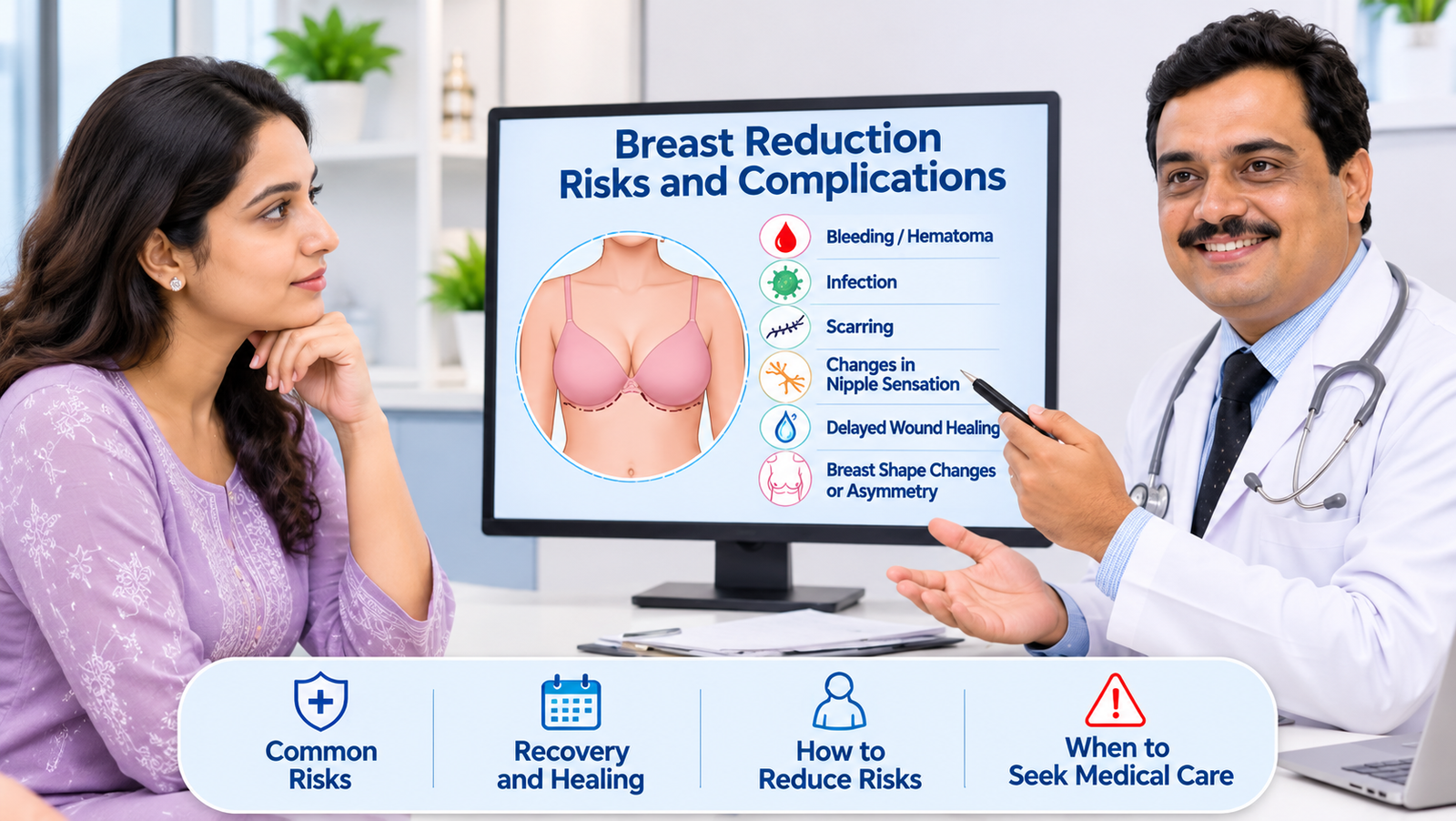
The most important breast reduction risks include bleeding, infection, delayed wound healing, scarring, changes in nipple sensation, asymmetry and problems with blood supply to the nipple or breast tissue.
However, the likelihood and severity of complications vary between patients.
1. Bleeding and Hematoma
Bleeding can occur during or after breast reduction surgery.
Sometimes, blood collects beneath the skin and forms a hematoma.
A small collection may resolve with monitoring. However, a larger hematoma may require drainage or another operation.
Warning signs include:
- Rapidly increasing swelling
- Sudden breast enlargement
- Increasing pain or tightness
- Significant bleeding through the dressing
Therefore, contact your surgical team promptly if these symptoms appear.
2. Infection After Breast Reduction
An infection may develop around the surgical incisions or deeper tissues.
Although surgeons take precautions to reduce infection risk, it cannot be eliminated completely.
Possible signs include:
- Increasing redness
- Unusual warmth around the incision
- Worsening pain
- Pus or unpleasant-smelling discharge
- Fever
Early assessment is important because some infections require antibiotics, drainage or further treatment.
3. Delayed Wound Healing
Breast reduction involves several surgical incisions.
As a result, some areas may heal more slowly than others.
Delayed healing sometimes occurs where incision lines meet, particularly at the lower breast junction in certain surgical techniques.
Additionally, smoking, diabetes, poor nutrition and circulation problems can increase healing difficulties.
Your surgeon may recommend dressings, wound care or further treatment depending on the cause.
4. Permanent Surgical Scars
Scarring is an unavoidable part of breast reduction surgery.
The scar pattern depends on the technique used.
Common patterns include:
- Around the areola
- Vertically from the areola to the breast crease
- Along the fold beneath the breast
Although scars often become less noticeable over time, they do not disappear completely.
Some patients may also develop thickened, widened or raised scars.
5. Changes in Nipple Sensation
Breast reduction surgery may affect the nerves that supply the nipples and surrounding skin.
Consequently, patients may notice reduced sensation, increased sensitivity or numbness.
Some changes improve during healing. However, others may remain permanent.
The surgeon should discuss this possibility before surgery.
6. Breast Asymmetry
Natural breasts are rarely identical.
Similarly, surgery cannot guarantee perfect symmetry.
Differences may occur in:
- Breast size
- Breast shape
- Nipple position
- Scar appearance
- Healing and swelling
Some early differences improve as swelling settles. However, persistent asymmetry may require further evaluation.
7. Reduced Blood Supply to Breast Tissue
In rare cases, the nipple, areola or surrounding breast tissue may not receive enough blood after surgery.
This can cause tissue damage or necrosis.
The risk may increase in complex reductions, particularly when a large amount of tissue must be removed or the patient has significant healing risk factors.
Therefore, careful surgical planning and postoperative monitoring are essential.
Breast Reduction Side Effects vs Complications
Not every symptom after surgery indicates a complication.
For example, mild swelling and bruising commonly occur during normal healing.
However, rapidly worsening symptoms may signal a problem.
| Symptom | Common recovery change | Possible complication |
|---|---|---|
| Swelling | Mild to moderate, gradually improving | Sudden or rapidly increasing swelling |
| Bruising | Usually settles over time | Expanding bruising with increasing pain |
| Pain | Improves with prescribed medication | Severe or worsening pain |
| Incision redness | Mild redness near healing wounds | Spreading redness, warmth or pus |
| Nipple sensation | Temporary numbness or sensitivity | Persistent or significant sensation loss |
| Breast shape | Temporary uneven swelling | Persistent marked asymmetry |
| Wound drainage | Small amounts may occur | Heavy bleeding or foul-smelling discharge |
Important: If you are unsure whether a symptom is normal, contact your surgeon rather than waiting for the next routine appointment.
What Increases the Risk of Breast Reduction Complications?
Several health and lifestyle factors can influence surgical recovery.
Smoking and Nicotine Use
Nicotine narrows blood vessels and can reduce oxygen delivery to healing tissue.
Consequently, smoking and other nicotine exposure can increase the risk of wound breakdown and tissue damage.
Your surgeon may require nicotine cessation before and after surgery.
Uncontrolled Diabetes
Poorly controlled blood glucose can increase infection and wound-healing risks.
Therefore, patients with diabetes may need additional assessment and optimisation before elective surgery.
Higher Body Mass Index
A higher BMI can be associated with certain postoperative complications.
However, BMI alone does not determine whether surgery is appropriate.
The surgeon should consider overall health, breast size and individual risk factors.
Nutritional Deficiencies
Adequate nutrition supports wound healing.
For example, protein deficiency or anaemia may complicate recovery.
Therefore, patients with suspected nutritional problems may need assessment before surgery.
Previous Breast Surgery
Earlier procedures can affect breast anatomy, scarring and blood supply.
As a result, revision surgery may require additional planning.
Large-Volume Breast Reduction
Removing a substantial amount of tissue can make surgery more complex.
However, the actual risk depends on the technique, blood supply and individual anatomy.
Can Breast Reduction Affect Breastfeeding?
Yes. Breast reduction surgery can affect future milk production.
During surgery, the surgeon removes and reshapes breast tissue.
Consequently, some milk ducts, nerves or glandular connections may be altered.
Is Breastfeeding Always Impossible?
No.
Some patients can breastfeed after breast reduction surgery.
However, others may experience reduced milk production or difficulty breastfeeding.
Does the Surgical Technique Matter?
Yes.
Techniques that preserve more connections between the nipple and glandular tissue may offer different breastfeeding possibilities.
Nevertheless, no technique can guarantee successful breastfeeding.
What if You Plan Pregnancy?
Discuss future pregnancy and breastfeeding goals before surgery.
Additionally, remember that pregnancy and weight changes can alter breast shape after reduction.
Can Breast Reduction Cause Permanent Numbness?
Temporary numbness is relatively common after breast surgery.
However, permanent sensation changes are also possible.
Why Does Numbness Occur?
The procedure can stretch, disturb or divide small sensory nerves.
As a result, nipple or breast skin sensation may change.
Does Sensation Return?
Sensation may improve gradually over several months.
However, the degree of recovery varies.
Some patients continue to experience reduced sensation or altered sensitivity.
When Should You Be Concerned?
Sudden nipple colour changes, severe pain or signs of impaired circulation require urgent surgical assessment.
Numbness alone does not necessarily indicate a dangerous complication, but persistent symptoms should be discussed during follow-up.
How Long Does Breast Reduction Recovery Take?
Recovery varies according to the procedure, patient health and healing response.
However, most patients need several weeks before returning to strenuous activities.
First 48 Hours
Swelling, tightness and discomfort are common.
Therefore, follow medication instructions, wear the recommended support garment and avoid unnecessary strain.
First Week
Pain and bruising often begin improving.
However, incision care remains important.
Attend scheduled follow-up visits and report unexpected changes.
Weeks Two to Four
Many patients gradually resume light activities.
Nevertheless, heavy lifting and vigorous exercise may still be restricted.
Weeks Four to Six
Some patients can return to more demanding activities after surgical clearance.
However, recovery timelines are individual.
Following Months
Swelling continues to settle and scars gradually mature.
Final breast shape may take several months to become clearer.
How Can You Reduce Breast Reduction Risks?
Although no precaution removes every surgical risk, several steps can support safer treatment.
Choose an Appropriately Qualified Plastic Surgeon
First, confirm your surgeon’s qualifications, experience and hospital arrangements.
Ask how they manage complications and postoperative follow-up.
Share Your Complete Medical History
Tell your surgeon about medications, allergies, previous operations and existing medical conditions.
Additionally, disclose smoking, nicotine use and supplements.
Follow Preoperative Instructions
Complete the recommended tests and follow advice about medication adjustments.
Do not stop prescribed medication without guidance from the treating clinician.
Avoid Smoking and Nicotine
Follow your surgeon’s nicotine cessation recommendations.
This step can be especially important for tissue circulation and wound healing.
Maintain Good Nutrition
A balanced diet and adequate protein intake support healing.
However, avoid starting supplements without discussing them with your healthcare team.
Follow Wound-Care Instructions
Keep dressings clean and attend follow-up appointments.
Do not apply unapproved creams, oils or home remedies to healing incisions.
Respect Activity Restrictions
Avoid heavy lifting and strenuous exercise until your surgeon permits them.
For example, returning to intense workouts too early may increase discomfort or place tension on healing wounds.
When Should You Seek Medical Care After Breast Reduction?
Recognising warning signs is an important part of recovery.
Contact Your Surgeon Promptly For:
- Increasing redness or swelling
- Fever
- New or worsening incision pain
- Unusual wound discharge
- Wound separation
- Sudden breast shape changes
- Darkening or unusual colour changes of the nipple
Seek Emergency Care For:
- Chest pain
- Sudden shortness of breath
- Fainting or severe weakness
- Heavy uncontrolled bleeding
- Rapidly expanding breast swelling with severe pain
- New severe leg swelling or pain, especially on one side
These symptoms may indicate serious complications that require immediate evaluation.
Do not delay emergency care while waiting for a routine appointment.
Breast Reduction Risks Compared With Breast Lift Risks
Breast reduction and breast lift procedures share some complications because both involve reshaping breast tissue and surgical incisions.
However, the goals differ.
| Feature | Breast reduction | Breast lift |
|---|---|---|
| Main purpose | Reduce breast size and weight | Improve breast position |
| Tissue removal | Removes breast tissue, fat and skin | Primarily removes excess skin and reshapes tissue |
| Scarring | Yes | Yes |
| Infection risk | Possible | Possible |
| Nipple sensation changes | Possible | Possible |
| Breastfeeding impact | May occur | May occur |
| Volume change | Significant reduction | Usually limited |
| Future sagging | Possible | Possible |
Therefore, patients should choose a procedure according to their anatomy, symptoms and goals rather than assuming one operation has no risks.
Read more about Breast Reduction vs Breast Lift.
Questions to Ask Before Breast Reduction Surgery
A detailed consultation helps you understand your individual risks.
What Complications Am I More Likely to Experience?
Ask how your medical history, breast size and surgical plan influence risk.
Which Incision Pattern Will You Use?
Discuss scar placement and the reasons for the proposed technique.
Could Surgery Affect Nipple Sensation?
Ask about temporary and permanent sensation changes.
Could I Breastfeed in the Future?
Discuss breastfeeding plans before consenting to surgery.
What Happens if a Complication Develops?
Ask how the surgeon handles infection, bleeding, wound breakdown or revision surgery.
How Many Follow-Up Appointments Will I Need?
Understand the postoperative monitoring plan and how to contact the surgical team if problems occur.
Related Breast Reduction Information at Elegance Clinic
Patients researching breast reduction risks can also explore related treatment information at Elegance Clinic.
For a detailed explanation of the operation, visit Breast Reduction (Mammoplasty). You can also read Breast Reduction Surgery: Procedure, Benefits and Recovery to understand the surgical process and healing stages.
Additionally, Who Benefits Most From Breast Reduction Surgery? explains patient suitability, while Breast Reduction Anaesthesia and Hospital Stay covers preparation and hospital-related considerations.
If you are comparing treatment options, explore the Breast Cosmetic Surgery Services page or review Breast Reduction Surgery: Cost, Recovery and Risks in India.
Frequently Asked Questions
1. What are the most common breast reduction risks?
Common breast reduction risks include swelling, bruising, scarring, temporary discomfort and changes in nipple sensation. Other possible complications include infection, bleeding, delayed wound healing and asymmetry.
2. Is breast reduction surgery dangerous?
Breast reduction is a major surgical procedure with recognised risks. Many patients recover without serious complications, but safety depends on individual health, surgical planning and postoperative care. A qualified surgeon should explain your personal risk profile.
3. Can breast reduction cause permanent nipple numbness?
Yes. Some patients experience permanent changes in nipple sensation. However, others notice temporary numbness that improves during healing. The outcome varies according to the surgical technique and individual nerve recovery.
4. How common is infection after breast reduction?
Infection is a recognised complication, but its frequency varies according to patient health and other factors. Increasing redness, warmth, pain, discharge or fever should prompt medical assessment.
5. Can breast reduction affect breastfeeding?
Yes. Surgery may alter milk ducts, glandular tissue and nerves. Some women can breastfeed afterward, but milk production may be reduced. Breastfeeding ability cannot be guaranteed.
6. Are breast reduction scars permanent?
Yes. All surgical incisions leave permanent scars. However, scars often become less noticeable as they mature. Their final appearance depends on the incision pattern, skin characteristics and healing.
7. What happens if a breast reduction wound opens?
Wound separation requires assessment by the surgical team. Treatment may involve dressings, infection management or additional procedures. Do not attempt to close the wound yourself.
8. How can I reduce complications after breast reduction?
Follow your surgeon’s instructions, avoid smoking and nicotine, maintain suitable nutrition, attend follow-up appointments and respect activity restrictions. Also, report unusual symptoms promptly.
9. What are the warning signs after breast reduction surgery?
Important warning signs include rapidly increasing swelling, heavy bleeding, spreading redness, fever, worsening pain, wound discharge and unusual nipple colour changes. Chest pain or sudden breathing difficulty requires emergency care.
10. Where can I learn more about breast reduction risks in Surat?
Patients considering surgery can explore Elegance Clinic and its Breast Reduction (Mammoplasty) information. An individual consultation with a qualified plastic surgeon is necessary to understand personal risks and treatment suitability.
Conclusion
Understanding breast reduction risks is essential before deciding on reduction mammoplasty.
Although surgery may improve comfort and reduce problems associated with heavy breasts, complications remain possible.
First, discuss your medical history and surgical goals. Next, ask about scarring, nipple sensation, breastfeeding and recovery. Additionally, understand which warning signs require immediate medical attention.
Most importantly, choose an appropriately qualified surgeon and follow postoperative instructions carefully.
For more information about breast reduction surgery, visit Elegance Clinic or explore its Breast Reduction Treatment page.
