

|
Getting your Trinity Audio player ready...
|
✓ Medically reviewed by Dr. Ashutosh Shah, Plastic, Reconstructive & Cosmetic Surgeon (M.Ch., DNB)
What is the difference between breast reduction and a breast lift?
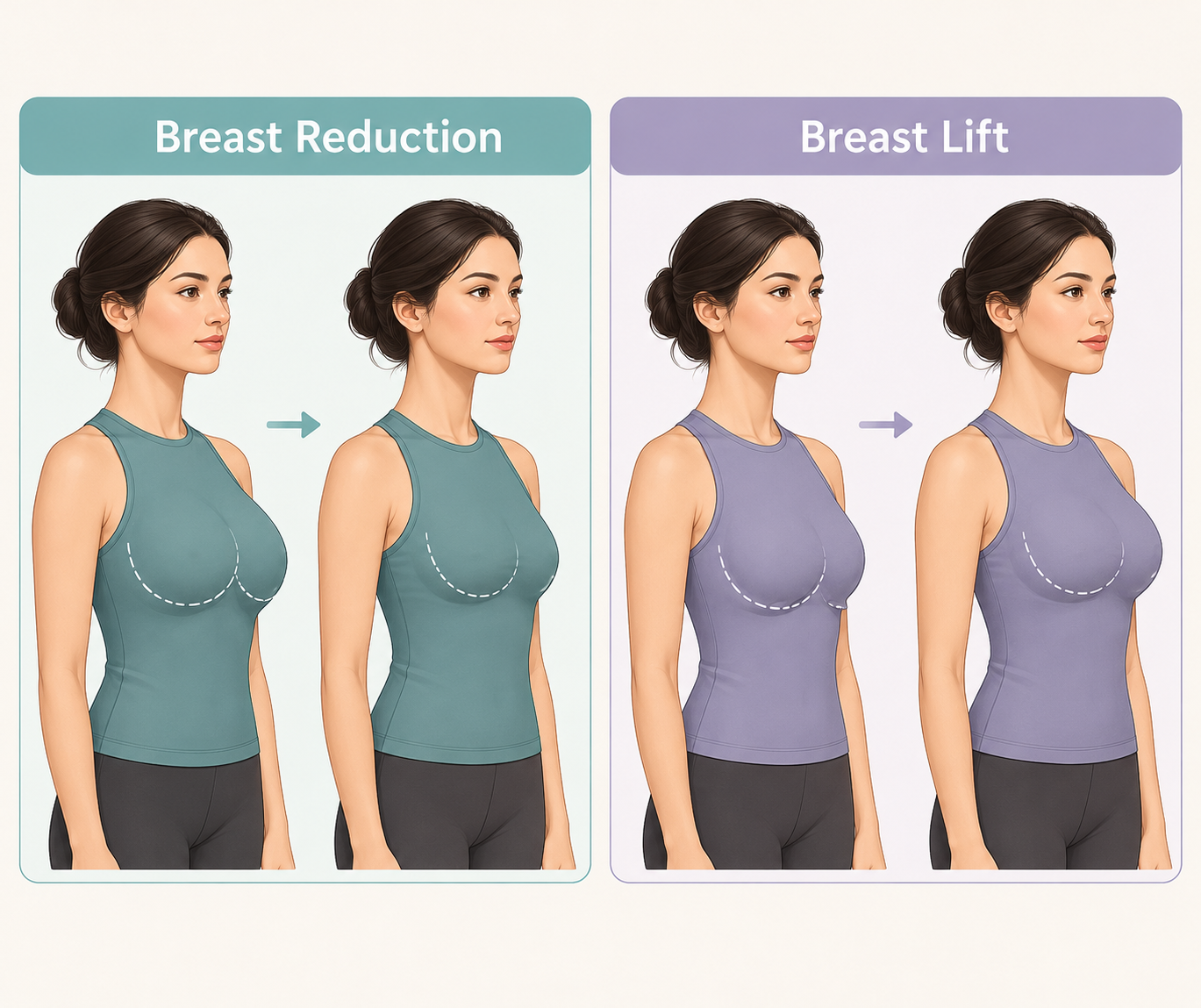
Breast reduction surgery removes breast tissue, fat and skin to make the breasts smaller and lighter. A breast lift, also called mastopexy, mainly removes excess skin and reshapes the breast to raise its position and improve contour. Both procedures can change breast shape, but reduction focuses on size and weight as well as shape, while a lift focuses primarily on position and firmness.
Breast reduction vs breast lift: key differences
The right procedure depends on whether your main concern is breast size, heaviness, sagging or a combination of these factors.
| Feature | Breast reduction | Breast lift |
|---|---|---|
| Main purpose | Reduce breast size and weight while improving shape | Raise and reshape breasts that have sagged |
| Breast tissue removed | Usually removes tissue and fat as well as excess skin | Primarily removes excess skin; tissue removal may be limited or case-dependent |
| Breast size | Usually becomes smaller | Often remains broadly similar in volume, although the shape may make the breasts look different |
| Breast position | Can lift and reshape the breasts as part of the reduction | Raises the breast and nipple–areola complex when appropriate |
| Common concerns | Heavy breasts, discomfort, difficulty with some activities, and disproportionate size | Sagging, stretched skin, downward-pointing nipples or loss of upper-breast fullness |
| Scars | Depends on the technique and amount of reduction; scars may surround the areola and extend vertically or along the breast crease | Often includes scars around the areola and possibly vertically or along the breast crease |
| Recovery | Depends on the amount of tissue removed and the surgical technique | Depends on the degree of reshaping and surgical technique |
| Can the procedures be combined? | Yes, reduction commonly includes lifting and reshaping | A lift can sometimes be combined with reduction or, in selected cases, augmentation |
Neither procedure guarantees a particular cup size or exact breast shape. Final results depend on anatomy, healing, skin quality and the surgical plan.
What does breast reduction surgery do?
Breast reduction is designed for people who want smaller, lighter breasts. Excess breast tissue, fat and skin are removed, and the remaining tissue is reshaped. The nipple and areola are generally repositioned to suit the new breast contour.
People may consider reduction if they experience:
- Neck, shoulder or upper-back discomfort associated with breast weight
- Deep grooves from bra straps
- Difficulty exercising or participating in certain activities
- Skin irritation beneath the breasts
- Difficulty finding comfortable clothing or supportive bras
- Breast size that feels disproportionate to their body
Breast reduction can improve comfort for appropriately selected patients, but it involves surgery and has risks, including bleeding, infection, scarring, changes in nipple sensation and possible effects on breastfeeding. The extent of benefit varies by individual.
What does a breast lift do?
A breast lift, or mastopexy, is intended to improve breast position and contour when the skin has stretched and the breasts have descended. The surgeon removes excess skin, reshapes the supporting tissue and repositions the nipple–areola complex when needed.
A lift may be considered when:
- The breasts sag after pregnancy or breastfeeding
- Skin has stretched after weight changes
- The nipples point downward or sit low on the breasts
- The breasts have lost some of their previous shape
- Breast volume is acceptable, but the position or contour is not
A lift does not usually provide a major reduction in breast size. It also cannot guarantee permanent firmness because ageing, gravity, future pregnancies and weight changes can affect the breasts over time.
Should I choose reduction or lift?
Start by identifying what you would most like to change.
If your breasts feel too large or heavy: Breast reduction may be more suitable because it removes tissue and reduces weight while also reshaping the breasts.
If you are comfortable with your breast volume but dislike sagging: A breast lift may be more appropriate because its main aim is to raise and reshape the breasts.
If you want smaller breasts and less sagging: A reduction often includes a lifting component. The surgeon removes excess tissue and skin while reshaping and repositioning the remaining breast.
If you want a fuller upper breast: A lift alone may not restore substantial lost volume. In selected cases, augmentation may be discussed, but the additional benefits and risks need careful consideration.
A consultation should include your goals, medical history, breast examination, skin quality, nipple position and discussion of scars, sensation and recovery.
Can breast reduction and a lift be performed together?
Yes. Breast reduction commonly involves lifting and reshaping the breasts as part of the operation. The surgeon removes the planned amount of tissue and excess skin, then reshapes the remaining breast and repositions the nipple–areola complex as appropriate.
The amount of tissue removed and the final size depend on your anatomy, preferences and what can be achieved safely. The surgeon should explain the likely scar pattern and any limitations related to blood supply, sensation or healing.
If you want only a lift, a separate reduction may not be necessary. If you want both a significant size reduction and a higher breast position, a combined reduction and lift may address both concerns in one operation.
What scars should you expect?
Both procedures leave scars. Their location and length depend on the surgical technique, the amount of skin removed and the shape of the breast.
Common patterns include:
- Around the areola: A scar follows the edge of the areola.
- Vertical scar: A line extends from the areola toward the breast crease.
- Inverted-T or anchor pattern: Scars run around the areola, vertically and along the breast crease.
Not every patient needs the same pattern. Scars generally change and mature over time, but they do not disappear completely. Some people develop raised, widened or darker scars. Follow the surgeon’s wound-care instructions and ask when scar treatment can safely begin.
How different are recovery times?
Recovery varies according to the procedure, the extent of surgery and individual healing. Both procedures may involve swelling, bruising, tenderness and temporary restrictions on lifting or strenuous activity.
After surgery, you may need to:
- Wear a recommended support bra
- Keep incisions clean and follow wound-care instructions
- Avoid heavy lifting and strenuous exercise for the period advised
- Attend scheduled follow-up appointments
- Avoid smoking or nicotine because it can impair healing
- Contact the surgical team if symptoms worsen or seem unusual
Do not judge the final breast shape in the first few weeks. Swelling settles gradually, and scars continue to mature over several months. Your surgeon should provide a personalised recovery plan based on the procedure performed.
What are the risks of breast reduction and breast lift?
Both procedures carry risks associated with surgery and anaesthesia. These can include bleeding, infection, fluid collection, delayed wound healing, visible scars, asymmetry, changes in breast or nipple sensation and the possibility of revision surgery.
Breast reduction may affect future breastfeeding, depending on the technique and the amount of tissue removed. A breast lift can also affect sensation or breastfeeding potential because tissue and nipple position may be altered.
Discuss pregnancy plans, future weight changes, medicines, smoking, medical conditions and your expectations before deciding. Seek urgent medical advice after surgery for symptoms such as chest pain, sudden breathlessness, significant bleeding, rapidly increasing swelling or fever with worsening wound symptoms.
Breast reduction and breast lift surgery address different concerns, so the right option depends on breast size, shape, symptoms and personal goals. Learn more about breast reduction surgery if you want to understand how excess breast tissue and skin are removed to reduce breast size and weight. If your main concern is sagging rather than breast size, read about breast lift surgery (mastopexy). You can also explore the clinic’s breast cosmetic surgery services to learn about other available procedures. A consultation with a qualified plastic surgeon can help determine which approach may suit your anatomy and expectations.
Frequently asked questions
Is a breast lift the same as breast reduction?
No. Breast reduction removes breast tissue, fat and skin to reduce size and weight while reshaping the breasts. A breast lift mainly removes excess skin and raises the breast and nipple position. Reduction usually includes reshaping and lifting, but a lift alone is not intended to produce a major size reduction.
Can I have a breast lift without reducing my size?
Yes. A breast lift may be suitable if you are generally happy with your breast volume but want to improve sagging or position. The procedure reshapes the existing tissue and removes excess skin. Your breasts may look different after reshaping, but a lift does not guarantee an exact size or upper-breast fullness.
Will breast reduction remove sagging?
Breast reduction usually includes lifting and reshaping the remaining breast tissue. It can address both excessive size and sagging in appropriately selected patients. The final position and contour depend on skin quality, anatomy, surgical technique and healing.
Can breast reduction and breast lift be done together?
Yes. Breast reduction commonly incorporates a lifting component. The surgeon removes excess tissue and skin, reshapes the breast and repositions the nipple–areola complex as appropriate. The planned size, scar pattern, risks and recovery should be discussed during consultation.
Will I lose nipple sensation after surgery?
Nipple sensation can change temporarily or permanently after either procedure. The risk depends on factors such as anatomy, the amount of tissue removed, the surgical technique and healing. Your surgeon should explain the specific risks for your planned operation.
Can I breastfeed after breast reduction or a lift?
Some people can breastfeed after these procedures, but breastfeeding ability cannot be guaranteed. The effect depends on the technique and whether milk ducts, nerves and supporting tissue remain intact. If you may want children in the future, discuss breastfeeding plans before surgery.
How do I know whether I need a reduction or a lift?
If breast size and weight are the main concerns, reduction may be appropriate. If volume is acceptable but the breasts sag, a lift may be more suitable. When both concerns are present, reduction with lifting and reshaping may be considered after a clinical assessment.
Conclusion
Breast reduction and breast lift surgery can both improve breast contour, but they serve different primary purposes. Reduction removes breast tissue to decrease size and weight, while a lift mainly raises and reshapes the breasts by addressing excess skin and position. If you want smaller breasts as well as less sagging, a combined reduction and lift may be discussed with a qualified plastic surgeon.
