

|
Getting your Trinity Audio player ready...
|
✓ Medically reviewed by Dr. Ashutosh Shah, Plastic, Reconstructive & Cosmetic Surgeon (M.Ch., DNB)
Varicose veins stockings class 2 provide graduated compression to help reduce leg swelling, heaviness, and discomfort in patients with symptomatic varicose veins. Class 1 offers lighter compression, while class 3 provides stronger support for selected conditions. However, compression stockings cannot repair damaged vein valves, and patients with poor arterial circulation need a medical assessment before using strong compression.
Many people buy compression stockings without knowing whether they need class 1, 2, or 3.
Some choose stockings based on brand or price, while others select a size using their usual shoe size.
However, medical compression stockings require accurate measurements and an appropriate pressure level.
The wrong class or size can cause discomfort, slipping, excessive pressure, or skin damage.
This guide explains compression classes, stocking lengths, correct measurements, safety precautions, and when medical evaluation matters.
What Are Varicose Vein Stockings and How Do They Work?
Varicose vein stockings are specially designed elastic garments that apply graduated pressure to the legs.
They usually provide the strongest pressure near the ankle and progressively less pressure higher up the leg.
This pressure helps support venous blood return and reduce fluid accumulation.
Patients may notice improvements in:
- Leg heaviness
- Aching after prolonged standing
- Mild to moderate swelling
- Discomfort associated with varicose veins
- Symptoms related to chronic venous insufficiency
Compression stockings do not physically remove varicose veins or permanently repair faulty vein valves.
They mainly help control symptoms.
Patients can explore varicose vein stockings and compression treatment to understand their role in venous care.
What Pressure Does Each Compression Class Provide?
Medical stockings come in different compression classes.
The pressure is measured in millimetres of mercury (mmHg).
Different international standards use different class definitions. The following table follows the RAL-GZ 387 classification.
| Compression Class | Pressure at Ankle (RAL Standard) | Typical Use | Length Usually Considered |
|---|---|---|---|
| Class 1 | 18–21 mmHg | Mild venous symptoms and selected cases of light swelling | Knee-length |
| Class 2 | 23–32 mmHg | Symptomatic varicose veins, venous swelling and selected post-treatment care | Knee-length or thigh-length |
| Class 3 | 34–46 mmHg | More severe venous or lymphatic swelling and selected chronic venous conditions | Based on specialist assessment |
These are general indications, not a prescription.
A clinician should select compression strength according to symptoms, diagnosis, arterial circulation, skin condition and the patient’s ability to use the garment.
Class 1: Light Compression
Class 1 stockings provide relatively gentle support.
A clinician may recommend them for selected patients with mild venous symptoms or minor swelling.
However, class 1 may not provide enough compression for more significant venous disease.
Class 2: Moderate Compression
Varicose veins stockings class 2 provide 23–32 mmHg of ankle pressure under the RAL classification.
Clinicians commonly consider this class for symptomatic varicose veins and certain forms of venous swelling.
Class 2 stockings may also form part of a short-term recovery plan after selected vein procedures.
However, not every patient with visible veins needs class 2 compression.
A vascular assessment helps determine whether the pressure is appropriate.
Class 3: Strong Compression
Class 3 stockings provide 34–46 mmHg under the RAL classification.
Specialists may recommend this level for selected patients with more severe venous or lymphatic conditions.
Patients should not start class 3 compression without appropriate assessment and professional guidance.
Important: A product labelled class 2 under another national standard may have a different pressure range. Always check the actual mmHg rating and the standard printed on the packaging.
Knee-Length or Thigh-Length Stockings: Which Should You Choose?
Stocking length depends on the condition, distribution of swelling, treatment plan, and individual comfort.
Knee-Length Compression Stockings
Knee-length stockings extend from the foot to just below the knee.
They are commonly suitable when symptoms mainly affect the lower leg.
Advantages include:
- Easier application
- Better comfort for many patients
- Less fabric around the thigh
- Lower likelihood of rolling at the upper leg
- Greater convenience during everyday activities
Many patients find knee-length stockings easier to wear consistently.
Thigh-Length Compression Stockings
Thigh-length stockings extend above the knee.
A clinician may recommend them when swelling or the treatment plan involves the thigh.
However, thigh-length stockings can roll down if the size or fit is incorrect.
They may also feel less comfortable in hot weather.
Does the Location of Varicose Veins Determine Stocking Length?
Not always.
A visible vein above the knee does not automatically mean every patient needs thigh-length stockings.
The clinician considers symptoms, swelling, anatomy, and the treatment objective.
Patients who are unsure whether their visible veins need medical treatment can read about the difference between spider veins and varicose veins.
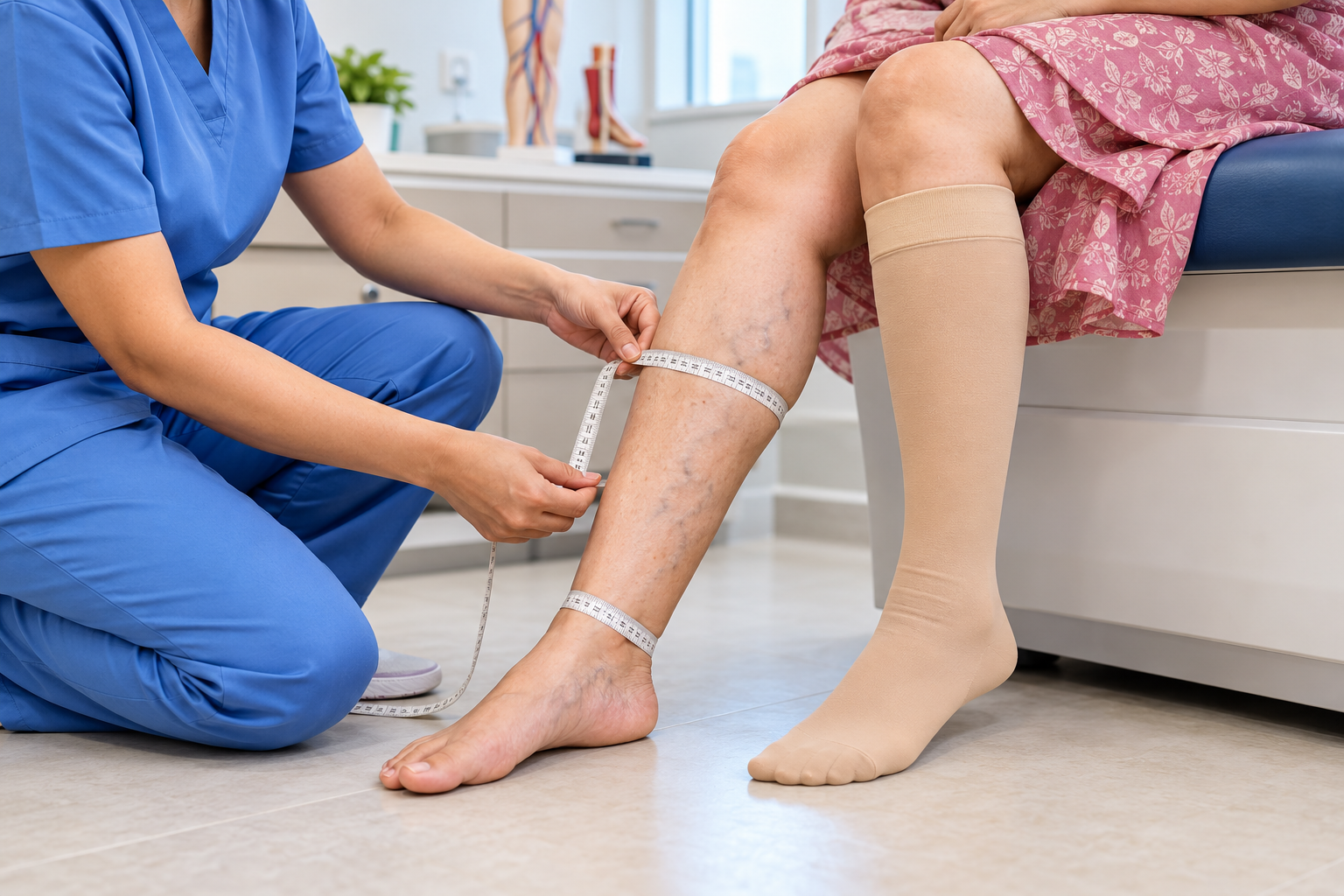
How Should You Measure Your Leg for the Right Stocking Size?
Correct sizing matters as much as compression class.
A stocking that is too loose may not provide the intended pressure.
A stocking that is too tight may cause discomfort, constriction, or skin injury.
A varicose veins stocking size chart generally uses leg measurements rather than shoe size alone.
Morning Measuring Checklist
Measure your legs in the morning, ideally before significant swelling develops.
| Measurement | Where to Measure | Why It Matters |
|---|---|---|
| Ankle circumference | Narrowest area above the ankle bones | Determines the fit near the highest-pressure area |
| Calf circumference | Widest part of the calf | Helps prevent excessive tightness or looseness |
| Thigh circumference | At the manufacturer’s specified thigh level | Required for thigh-length stockings |
| Lower-leg length | From the floor or heel reference point to below the knee, following the brand’s instructions | Determines knee-length garment fit |
| Full-leg length | From the heel reference point to the specified upper-thigh level | Required for thigh-length garments |
Important Sizing Tips
- Measure both legs because their dimensions may differ.
- Use a flexible measuring tape.
- Keep the tape snug without squeezing the skin.
- Record measurements in centimetres.
- Compare the results with the manufacturer’s specific size chart.
- Ask a trained fitter for help if measurements fall between sizes.
Do not assume that a medium-sized garment from one brand will match another brand.
Different manufacturers use different sizing systems.
Varicose Veins Clinic Near Sachin Surat: When Should You Get a Compression Assessment?
Patients with visible varicose veins, persistent swelling, or recurring leg discomfort should consider a vascular assessment before selecting strong compression.
A clinician may examine the legs, review symptoms, and check circulation.
Depending on the findings, the assessment may include:
- Skin colour and temperature
- Foot pulses
- Swelling pattern
- Previous vein treatment
- History of ulcers or blood clots
- Ankle-brachial pressure index (ABPI)
- Venous duplex ultrasound when indicated
At Elegance Clinic, Dr. Ashutosh Shah, a plastic and reconstructive surgeon practising since 2004, can assess venous symptoms and discuss whether compression, further vascular evaluation, or another treatment approach is appropriate.
The aim is to select compression that supports circulation without creating unnecessary pressure-related risks.
Who Should Not Wear Compression Stockings Without a Medical Check?
Understanding when not to wear compression stockings is essential.
Strong compression can be harmful in patients with certain circulation or skin problems.
1. Significant Peripheral Arterial Disease
Peripheral arterial disease reduces blood supply to the legs.
Strong compression may further compromise circulation when arterial flow is severely impaired.
Clinicians often use the ankle-brachial pressure index to assess arterial circulation.
An ABPI below 0.5 generally indicates severe arterial disease and is a major contraindication to sustained medical compression.
An ABPI between 0.5 and 0.8 usually requires specialist assessment and, where appropriate, modified compression rather than routine strong stockings.
An ABPI above 1.3 may indicate non-compressible arteries, requiring alternative vascular assessment.
These thresholds are general guidance; clinicians must also consider ankle and toe pressures, symptoms and the complete vascular examination.
2. Severe Peripheral Neuropathy
Patients with significant loss of sensation may not notice excessive pressure or skin injury.
This concern is particularly important in people with diabetes-related neuropathy.
A clinician should assess sensation, circulation, and skin condition before prescribing compression.
3. Serious Skin Infection or Fragile Skin
Patients with acute skin infection, open wounds, or fragile skin need medical assessment before wearing stockings.
Compression is not automatically prohibited for every skin infection or wound. In selected cases, clinicians use compression alongside appropriate treatment.
However, patients should not apply strong compression over an untreated or worsening problem without professional guidance.
4. Severe or Unstable Heart Failure
Patients with severe, decompensated heart failure may not tolerate additional fluid returning toward the central circulation.
They require medical assessment before starting compression.
5. Unexplained Sudden Leg Swelling
Sudden swelling, especially in one leg, may indicate deep vein thrombosis or another urgent condition.
Do not simply start wearing compression stockings to manage unexplained swelling.
Seek prompt medical evaluation.
Compression may form part of treatment after a diagnosis, but the clinician must determine its suitability.
Can People With Diabetes Wear Varicose Vein Stockings?
Some people with diabetes can safely use compression stockings.
However, diabetes may increase the importance of assessing circulation, sensation, and skin health.
Patients with diabetic neuropathy may not feel excessive pressure.
Those with peripheral arterial disease may have reduced blood flow.
Before using strong compression, a clinician may check:
- Foot pulses
- Protective sensation
- Skin integrity
- History of foot ulcers
- ABPI or toe pressures when appropriate
Patients should inspect their feet and legs regularly while using compression.
Remove the stockings and seek medical advice if they cause new pain, numbness, skin discolouration or pressure marks that do not resolve.
Do Compression Stockings Cure Varicose Veins?
No.
Compression stockings can reduce symptoms, but they do not eliminate faulty vein valves or close an incompetent superficial vein.
What Stockings Can Do
They may help:
- Reduce swelling
- Relieve heaviness
- Improve comfort during standing
- Support venous blood return
- Assist selected patients during recovery after treatment
What Stockings Cannot Do
They cannot:
- Permanently repair damaged vein valves
- Remove existing enlarged veins
- Guarantee prevention of new varicose veins
- Replace necessary treatment for serious venous disease
NICE guideline CG168 recommends interventional treatment for suitable patients with confirmed truncal reflux rather than routinely offering compression hosiery as the primary treatment.
Compression remains useful when intervention is unsuitable, when patients choose conservative management, or when clinicians recommend it for specific circumstances.
Do You Need Compression After Laser Treatment for Varicose Veins?
Some patients need temporary compression after endovenous laser treatment.
The duration depends on the procedure, clinician’s protocol, and individual circumstances.
NICE CG168 advises that when compression hosiery or bandaging is offered after an interventional treatment, it should not be used for more than seven days under that guideline’s recommendation.
Other clinical protocols may differ based on the procedure and patient condition.
Patients should follow their treating vascular specialist’s instructions rather than independently extending or stopping prescribed compression.
What If You Have a Varicose Vein Ulcer?
A venous leg ulcer requires more than a standard retail stocking.
The clinician must assess the wound, venous circulation and arterial blood supply.
Treatment may involve wound care, appropriate compression and management of underlying venous reflux.
Patients can explore varicose vein ulcer care for more information.
For some patients, clinicians use multilayer compression bandaging rather than ordinary stockings.
The choice depends on wound condition, swelling, arterial circulation, and the treatment plan.
How Should You Wear and Maintain Compression Stockings?
Proper use helps maintain comfort and effectiveness.
Putting Stockings On
- Put stockings on in the morning when swelling is usually lower.
- Make sure the skin is dry.
- Turn the stocking partly inside out if the manufacturer recommends this method.
- Position the heel correctly.
- Pull the garment gradually over the ankle and calf.
- Smooth out wrinkles.
- Avoid folding or rolling the top edge.
A stocking applicator may help patients who have difficulty bending or gripping the fabric.
Caring for Stockings
Follow the manufacturer’s washing instructions.
Avoid excessive heat and harsh cleaning products that can damage elastic fibres.
Replace stockings when they lose elasticity, become damaged, or no longer fit correctly.
Many manufacturers recommend replacement after approximately three to six months of regular use, but the exact lifespan varies.
Frequently Asked Questions
1. Which compression stocking class should I buy for varicose veins?
Class 2 stockings are commonly used for symptomatic varicose veins, but they are not suitable for everyone. Under the RAL standard, class 2 provides 23–32 mmHg at the ankle. A clinician should assess your symptoms, circulation and leg measurements before recommending a compression class.
2. Can I wear varicose vein stockings if I have diabetes?
Some people with diabetes can wear compression stockings safely. However, those with poor circulation, severe neuropathy or active foot problems require careful assessment. Patients seeking a varicose veins clinic near sachin surat should ask about arterial circulation and foot-sensation checks before starting strong compression.
3. Do compression stockings cure varicose veins?
No. Compression stockings may reduce swelling, aching and heaviness, but they cannot repair faulty vein valves or remove existing varicose veins. Patients with significant venous reflux may need further evaluation and discussion of interventional treatment.
4. Should I Wear Compression Stockings at Night?
Most patients who use standard daytime compression stockings remove them before sleeping. However, some medical conditions require different instructions. Follow your clinician’s prescribed wearing schedule rather than assuming every stocking should remain on overnight.
5. How Long Does One Pair of Compression Stockings Last?
Many medical compression stockings last approximately three to six months with regular use and proper care. Their lifespan depends on the manufacturer, material, washing method and frequency of wear. Replace stockings when they lose elasticity or no longer provide a secure fit.
6. Can I Wear Compression Stockings During Summer Heat?
Yes, many patients can wear suitable compression stockings during hot weather. Lightweight materials, correct sizing and proper skin care may improve comfort. However, excessive sweating, irritation or difficulty tolerating the garment should prompt a review of the stocking type and wearing schedule.
7. Why Do My Thigh-Length Stockings Roll Down?
Thigh-length stockings may roll down because of incorrect sizing, unsuitable length, changes in leg circumference or poor garment positioning. A rolled stocking can create a tight band that concentrates pressure. Avoid folding the top edge and ask a trained fitter to reassess the size.
8. Do I Need Stockings After Laser Treatment?
Some patients receive short-term compression after endovenous laser treatment. The recommended duration depends on the procedure and clinical protocol. NICE CG168 advises no more than seven days when compression is offered after intervention under that guideline. Follow your treating clinician’s instructions.
Conclusion
Varicose vein stockings can improve comfort and reduce swelling, but choosing the correct compression class and size is essential.
Class 1 provides lighter support, class 2 commonly helps manage symptomatic varicose veins, and class 3 provides stronger compression for selected medical conditions.
Knee-length stockings suit many patients, while others may need thigh-length garments.
Accurate ankle, calf, and leg-length measurements help ensure the correct fit.
Patients with peripheral arterial disease, severe neuropathy, significant skin problems or unexplained swelling should seek medical assessment before using strong compression.
At Elegance Clinic, Dr. Ashutosh Shah can evaluate symptoms, review circulation concerns, and discuss whether compression stockings or further vascular treatment may be appropriate.
