

|
Getting your Trinity Audio player ready...
|
✓ Medically reviewed by Dr. Ashutosh Shah, Plastic, Reconstructive & Cosmetic Surgeon (M.Ch., DNB)
Varicose veins from standing can develop when long working hours increase pressure inside the leg veins, especially in people with weakened vein valves. Diamond workers, textile employees, and shop staff may notice evening leg heaviness, ankle swelling, or visible veins. Regular movement helps, while a duplex ultrasound can identify venous reflux and guide treatment.
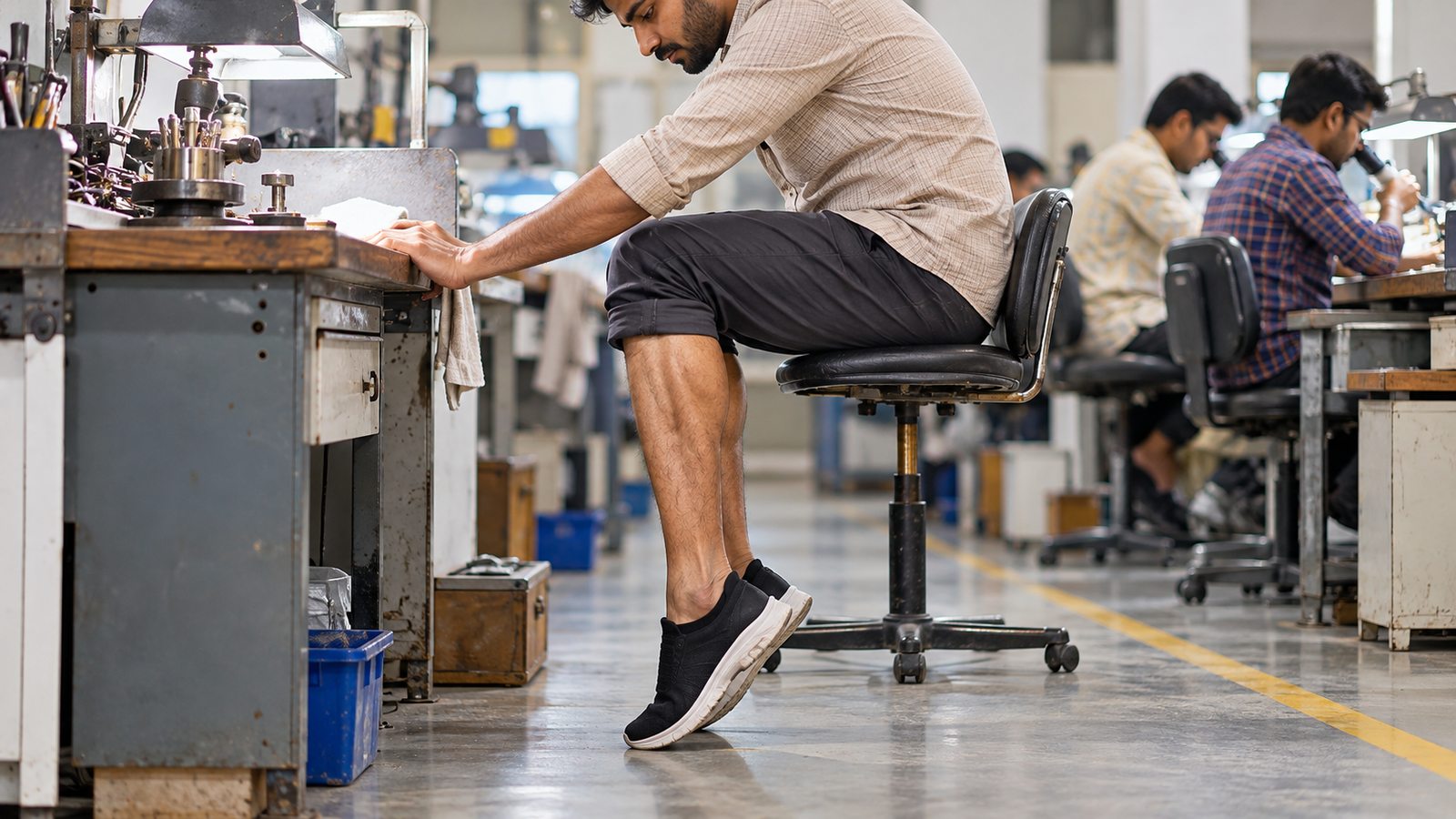
Many workers spend eight to twelve hours standing near machinery, working at shop counters or sitting in fixed positions while polishing diamonds. These routines can strain the leg veins over time.
Although prolonged standing does not cause varicose veins in everyone, it increases the risk of chronic venous problems, particularly when combined with family history, ageing, obesity, or previous vein disease.
At Elegance Clinic, Dr. Ashutosh Shah, MS, MCh (Plastic Surgery), D.N.B., with 22+ years of experience, helps patients understand their symptoms and available treatment options. A qualified vascular specialist can assess vein reflux and determine whether conservative care or a procedure is appropriate.
Why Do Standing and Fixed-Posture Jobs Strain Leg Veins?
Leg veins carry blood back towards the heart. Small valves inside these veins help prevent blood from flowing backwards.
When you walk, your calf muscles contract and push blood upwards. This mechanism is called the calf muscle pump.
However, standing in one position for several hours reduces the benefit of regular muscle contractions.
Blood may collect in the lower legs, increasing venous pressure.
In people with weakened valves, this pressure can contribute to vein enlargement and reflux.
Over time, affected veins may become swollen, twisted or visible beneath the skin.
Does standing cause varicose veins?
Prolonged standing is a recognised risk factor for chronic venous disease.
The European Society for Vascular Surgery (ESVS) 2022 guidelines identify prolonged standing among the factors associated with venous disease.
However, not everyone who stands for long periods develops varicose veins. Genetics, age, body weight and other individual factors also influence risk.
Can sitting for long hours cause similar problems?
Yes. Remaining seated without moving the ankles or calves reduces muscle-pump activity.
Diamond-polishing workers who sit at a wheel for several hours may experience leg heaviness or swelling.
The important factor is often prolonged immobility rather than standing alone.
Which Early Signs Should Varachha Workers Not Ignore?
Workers may dismiss early symptoms as normal tiredness after a long shift.
However, recurring symptoms deserve attention.
Common warning signs include:
- Heavy or aching legs towards the evening
- Swelling around the ankles
- Visible blue or bulging veins
- Itching around the lower legs
- Burning or throbbing discomfort
- Night cramps
- Skin darkening near the ankles
Symptoms may become more noticeable after prolonged standing and improve with walking or leg elevation.
Not every leg symptom indicates varicose veins. Muscle problems, medication effects, heart or kidney conditions, and other causes can produce similar complaints.
Shift-Worker Warning Sign Checklist
| Warning sign | What it may indicate | Recommended action |
|---|---|---|
| Evening leg heaviness | Venous pooling or muscle fatigue | Take movement breaks; seek assessment if persistent |
| Ankle swelling | Venous insufficiency or another medical cause | Arrange a clinical examination if recurrent |
| Night cramps | Muscle fatigue or another underlying problem | Review hydration, medications and persistent symptoms |
| Itching near the ankle | Skin irritation or venous eczema | Seek medical advice if recurring |
| Brown skin around the ankle | Possible chronic venous skin changes | Arrange vascular assessment and duplex ultrasound when indicated |
| Non-healing leg wound | Possible venous ulcer or another serious condition | Seek prompt medical assessment |
Important: Sudden swelling in one leg, especially with pain, warmth, or redness, requires urgent assessment for conditions such as deep vein thrombosis. Chest pain or breathlessness with these symptoms requires emergency care.
What Can You Change at Work Before Varicose Veins Worsen?
Workers cannot always reduce their shift length, but small changes can help improve calf-muscle activity and reduce discomfort.
1. Perform calf raises during breaks
Stand securely and slowly lift your heels, then lower them.
Try 10–15 repetitions during a short movement break if your balance and health permit.
These movements activate the calf muscles and encourage venous blood flow.
2. Avoid standing completely still
Shift your weight between your legs and take short walking breaks whenever your duties allow.
Even brief movement can help activate the calf muscle pump.
3. Move your ankles while sitting
Workers at diamond wheels or sewing machines can perform ankle pumps while seated.
Point the toes upwards and downwards several times.
4. Elevate your legs during rest
When possible, raise your legs above heart level for a short period during rest.
This may help reduce dependent swelling.
5. Consider medical compression stockings
Graduated compression stockings can help some patients manage venous symptoms and swelling.
However, the correct pressure class and fit depend on the patient’s condition.
People with suspected arterial circulation problems, significant neuropathy, or certain other medical conditions should seek clinical advice before using compression.
Read more about conservative management of varicose veins.
Workplace Routine Card
| When | Simple activity | Purpose |
|---|---|---|
| Every 45–60 minutes, when practical | Walk briefly or perform 10–15 calf raises | Activate the calf muscle pump |
| During seated work | Perform ankle pumps and circles | Reduce prolonged immobility |
| During a scheduled break | Elevate legs if a suitable space is available | Help reduce dependent swelling |
| During working hours, if prescribed | Wear properly fitted compression stockings | Help manage symptoms and swelling |
| After work | Walk comfortably and rest with legs elevated | Support circulation and symptom relief |
These steps may improve symptoms, but they cannot reliably reverse established varicose veins.
How Do Doctors Diagnose Varicose Veins?
A doctor begins with a medical history and leg examination.
The assessment considers swelling, visible veins, skin changes, symptoms, and previous episodes of thrombosis.
Duplex ultrasound
A venous duplex ultrasound evaluates blood flow and checks whether the vein valves allow abnormal backward flow, known as reflux.
It can help identify:
- Superficial venous reflux
- Involvement of major superficial veins
- Deep venous abnormalities
- Veins that may require treatment
Not every patient with visible veins needs an intervention. Treatment decisions depend on symptoms, clinical findings, and ultrasound results.
CEAP classification
Clinicians use the CEAP classification to describe chronic venous disease.
The clinical categories include:
| CEAP class | Typical finding |
|---|---|
| C0 | No visible or palpable signs |
| C1 | Spider or reticular veins |
| C2 | Varicose veins |
| C3 | Oedema |
| C4 | Skin or tissue changes related to venous disease |
| C5 | Healed venous ulcer |
| C6 | Active venous ulcer |
The 2020 CEAP revision provides a standardised framework for documenting venous disease.
Learn how to distinguish spider veins or varicose veins.
How Is Varicose Vein Treatment Planned Around Shifts and Unit Holidays?
Treatment depends on the affected veins, symptoms, and duplex findings.
Workers should explain their duties to the treating specialist, including whether their jobs involve prolonged standing, heavy lifting, or sitting.
Conservative treatment
For mild symptoms or patients who do not require immediate intervention, clinicians may recommend:
- Regular walking and calf exercises
- Appropriate compression stockings
- Weight management when relevant
- Leg elevation
- Skin care
- Follow-up when symptoms change
Endovenous laser treatment
Endovenous laser ablation uses heat delivered through a catheter to close an incompetent superficial vein.
It is generally a minimally invasive procedure, and many suitable patients can go home the same day.
Walking usually begins soon after treatment, according to the treating team’s instructions.
However, the amount of time needed before returning to work varies.
Radiofrequency ablation
Radiofrequency ablation also closes an incompetent vein using controlled heat.
Like laser treatment, it may allow relatively quick recovery for suitable patients.
Foam sclerotherapy or other procedures
Foam sclerotherapy and other techniques may be appropriate depending on vein anatomy and treatment goals.
Some patients require additional treatment for visible branch veins.
Explore the available varicose and vascular surgery options.
How much leave should workers plan?
| Work activity | General planning considerations |
|---|---|
| Seated diamond polishing | Many patients resume light work relatively soon, but should avoid prolonged immobility |
| Shop-counter standing | May require modified duties and additional movement breaks |
| Textile machinery operation | Return depends on mobility, safety, and physical demands |
| Heavy lifting or strenuous labour | May require a longer period of restricted activity |
After uncomplicated endovenous treatment, some patients return to light work within one or two days. Others need more time, particularly when their work involves prolonged standing or strenuous activity.
The treating specialist must determine individual leave requirements. Workers should not assume that a day-care procedure means immediate unrestricted activity.
Follow-up duplex timing also depends on the procedure, symptoms, clinical findings, and local protocol. Confirm the specific schedule with the treating clinic rather than assuming every patient needs the same scan.
Varicose Veins Doctor Near Varachha: When Should Workers Book a Consultation?
Workers should consider a consultation when leg symptoms repeatedly interfere with work or rest.
Medical assessment is particularly important when:
- Leg heaviness or swelling occurs regularly
- Bulging veins become painful
- Itching or eczema persists
- Skin near the ankle becomes darker or thicker
- A leg wound does not heal
- Symptoms worsen despite movement breaks and conservative care
At Elegance Clinic, Dr. Ashutosh Shah can help patients understand their concerns and the available care pathway. When necessary, a vascular specialist can perform a detailed venous assessment and plan treatment.
Workers should ask about the need for duplex ultrasound, treatment suitability, recovery restrictions, and follow-up arrangements before scheduling a procedure around a unit holiday.
When Do Skin Changes or Ulcers Make Treatment Urgent?
Untreated chronic venous disease can sometimes progress to skin inflammation, pigmentation, hardening and ulceration.
Brown pigmentation near the ankle may indicate longstanding venous hypertension.
Persistent eczema, fragile skin or a non-healing wound requires medical attention.
A venous leg ulcer often develops around the lower leg or ankle, but not every wound in this area results from venous disease.
A clinician must assess circulation, infection risk, and other causes before recommending treatment.
For related information, see treatment of swollen legs.
Bleeding from a varicose vein also requires prompt medical care. Apply firm direct pressure and elevate the leg while seeking assistance.
Frequently Asked Questions
Does sitting all day at a diamond wheel cause varicose veins too?
Prolonged sitting can contribute to venous pooling because the calf muscles remain relatively inactive. It does not guarantee that varicose veins will develop, but frequent ankle movements and walking breaks may help reduce discomfort.
Can I keep working while wearing compression stockings?
Many workers can continue their regular duties while wearing appropriately fitted compression stockings. A clinician should recommend the suitable compression level, particularly if the patient has other circulation problems.
How many days off are needed after laser treatment?
Some patients return to light duties within one or two days after uncomplicated endovenous laser treatment. Workers who stand for long hours or lift heavy loads may need modified duties or additional recovery time. Follow the treating specialist’s advice.
Is varicose vein treatment covered under ESIC or health insurance?
Coverage depends on the patient’s eligibility, medical necessity, insurance policy, hospital network, and authorisation requirements. Workers should confirm ESIC eligibility or insurer approval before treatment. Cosmetic-only procedures may not qualify for reimbursement.
Can young workers in their twenties get varicose veins?
Yes. Varicose veins can occur in younger adults, especially when they have a family history or other risk factors. Age alone does not rule out venous disease.
Does leg massage help varicose veins?
Gentle massage may provide temporary comfort for some people, but it does not repair faulty vein valves or remove varicose veins. Avoid vigorous massage over painful, inflamed, or swollen veins. Sudden painful swelling requires medical assessment before massage.
Can standing all day in a diamond factory cause varicose veins?
Prolonged standing increases venous pressure and is associated with chronic venous disease. Workers who already have weakened vein valves may face a higher risk of developing symptomatic varicose veins.
Where can I find treatment for varicose veins near my workplace?
Workers looking for a varicose veins doctor near Varachha should choose a qualified clinician who can arrange appropriate vascular assessment and duplex ultrasound when indicated. Treatment should reflect the vein findings and the physical demands of the patient’s job.
Can I continue working after varicose vein treatment?
Many patients resume light activities soon after minimally invasive treatment. However, the surgeon may recommend temporary restrictions on heavy lifting, prolonged standing, or strenuous work.
Key Takeaways
- Varicose veins from standing are associated with prolonged venous pressure and reduced calf-muscle activity.
- Diamond, textile and shop workers may experience leg heaviness, swelling and visible veins after long shifts.
- Sitting without movement can also contribute to venous pooling.
- Calf raises, walking breaks and suitable compression stockings may help control symptoms.
- Duplex ultrasound helps identify venous reflux and guide treatment.
- Modern procedures may allow relatively quick recovery, but time off depends on job demands.
- Skin darkening, persistent swelling and non-healing wounds require medical evaluation.
Conclusion
Varicose veins from standing can affect workers who spend long hours at diamond wheels, textile machines and shop counters. Recognising early symptoms and making small changes during work can help reduce discomfort.
However, persistent swelling, visible bulging veins, and skin changes should not be ignored.
At Elegance Clinic, Dr. Ashutosh A Shah, MS, MCh (Plastic Surgery), D.N.B., with 22+ years of experience, helps patients understand treatment options and the importance of appropriate vascular assessment.
Early diagnosis can help workers plan treatment around their shifts while protecting long-term leg health.
