

|
Getting your Trinity Audio player ready...
|
✓ Medically reviewed by Dr. Ashutosh Shah, Plastic, Reconstructive & Cosmetic Surgeon (M.Ch., DNB)
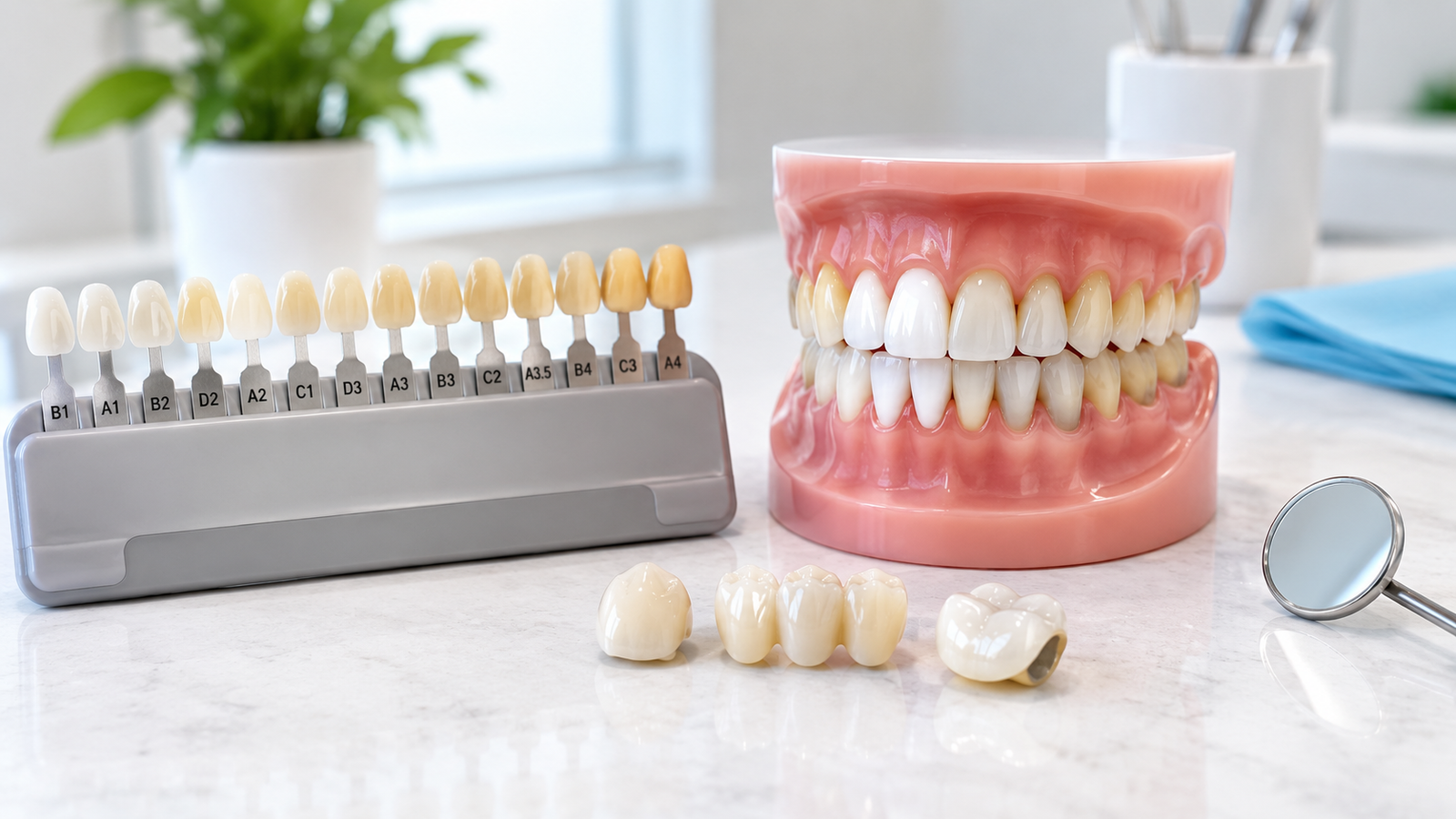
Teeth whitening can brighten natural teeth, but it cannot change the colour of every tooth or dental restoration. Professional bleaching treatments help reduce certain stains and lighten natural tooth structure. However, crowns, veneers, fillings, and dental implants do not respond to whitening agents. Results also depend on the cause of discolouration and the condition of your teeth.
Many people want a brighter smile but feel unsure about whether whitening will produce an even colour across all their teeth.
Some patients have yellowish natural teeth, while others have dark spots, old fillings, crowns, or discolouration after dental treatment.
Although whitening can improve the appearance of many natural teeth, it has limitations.
Understanding these differences helps patients choose suitable treatment and avoid unrealistic expectations.
This guide explains how whitening works, which stains respond, why restorations retain their colour, and when alternative cosmetic dental treatments may help.
What Is Teeth Whitening and How Does It Work?
Teeth whitening uses bleaching agents to lighten natural tooth structure.
Dentists commonly use hydrogen peroxide or carbamide peroxide in whitening treatments.
These agents penetrate the tooth structure and react with certain stain-producing compounds.
This process can reduce discolouration and make teeth appear lighter.
However, whitening does not work equally well on every tooth.
What Causes Teeth to Become Discoloured?
Several factors contribute to changes in tooth colour.
Food and beverages: Tea, coffee, red wine, and strongly coloured foods can contribute to surface staining.
Tobacco: Smoking and other tobacco use can create yellow or brown stains.
Ageing: Changes in enamel and dentine can make teeth appear darker over time.
Dental trauma: An injured tooth may gradually become grey or dark.
Medications: Certain medications, including tetracycline exposure during tooth development, can cause intrinsic staining.
Excess fluoride during tooth development: Dental fluorosis may create white, yellow, or brown areas.
Previous dental treatment: Root canal treatment and some restorative materials can affect tooth appearance.
Because these causes differ, the same whitening method may not produce equal results for everyone. A dentist can assess staining alongside other dental care options.
Myth vs Fact: Can Whitening Change Every Tooth’s Colour?
A common misconception is that whitening makes every visible tooth equally white.
The reality is more complicated.
Myth 1: Whitening Changes the Colour of Every Tooth
Fact: Whitening agents primarily affect natural tooth structure.
Crowns, veneers, bridges, dental implants, and tooth-coloured fillings do not bleach like natural teeth.
If you have visible restorations, their colour may remain unchanged while surrounding natural teeth become lighter.
This can create a noticeable colour difference.
Myth 2: All Natural Teeth Become the Same Shade
Fact: Natural teeth can respond differently to bleaching.
The degree of improvement depends on:
- Existing tooth shade
- Type of staining
- Enamel thickness
- Dentine colour
- Previous dental trauma
- Tooth structure
- Whitening method
Some teeth may become significantly lighter, while others show only a modest change.
Myth 3: Whitening Removes Every Type of Stain
Fact: Certain stains respond better than others.
Yellowish discolouration often responds more predictably than grey or complex intrinsic staining.
Some developmental stains and discolouration from trauma may require additional dental treatment.
Myth 4: Stronger Whitening Products Always Give Better Results
Fact: Higher concentrations do not automatically mean better or safer results.
Improper use can increase tooth sensitivity and irritate or burn the gums.
A dentist should assess whether whitening is appropriate and select a suitable treatment protocol.
Myth 5: Whitening Permanently Changes Tooth Colour
Fact: Whitening results do not last forever.
Teeth can gradually develop new stains from food, drinks, tobacco, and natural ageing.
Some patients may need occasional maintenance under professional guidance.
Which Types of Tooth Stains Respond to Whitening?
The cause of staining plays an important role in determining treatment results.
Dentists generally distinguish between extrinsic and intrinsic discolouration.
Extrinsic Stains
Extrinsic stains develop on the outer tooth surface.
Common causes include tea, coffee, tobacco, and pigmented foods.
Professional cleaning can remove many surface deposits.
Whitening may help improve the underlying tooth shade when patients also have deeper discolouration.
However, surface cleaning and bleaching are different treatments.
Intrinsic Stains
Intrinsic stains occur within the tooth structure.
Possible causes include:
- Tooth development changes
- Certain medications
- Trauma
- Age-related changes
- Previous dental treatment
Some intrinsic stains respond to bleaching, while others respond poorly.
A dentist may recommend bonding, veneers, or another treatment when whitening cannot provide the desired improvement. The clinic’s dental procedures page outlines other treatment options.
Tooth Discolouration After Root Canal Treatment
A tooth may darken after trauma or root canal treatment.
In selected cases, a dentist may consider internal bleaching for a root-canal-treated tooth.
This differs from standard external whitening.
The dentist must first assess the tooth, root canal treatment, and surrounding tissues.
Internal bleaching also carries specific risks, including external cervical root resorption, so appropriate case selection and technique are important.
Why Don’t Crowns, Veneers and Fillings Whiten?
One of the most important teeth whitening limits involves existing dental restorations.
Whitening agents do not predictably change the colour of ceramic, porcelain, composite resin, or other restorative materials.
Dental Crowns
A dental crown covers a prepared tooth. Read more about dental crowns and bridges and how dentists use them to restore teeth.
Dentists may use ceramic, porcelain, zirconia, or other materials to make crowns.
These materials do not respond to bleaching like natural teeth.
For example, if a patient has a crown on a front tooth, whitening the surrounding natural teeth may make the crown appear darker.
Dental Veneers
Veneers cover the visible front surface of teeth.
Although veneers can resist certain stains, whitening products cannot change their original manufactured shade.
Patients who want a different veneer colour may need to discuss replacement.
However, replacing a healthy restoration solely for colour reasons requires careful consideration because the procedure may involve additional tooth preparation.
Tooth-Coloured Fillings
Composite fillings also retain their original shade during whitening.
This can create colour differences between the filling and the surrounding natural tooth.
A dentist may recommend replacing a visible filling after whitening if the mismatch becomes noticeable and replacement is clinically appropriate.
Dental Implants
A dental implant supports a restoration such as a crown.
The implant itself does not have a visible natural tooth shade.
The artificial crown attached to it does not bleach.
Patients with implant crowns in the smile area should discuss shade matching before whitening.
Teeth Whitening Limits: What Results Can You Realistically Expect?
Whitening can improve tooth colour, but patients should understand its limitations.
| Tooth Condition | Expected Response to Whitening | Possible Alternative |
|---|---|---|
| Yellowish natural teeth | Often respond well | Professional whitening |
| Coffee or tea staining | Surface cleaning and whitening may help | Scaling, polishing and whitening |
| Age-related discolouration | Variable improvement | Whitening or cosmetic restoration |
| Grey intrinsic staining | Less predictable | Bonding or veneers |
| Tetracycline staining | May require prolonged treatment; results vary | Veneers or bonding |
| Dental fluorosis | Depends on severity and colour changes | Microabrasion, resin infiltration or veneers |
| Dental crowns | No bleaching effect | Shade assessment or crown replacement |
| Composite fillings | No predictable colour change | Filling replacement when appropriate |
| Implant-supported crowns | No bleaching effect | Restoration replacement if appropriate |
| Dark root-canal-treated tooth | External whitening may be insufficient | Selected internal bleaching or restoration |
A clinical examination helps determine which option is suitable.
Can Whitening Make Teeth Completely White?
Whitening can lighten natural teeth, but it cannot guarantee an extremely white shade.
Natural tooth colour depends on enamel, dentine, and individual anatomy.
Patients who want a highly uniform cosmetic shade may need to discuss restorative treatments.
However, healthy natural teeth should not undergo unnecessary irreversible treatment simply to achieve an artificial shade.
Professional Teeth Whitening vs At-Home Whitening
Patients can choose from different whitening approaches.
However, safety and effectiveness depend on the product, concentration, technique, and dental condition.
Professional In-Office Whitening
A dentist supervises the whitening procedure and takes steps to protect the surrounding soft tissues. Patients can explore the clinic’s dental services before discussing treatment.
Professional treatment may produce noticeable improvement within a shorter treatment period.
However, results vary, and some patients require additional sessions.
Dentist-Supervised Home Whitening
A dentist may provide custom trays and a suitable bleaching gel for home use.
Patients follow instructions regarding gel quantity, wearing time, and treatment duration.
This approach can produce gradual whitening over several days or weeks.
Over-the-Counter Whitening Products
Whitening strips, gels and other products are available for home use.
Their effectiveness varies according to the formulation and concentration.
Improper use may cause sensitivity or gum irritation.
Patients with untreated cavities, gum disease or extensive restorations should seek dental advice before using bleaching products.
Do Whitening Toothpastes Work?
Whitening toothpastes mainly help remove external surface stains.
They generally cannot produce the same degree of intrinsic tooth colour change as peroxide-based bleaching.
Some products may also contain abrasive ingredients, so patients should choose appropriate formulations and avoid aggressive brushing.
What Are the Possible Side Effects of Tooth Bleaching?
Tooth bleaching is generally well tolerated when a dentist selects an appropriate method and supervises treatment.
However, side effects can occur.
Tooth Sensitivity
Temporary sensitivity is one of the most common complaints.
Patients may notice discomfort when consuming cold drinks or breathing cold air.
Sensitivity often improves after treatment, although its intensity varies.
Gum Irritation
Bleaching gel can irritate the gums when it contacts soft tissues.
Improper application may cause temporary redness, soreness, or chemical burns.
Uneven Whitening
Teeth may respond differently because of existing restorations, stains, or variations in natural tooth structure.
This can result in uneven colour.
Temporary Changes in Appearance
Teeth may look unusually bright immediately after certain whitening procedures because of temporary dehydration.
The shade can change as the teeth rehydrate.
Therefore, dentists may wait before making final shade-matching decisions for new restorations.
Who Should Avoid Whitening Without Dental Assessment?
Patients should seek professional evaluation if they have:
- Untreated tooth decay
- Gum disease
- Significant tooth sensitivity
- Cracked or damaged teeth
- Extensive visible restorations
- Unexplained tooth discolouration
- Recent dental trauma
Pregnant or breastfeeding patients should also discuss elective whitening with their dentist because safety evidence remains limited.
How Long Do Teeth Whitening Results Last?
Whitening results vary between individuals.
Some patients maintain a lighter shade for many months, while others notice staining sooner.
The duration depends on oral hygiene, diet, tobacco use, and natural tooth characteristics.
Tips to Maintain a Brighter Smile
- Brush twice daily with fluoride toothpaste.
- Clean between your teeth regularly.
- Attend routine dental check-ups.
- Reduce tobacco use.
- Rinse your mouth with water after strongly coloured drinks.
- Follow your dentist’s advice about maintenance whitening.
- Avoid frequent unsupervised bleaching.
Patients should not repeat whitening excessively in an attempt to achieve an unrealistic shade.
How Can You Choose the Right Whitening Treatment?
Before recommending whitening, a dentist should examine the teeth and identify the cause of discolouration. At Elegance Clinic, patients can consult
Dr. Kreena Shah about appropriate dental assessment and treatment options.
A consultation may include:
- Checking the natural tooth shade.
- Examining enamel and gum health.
- Identifying crowns, veneers and fillings.
- Assessing the type of staining.
- Discussing expected shade improvement.
- Explaining sensitivity and other risks.
- Planning restoration shade matching when necessary.
Patients should also understand that whitening is a cosmetic procedure rather than a substitute for dental cleaning or treatment of oral disease.
Frequently Asked Questions
1. Can teeth whitening change the colour of all my teeth?
No. Teeth whitening can lighten natural tooth structure, but it cannot change the shade of crowns, veneers, composite fillings or implant-supported crowns. Even natural teeth may respond differently depending on their existing colour and the cause of staining.
2. Does tooth bleaching work on yellow and grey teeth?
Yellowish teeth often respond better to bleaching than grey teeth. However, results depend on the cause of discolouration. Some intrinsic stains require prolonged treatment or alternative cosmetic procedures. A dentist can assess whether bleaching is likely to provide a noticeable improvement.
3. Will whitening make my crowns look darker?
Whitening does not darken crowns. However, natural teeth may become lighter while crowns retain their original shade. This difference can make a crown appear darker by comparison. A dentist can help plan whitening and restoration shade matching.
4. Can I whiten my teeth if I have fillings?
Yes, some patients with fillings can undergo whitening. However, the fillings themselves will not change colour. If a visible filling no longer matches the surrounding tooth after whitening, your dentist may discuss whether replacement is appropriate.
5. Is professional teeth whitening permanent?
No. Whitening results gradually change as new stains develop and natural ageing continues. Good oral hygiene, regular dental care and appropriate maintenance can help preserve the result. Avoid repeating bleaching without professional guidance.
6. Is teeth whitening safe for sensitive teeth?
Some patients with sensitive teeth can undergo whitening using a modified treatment plan. However, bleaching may temporarily increase sensitivity. A dentist should first identify the cause of discomfort and determine whether whitening is suitable or whether another dental problem needs treatment.
Conclusion
Teeth whitening can improve the colour of many natural teeth, but it cannot make every tooth or restoration the same shade.
Yellowish natural teeth often respond well to bleaching, while complex intrinsic stains may show less predictable improvement.
Crowns, veneers, fillings and implant-supported restorations retain their existing colour.
The best approach starts with identifying the cause of discolouration and discussing realistic expectations.
A qualified dentist can evaluate tooth health, existing restorations, and whitening suitability before recommending treatment.
Understanding the limitations of whitening helps patients make informed decisions and avoid unnecessary cosmetic procedures.
