

|
Getting your Trinity Audio player ready...
|
✓ Medically reviewed by Dr. Ashutosh Shah, Plastic, Reconstructive & Cosmetic Surgeon (M.Ch., DNB)
Should you stop brushing if your gums bleed?
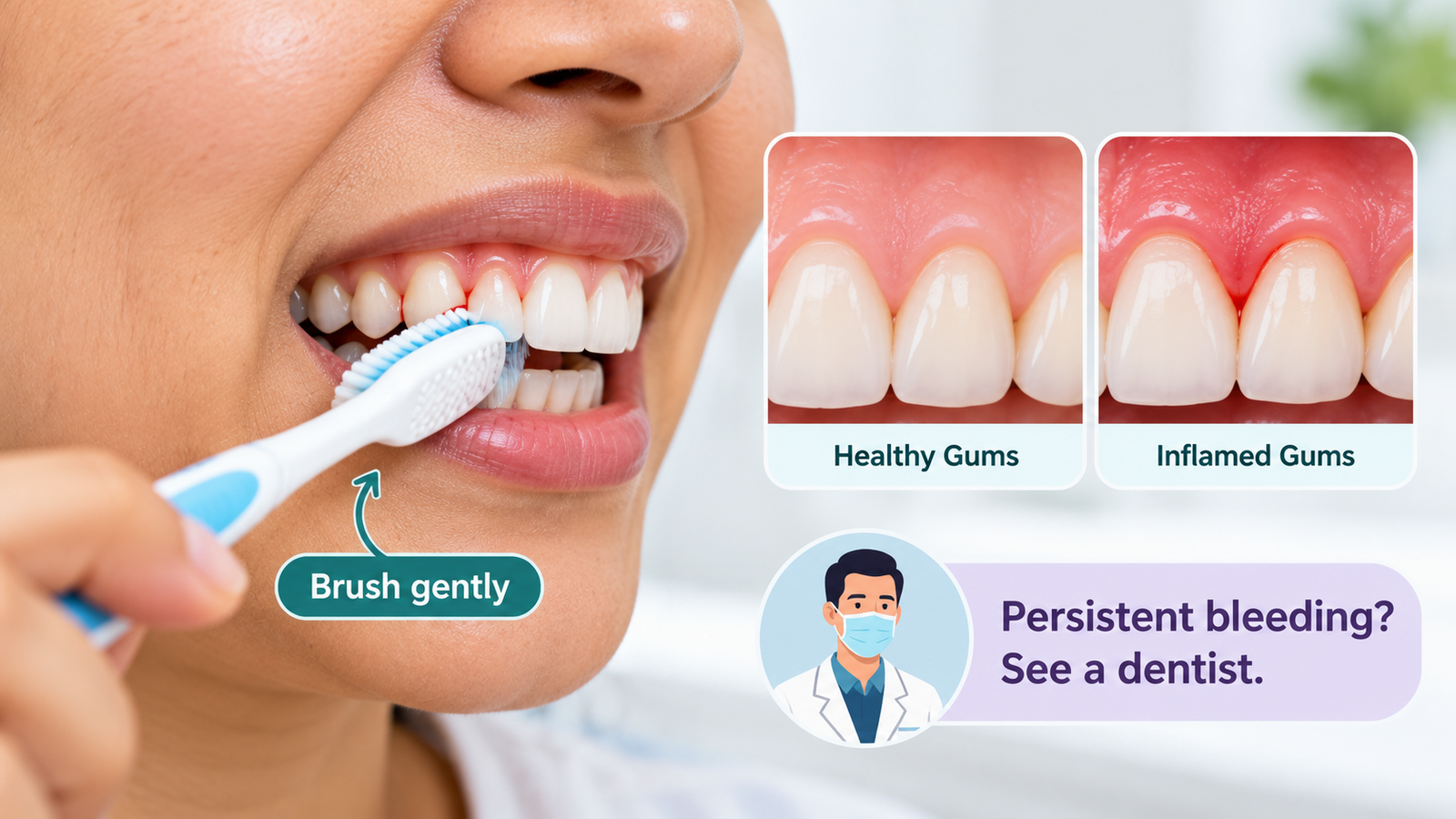
No, you should not usually stop brushing altogether if your gums bleed. Bleeding gums while brushing can be an early sign of gingivitis, often caused by plaque accumulating along the gumline. Continue cleaning your teeth gently with a soft-bristled toothbrush, use suitable interdental cleaning and arrange a dental check if bleeding persists or recurs. Avoid scrubbing harder or ignoring the bleeding.
Myth vs fact: What does bleeding while brushing mean?
| Myth | Fact |
|---|---|
| Bleeding means I should stop brushing. | Stopping can allow more plaque to accumulate. Continue gentle cleaning unless a dentist advises otherwise. |
| I should brush harder to remove the cause. | Aggressive brushing can irritate the gums and damage tooth surfaces. Use gentle pressure. |
| Bleeding gums are always caused by brushing. | Plaque-related gingivitis is common, but other oral or medical factors may contribute. |
| Bleeding is normal, so I can ignore it. | Repeated bleeding deserves attention and may indicate gum inflammation or another problem. |
| Mouthwash alone will solve bleeding gums. | Mouthwash does not replace brushing, interdental cleaning or professional treatment when needed. |
Why do gums bleed when you brush?
Healthy gums generally should not bleed regularly during normal brushing. Bleeding can happen when gum tissue is inflamed or irritated.
Common causes include:
- Plaque buildup: Bacteria accumulate along the gumline and irritate the gums.
- Gingivitis: Early gum inflammation can cause redness, swelling and bleeding.
- Brushing too hard: Excessive pressure or a hard-bristled brush may injure the gum tissue.
- Inconsistent flossing or interdental cleaning: Gums may bleed when cleaning is restarted, particularly if inflammation is already present.
- Dental deposits: Hardened plaque, known as tartar, may require professional removal.
- Other contributing factors: Some medicines, smoking, hormonal changes and certain health conditions can affect gum health or bleeding.
The cause cannot be confirmed from bleeding alone. A dentist can examine the gums and determine whether professional cleaning, gum treatment or further assessment is needed.
What are the symptoms of gingivitis?
Gingivitis is inflammation of the gums and is often associated with plaque accumulation. Possible symptoms include:
- Bleeding during brushing or flossing
- Red or swollen gums
- Tenderness along the gumline
- Persistent bad breath
- Gums that look shiny or inflamed
Gingivitis may cause little pain, so the absence of discomfort does not necessarily mean the gums are healthy.
If gum disease progresses, it can affect the tissues supporting the teeth. Signs such as gum recession, persistent bad breath, loose teeth or changes in the way teeth fit together need dental assessment.
How should you brush when your gums bleed?
Use a gentle, consistent routine rather than avoiding the area.
- Choose a soft-bristled toothbrush.
- Hold it at approximately a 45-degree angle toward the gumline.
- Use small, gentle movements instead of forceful horizontal scrubbing.
- Clean all tooth surfaces, including the gumline.
- Brush for about two minutes, twice daily, using fluoride toothpaste.
- Clean between your teeth daily with floss or appropriately sized interdental brushes.
- Replace a worn toothbrush and avoid pressing hard.
- Spit out toothpaste after brushing; follow your dentist’s advice on rinsing.
If a particular area is very painful, bleeding heavily or visibly injured, seek dental advice rather than repeatedly brushing the injury. Do not stop routine oral hygiene for several days simply because mild bleeding occurs.
Does flossing make bleeding gums worse?
Flossing may cause bleeding when the gums are already inflamed or when the technique is too forceful. Gentle, regular interdental cleaning can help remove plaque from areas a toothbrush cannot reach.
Guide the floss carefully between the teeth rather than snapping it into the gums. If interdental brushes are more suitable, a dental professional can recommend the right size.
If bleeding continues despite gentle, consistent cleaning, arrange an examination. Persistent bleeding should not be assumed to be a normal part of flossing.
What is the treatment for bleeding gums?
Treatment depends on the cause. If plaque-related gingivitis is responsible, improving daily cleaning and having professional dental cleaning when indicated can often reduce inflammation.
A dentist may recommend:
- Reviewing brushing and interdental-cleaning technique
- Professional removal of plaque and tartar
- Assessment for gum pockets or signs of periodontitis
- Treatment of other dental problems that contribute to irritation
- Review of medicines or medical factors if bleeding is unusual or persistent
Do not start antibiotics or stop prescribed medicines on your own to treat bleeding gums. Medication changes should be discussed with the prescribing clinician.
When should you see a dentist?
Book a dental appointment if bleeding happens repeatedly, continues despite gentle oral hygiene, or is accompanied by swollen gums, persistent bad breath, gum recession or tooth mobility.
Seek urgent dental care for severe or persistent bleeding, significant swelling, pus, fever or severe pain. If heavy bleeding will not stop, or bleeding occurs with difficulty breathing or swallowing, seek emergency medical care.
Bleeding from multiple areas, frequent unexplained bruising or bleeding elsewhere in the body may require prompt medical assessment as well as dental evaluation.
If your gums bleed regularly while brushing, a dental examination can help identify whether plaque buildup, gingivitis or another gum problem is responsible. Read about tips for maintaining healthy teeth and gums for everyday oral-hygiene guidance, explore the clinic’s dental services to learn about available care, and find out when gum surgery and contouring may be considered for specific gum conditions. If bleeding persists or keeps returning, arrange a dental assessment rather than relying on home care alone.
Frequently asked questions
Should I stop brushing if my gums bleed?
Usually, no. Continue brushing gently with a soft-bristled toothbrush and clean between your teeth carefully. Stopping routine cleaning can allow plaque to build up and worsen inflammation. If bleeding is heavy, persistent or associated with pain or swelling, seek dental advice.
Can gingivitis go away on its own?
Mild gingivitis may improve when plaque is consistently removed, but it should not be ignored. Professional cleaning may be necessary if tartar has accumulated. A dentist can assess whether the inflammation is limited to the gums or whether there are signs of more advanced gum disease.
What is the treatment for bleeding gums?
Treatment depends on the cause. It may include improved brushing and interdental cleaning, professional scaling to remove tartar, and assessment for gum disease or other contributing factors. Persistent or unexplained bleeding may require further dental or medical evaluation.
Is bleeding while flossing normal?
Bleeding can occur when gums are inflamed or flossing technique is too forceful. Use gentle technique and clean between the teeth consistently. If bleeding continues, becomes heavy or is accompanied by pain or swelling, consult a dentist.
Can brushing too hard cause bleeding gums?
Yes. Brushing with excessive pressure or a hard-bristled toothbrush can irritate the gums. Use a soft brush and gentle movements. However, do not assume brushing pressure is the only cause, especially if bleeding happens regularly.
When is bleeding from the gums an emergency?
Heavy bleeding that does not stop, rapidly increasing swelling, severe pain or signs of spreading infection require urgent assessment. Difficulty breathing or swallowing is an emergency. Frequent unexplained bleeding or bruising should also be discussed promptly with a healthcare professional.
Final advice
Bleeding gums are a reason to improve your oral-care routine and investigate the cause, not usually a reason to stop brushing. Clean gently, use fluoride toothpaste and arrange a dental assessment if bleeding recurs or does not improve. Early attention can help identify gingivitis and prevent gum problems from progressing.
