

|
Getting your Trinity Audio player ready...
|
✓ Medically reviewed by Dr. Ashutosh Shah, Plastic, Reconstructive & Cosmetic Surgeon (M.Ch., DNB)
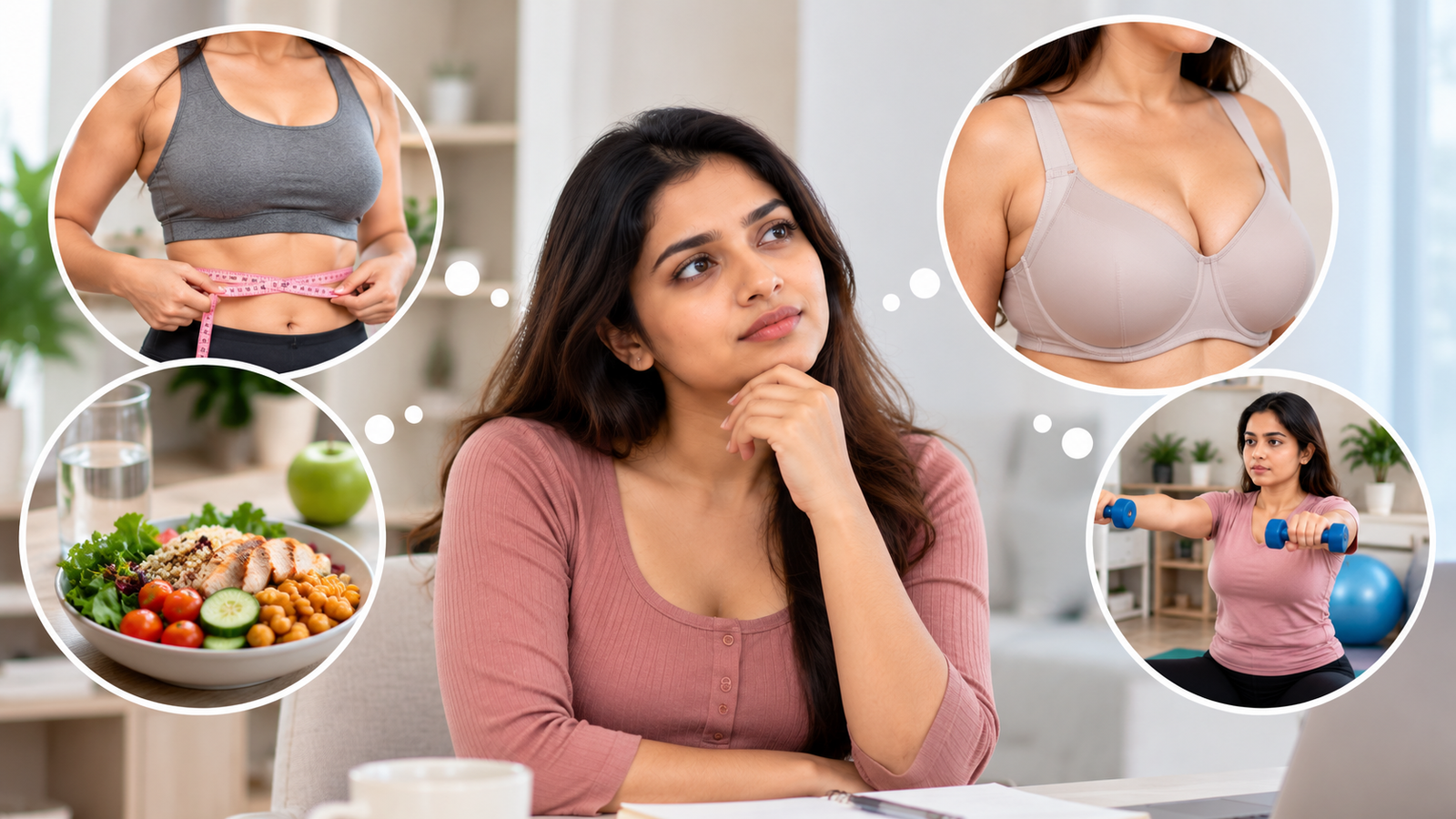
Breast reduction without surgery may be possible to a limited extent through weight loss, particularly when breasts contain a higher proportion of fatty tissue. A supportive bra can relieve discomfort but does not permanently reduce breast size. Exercise and creams cannot reliably shrink glandular tissue. The best approach depends on breast composition, symptoms and personal goals.
Women with larger breasts sometimes experience neck pain, shoulder discomfort, back strain, skin irritation or difficulty finding comfortable clothing. These problems may affect daily activities, exercise and overall quality of life.
Before considering surgery, many women want to know whether losing weight, wearing a better bra or following a specific exercise routine can help.
Understanding which methods provide actual size reduction and which only improve comfort can help set realistic expectations.
At Elegance Clinic, Dr. Ashutosh A Shah, MS, MCh (Plastic Surgery), DNB, discusses breast reduction options according to breast size, physical symptoms, skin quality and individual expectations. A consultation can help determine whether conservative measures are sufficient or surgical treatment may be appropriate.
What Is Breast Reduction Without Surgery?
Breast reduction without surgery refers to methods intended to decrease breast size or manage symptoms without an operation.
These approaches may include:
- Weight management
- Supportive bras
- Physical exercise
- Posture improvement
- Physiotherapy
- Skin care
- Treatment of underlying hormonal or medical conditions when present
However, these methods do not all work in the same way.
Weight loss may reduce breast fat in some women. Supportive clothing and physical therapy mainly improve comfort rather than breast volume.
No cream, massage technique or exercise programme has been proven to reliably remove significant amounts of glandular breast tissue.
Why Are Some Breasts Naturally Large?
Breast size varies considerably between women.
The breasts contain several types of tissue, including fat, milk-producing glandular tissue, connective tissue and skin.
Their size is influenced by multiple factors.
Genetics
Inherited characteristics play an important role in natural breast development.
Some women have larger breasts regardless of their overall body weight.
Hormonal Changes
Hormonal changes during puberty, pregnancy and other life stages can influence breast size.
Body Fat Distribution
Breasts contain fatty tissue, but the proportion differs between individuals.
Women with more fatty tissue in the breasts may notice size changes when their body weight changes.
Pregnancy
Breast tissue often enlarges during pregnancy as the body prepares for milk production.
After pregnancy and breastfeeding, breast volume may decrease or change in shape.
Medicines and Medical Conditions
Certain medicines and uncommon medical conditions can contribute to breast enlargement.
Sudden, rapid or unusual breast growth should be medically evaluated rather than treated as an ordinary cosmetic concern.
Myth vs Fact: Can Non-Surgical Methods Reduce Breast Size?
| Common claim | Medical reality |
|---|---|
| Losing weight always makes breasts smaller | Weight loss may reduce breast fat, but results vary |
| A supportive bra permanently reduces breast size | Bras improve support and comfort but do not remove tissue |
| Chest exercises shrink large breasts | Exercise strengthens muscles but does not selectively remove breast tissue |
| Breast reduction creams dissolve fat | Reliable clinical evidence for meaningful reduction is lacking |
| Massage makes breasts smaller | Massage has not been shown to reduce breast volume |
| A special diet targets breast fat | Fat loss cannot be directed to one specific body area |
| Surgery is the only way to relieve discomfort | Conservative measures can improve symptoms in some women |
| Every woman with large breasts needs surgery | Treatment depends on symptoms, preferences and medical findings |
1. Can Weight Loss Reduce Breast Size Naturally?
Weight loss may decrease breast size in some women because breasts contain fatty tissue.
When overall body fat decreases, some breast fat may also be lost.
However, the amount of reduction is unpredictable.
Who May Notice a Reduction?
Women whose breasts contain a higher proportion of fatty tissue may notice more change.
Others have a greater proportion of glandular tissue, which may not respond substantially to weight loss.
Genetics, age and hormonal factors also influence the result.
How Much Smaller Can Breasts Become?
There is no reliable formula that predicts how many cup sizes a person will lose.
Some women notice a meaningful reduction after weight loss. Others experience only a small change despite losing substantial body weight.
Cup size is also affected by band size and bra design, making it an imperfect measure of breast volume.
Can Weight Loss Cause Breast Sagging?
Yes, particularly after significant weight loss.
As breast volume decreases, previously stretched skin may not fully tighten.
This can create:
- Reduced upper breast fullness
- Loose skin
- Changes in breast shape
- Increased drooping
- Lower nipple position
Therefore, losing weight does not necessarily produce a smaller, firmer breast shape.
Should You Lose Weight Before Breast Reduction Surgery?
For patients who are above their preferred healthy weight, gradual and sustainable weight management may be worth discussing before surgery.
A stable weight can make surgical planning more predictable.
However, weight loss should not be treated as a mandatory solution for every woman with large breasts.
Some women experience significant symptoms even at a healthy body weight.
2. Can a Supportive Bra for Heavy Breasts Replace Surgery?
A well-fitted bra can improve comfort and reduce breast movement.
For women experiencing discomfort during walking, exercise or daily activities, proper support may make a noticeable difference.
However, a supportive bra for heavy breasts does not permanently reduce breast size.
How Does a Supportive Bra Help?
A suitable bra distributes breast weight across the band, cups and straps.
Potential benefits include:
- Reduced breast movement
- Better comfort during exercise
- Less pressure from poorly fitted straps
- Improved clothing fit
- Reduced friction beneath the breasts
- Improved support during daily activities
These benefits depend on correct sizing and individual needs.
What Should You Look for in a Supportive Bra?
Consider the following features:
A firm, comfortable band: Most support should come from the band rather than the shoulder straps alone.
Appropriate cup coverage: Cups should contain breast tissue without excessive compression or spilling.
Comfortable straps: Wider, adjustable straps may reduce localised pressure.
Suitable sports support: High-impact activities may require specialised sports bras.
Breathable materials: Moisture-managing fabrics can help reduce discomfort beneath the breasts.
Can a Bra Reduce Neck and Shoulder Pain?
A better-fitting bra may relieve some discomfort.
Nevertheless, pain can have several causes, including posture, muscle strain and other medical conditions.
Persistent symptoms deserve proper assessment.
For some women, supportive bras provide adequate relief. Others continue to experience discomfort despite trying different designs.
3. Can Exercise Make Large Breasts Smaller?
Exercise supports general health, physical fitness and weight management.
However, it cannot directly target breast tissue for fat loss.
The breasts do not contain muscles that can be exercised to reduce their volume.
Which Exercises May Help?
Activities that strengthen the chest, back and shoulders may improve posture and physical comfort.
Examples include:
- Wall push-ups
- Modified push-ups
- Resistance-band rows
- Shoulder blade exercises
- Chest presses
- Gentle upper-back strengthening
- Low-impact aerobic activity
These exercises may help some women manage discomfort associated with heavy breasts.
Do Chest Exercises Burn Breast Fat?
No.
Chest exercises strengthen the pectoral muscles beneath the breasts.
They do not selectively burn fat from the breast area or remove glandular tissue.
Overall physical activity may contribute to weight loss, which can indirectly affect breast volume in some individuals.
What If Large Breasts Make Exercise Difficult?
Women with heavy breasts may find running, jumping or other high-impact activities uncomfortable.
Low-impact options may be easier to tolerate, including:
- Walking
- Stationary cycling
- Swimming
- Gentle strength training
- Modified yoga
- Low-impact fitness routines
A supportive sports bra may also improve comfort.
Choose activities according to your fitness level and any existing medical conditions.
4. Can Creams, Oils or Massage Reduce Breast Size?
Products marketed for natural breast reduction often claim to tighten skin, dissolve fat or shrink breast tissue.
These claims should be viewed cautiously.
Do Breast Reduction Creams Work?
There is no reliable clinical evidence that topical creams can meaningfully reduce breast volume.
Moisturisers may improve skin hydration and appearance.
However, they cannot reliably remove breast fat or glandular tissue.
Can Massage Reduce Breast Size?
Massage may provide temporary relaxation or comfort.
It has not been demonstrated to produce a lasting reduction in breast volume.
Aggressive massage can also irritate sensitive tissue.
Do Herbal Supplements Reduce Breast Size?
Herbal products marketed for breast reduction may contain ingredients with uncertain effectiveness and safety.
Some can interact with medicines or affect hormonal pathways.
Patients should avoid using unregulated products that promise rapid or dramatic changes.
5. Can Diet Reduce Breast Size?
A balanced diet can support gradual weight management.
If overall body fat decreases, breast size may also change.
However, no particular food has been proven to selectively shrink breast tissue.
Foods Commonly Promoted for Breast Reduction
Online claims often mention:
- Green tea
- Flaxseeds
- Ginger
- Citrus fruits
- Specific herbal drinks
- Low-fat diets
These foods may be part of a balanced eating pattern, but they should not be presented as proven breast reduction treatments.
What Is a More Realistic Approach?
Focus on sustainable nutrition rather than restrictive diets.
A balanced eating plan generally includes adequate protein, vegetables, fruits, whole grains and healthy fats.
For individuals who need weight management support, a registered dietitian or qualified healthcare professional can provide personalised guidance.
6. Can Physiotherapy Help With Heavy Breast Symptoms?
Physiotherapy may help manage some musculoskeletal symptoms associated with larger breasts.
A physiotherapist can assess posture, strength, movement and contributing sources of pain.
Treatment may include:
- Upper-back strengthening
- Shoulder stabilisation exercises
- Postural training
- Mobility exercises
- Activity modification
- Advice on comfortable movement
These approaches do not remove breast tissue.
However, they may improve function and reduce discomfort in selected patients.
If pain continues despite conservative measures, further medical assessment may be appropriate.
When Are Non-Surgical Methods Enough?
Conservative management may be reasonable when breast size is not causing significant ongoing problems.
For example, a woman with mild exercise discomfort may find that a better sports bra and changes in activity provide sufficient relief.
Weight management may also help when breast volume is partly related to overall body fat.
Non-surgical care may be suitable when:
- Symptoms are mild
- A supportive bra provides adequate comfort
- Physical activity remains manageable
- Skin irritation is occasional and responds to care
- Breast size is not causing significant functional limitations
- The patient does not want surgery
The goal is not necessarily to make breasts smaller.
For some women, improved comfort is enough.
When Might Breast Reduction Surgery Be Considered?
Breast reduction surgery, also called reduction mammoplasty, removes selected breast tissue, fat and excess skin to reduce breast volume and reshape the breasts.
It may be considered when large breasts contribute to persistent physical symptoms or significant functional difficulties.
Common concerns include:
- Ongoing neck, shoulder or back discomfort
- Shoulder strap grooving
- Recurrent skin irritation beneath the breasts
- Difficulty participating in physical activity
- Problems finding comfortable clothing
- Significant breast heaviness
- Difficulty maintaining comfortable posture
- Personal dissatisfaction with breast size
Surgery is not automatically necessary because breasts are large.
The decision depends on symptoms, overall health, anatomy and personal preferences.
Patients can explore the clinic’s breast treatment services for information about available procedures.
Breast Reduction Without Surgery vs Surgical Reduction
The main difference is whether breast tissue is physically removed.
| Factor | Non-surgical methods | Breast reduction surgery |
|---|---|---|
| Reduces breast fat | Possible with overall weight loss | Removes selected fat and tissue |
| Reduces glandular tissue | Not reliably | Yes |
| Removes excess skin | No | Yes |
| Improves support | Bras can help temporarily | Reduces breast weight |
| May relieve discomfort | Yes, in selected cases | Often improves breast-related symptoms |
| Requires anaesthesia | Usually no | Yes |
| Produces surgical scars | No | Yes |
| Requires recovery time | Minimal for most methods | Several weeks of activity modification |
| Guarantees symptom relief | No | No |
| Changes breast shape | Sometimes indirectly | Yes, through reshaping |
Neither approach is appropriate for every patient.
A qualified surgeon can explain whether conservative treatment, surgery or continued observation best suits the individual situation.
Does Breast Reduction Surgery Also Lift the Breasts?
Breast reduction commonly includes reshaping breast tissue and repositioning the nipple-areola complex.
Therefore, the operation often improves breast position as well as reducing volume.
However, breast reduction and breast lift surgery have different primary goals.
A breast lift mainly reshapes and elevates existing breast tissue, while breast reduction removes tissue to decrease breast size.
Women whose main concern is drooping rather than heaviness may be better suited to a lift.
For more information, review which breast surgery may suit different concerns.
What Are the Risks of Breast Reduction Surgery?
Breast reduction is a surgical procedure and carries potential complications.
These may include:
- Bleeding
- Infection
- Visible scars
- Delayed wound healing
- Changes in nipple or breast sensation
- Breast asymmetry
- Fat necrosis
- Changes in breast shape
- Difficulty or inability to breastfeed
- Anaesthesia-related complications
- Rare loss of nipple-areola tissue
- Need for additional surgery
The likelihood of complications varies according to individual health, surgical technique and other factors.
Smoking, certain medical conditions and poor wound healing can increase risks.
Patients should discuss these considerations before making a decision.
How Long Does Recovery Take After Breast Reduction?
Recovery varies depending on the extent of surgery and the patient’s health.
Many patients return to light daily activities within approximately one to two weeks, although some need longer.
Swelling and tenderness are common during early recovery.
Heavy lifting, strenuous exercise and high-impact activities are usually restricted for several weeks according to the surgeon’s instructions.
Final breast shape and scar appearance continue to change over subsequent months.
Patients should follow their own surgical team’s recovery guidance rather than relying on a fixed timeline.
How to Decide Between Weight Loss, Supportive Bras and Surgery
The best approach depends on the main problem you want to address.
If Your Main Concern Is Breast Size
Weight loss may help when a meaningful proportion of breast volume comes from fat.
If breast size remains large despite a stable healthy weight, other options may be discussed.
If Your Main Concern Is Discomfort
A supportive bra, activity modification and physiotherapy may provide relief.
Persistent symptoms may justify a surgical consultation.
If Your Main Concern Is Sagging
Weight loss and supportive bras do not reliably reposition breast tissue.
A breast lift or reduction may be considered depending on breast size and anatomy.
If Your Main Concern Is Both Size and Heaviness
Breast reduction surgery may address volume and reshape the breasts.
The potential benefits must be weighed against scarring, recovery and surgical risks.
What Happens During a Breast Reduction Consultation?
A consultation helps clarify whether surgery is suitable and what alternatives are available.
Step 1: Discuss Your Symptoms
Explain whether you experience discomfort, skin irritation, difficulty exercising or other concerns.
Step 2: Review Medical History
The surgeon may ask about weight changes, medicines, smoking, previous breast procedures and future pregnancy plans.
Step 3: Assess Breast Anatomy
Breast size, skin quality, nipple position and asymmetry are examined.
Step 4: Discuss Treatment Options
The surgeon explains conservative measures, surgical reduction and other procedures where relevant.
Step 5: Understand Recovery and Risks
Patients should receive information about scarring, possible changes in sensation, breastfeeding considerations and expected recovery.
For consultation arrangements, visit the Elegance Clinic appointment page.
Frequently Asked Questions
1. Can Breast Reduction Without Surgery Really Work?
Breast reduction without surgery may produce a limited decrease in breast volume through overall weight loss, particularly when the breasts contain more fatty tissue. However, non-surgical methods cannot reliably remove glandular tissue or excess skin.
2. Can Losing Weight Reduce Breast Size by One or Two Cup Sizes?
Some women notice a reduction in breast size after weight loss, but the amount varies. Genetics, breast composition and the degree of weight change influence results. A specific cup-size reduction cannot be guaranteed.
3. Can a Supportive Bra for Heavy Breasts Replace Surgery?
A supportive bra for heavy breasts may improve comfort, reduce movement and ease some symptoms. However, it cannot permanently reduce breast volume. Women with persistent physical difficulties may still consider a surgical consultation.
4. Which Exercises Help Reduce Breast Size Naturally?
No exercise selectively removes breast fat or glandular tissue. Regular physical activity may support overall weight loss, while chest and back exercises can improve strength and posture. These changes may help comfort but do not guarantee smaller breasts.
5. When Should I Consider Breast Reduction Surgery?
Breast reduction may be considered when large breasts cause persistent discomfort, recurrent skin irritation or difficulty with daily activities despite suitable conservative measures. A qualified plastic surgeon can assess whether surgery is appropriate.
Key Takeaways
- Breast reduction without surgery may be possible to a limited extent through overall weight loss.
- The amount of breast size reduction varies between individuals.
- Supportive bras improve comfort but do not permanently shrink breast tissue.
- Exercise strengthens muscles but cannot selectively reduce breast fat.
- Creams, oils and massage are not proven methods for meaningful breast reduction.
- Physiotherapy may help manage posture-related or muscular discomfort.
- Non-surgical care can be sufficient when symptoms are mild.
- Breast reduction surgery removes tissue and can reshape the breasts.
- Surgery involves scarring, recovery and potential complications.
- Treatment decisions should reflect symptoms, anatomy and personal preferences.
Conclusion
Breast reduction without surgery may help some women manage breast heaviness and achieve limited size changes.
Weight loss can reduce breast fat in selected individuals, while supportive bras and physiotherapy may improve comfort. However, exercise, creams and massage cannot reliably remove substantial breast tissue.
For women with persistent physical symptoms, breast reduction surgery may offer an alternative by removing tissue and reshaping the breasts.
The most appropriate choice depends on breast composition, symptom severity, overall health and personal goals.
If breast heaviness continues to affect your comfort or daily activities, a professional assessment can help clarify suitable options. You can book a consultation at Elegance Clinic to discuss your concerns and treatment preferences.
