

|
Getting your Trinity Audio player ready...
|
✓ Medically reviewed by Dr. Ashutosh Shah, Plastic, Reconstructive & Cosmetic Surgeon (M.Ch., DNB)
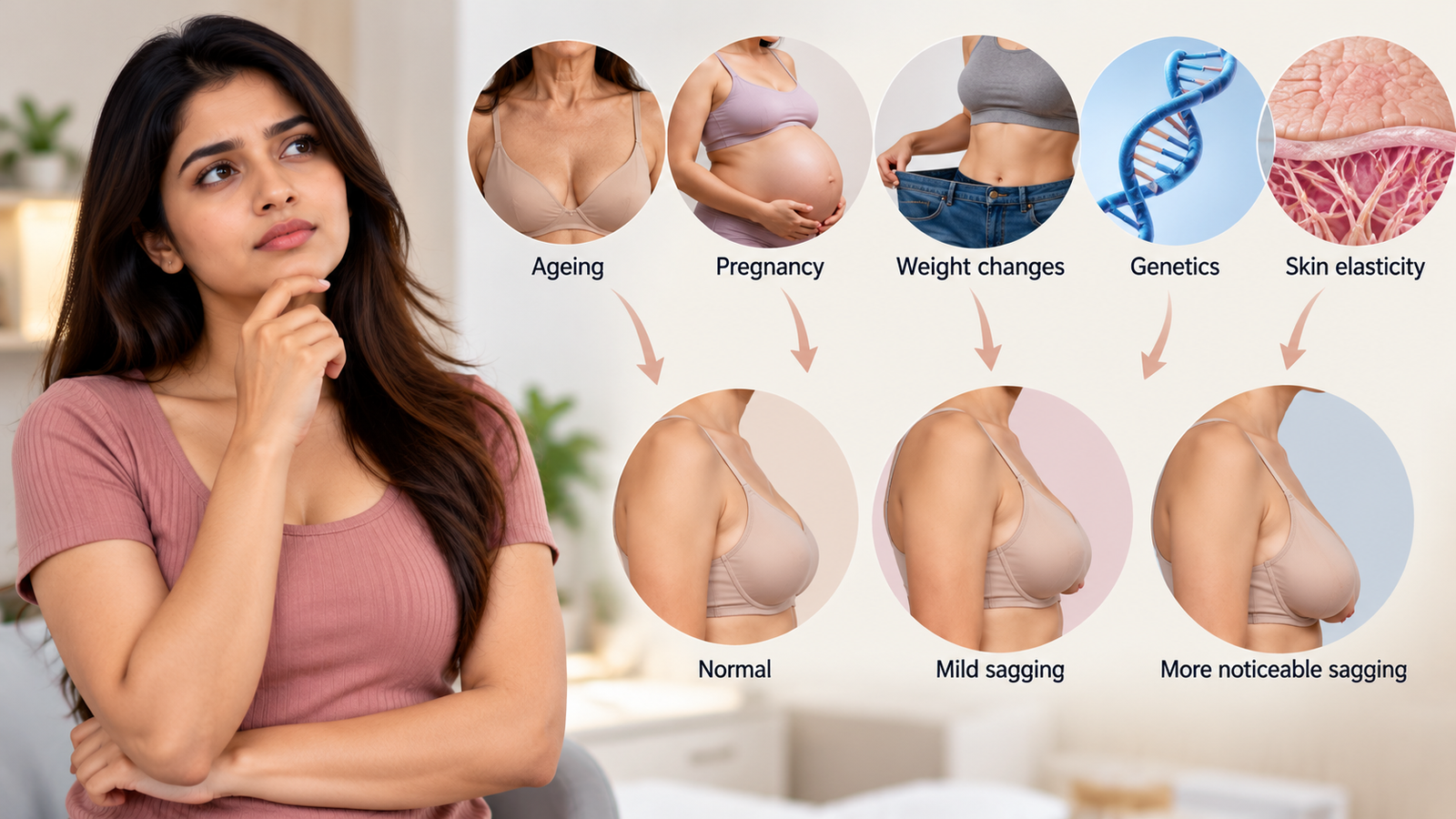
Why do breasts sag? Breast sagging, medically called breast ptosis, occurs when the skin and supporting tissues gradually stretch, allowing the breasts and nipples to move downward. Ageing, pregnancy-related changes, weight fluctuations, genetics, and breast size can contribute. Sagging is a common physical change, not necessarily a medical problem, and treatment is optional.
Many women notice changes in breast shape at different stages of life. Some experience sagging after pregnancy, while others observe gradual drooping with age or after significant weight loss.
Understanding the causes of breast ptosis can help distinguish normal changes from concerns that may benefit from medical evaluation.
At Elegance Clinic, Dr. Ashutosh Shah, MS, MCh (Plastic Surgery), DNB, discusses breast shape concerns and suitable surgical options based on individual anatomy, skin quality, and personal expectations.
What Is Breast Sagging or Breast Ptosis?
Breast ptosis is the medical term for downward displacement of the breast and nipple relative to the natural breast fold.
The breasts contain fatty tissue, glandular tissue, connective tissue, and skin. Unlike some other body structures, they do not contain muscles that can directly lift breast tissue.
As skin elasticity and structural support change, the breasts may gradually settle into a lower position.
Common signs include:
- Nipples pointing downward
- Reduced upper breast fullness
- Loose or stretched breast skin
- Breast tissue resting lower on the chest
- Changes in breast shape
- Nipples positioned at or below the breast fold
The degree of sagging varies considerably between individuals.
Importantly, breast ptosis is not automatically a sign of disease or poor health.
Why Do Breasts Sag? The 7 Main Causes
Several factors influence breast shape and position. Some are related to natural ageing, while others involve changes in breast volume or skin support.
1. Ageing and Reduced Skin Elasticity
Ageing is one of the most common contributors to breast sagging.
Over time, skin changes collagen and elastin, the proteins that help maintain firmness and flexibility.
As skin becomes less elastic, it may provide less support to the underlying breast tissue.
Age-related changes may include:
- Reduced skin firmness
- Changes in connective tissue
- Loss of upper breast fullness
- Gradual nipple descent
- Increased skin laxity
These changes occur at different rates depending on genetics, breast size, and other factors.
Although skincare can support general skin health, creams cannot reliably reverse established breast ptosis.
2. Pregnancy-Related Breast Changes
Pregnancy can significantly affect breast size and shape.
Hormonal changes cause the breasts to develop and enlarge in preparation for milk production.
As breast volume increases, the skin and supporting tissues may stretch.
After pregnancy, the breasts may become smaller or lose some of their previous fullness.
This change can leave the skin relatively loose, contributing to a drooping appearance.
Does Breastfeeding Cause Sagging?
Breastfeeding itself has not been consistently shown to be an independent cause of breast sagging.
Pregnancy-related breast enlargement, age, body mass index, number of pregnancies, and other factors can influence breast shape.
Therefore, women should not avoid breastfeeding solely because they fear it will cause breast ptosis.
Why Do Some Breasts Sag After Pregnancy?
Sagging breasts after pregnancy may result from a combination of stretched skin, changing breast volume, and individual tissue characteristics.
Some women experience mild changes, while others notice substantial differences in breast position.
The extent of these changes cannot be predicted precisely.
3. Significant Weight Loss or Weight Fluctuations
Breasts contain varying amounts of fatty tissue.
When body weight changes, breast volume may also increase or decrease.
Significant weight loss can reduce breast fullness, sometimes leaving excess skin behind.
Repeated weight gain and loss may contribute to stretching and changes in skin elasticity.
Common changes include:
- Reduced breast projection
- Loose skin
- Loss of upper breast fullness
- A flatter breast appearance
- Increased downward positioning
Gradual weight management may support overall health, but it cannot guarantee that breast sagging will be prevented.
4. Genetics and Natural Breast Structure
Genetics influence many aspects of breast appearance.
Inherited characteristics may affect:
- Breast size
- Skin elasticity
- Connective tissue properties
- Breast shape
- Tissue distribution
- Natural nipple position
Some women have naturally lower breast positions even at a younger age.
Others retain relatively firm breast contours for longer.
These differences are normal and do not necessarily indicate a health problem.
5. Larger Breast Size
Larger breasts may experience greater mechanical loading on the skin and supporting tissues.
Over time, this can contribute to stretching and downward movement.
However, breast size alone does not determine whether sagging will occur.
Skin quality, genetics, age, and weight history also influence breast position.
Women with smaller breasts can develop ptosis, while some women with larger breasts experience relatively little drooping.
6. Gravity and Long-Term Tissue Changes
Gravity acts continuously on breast tissue.
Its effects interact with breast weight, skin elasticity, and structural support.
Over time, these combined influences may contribute to changes in breast position.
Gravity should not be viewed as the only cause of sagging.
Breast ptosis is usually multifactorial, meaning several factors contribute simultaneously.
7. Smoking and Skin Health
Smoking can negatively affect skin health through changes in circulation and connective tissue.
Tobacco exposure is associated with premature skin ageing and reduced healing capacity.
These effects may contribute to loss of skin elasticity.
Avoiding tobacco supports general health and is particularly important for patients considering breast surgery because smoking increases the risk of wound-healing complications.
What Are the Different Grades of Breast Sagging?
Plastic surgeons may assess breast ptosis by examining nipple position relative to the inframammary fold, the natural crease beneath the breast.
The Regnault classification is one commonly used system.
| Classification | General description |
|---|---|
| Grade I — Mild ptosis | Nipple lies at or slightly below the breast fold |
| Grade II — Moderate ptosis | Nipple lies below the fold but remains above the lowest breast contour |
| Grade III — Severe ptosis | Nipple lies below the fold and near the lowest breast contour |
| Pseudoptosis | Lower breast tissue droops, but the nipple remains above the fold |
These categories are simplified descriptions.
A surgeon also considers breast volume, skin quality, nipple direction, and individual anatomy.
Does Every Grade Require Surgery?
No.
Breast sagging does not automatically require treatment.
Women who are comfortable with their breast appearance may choose no intervention.
Surgery is generally considered when someone wants to change breast shape or position and understands the potential benefits and risks.
Why Do Breasts Sag at a Young Age?
Breast sagging can occur in younger adults.
Although ageing contributes to ptosis, it is not the only factor.
Possible influences include:
- Naturally larger breasts
- Genetic tissue characteristics
- Significant weight changes
- Pregnancy-related changes
- Naturally lower breast development
- Variations in skin elasticity
Younger age does not rule out breast ptosis.
However, sudden or unusual breast changes should not automatically be attributed to sagging.
A new lump, persistent focal pain, nipple discharge, or unexplained skin change deserves medical assessment.
Can Wearing the Wrong Bra Cause Breast Sagging?
There is no strong evidence that wearing a particular type of bra permanently prevents or causes breast ptosis.
A supportive, correctly fitted bra may improve comfort, especially during physical activity.
Sports bras can reduce breast movement during exercise.
However, bras do not permanently reposition breast tissue or restore stretched skin.
Does Sleeping Without a Bra Cause Sagging?
There is no reliable evidence that sleeping without a bra causes breast sagging.
Whether to wear one at night is primarily a matter of personal comfort.
Can Exercise Prevent or Reverse Breast Sagging?
Exercise strengthens muscles and supports general physical health.
However, the breasts themselves do not contain muscles that can be trained to lift the nipple or remove loose skin.
Chest exercises strengthen the pectoral muscles beneath the breast tissue.
Examples include:
- Push-ups
- Chest presses
- Dumbbell fly exercises
- Resistance-band exercises
- Posture-strengthening movements
These activities may improve chest muscle development and posture.
Nevertheless, exercise cannot reliably reverse established breast ptosis.
Can Chest Exercises Make Breasts Look Firmer?
Improved posture and muscle tone may create a modest visual difference in some individuals.
The actual breast tissue, however, is not lifted in the same way that surgery can reposition it.
Patients should be cautious about exercise programmes promising permanent breast lifting.
Do Breast Firming Creams and Oils Work?
Many products claim to tighten breast skin or restore youthful firmness.
Common ingredients include:
- Hyaluronic acid
- Glycerin
- Peptides
- Retinoids
- Vitamin C
- Plant-based oils
Some ingredients can improve skin hydration or appearance.
However, topical products cannot reliably remove excess breast skin, reposition nipples, or restore stretched internal support.
Massage and oils may provide temporary comfort or moisturisation, but they have not been shown to correct established breast ptosis.
Breast Sagging Myths vs Facts
| Common belief | Medical reality |
|---|---|
| Breastfeeding always causes sagging | Pregnancy-related changes and other factors are more relevant; breastfeeding itself is not consistently an independent cause. |
| Wearing a bra prevents sagging. | Bras provide support and comfort but have not been shown to prevent ptosis permanently. |
| Chest exercises lift breast tissue | Exercise strengthens chest muscles but does not reposition breast tissue |
| Firming creams reverse sagging | Creams may improve skin appearance but cannot correct significant ptosis |
| Only older women experience sagging | Younger women may also develop breast ptosis |
| Breast implants always correct drooping | Implants add volume but do not reliably correct significant nipple descent |
| All sagging breasts need surgery | Treatment is optional and depends on individual goals |
Can Breast Sagging Be Prevented?
It is not possible to prevent every change in breast shape.
Ageing, genetics, and pregnancy-related tissue changes cannot be fully controlled.
However, certain habits support overall skin and breast health.
Maintain a Stable, Healthy Weight
Avoiding repeated large weight fluctuations may help reduce additional stretching of the skin.
Stop Smoking
Avoiding tobacco supports skin health, circulation, and wound healing.
Exercise Regularly
Physical activity helps maintain overall health, posture, and muscle strength.
Wear a Comfortable Supportive Bra
A well-fitted bra can reduce discomfort during daily activities.
Sports bras are particularly useful during high-impact exercise.
Protect Skin From Excessive Sun Exposure
Sun protection supports skin health in exposed areas, including the upper chest.
Maintain Realistic Expectations
Even with healthy habits, some degree of breast shape change may occur naturally over time.
These measures support health but cannot guarantee prevention of ptosis.
When Should You Consider Breast Lift Surgery?
A breast lift, medically known as mastopexy, is a procedure designed to reshape sagging breasts and reposition the nipple-areola complex.
During surgery, excess skin is removed, and existing breast tissue is reshaped.
A lift may be considered when:
- Nipples have moved noticeably downward
- Excess breast skin is present
- Breast shape has changed after pregnancy
- Significant weight loss has caused drooping
- Breast position is a greater concern than size
- Non-surgical measures cannot achieve the desired change
Patients considering treatment can explore the clinic’s breast sagging correction options.
Does a Breast Lift Increase Breast Size?
A breast lift primarily changes shape and position.
It does not significantly increase breast volume.
Some women feel their breasts look fuller after reshaping, but the operation does not add the volume provided by implants.
Patients seeking both lifting and increased fullness may discuss combining a lift with augmentation.
Breast Lift vs Breast Implants: What Is the Difference?
Breast lifting and augmentation address different concerns.
A lift repositions breast tissue and removes excess skin. Implants mainly increase breast volume and projection.
| Concern | Breast lift | Breast implants |
|---|---|---|
| Significant sagging | Can correct breast position | Usually insufficient alone |
| Low nipple position | Can reposition the nipple | Does not reliably correct it |
| Excess skin | Removes excess skin | Does not remove it |
| Small breast size | Does not significantly increase volume | Can increase volume |
| Loss of fullness | Reshapes existing tissue | Can restore volume |
| Volume and sagging together | May be combined with implants | May be combined with a lift |
For some patients, a combined procedure may be appropriate.
Others may benefit from a breast lift alone.
Patients comparing these procedures can review which breast surgery may suit different concerns.
What Happens During a Breast Sagging Consultation?
A consultation helps determine the cause and degree of sagging and whether treatment is appropriate.
Step 1: Discuss Your Concerns
The surgeon asks what changes you have noticed and what result you hope to achieve.
Step 2: Review Medical History
Relevant factors include pregnancy history, weight changes, medicines, smoking, and previous breast procedures.
Step 3: Examine Breast Anatomy
The assessment may include breast volume, nipple position, skin elasticity, and asymmetry.
Step 4: Explain Treatment Options
Depending on your anatomy, options may include no surgery, a breast lift, implants, or a combined procedure.
Step 5: Discuss Risks and Recovery
If surgery is being considered, the surgeon explains scarring, recovery expectations, possible complications, and the likelihood of future changes.
For information about the clinic’s services, visit the breast treatment page.
What Are the Risks of Breast Lift Surgery?
Although breast lifting can improve breast position, it is a surgical procedure with potential risks.
Possible complications include:
- Bleeding
- Infection
- Scarring
- Changes in nipple or breast sensation
- Delayed wound healing
- Breast asymmetry
- Changes in nipple or areola appearance
- Partial or complete nipple-areola tissue loss, which is uncommon but serious
- Anaesthesia-related complications
- Need for revision surgery
Scars are an expected part of breast lift surgery, although their appearance often changes over time.
Future pregnancy, ageing and weight fluctuations can also affect results.
Patients should discuss risks and realistic expectations before choosing surgery.
Is Breast Sagging a Medical Problem?
Breast sagging itself is usually a normal anatomical change rather than a disease.
Treatment is generally based on personal preference.
However, certain breast symptoms require medical evaluation.
These include:
- A new breast or underarm lump
- Bloody or spontaneous nipple discharge
- New nipple inversion
- Persistent localised breast pain
- Unexplained skin dimpling
- Redness, swelling or skin thickening
- A sudden unexplained change in one breast
Such symptoms should not be dismissed as ordinary breast sagging.
A qualified healthcare professional can determine whether further examination or imaging is necessary.
Frequently Asked Questions
1. Why Do Breasts Sag With Age?
Breasts may sag with age because skin elasticity and connective tissue support gradually change. Gravity, breast size, genetics, and previous weight fluctuations can also influence breast position.
2. Does Breastfeeding Cause Sagging Breasts?
Breastfeeding itself has not been consistently identified as an independent cause of breast sagging. Pregnancy-related breast enlargement, ageing, weight changes, and genetics may contribute more significantly.
3. Can Exercise Lift Sagging Breasts Naturally?
Exercise can strengthen the chest muscles and improve posture, but it cannot reliably reposition breast tissue, remove excess skin, or lift nipples that have descended.
4. Can Sagging Breasts Become Firm Again Without Surgery?
Mild changes in appearance may occur with weight stability, posture improvement, or better skin hydration. However, significant breast ptosis cannot usually be reversed through creams, massage, or exercise.
5. When Is Breast Lift Surgery Recommended?
A breast lift may be considered when noticeable nipple descent, excess skin, or changes in breast shape cause concerns that a patient wishes to address. Suitability depends on anatomy, medical history, expectations, and an individual surgical assessment.
Key Takeaways
- Breast sagging is medically known as breast ptosis.
- Ageing, pregnancy-related changes, genetics, and weight fluctuations are common contributors.
- Larger breast size and skin elasticity can influence the degree of drooping.
- Breastfeeding itself is not consistently associated with an independent increase in sagging.
- Exercise strengthens chest muscles but does not directly lift breast tissue.
- Creams and oils cannot reliably reverse significant ptosis.
- Wearing a bra may improve comfort but does not permanently prevent sagging.
- Breast ptosis is usually a normal physical change, not a disease.
- A breast lift can reshape tissue and reposition nipples.
- Treatment is optional and should reflect individual goals.
Conclusion
Understanding why do breasts sag begins with recognising that breast shape changes are influenced by several natural and lifestyle-related factors.
Ageing, pregnancy, genetics, breast volume and weight fluctuations can all contribute to changes in skin support and nipple position.
Although healthy habits support overall wellbeing, they cannot guarantee that breast sagging will be prevented or reversed.
Women who are comfortable with their breast appearance do not need treatment. For those considering a change, a breast lift may be an option after an appropriate assessment.
To discuss available services and consultation arrangements, patients can book an appointment at Elegance Clinic.
