

|
Getting your Trinity Audio player ready...
|
✓ Medically reviewed by Dr. Ashutosh Shah, Plastic, Reconstructive & Cosmetic Surgeon (M.Ch., DNB)
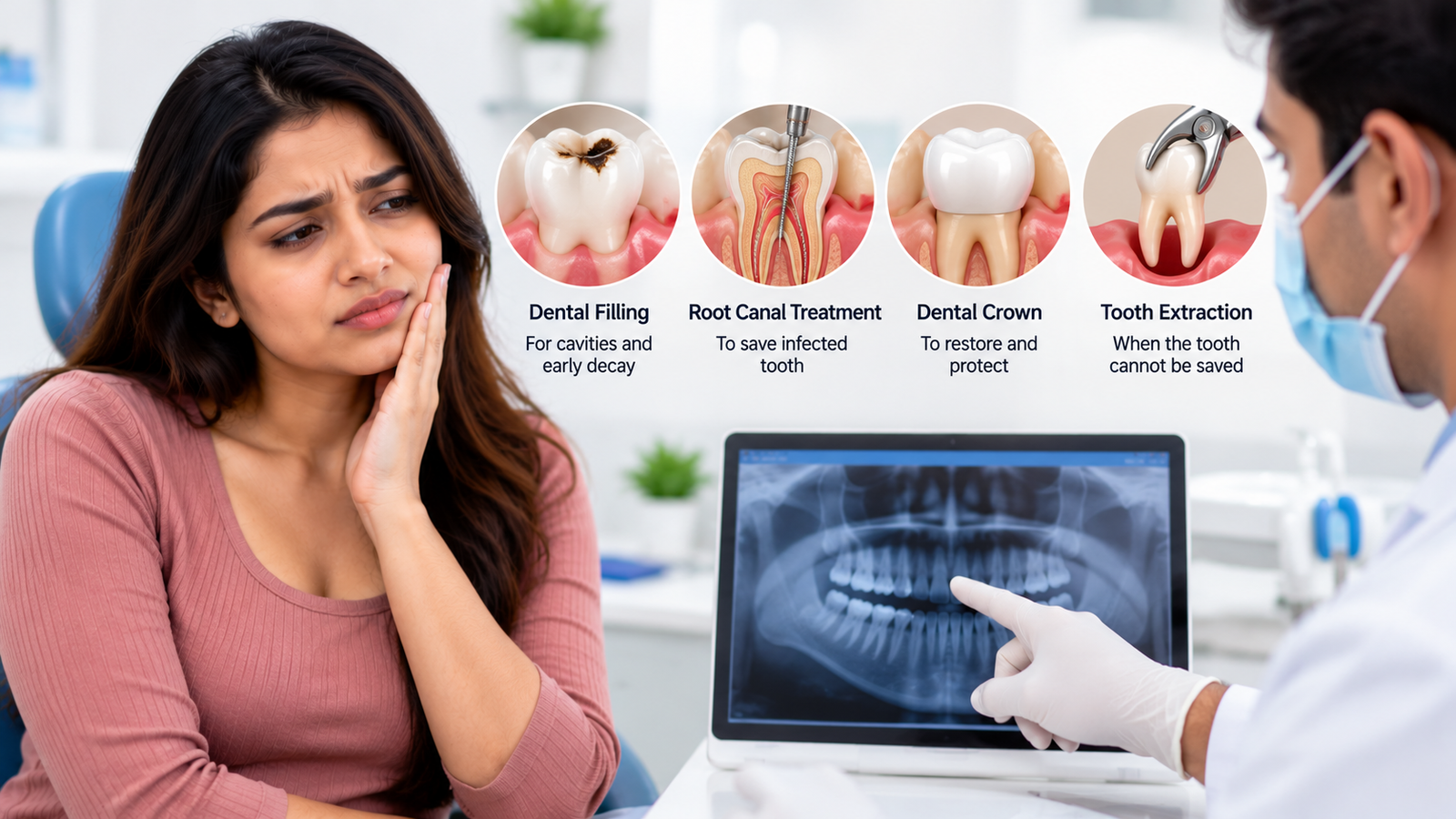
No, every painful tooth does not need removal. The right tooth pain treatment depends on the cause and extent of damage. Cavities may be treated with fillings, while infected tooth pulp may require root canal treatment. Tooth extraction is generally considered when a tooth cannot be predictably restored or preserved.
Toothache can make eating, sleeping and daily activities difficult. When pain becomes severe, many patients assume that removing the affected tooth is the quickest or only solution.
However, pain alone does not determine whether a tooth can be saved.
Modern dentistry offers several treatments designed to preserve natural teeth whenever clinically appropriate.
Understanding the difference between saving a tooth and removing it can help patients make informed decisions about their dental care.
Patients exploring treatment options can visit the Elegance Clinic website for information about the clinic and its available services.
Why Does a Tooth Become Painful?
Tooth pain can develop for several reasons.
Some conditions affect the outer layers of the tooth, while others involve the nerves, roots or surrounding gums.
Identifying the cause is the first step in selecting appropriate treatment.
1. Tooth Decay
Dental cavities develop when acids produced by oral bacteria damage tooth structure.
Early decay may not cause noticeable symptoms.
As the cavity becomes deeper, patients may experience:
- Sensitivity to sweets
- Pain when eating cold or hot foods
- Discomfort while chewing
- Visible holes or damaged areas
- Persistent toothache
Treatment depends on how far the decay has progressed.
Small or moderate cavities may be restored with fillings. More extensive damage may require a crown or root canal treatment.
2. Infection Inside the Tooth
The centre of a tooth contains pulp tissue, which includes nerves and blood vessels.
Deep decay, cracks or trauma can cause inflammation or infection of this tissue.
Symptoms may include:
- Severe or throbbing pain
- Lingering sensitivity to temperature
- Pain while biting
- Gum swelling
- Tenderness around the affected tooth
Root canal treatment may allow the tooth to be preserved if it remains restorable.
3. Cracked or Broken Teeth
A tooth may crack because of trauma, grinding, biting hard objects or weakened tooth structure.
Some cracks cause pain only when chewing.
Others extend into deeper parts of the tooth.
The location and severity of the crack determine whether the tooth can be repaired.
4. Gum Disease
Inflamed or infected gums can cause discomfort around teeth.
Advanced periodontal disease may damage the tissues and bone supporting a tooth.
Symptoms can include:
- Bleeding gums
- Swelling
- Bad breath
- Gum recession
- Loose teeth
- Pain while chewing
Early treatment may help preserve affected teeth.
5. Dental Abscess
A dental abscess is a collection of pus associated with infection.
It may develop around a tooth root or within the supporting gum tissues.
Possible symptoms include severe pain, swelling, tenderness and an unpleasant taste.
A dental abscess requires prompt professional assessment.
Antibiotics alone usually do not eliminate the source of a dental infection. Drainage, root canal treatment, periodontal treatment or extraction may be needed, depending on the cause.
6. Tooth Sensitivity
Not every painful tooth has an infection.
Exposed dentine, enamel wear, gum recession or certain dental restorations may cause sensitivity.
These problems can sometimes be managed without invasive procedures.
Does Tooth Pain Always Mean Extraction?
No.
A painful tooth may still have enough healthy structure and supporting tissue to be restored.
Dentists generally consider preserving natural teeth when treatment offers a reasonable long-term prognosis.
However, saving a tooth is not always possible or advisable.
The decision depends on several factors:
- Amount of remaining tooth structure
- Extent of decay
- Condition of the tooth pulp
- Presence of cracks or fractures
- Health of the surrounding bone
- Gum condition
- Tooth mobility
- Previous dental treatment
- Overall medical history
A clinical examination and appropriate investigations help determine the best approach.
What Tooth Pain Treatment Options Are Available?
Different dental conditions require different treatments.
The aim is to relieve pain, address the underlying problem and preserve oral function.
1. Dental Fillings
A filling may be recommended when decay or damage affects a limited portion of the tooth.
The dentist removes damaged tissue and restores the area with a suitable material.
Fillings can help:
- Restore tooth structure
- Reduce sensitivity caused by a cavity
- Improve chewing function
- Prevent further damage when appropriately maintained
However, fillings are not suitable for every damaged tooth.
2. Root Canal Treatment
Root canal treatment may be recommended when the pulp inside a tooth is irreversibly inflamed or infected.
The procedure involves removing affected pulp tissue, cleaning and disinfecting the root canal system, and sealing the canals.
A suitable final restoration is then placed to protect the tooth.
Can a Root Canal Save a Severely Painful Tooth?
Yes, in selected cases.
Even a tooth causing significant pain may be preserved through root canal treatment if its roots, remaining structure and surrounding support are adequate.
The intensity of pain does not automatically mean extraction is necessary.
3. Dental Crown
A crown covers and protects a tooth that has been weakened by extensive damage or previous treatment.
It may be recommended after certain root canal procedures or when a large restoration is required.
The dentist must first determine whether enough healthy tooth structure remains to support the crown.
4. Periodontal Treatment
If pain is related to gum disease, treatment may involve professional cleaning, deeper periodontal therapy or other procedures.
The goal is to control inflammation and improve the health of supporting tissues.
Severely affected teeth may not always be salvageable.
5. Tooth Extraction
Tooth extraction removes the affected tooth.
It may be recommended when damage is too extensive for predictable restoration or when retaining the tooth would create ongoing problems.
Extraction should be based on a clinical assessment rather than pain severity alone.
Save Tooth or Extract: How Does the Dentist Decide?
The decision to save tooth or extract depends on whether the tooth can be treated successfully and remain functional.
A dentist evaluates the tooth’s condition and discusses the available options.
| Dental condition | Possible treatment | Is extraction always needed? |
|---|---|---|
| Small cavity | Dental filling | No |
| Deep decay affecting pulp | Root canal treatment and restoration | No |
| Minor tooth fracture | Filling, bonding or crown | No |
| Severe vertical root fracture | Often extraction | Frequently |
| Localised dental abscess | Root canal, drainage or extraction | No |
| Mild to moderate gum disease | Periodontal treatment | No |
| Severe bone loss with poor prognosis | Periodontal assessment or extraction | Sometimes |
| Tooth damaged beyond restoration | Extraction | Often |
These are general examples.
An individual examination is necessary before deciding on treatment.
When Can a Painful Tooth Be Saved?
A tooth may be suitable for preservation when the remaining structure and supporting tissues are adequate.
Enough Healthy Tooth Structure Remains
A tooth must have sufficient remaining structure to support a durable restoration.
If too much tooth material has been lost, long-term preservation may be difficult.
The Root Is in Suitable Condition
Healthy or treatable roots improve the possibility of saving a tooth.
Certain root fractures or extensive damage may make restoration impractical.
Gum and Bone Support Are Adequate
Teeth depend on surrounding bone and periodontal tissues for stability.
A tooth with severe supporting bone loss may have a poor prognosis.
Infection Can Be Treated
Many infected teeth can be managed through root canal treatment or other appropriate dental procedures.
However, the outcome depends on the extent of infection and overall tooth condition.
The Tooth Can Function After Restoration
A successful treatment should allow the tooth to remain useful for chewing and other normal functions.
The dentist considers both immediate treatment success and long-term durability.
When Is Tooth Extraction Necessary?
Extraction may be recommended when preserving the tooth is unlikely to provide a predictable result.
Severe Tooth Decay
Extensive decay may destroy so much tooth structure that a reliable restoration is not possible.
Vertical Root Fracture
A vertical root fracture can create a pathway for infection and may significantly reduce the chance of saving the tooth.
Advanced Gum Disease
Severe periodontal damage can lead to extensive bone loss and tooth mobility.
Some affected teeth may eventually require removal.
Extensive Tooth Trauma
A tooth damaged in an accident may be impossible to restore if the fracture extends into critical areas.
Repeated Treatment Failure
Occasionally, a tooth remains infected or develops complications despite previous treatment.
Retreatment or endodontic surgery may still be possible in some cases, but extraction may be necessary when the prognosis is poor.
Certain Wisdom Tooth Problems
Impacted or partially erupted wisdom teeth may require extraction if they cause repeated infection, damage adjacent teeth or create other clinically significant problems.
Not every wisdom tooth needs removal.
Is Root Canal Treatment Better Than Tooth Extraction?
Root canal treatment and extraction serve different purposes.
Root canal treatment aims to preserve a tooth, while extraction removes it.
When a tooth is restorable, preservation may offer important functional benefits.
Benefits of Saving a Natural Tooth
Keeping a natural tooth may help:
- Maintain normal chewing
- Preserve existing tooth position
- Avoid a gap
- Reduce the need for replacement treatment
- Maintain natural tooth structure
However, root canal treatment does not guarantee that a tooth will last indefinitely.
A tooth may still fracture, develop recurrent infection or require further treatment.
When Might Extraction Be the Better Option?
Extraction may be appropriate when the tooth is structurally unsalvageable or has a very poor long-term prognosis.
The dentist should explain why preservation is or is not recommended.
Root Canal Treatment vs Tooth Extraction
| Factor | Root canal treatment | Tooth extraction |
|---|---|---|
| Main purpose | Preserve the natural tooth | Remove the tooth |
| Suitable for | Selected teeth with pulp inflammation or infection | Teeth that cannot reasonably be preserved |
| Tooth remains in place | Yes | No |
| May require additional restoration | Often | Replacement may be considered |
| Recovery | Usually manageable discomfort | Healing of the extraction site is required |
| Future treatment | Crown, monitoring or retreatment may be needed | Implant, bridge or denture may be considered |
| Long-term outcome | Depends on tooth condition and restoration | Depends on healing and replacement decisions |
The most suitable option depends on the diagnosis and individual circumstances.
What Happens During a Dental Examination for Tooth Pain?
A dentist usually begins by asking about your symptoms.
Questions may include:
- When did the pain start?
- Is the pain constant or occasional?
- Does hot or cold food trigger discomfort?
- Does the tooth hurt while biting?
- Have you noticed swelling?
- Have you had previous treatment on the tooth?
Step 1: Oral Examination
The dentist examines the affected tooth and surrounding gums.
Visible cavities, fractures, swelling and existing restorations are assessed.
Step 2: Sensitivity and Biting Tests
Cold testing, percussion or biting tests may help identify the source of pain.
Not every test is necessary for every patient.
Step 3: Dental X-Ray
An X-ray may be recommended to assess tooth roots, surrounding bone, decay or signs of infection.
Step 4: Diagnosis
The dentist combines symptoms, examination findings and imaging results to identify the likely cause.
Step 5: Treatment Planning
Suitable options are explained, including benefits, limitations, costs and possible risks.
Patients can explore the clinic’s available treatment services for general information about its care offerings.
Can Antibiotics Cure Tooth Pain Without Dental Treatment?
Antibiotics are not required for most toothaches.
When pain is caused by inflamed pulp or localised dental disease, the underlying problem usually needs dental treatment.
Antibiotics may be appropriate when infection is spreading or systemic symptoms are present, depending on the clinical assessment.
Taking antibiotics unnecessarily can cause side effects and contribute to antimicrobial resistance.
Patients should not start leftover antibiotics or use someone else’s prescription.
What Can You Do for Tooth Pain Before Seeing a Dentist?
Temporary self-care may help manage discomfort until professional assessment is available.
However, home remedies do not replace dental treatment.
Use Suitable Pain Relief
Over-the-counter pain medicines may help when used according to the label and individual medical suitability.
Ask a pharmacist or healthcare professional if you have medical conditions, take other medicines or are unsure which medicine is appropriate.
Avoid Trigger Foods
Very hot, cold or sweet foods may worsen sensitivity.
Choose foods that are comfortable to eat.
Maintain Gentle Oral Hygiene
Continue brushing carefully and cleaning between teeth where possible.
Avoid aggressive brushing around painful areas.
Use a Cold Compress for Swelling
A cold compress on the outside of the cheek may provide temporary comfort.
Avoid placing excessive heat directly over an area of suspected infection.
Arrange a Dental Appointment
Persistent or worsening pain should be professionally assessed.
Do not place aspirin directly against the tooth or gum, as it can cause tissue injury.
When Is Tooth Pain an Emergency?
Certain symptoms require urgent dental or medical attention.
Seek prompt dental assessment for:
- Severe or worsening tooth pain
- Gum or facial swelling
- Pus or a suspected dental abscess
- Pain following dental trauma
- A broken tooth with significant discomfort
- Fever associated with dental infection
Seek emergency medical care immediately if swelling causes difficulty breathing or swallowing, spreads rapidly into the face or neck, or is accompanied by severe systemic illness.
These symptoms may indicate a spreading infection requiring urgent treatment.
What Happens After Tooth Extraction?
If extraction is necessary, the dentist explains the procedure and expected recovery.
Local anaesthesia is commonly used to numb the treatment area.
After removal, a blood clot forms in the socket and supports healing.
Patients are usually advised to:
- Follow the dentist’s bleeding-control instructions
- Avoid vigorous rinsing during the initial healing period
- Avoid smoking
- Eat suitable soft foods initially
- Maintain oral hygiene carefully
- Attend follow-up appointments when advised
Healing time varies depending on the tooth, complexity of extraction and individual health.
What Happens to the Gap After Extraction?
Depending on which tooth is removed, the dentist may discuss replacement options.
These can include:
- Dental implants
- Dental bridges
- Removable dentures
- Leaving the space unrestored in selected situations
The appropriate choice depends on bite function, adjacent teeth, bone support, cost and patient preferences.
Why Is Saving a Natural Tooth Often Preferred?
Natural teeth contribute to chewing, speech and maintaining the arrangement of the dental arches.
Preserving a tooth may avoid the need for replacement procedures.
However, attempting to save a tooth with a very poor prognosis can result in repeated treatment, discomfort and additional expense.
The objective should be predictable oral health rather than preserving every tooth at any cost.
A balanced decision considers:
- Likelihood of successful treatment
- Remaining tooth structure
- Gum and bone health
- Expected longevity
- Treatment costs
- Patient preferences
- Alternative options
How to Prevent Tooth Pain and Tooth Loss
Many dental problems can be reduced through preventive care.
Brush Twice Daily
Use fluoride toothpaste and a soft-bristled toothbrush.
Clean Between Teeth
Floss or interdental brushes can help remove plaque from difficult-to-reach areas.
Limit Frequent Sugar Exposure
Reducing frequent sugary snacks and drinks lowers the risk of tooth decay.
Avoid Tobacco
Smoking and smokeless tobacco increase the risk of periodontal disease and other oral health problems.
Address Dental Problems Early
Small cavities and gum inflammation are generally easier to manage before significant damage occurs.
Attend Dental Check-Ups
Regular dental examinations allow early assessment of tooth decay, gum disease and other concerns.
For appointment enquiries, patients can visit the Elegance Clinic contact page.
Frequently Asked Questions
1. Does Every Painful Tooth Need to Be Removed?
No. Many painful teeth can be treated with fillings, root canal treatment, crowns or periodontal care. Extraction is generally considered when the tooth cannot be predictably restored or preserved.
2. Can a Severely Painful Tooth Be Saved With Root Canal Treatment?
Yes, some severely painful teeth can be saved through root canal treatment. Suitability depends on the remaining tooth structure, root condition, surrounding bone and extent of infection.
3. How Does a Dentist Decide Whether to Save a Tooth or Extract It?
The dentist assesses tooth decay, fractures, pulp condition, gum health, bone support and the possibility of a durable restoration. Clinical examination and appropriate X-rays help guide the decision.
4. Is Tooth Extraction More Painful Than Root Canal Treatment?
Both procedures are generally performed with local anaesthesia to minimise pain. Patients may experience discomfort during recovery, but the amount varies according to the procedure and individual condition.
5. Can Tooth Pain Go Away Without Treatment?
Tooth pain may temporarily decrease, but this does not always mean the problem has resolved. In some cases, pain decreases after the pulp loses vitality while infection remains. Persistent or recurring toothache requires dental assessment.
Key Takeaways
- Tooth pain does not automatically mean extraction is necessary.
- The cause of pain determines the appropriate treatment.
- Small cavities may be treated with fillings.
- Root canal treatment can preserve selected infected teeth.
- Dental crowns may protect weakened teeth.
- Severe fractures or extensive decay may require extraction.
- Antibiotics alone do not usually resolve the source of dental infection.
- Dental X-rays may help assess roots and surrounding bone.
- Early treatment can improve the chances of preserving natural teeth.
- Urgent symptoms should never be ignored.
Conclusion
A painful tooth does not always need to be removed.
Modern tooth pain treatment offers several ways to manage dental problems while preserving natural teeth when clinically appropriate.
Fillings, root canal treatment and periodontal care may help address the underlying cause of discomfort. Extraction is generally reserved for teeth that cannot reasonably be restored or maintained.
The decision to save a tooth or extract it should be based on examination findings, long-term prognosis and individual treatment goals.
If you are experiencing persistent tooth pain, arrange a professional dental assessment rather than assuming removal is necessary.
Patients can request an appointment at Elegance Clinic to enquire about available consultation services.
