

|
Getting your Trinity Audio player ready...
|
✓ Medically reviewed by Dr. Ashutosh Shah, Plastic, Reconstructive & Cosmetic Surgeon (M.Ch., DNB)
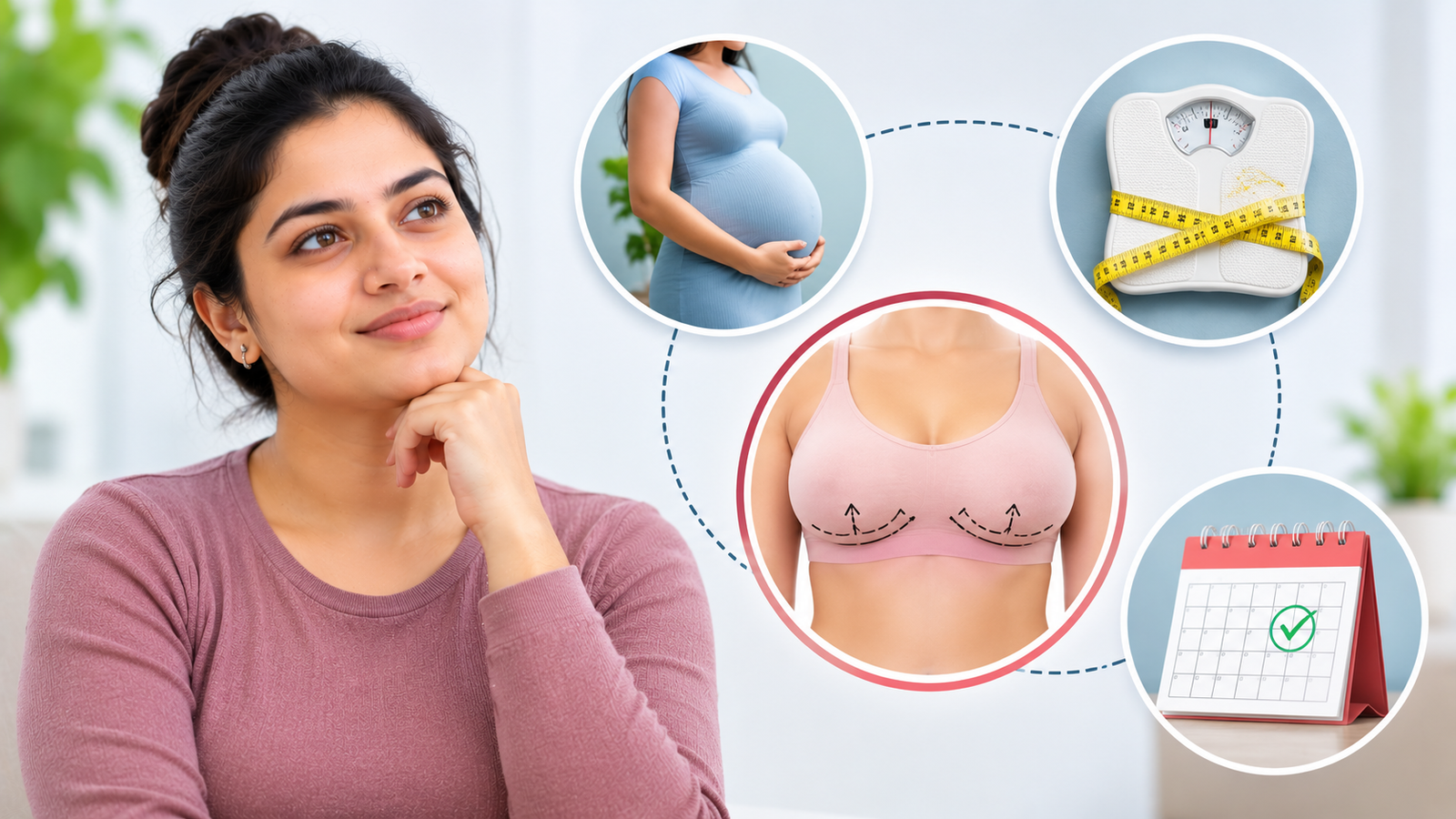
Breast reduction and pregnancy require careful planning because pregnancy, breastfeeding and significant weight changes can affect breast size and shape after surgery. Although reduction results are generally long-lasting, remaining breast tissue can change over time. Therefore, the best time for surgery depends on your physical symptoms, future pregnancy plans, breastfeeding goals and weight stability.
Many women consider breast reduction to relieve discomfort caused by heavy breasts. However, they also wonder whether pregnancy will reverse the results or whether gaining weight will make their breasts larger again.
At Elegance Clinic, plastic surgeon Dr. Ashutosh Shah evaluates breast size, medical history, lifestyle and future pregnancy plans before discussing surgical options.
Key Takeaways
- Pregnancy can change breast size and shape after reduction surgery.
- Breast reduction does not generally prevent pregnancy.
- Breastfeeding may remain possible, but milk production can be reduced.
- Weight gain can increase the volume of remaining breast tissue.
- Significant weight loss may change breast fullness and skin tightness.
- Stable weight and realistic expectations help with long-term planning.
Can Pregnancy Change Breast Reduction Results?
Yes. Pregnancy can change the appearance of breasts after reduction surgery.
During pregnancy, hormonal changes prepare the breasts for milk production. Consequently, the remaining glandular tissue may enlarge, while breast skin stretches.
After pregnancy and breastfeeding, breast volume may decrease again. However, the skin and supporting tissues may not return to their previous condition.
As a result, some women notice renewed sagging, increased breast size or changes in nipple position.
Does pregnancy reverse the surgery?
Not necessarily.
Breast reduction permanently removes selected amounts of breast tissue, fat and skin. Pregnancy does not simply restore everything removed during surgery.
Nevertheless, remaining tissue can enlarge, and breast shape can change.
The extent of these changes varies between individuals. Therefore, no surgeon can guarantee that breast size and shape will remain unchanged after pregnancy.
The NHS guidance on breast reduction also explains that breasts can become larger during pregnancy and that surgery may affect breastfeeding.
Should You Have Breast Reduction Before or After Pregnancy?
There is no single correct answer for everyone.
Instead, patients should consider how severely their current breast size affects daily life and how soon they hope to become pregnant.
Reasons to consider surgery before pregnancy
Some women experience persistent neck pain, shoulder discomfort, skin irritation or difficulty exercising because of heavy breasts.
For these patients, postponing treatment may mean continuing to experience troublesome symptoms.
Therefore, earlier breast reduction may be reasonable after a full surgical assessment.
However, patients must understand that future pregnancy can change the cosmetic result and that surgery may affect breastfeeding.
Reasons to consider waiting
If pregnancy is planned soon, waiting until after pregnancy and breastfeeding may help patients make decisions based on a more settled breast size.
Additionally, women who strongly prioritise breastfeeding may prefer to postpone surgery because milk production cannot be guaranteed after reduction.
Nevertheless, waiting does not guarantee successful breastfeeding or prevent future breast changes.
Breast Reduction Timing: Comparison Table
| Situation | Possible effect on results | Planning consideration |
|---|---|---|
| Pregnancy after reduction | Enlargement, stretching or shape changes | Discuss future pregnancy plans |
| Breastfeeding after reduction | Temporary fullness and possible milk-supply limitations | Discuss surgical technique |
| Significant weight gain | Increased breast volume | Aim for sustainable weight management |
| Significant weight loss | Reduced fullness or increased skin laxity | Consider weight stability |
| Stable weight | May help preserve breast proportions | Maintain realistic expectations |
| Pregnancy planned soon | Results may change after pregnancy | Discuss whether postponement makes sense |
Ultimately, the decision should balance current symptoms with long-term priorities.
For more information about surgical suitability, read our guide to breast reduction candidates.
Can You Breastfeed After Breast Reduction Surgery?
Some women can breastfeed after breast reduction surgery. However, others experience reduced milk production or cannot produce enough milk.
Breastfeeding ability depends partly on how the operation affects glandular tissue, milk ducts, nerves and nipple connections.
How does surgical technique matter?
During reduction mammoplasty, surgeons remove excess tissue and reshape the remaining breast.
Certain techniques preserve more connections between the nipple and underlying milk-producing tissue.
However, no technique guarantees normal milk production.
In particular, procedures that completely detach and reposition the nipple can substantially affect breastfeeding ability.
What if you become pregnant after surgery?
Tell your maternity care team about your previous breast reduction.
Additionally, consider early support from a qualified lactation professional after delivery.
A healthcare professional can help monitor milk transfer and infant weight gain. Some mothers may require supplemental feeding to ensure adequate nutrition.
Therefore, patients should discuss breastfeeding goals with their surgeon before surgery, not only after becoming pregnant.
Our detailed article on breastfeeding after breast reduction explains these considerations.
Does Weight Gain After Breast Reduction Increase Breast Size?
Yes, weight gain after breast reduction may increase breast size.
Breasts contain both glandular and fatty tissue. Although surgery removes some of this tissue, the remaining fat can increase in volume when body weight rises.
Consequently, significant weight gain may change breast fullness, proportions and appearance.
Will everyone experience the same change?
No.
The amount of change depends on breast composition, genetics, hormonal influences and the extent of weight gain.
For example, a person whose breasts contain more fatty tissue may notice a greater response to body-weight changes.
However, breast size does not always change in direct proportion to overall weight.
Therefore, maintaining a sustainable weight may help preserve results, but it cannot guarantee permanent breast dimensions.
Do Breasts Grow Back After Reduction Surgery?
Breasts can become larger after reduction surgery, but this does not usually mean that the removed tissue has regenerated.
Instead, remaining breast tissue and fat can respond to pregnancy, weight changes, hormonal fluctuations and ageing.
Why might breast size increase again?
Several factors can contribute:
- Significant weight gain.
- Pregnancy-related hormonal changes.
- Natural changes in glandular tissue.
- Certain hormonal treatments.
- Changes associated with ageing.
Rarely, ongoing breast growth related to hormonal or medical conditions may require further assessment.
Does everyone need another operation?
No.
A moderate change in size does not automatically require revision surgery.
However, if breasts become significantly larger or symptoms return, a plastic surgeon can reassess the situation.
Importantly, revision surgery involves additional risks and requires careful planning.
For a broader explanation of the procedure and its limitations, read breast reduction surgery.
How Does Weight Loss Affect Breast Reduction Results?
Weight loss can also change breast appearance after reduction surgery.
Because breasts contain fatty tissue, losing body fat may reduce their volume.
However, the degree of change varies considerably.
Can weight loss cause sagging?
Significant weight loss may reduce breast fullness without producing an equivalent reduction in skin.
Consequently, some patients notice loose skin or a lower breast position.
Skin elasticity, age, genetics and the amount of weight lost all influence the final appearance.
Should you lose weight before surgery?
If you are actively planning substantial weight loss, discussing that goal before breast reduction is sensible.
A more stable weight can help the surgeon assess your breast proportions and plan tissue removal.
Nevertheless, weight loss is not a universal requirement for surgery.
Patients with significant physical symptoms may have different priorities, and suitability depends on individual health.
For patients exploring non-surgical options, our article on breast reduction without surgery explains how weight loss may affect breast volume.
What Is the Best Time to Schedule Breast Reduction?
The best timing depends on your health, symptoms, pregnancy plans and weight stability.
Rather than following a fixed rule, patients should make the decision after an individual assessment.
If you plan pregnancy soon
Discuss whether postponing surgery would better support your breastfeeding and cosmetic goals.
If you recently delivered a baby
Breast size can continue changing after pregnancy and breastfeeding.
Therefore, surgeons may recommend waiting until breast changes have settled before planning elective reduction.
If your weight is changing
Consider whether you expect substantial further weight loss or gain.
Stable weight can make surgical planning more predictable.
However, patients should not delay assessment of severe symptoms simply because their future plans remain uncertain.
What Should You Discuss With Your Plastic Surgeon?
Before deciding on breast reduction, prepare questions about both immediate benefits and long-term changes.
Discuss your pregnancy plans, breastfeeding priorities, expected weight changes and desired breast proportions.
Additionally, ask how the proposed technique may affect nipple sensation, scars and milk production.
At Elegance Clinic, Dr. Ashutosh Shah, a plastic, reconstructive and cosmetic surgeon, evaluates these factors during consultation.
The discussion should include realistic expectations because surgery cannot guarantee a particular cup size or permanently prevent future changes.
Patients should also understand recovery requirements and potential complications before consenting to treatment.
Frequently Asked Questions
1. Is it safe to get pregnant after breast reduction?
Pregnancy is generally possible after breast reduction surgery because the operation does not usually affect reproductive organs or fertility. However, pregnancy may change breast size and shape, while previous surgery may affect breastfeeding. Discuss your plans with your plastic surgeon and obstetrician.
2. Should I wait until after having children for breast reduction?
Waiting may be reasonable if you plan pregnancy soon or strongly prioritise breastfeeding. However, patients experiencing substantial neck pain, back discomfort or skin problems may benefit from considering earlier treatment. The decision depends on current symptoms, future goals and willingness to accept possible changes in surgical results.
3. Can I breastfeed after breast reduction surgery?
Some women breastfeed successfully after reduction surgery, while others produce insufficient milk. Outcomes depend on the surgical technique and preservation of milk ducts, nerves and glandular tissue. Therefore, breastfeeding cannot be guaranteed. Tell your surgeon about future feeding goals and arrange lactation support if you become pregnant.
4. Will my breasts grow back if I gain weight?
Breasts may become larger after significant weight gain because remaining fatty tissue can increase in volume. However, removed tissue does not simply regenerate. The amount of enlargement varies with genetics, breast composition and hormonal factors. Maintaining a sustainable weight may help preserve results, although it cannot prevent every future change.
5. How long should my weight be stable before breast reduction?
There is no single weight-stability period suitable for every patient. Surgeons consider recent weight changes, future weight-loss plans, overall health and breast-related symptoms. If you expect substantial weight loss, discuss whether delaying surgery would improve planning.
Conclusion
Breast reduction and pregnancy require individual planning because hormonal changes, breastfeeding and weight fluctuations can alter long-term breast appearance.
Although breast reduction permanently removes selected tissue, the remaining breasts can change over time.
Therefore, patients should consider their current symptoms, future pregnancy goals and weight stability before deciding when to undergo surgery.
At Elegance Clinic, Dr. Ashutosh Shah provides consultations to discuss surgical suitability, expected results and important limitations.
Considering breast reduction surgery? Schedule a consultation to discuss the timing that best fits your health and future plans.
