

|
Getting your Trinity Audio player ready...
|
✓ Medically reviewed by Dr. Ashutosh Shah, Plastic, Reconstructive & Cosmetic Surgeon (M.Ch., DNB)
A good breast lift candidate is someone experiencing breast sagging, downward-pointing nipples, stretched skin or changes in breast shape after pregnancy, breastfeeding, ageing or weight loss. Breast lift surgery, also called mastopexy, reshapes and raises the breasts by removing excess skin and repositioning breast tissue. Suitability depends on breast anatomy, overall health, personal goals and realistic expectations.
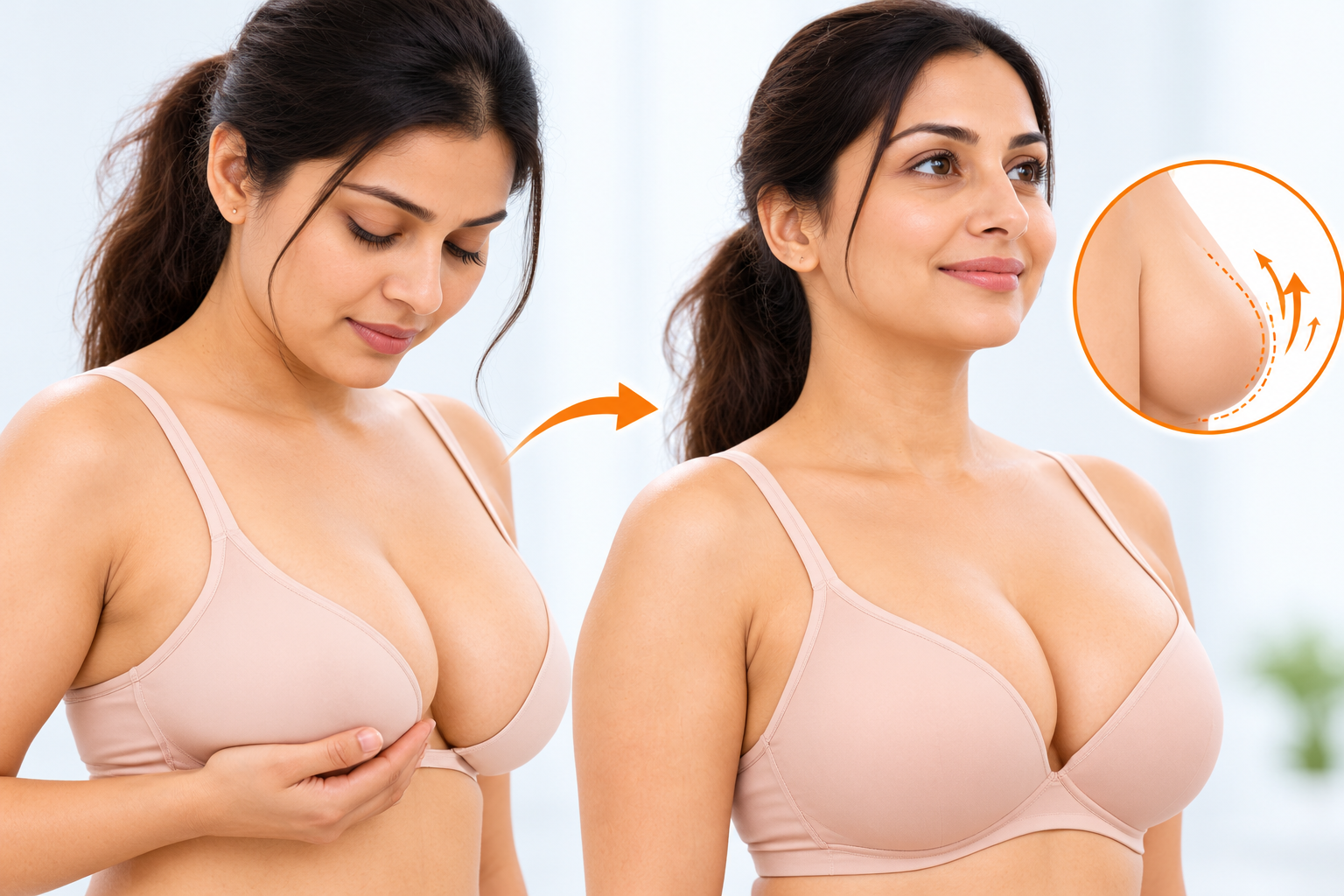
Breast sagging is a common concern among women at different stages of life. While supportive bras can improve appearance under clothing, they cannot permanently reposition stretched breast tissue.
Breast lift surgery may help restore a firmer, more elevated breast contour without necessarily increasing breast size.
However, not every woman with sagging breasts requires surgery. Understanding the signs, eligibility factors and expected results can help you decide whether to consult a qualified plastic surgeon.
Who Is a Good Breast Lift Candidate?
A suitable breast lift candidate generally has noticeable breast sagging and wants to improve breast position, contour or symmetry.
You may benefit from breast lift surgery if you:
-
Have breasts that appear lower than before.
-
Notice nipples pointing downward.
-
Have stretched or loose breast skin.
-
Experience breast sagging after pregnancy or breastfeeding.
-
Have lost significant weight and noticed changes in breast shape.
-
Feel your breasts have lost their previous firmness.
-
Have one breast positioned lower than the other.
-
Are in good general health and have realistic expectations.
Breast lift surgery primarily improves breast shape and position rather than substantially changing breast volume.
Women who want larger breasts may need to discuss breast augmentation, while those experiencing discomfort from heavy breasts may benefit more from breast reduction.
Checklist: 8 Signs You May Need a Breast Lift
Understanding who needs a breast lift involves evaluating physical changes, breast position and personal concerns.
1. Your Breasts Have Started Sagging
Breast sagging, medically called breast ptosis, occurs when the breasts gradually lose their elevated position.
Common contributing factors include:
-
Natural ageing.
-
Pregnancy-related breast changes.
-
Weight fluctuations.
-
Reduced skin elasticity.
-
Genetic factors.
If your breasts sit noticeably lower than before, a breast lift consultation may help determine whether mastopexy is appropriate.
2. Your Nipples Point Downward
Nipple position is an important factor when evaluating breast sagging.
In some women, the nipples gradually move downward as the surrounding skin stretches.
During a consultation, the plastic surgeon evaluates nipple position in relation to the inframammary fold, the natural crease beneath the breast.
Nipples positioned below this fold may indicate a degree of ptosis, although breast shape and other anatomical factors must also be considered.
Breast lift surgery can reposition the nipple-areola complex to a more elevated location.
3. You Have Loose or Stretched Breast Skin
Skin stretching can occur after pregnancy, breastfeeding, weight changes or ageing.
Some women notice that their breasts appear deflated even when their overall breast volume has not changed significantly.
Breast lift surgery removes excess skin and reshapes the remaining breast tissue to improve contour.
However, the procedure cannot permanently prevent future skin stretching or ageing.
4. Your Breasts Have Changed After Pregnancy
Pregnancy can cause breast enlargement and stretching of the surrounding skin.
After pregnancy or breastfeeding, breast volume may decrease, leaving the skin relatively loose.
Common changes include:
-
Reduced upper breast fullness.
-
Lower breast position.
-
Changes in nipple direction.
-
Differences in breast symmetry.
Women considering surgery after pregnancy should generally wait until breastfeeding has ended and breast size has stabilised.
Future pregnancies can affect surgical results, so timing should be discussed during consultation.
5. You Have Experienced Significant Weight Loss
Major weight loss may reduce breast fat volume while leaving stretched skin behind.
This can create a flattened or drooping appearance.
Women who have achieved a stable weight but remain concerned about breast sagging may consider mastopexy.
For patients with substantial volume loss, a breast lift alone may not provide the desired upper breast fullness. Additional procedures may be discussed when appropriate.
6. Your Breasts Appear Asymmetrical
Most women have some natural differences between their breasts.
However, noticeable differences in breast position, nipple height or shape may become more apparent over time.
Breast lift surgery may help improve symmetry by adjusting breast shape and position.
Perfect symmetry cannot be guaranteed because natural anatomical differences remain.
7. You Are Unhappy with Breast Shape but Not Size
Some women are satisfied with their breast volume but want a more elevated appearance.
In these cases, breast lift surgery may be more appropriate than breast augmentation or breast reduction.
A mastopexy can reshape existing breast tissue without significantly increasing breast size.
This distinction is important when choosing the right procedure.
8. Your Breast Shape Affects Clothing Comfort or Confidence
Breast sagging can influence how certain bras, dresses and fitted clothes appear.
Some women feel uncomfortable wearing particular clothing styles or experience reduced confidence because of changes in breast shape.
These concerns may be valid reasons to seek a consultation, provided the decision reflects your own preferences and expectations.
Mastopexy Eligibility: What Factors Do Surgeons Consider?
Mastopexy eligibility depends on several medical and anatomical factors rather than breast size or age alone.
Overall Physical Health
Candidates should generally be healthy enough to undergo anaesthesia and recover safely.
Medical conditions such as uncontrolled diabetes, certain cardiovascular disorders or active infections may require treatment or further evaluation before surgery.
Stable Body Weight
Significant weight changes after surgery may affect breast volume and skin tightness.
Maintaining a reasonably stable weight can help support longer-lasting results.
Smoking and Nicotine Use
Smoking and nicotine exposure can reduce tissue blood supply and increase the risk of delayed healing, wound complications and tissue damage.
Your surgeon may recommend stopping nicotine products for a specified period before and after surgery.
Pregnancy and Breastfeeding Plans
Women planning future pregnancies should discuss surgical timing.
Pregnancy can alter breast shape after a lift, and mastopexy may affect breastfeeding ability depending on the technique used.
Realistic Expectations
A breast lift can improve breast position and contour, but it cannot guarantee permanent firmness, perfect symmetry or invisible scars.
Understanding these limitations is essential before proceeding.
Breast Lift vs Breast Reduction: Which Procedure Is Right for You?
Breast lift and breast reduction surgery address different concerns.
| Feature | Breast Lift | Breast Reduction |
|---|---|---|
| Main purpose | Improve breast position and shape | Reduce breast size and weight |
| Removes excess skin | Yes | Yes |
| Removes substantial breast tissue | Not usually | Yes |
| Repositions nipples | Usually | Usually |
| Helps heavy breast symptoms | Not the primary purpose | May improve symptoms |
| Changes breast volume | Usually limited | Significant reduction possible |
Women with sagging breasts who are comfortable with their current breast size may benefit from mastopexy.
Women experiencing neck pain, shoulder discomfort or skin irritation associated with large breasts may be better suited to breast reduction.
For more information about available surgical options, visit Elegance Clinic.
Can Breast Lift Surgery Be Combined with Breast Augmentation?
Yes. In selected patients, breast lift surgery can be combined with breast augmentation.
This approach may be considered when a woman has both breast sagging and loss of volume.
A breast lift improves breast position, while augmentation adds volume through implants or, in selected cases, fat transfer.
However, combining procedures may increase surgical complexity and carries additional risks.
The surgeon evaluates breast tissue quality, skin elasticity, desired size and overall health before recommending a combined approach.
Who Should Consider Delaying Breast Lift Surgery?
Some women may benefit from postponing mastopexy until certain conditions are addressed.
These include:
-
Women who are currently pregnant or breastfeeding.
-
Patients planning substantial weight loss.
-
Individuals with uncontrolled medical conditions.
-
Patients who smoke or use nicotine and have not completed recommended cessation.
-
Women with unresolved breast symptoms requiring investigation.
-
Individuals who are not comfortable with permanent surgical scars or recovery requirements.
A breast lift should be planned after appropriate medical assessment and informed discussion.
What Happens During a Breast Lift Consultation?
A breast lift consultation involves reviewing your concerns, examining breast anatomy and discussing suitable surgical options.
The assessment typically includes:
-
Medical history: Previous surgeries, medical conditions, medications and relevant breast health history.
-
Breast examination: Evaluation of breast volume, skin elasticity, nipple position and asymmetry.
-
Treatment goals: Discussion of desired breast shape and whether volume changes are also needed.
-
Surgical planning: Explanation of possible incision patterns, scars and techniques.
-
Risk assessment: Discussion of anaesthesia, bleeding, infection, wound healing, changes in nipple sensation and possible revision surgery.
-
Recovery guidance: Expected activity restrictions, supportive garments and follow-up appointments.
Age-appropriate breast imaging or further investigation may be recommended based on individual risk factors and clinical findings.
Breast Lift Surgery at Elegance Clinic with Dr. Ashutosh Shah
At Elegance Clinic, Dr. Ashutosh Shah evaluates women considering breast lift surgery by assessing breast sagging, nipple position, skin elasticity, existing breast volume and individual aesthetic goals. The consultation helps determine whether mastopexy alone or another breast procedure may be more suitable, while explaining surgical risks, expected scars, recovery and realistic results.
The aim of breast lift surgery is to improve breast contour and position while considering each patient’s natural anatomy and preferences.
Patients can visit the Elegance Clinic website for further information about consultation options.
Breast Lift Recovery: What Should Candidates Expect?
Recovery after breast lift surgery varies depending on the technique, extent of surgery and individual healing.
| Recovery period | General expectations |
|---|---|
| First few days | Swelling, bruising, tenderness and limited activity |
| 1–2 weeks | Many patients can resume light activities and desk work |
| 3–6 weeks | Gradual return to additional activities as approved by the surgeon |
| Several months | Breast shape and scars continue to mature |
| 6–12 months or longer | Scars may gradually soften and fade, although they remain permanent |
Patients should follow their surgeon’s instructions regarding supportive bras, wound care, sleeping positions and physical activity.
Strenuous exercise and heavy lifting should only resume when medically cleared.
Frequently Asked Questions
1. How do I know if I am a breast lift candidate?
You may be a breast lift candidate if your breasts have noticeable sagging, stretched skin, downward-pointing nipples or changes in shape after pregnancy or weight loss. A plastic surgeon can confirm suitability through examination.
2. What is the ideal age for breast lift surgery?
There is no single ideal age. Adult women may consider breast lift surgery when breast development is complete, their health is suitable and they have realistic expectations.
3. Can I get a breast lift without implants?
Yes. Breast lift surgery can reshape and elevate existing breast tissue without implants. Implants may be considered separately when additional breast volume is desired.
4. Is breast lift surgery suitable after breastfeeding?
Yes. Women may consider surgery after breastfeeding has ended and breast size has stabilised. The appropriate waiting period depends on individual circumstances.
5. Does breast lift surgery reduce breast size?
A breast lift primarily improves breast shape and position. A small amount of tissue may be removed during reshaping, but significant size reduction generally requires breast reduction surgery.
6. Can breast lift surgery correct uneven breasts?
Breast lift surgery may improve differences in breast position, nipple height and shape. However, complete symmetry cannot be guaranteed.
7. Are breast lift results permanent?
Breast lift results can last for years, but ageing, pregnancy, weight fluctuations and gravity can gradually change breast shape again.
8. Will breast lift surgery leave scars?
Yes. Mastopexy requires incisions that produce permanent scars. Their location and extent depend on the surgical technique, and their appearance generally improves with time.
Conclusion
A suitable breast lift candidate is someone experiencing breast sagging, loose skin, downward nipple position or changes in breast contour who wants a more elevated breast shape.
Breast lift surgery may improve breast appearance and symmetry, but suitability depends on individual anatomy, health, lifestyle and expectations.
A consultation with Dr. Ashutosh Shah at Elegance Clinic can help patients understand their options and make an informed decision about breast lift surgery.
