

|
Getting your Trinity Audio player ready...
|
✓ Medically reviewed by Dr. Ashutosh Shah, Plastic, Reconstructive & Cosmetic Surgeon (M.Ch., DNB)
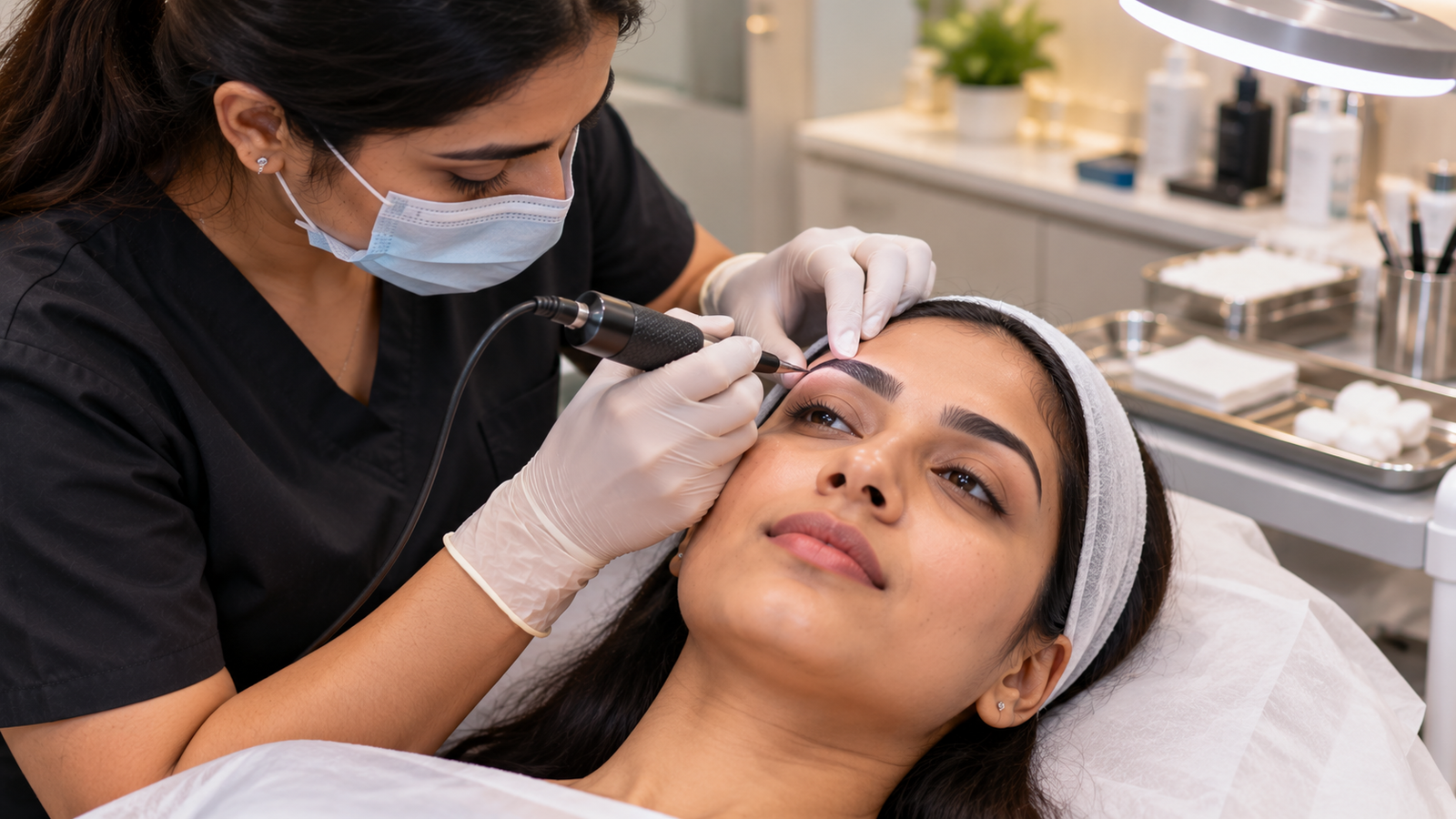
Permanent make-up is better understood as semi-permanent cosmetic pigmentation, not makeup that stays unchanged forever. Depending on the treatment, skin type, pigment, technique, sun exposure and aftercare, results can remain visible for years but gradually become lighter or change in tone. Touch-ups restore colour and definition after the initial treatment has healed and settled.
How Long Does Permanent Make-Up Last on Brows, Eyes and Lips?
The lifespan of permanent make-up varies considerably between treatments.
Pigment is placed into the skin to create the appearance of makeup, but the colour gradually changes as the skin renews and the pigment is broken down or becomes less visible.
Elegance Clinic describes its permanent makeup procedures as semi-permanent and notes that brow and lip treatments can last for several years, with periodic touch-ups used to maintain the desired appearance.
A practical planning range is:
| Treatment | Typical visible lifespan | First touch-up | Refresh interval | What usually fades first |
|---|---|---|---|---|
| Microbladed brows | About 1–2 years | Around 6–10 weeks if needed after healing | Often 12–24 months | Fine hair strokes |
| Powder / ombre brows | About 1–3 years | Around 6–10 weeks if needed | Often 12–24+ months | Soft edges and lighter shading |
| Upper eyeliner | About 2–4 years | Around 6–12 weeks if needed | Often 2–4 years | Intensity of the line |
| Lower eyeliner | About 1–3 years | Around 6–12 weeks if needed | Often 1–3 years | Fine outer/detail areas |
| Lip blush | About 1–3 years | Around 6–10 weeks if needed | Often 1–3 years | Lip-edge definition and intensity |
| Full lip colour | About 1–3 years | Around 6–10 weeks if needed | Often 1–3 years | Colour intensity |
| Beauty spot | About 1–3 years | After complete healing if needed | Individual | Colour intensity |
| Scalp micropigmentation | Long-lasting; gradual fading | Depends on the result | Periodic refresh when required | Density/colour contrast |
These are planning ranges, not guarantees. Elegance Clinic’s current pages state that Nano Brows typically last around 1–2 years and that periodic touch-ups are recommended. Its lip-colour page describes results as lasting several years, while its scalp-micropigmentation information states that periodic touch-ups may be recommended over time.
Why Does the Colour Fade and Change Shade Over Time?
Permanent makeup does not remain exactly the same colour from the day it is applied.
Several things influence how pigment looks over time.
Skin renewal
Pigment is placed in the upper layers of the skin. As skin cells renew, some pigment becomes less visible.
Sun exposure
Ultraviolet exposure can contribute to fading and colour changes. Regular sun protection is therefore important after the area has healed.
Skin type
Different skin types retain and display pigment differently.
Oily skin can make fine brow strokes lose crispness more quickly, while dry or mature skin may behave differently.
Pigment characteristics
The original pigment colour and formulation influence how the colour ages.
Treatment technique
Depth and placement matter. Pigment that is placed too deeply can behave differently from pigment placed appropriately in the intended skin layer.
Lifestyle and aftercare
Sun exposure, skincare products, sweating, swimming and how the treated area is cared for during healing can all influence longevity.
The clinic specifically notes that permanent makeup is customized according to the individual’s skin type, natural brow pattern and desired outcome.
What Actually Happens in a Touch-Up Appointment?
A touch-up is not simply “adding more colour.”
The practitioner first assesses how the original pigment has healed.
The appointment may involve:
- Looking at the healed colour.
- Checking whether the shape remains appropriate.
- Identifying areas where pigment has faded unevenly.
- Assessing whether the pigment has changed tone.
- Adjusting the colour if appropriate.
- Adding pigment selectively rather than automatically covering the whole area.
- Reviewing aftercare again.
For brows, this can mean reinforcing faded strokes or shading.
For lips, it may mean restoring colour intensity or improving areas where pigment has healed less evenly.
For eyeliner, the practitioner may assess whether the line has remained clear and whether a refresh is appropriate.
A touch-up should therefore be based on the healed result, not simply on a calendar date.
When Is the First Touch-Up Due?
The first touch-up is usually considered after the initial treatment has completely healed and the final colour has settled.
For many permanent-makeup procedures, this is around 6–10 weeks, although the appropriate timing depends on the treatment and the practitioner’s assessment.
This is different from a yearly refresh.
The first touch-up corrects the initial healed result. Later refreshes are performed when the pigment gradually becomes lighter or the shape loses definition.
Elegance Clinic’s Nano Brow information states that final results develop gradually over approximately 4–6 weeks, which is why judging the result immediately after treatment can be misleading.
How Long Is the Healing and Peeling Phase?
The treated area can initially look darker, stronger or more defined than the eventual result.
Mild:
- Redness
- Swelling
- Tenderness
- Dryness
- Flaking
- Scabbing
can occur during healing.
As the superficial skin heals and flakes away, the colour can appear lighter than it looked immediately after treatment.
Elegance Clinic’s current permanent-makeup information states that redness, swelling and minor discomfort can occur immediately after treatment and usually settle within a few days. Its Nano Brow information also notes that mild redness, swelling or scabbing may occur for a few days and that the colour softens during healing.
Do not pick peeling skin. Doing so can interfere with healing and pigment retention.
The exact aftercare instructions should come from the practitioner who performed the treatment.
Why Did My Brows Turn Reddish or Grey?
A change in brow colour does not necessarily mean something has gone wrong.
As pigment ages, its appearance can change. The original shade, pigment composition, skin characteristics, sun exposure and previous procedures can all influence the final tone.
Older permanent makeup may sometimes develop unwanted warm, reddish or grey-looking tones.
The important step is assessment before adding more pigment.
Simply placing a new colour over an old unwanted tone can make correction more difficult.
A practitioner may need to determine:
- What pigment remains
- How deep it is
- Whether the shape is still suitable
- Whether the colour needs correction
- Whether removal should be considered first
If you have old permanent makeup from another provider, mention it before booking a new treatment.
Does Oily Skin Make Permanent Make-Up Fade Faster?
Skin type can influence how permanent makeup heals and how sharply the pigment remains visible.
With oily skin, fine brow strokes may become less crisp over time and may not retain the same hair-like appearance as they initially had.
That does not necessarily mean that permanent makeup is unsuitable.
Instead, the technique may need to be selected according to the skin.
For example, a powder or combination-brow approach may sometimes be considered when very fine strokes are less suitable. Elegance Clinic describes combination brows as a technique combining hair-like strokes with powder shading and notes that the approach is customized to the individual’s skin and desired appearance.
The correct choice should be made after assessing the actual skin rather than choosing a technique solely from photographs online.
Can Permanent Make-Up Be Removed or Corrected?
Yes, but removal can be difficult and is not always complete.
Correction and removal are different processes.
Correction
Correction aims to improve an unwanted colour, shape or uneven result.
This may sometimes be possible by adjusting or modifying the existing pigment.
Removal
Removal attempts to reduce the existing pigment.
Laser treatment can be used for some cosmetic tattoo pigments, but the response depends on pigment colour, depth, age, skin type and other factors.
Elegance Clinic’s current laser tattoo-removal information states that professional, amateur and cosmetic tattoos—including eyebrow or lip pigmentation—may be assessed for laser removal. It also explains that multiple treatments are generally required and that darker inks tend to respond faster than some other colours.
Importantly, permanent-makeup removal should not be treated as guaranteed erasure.
Some pigment may remain, and different colours can respond differently.
A patch assessment and professional evaluation are important before deciding on treatment.
Can Permanent Make-Up Be Removed by Laser?
Sometimes.
Laser removal works by delivering short pulses of energy that break pigment into smaller particles, which the body gradually clears.
The number of sessions depends on factors including:
- Pigment colour
- Pigment depth
- Pigment density
- Age of the pigmentation
- Skin type
- Previous treatments
Elegance Clinic states that its laser tattoo-removal treatment can be used for cosmetic tattoos such as eyebrow and lip pigmentation, but that several sessions may be necessary and complete removal cannot always be guaranteed.
This is why someone considering permanent makeup should think about the procedure as a long-term cosmetic commitment, even though the colour eventually fades.
Is Permanent Make-Up Safe on Sensitive Skin?
Sensitive skin does not automatically mean permanent makeup is impossible, but it does mean that the skin should be assessed carefully before treatment.
Tell the practitioner if you have:
- Previous reactions to pigments
- Skin allergies
- Active skin irritation
- Eczema or another skin condition affecting the treatment area
- A history of abnormal scarring
- Previous reactions to cosmetic tattooing
- Current medications that may affect healing
A patch test may be recommended depending on the procedure and pigment.
Elegance Clinic’s current permanent-makeup information specifically recommends professional assessment and notes that people with certain skin conditions or pigment allergies should consult a professional before treatment.
Do not treat a small amount of redness immediately after the procedure as proof of an allergy. Mild redness and swelling can be part of normal early healing, while a significant or worsening reaction needs medical assessment.
What Makes Permanent Make-Up Fade Faster?
Several factors can shorten the visible lifespan.
Sun exposure
Frequent ultraviolet exposure can accelerate colour fading.
Oily skin
Oilier skin can affect how crisply some pigment techniques remain visible.
Skincare
Certain active skincare products and procedures can affect pigment over time, particularly when used directly on the treated area.
Frequent exfoliation
Regular aggressive exfoliation can contribute to faster fading.
Swimming and sweating during healing
These should be managed according to the practitioner’s aftercare instructions during the initial healing period.
Natural ageing
Skin texture and cell turnover change over time, so the appearance of permanent makeup changes too.
Technique and pigment
The procedure itself has a major effect on longevity.
This is why two people can have the same type of permanent makeup and still need refreshes at very different times.
What Should You Do During the Healing Period?
The first days after treatment are important.
Follow the specific instructions provided by your practitioner, but commonly the treated area needs to be protected from unnecessary irritation.
Depending on the treatment, instructions may include:
- Keeping the area clean
- Avoiding unnecessary wetting for the instructed period
- Avoiding makeup directly over the treated area during early healing
- Avoiding picking or scratching
- Avoiding excessive sweating when instructed
- Protecting the healed area from sun exposure
- Using only recommended aftercare products
Elegance Clinic advises avoiding getting the treated area wet for at least several days after permanent makeup and avoiding makeup on the treated area for about a week to support healing.
Your individual instructions should take priority because aftercare can differ between brows, eyeliner and lip treatments.
Permanent Make-Up Longevity Depends on the Treatment
There is no single answer to “How long does permanent make-up last?”
Brows may gradually lose fine definition, eyeliner may slowly lose intensity, and lip pigment can become softer over time.
Scalp micropigmentation behaves differently again because the goal is to create the appearance of follicle shadows rather than hair-like eyebrow strokes. Elegance Clinic notes that SMP is designed using small pigment dots and that periodic touch-ups may be needed to maintain the appearance.
The most useful way to plan permanent makeup is therefore:
initial treatment → healing → first touch-up if required → gradual fading → refresh when needed
Frequently Asked Questions
How long does microbladed brow last?
Microbladed or hair-stroke brows commonly remain visible for around 1-2 years, although some people may see faster or slower fading depending on skin type, technique, pigment and aftercare.
When is the first touch-up due?
A first touch-up is commonly considered around 6-10 weeks, after the skin has healed and the pigment has settled. The exact timing should be decided after assessing the healed result.
Why did my brows turn reddish or grey?
Pigment can change appearance as it ages. Existing pigment, colour formulation, skin characteristics, sun exposure and previous treatments can contribute to unwanted warm or cool tones. Have the colour assessed before adding more pigment.
Does oily skin make it fade faster?
Oily skin can affect pigment retention and may make fine brow strokes lose crispness sooner. A different technique, such as powder or combination brows, may sometimes be more suitable depending on the skin.
Can permanent make-up be removed by laser?
Some permanent makeup pigments can be treated with laser removal, but removal may require multiple sessions and complete clearance is not guaranteed. Pigment colour, depth, age and skin type affect the result.
Is it safe on sensitive skin?
It may be suitable after appropriate assessment, but people with pigment allergies, active skin conditions or previous reactions should discuss these issues before treatment. A practitioner may recommend testing or an alternative approach.
How long is the healing and peeling phase?
The most noticeable redness, swelling, dryness or peeling is generally concentrated in the early healing period. Colour continues to settle afterward, and Nano Brow results at Elegance Clinic are described as developing gradually over approximately 4-6 weeks.
Permanent Does Not Mean Unchanged Forever
Permanent makeup is designed to last much longer than conventional makeup, but it does not stay identical forever.
The colour gradually fades, fine details can soften, and the skin itself changes with time. A touch-up is used to restore definition after the initial treatment has healed or later when the pigment becomes less visible.
The lifespan depends on the treatment, skin type, pigment, technique, sun exposure, lifestyle and aftercare. Brows may need refreshing sooner than some eyeliner or lip treatments, while scalp micropigmentation has its own maintenance pattern.
If you are considering permanent makeup, the most useful consultation questions are not only “How long will it last?” but also:
What technique suits my skin? When should I expect the first touch-up? What will the pigment look like as it fades? And what options would I have if I later wanted it corrected or removed?
Understanding those answers before treatment helps you plan for both the initial result and the long-term maintenance.

