

|
Getting your Trinity Audio player ready...
|
✓ Medically reviewed by Dr. Ashutosh Shah, Plastic, Reconstructive & Cosmetic Surgeon (M.Ch., DNB)
Written by: Dr. Ashutosh Shah
Dr. Ashutosh Shah is a Plastic, Reconstructive & Cosmetic Surgeon with more than 22 years of surgical experience. He is the Director of Elegance Clinic and has expertise across aesthetic, reconstructive and surgical procedures. His approach emphasizes appropriate clinical assessment, patient safety, ethical treatment planning and natural-looking outcomes.
Key Takeaways
- Frenulum repair surgery, commonly called frenuloplasty, may be considered when the penile frenulum is too short, tight, scarred or repeatedly torn.
- A short frenulum can cause discomfort during erections or sexual activity and may sometimes lead to tearing or bleeding.
- Not every frenulum problem requires surgery; mild cases may sometimes be observed or managed with non-surgical measures.
- Frenuloplasty generally involves releasing or lengthening the tight tissue so that it has greater flexibility.
- A medical examination is important because symptoms can also be related to foreskin conditions or other genital problems.
- Recovery and activity restrictions depend on the procedure and the individual’s healing.
Introduction
A small fold of tissue called the penile frenulum connects the underside of the head of the penis with the foreskin. When this tissue is unusually short or tight, it can pull during an erection or when the foreskin is retracted. Some people may experience discomfort, repeated tearing or bleeding, particularly during sexual activity.
This is where frenulum repair surgery may become relevant. The procedure, often referred to as frenuloplasty, is intended to release or lengthen a restrictive frenulum. However, surgery is not automatically necessary for everyone with a short frenulum. The appropriate approach depends on the symptoms, examination findings and overall condition of the foreskin and surrounding tissues.
This guide explains what frenulum repair surgery involves, when it may be considered, what patients can expect during recovery and when professional assessment is important.
What Is Frenulum Repair Surgery?
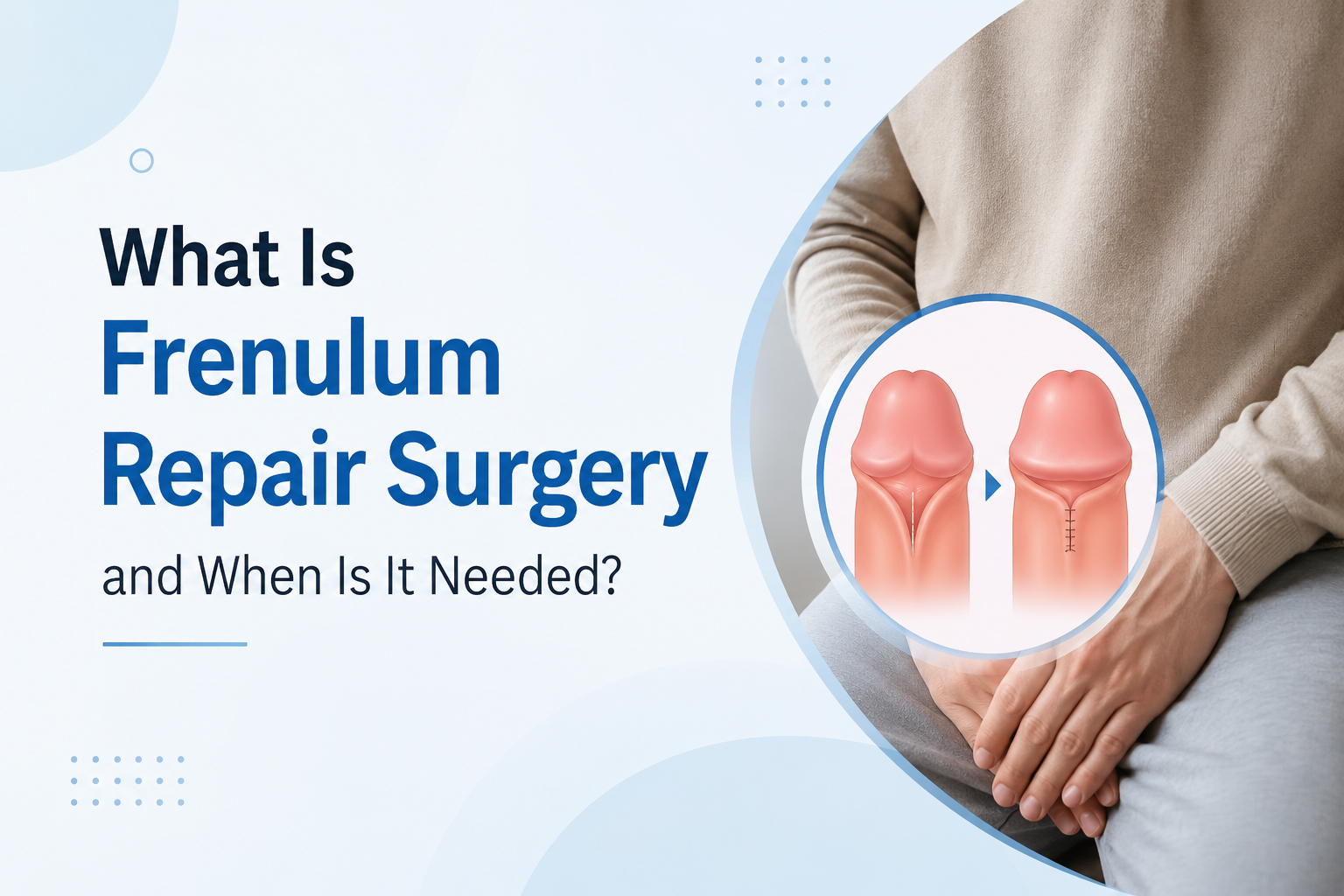
Frenulum repair surgery generally refers to a surgical procedure used to address a short, tight or damaged penile frenulum. In the context of a short frenulum, the procedure is commonly called frenuloplasty.
The aim is to reduce excessive tension in the frenulum and allow more comfortable movement. Surgical techniques can involve dividing the restrictive tissue and repairing it in a way that provides additional length.
The exact technique is selected according to the individual’s anatomy and the reason for treatment. A doctor first needs to determine whether the symptoms are actually coming from the frenulum or from another condition affecting the foreskin or penis.
Why Can the Frenulum Cause Problems?
A short frenulum may be present from birth. In other cases, inflammation, injury or scarring can contribute to tightening of the tissue. A restrictive frenulum may become noticeable when the foreskin is pulled back or during an erection.
Common concerns can include:
- Tightness or pulling beneath the head of the penis
- Discomfort during an erection
- Pain during sexual intercourse or masturbation
- Repeated tearing of the frenulum
- Bleeding after a tear
- Difficulty retracting the foreskin comfortably
These symptoms do not necessarily mean that surgery is required. A proper assessment helps establish the cause and determine the most appropriate treatment.
When Is Frenulum Repair Surgery Needed?
Frenulum repair surgery may be considered when a short or tight frenulum repeatedly causes symptoms or affects normal function. For example, repeated tearing and painful tightness can be reasons for surgical evaluation.
A doctor may consider frenuloplasty when:
Repeated Tearing Occurs
A tight frenulum can become injured during sexual activity or forceful retraction. Repeated tears may heal with scar tissue, potentially making the tissue less flexible.
Pain or Tightness Persists
If pulling or discomfort continues during erections or sexual activity, treatment may be considered after clinical evaluation.
The Foreskin Cannot Move Comfortably
A short frenulum can sometimes contribute to difficulty retracting the foreskin even when the foreskin itself is not the primary problem. BAUS notes that frenuloplasty may be appropriate when tightness is caused by a short frenulum rather than true foreskin tightness.
Can a short frenulum heal without surgery?
Some mild cases may be observed or managed conservatively. The appropriate option depends on the symptoms and examination findings.
Does a short frenulum always cause pain?
No. Some people have a short frenulum without significant symptoms, while others experience pulling, discomfort or tearing.
Can a torn frenulum repair itself?
A minor tear may heal naturally, but repeated tearing or persistent symptoms should be assessed by a medical professional.
Is frenuloplasty the same as circumcision?
No. Frenuloplasty specifically addresses the frenulum. Circumcision removes the foreskin and may be considered separately when foreskin-related problems are also present.
Can frenulum problems be confused with phimosis?
Yes. A short frenulum can sometimes produce symptoms that resemble foreskin tightness. Clinical assessment helps distinguish between the two conditions.
How Is Frenulum Repair Surgery Performed?
During frenuloplasty, the surgeon releases the restrictive frenulum and repairs the tissue in a lengthened position. The procedure is designed to reduce tension and improve flexibility rather than simply remove the tissue.
The type of anaesthesia depends on the clinical setting, procedure and medical assessment. Patient information from NHS sources describes frenuloplasty being performed using local or general anaesthesia in appropriate cases.
Before surgery, the doctor will discuss the patient’s symptoms, medical history, medications and treatment expectations. This assessment is important for deciding whether frenuloplasty is appropriate or whether another treatment would be more suitable.
What Is Recovery Like After Frenulum Repair Surgery?
Recovery varies between individuals. Mild discomfort, swelling or bruising can occur during the early healing period. Dissolvable stitches are commonly used, so separate stitch removal may not be required in many cases.
Patients should follow the surgeon’s specific aftercare instructions. Depending on the procedure and healing progress, this may include keeping the area clean, wearing comfortable clothing and avoiding sexual activity until the wound has adequately healed.
The exact return-to-activity timeline should be confirmed with the treating surgeon rather than following a fixed schedule.
Are There Risks?
Like any surgical procedure, frenulum repair surgery can have potential complications. These may include:
- Pain or discomfort
- Bleeding
- Infection
- Swelling or bruising
- Wound-healing problems
- Scarring
- Changes in sensation
Rarely, symptoms may persist and additional treatment may be considered. BAUS also notes that circumcision may sometimes be required if frenuloplasty does not adequately resolve the underlying problem.
When Should You See a Doctor?
Consider seeking medical evaluation if you experience repeated frenulum tearing, bleeding, persistent pain, significant tightness or difficulty retracting the foreskin.
It is particularly important not to repeatedly forcefully stretch or retract painful tissue after an injury, as further trauma may worsen the problem. A qualified clinician can examine the area and explain whether observation, conservative management or surgery is appropriate.
Choosing Appropriate Surgical Care
For concerns involving the penile frenulum, treatment should begin with an accurate assessment rather than assuming that surgery is necessary. At Elegance Clinic, Dr. Ashutosh Shah brings more than two decades of surgical experience to patient evaluation and treatment planning. His profile provides further information about his professional background and surgical expertise.
Patients can also explore the clinic’s broader Aesthetic Genital and Circumcision & Frenuloplasty services to understand how related concerns may be evaluated. For those considering treatment, the clinic’s About Us information explains its approach to cosmetic, reconstructive and plastic surgical care. A private consultation can then help determine the most appropriate next step for an individual’s symptoms and anatomy.
Conclusion
Frenulum repair surgery, or frenuloplasty, can be an option for people whose short or tight penile frenulum causes persistent discomfort, repeated tearing or functional difficulty. However, not every short frenulum requires surgery. The right decision depends on the symptoms, examination findings and whether another foreskin or penile condition is contributing to the problem.
If you are experiencing recurrent tearing, pain or tightness, professional evaluation can help identify the cause and explain the treatment options available. A personalized assessment is the best way to determine whether frenulum repair surgery is appropriate for your situation.
Frequently Asked Questions
How do I know whether I need frenulum repair surgery?
A physical examination is the most reliable way to determine whether the frenulum is causing your symptoms and whether surgery is appropriate.
Will frenulum repair surgery prevent future tearing?
The purpose of frenuloplasty is to reduce excessive tightness, which may reduce problems caused by a restrictive frenulum. Individual outcomes can vary.
How soon can normal activities resume?
The timeline depends on healing and the nature of the procedure. Your surgeon will provide specific instructions about exercise, sexual activity and other activities.
Can frenuloplasty be performed if there is also a foreskin problem?
It can depend on the underlying condition. If the foreskin itself is significantly affected, another procedure such as circumcision may be considered instead of or after frenuloplasty.
Is a consultation necessary before choosing treatment?
Yes. Because similar symptoms can have different causes, professional examination is important before deciding on surgery.

