

|
Getting your Trinity Audio player ready...
|
✓ Medically reviewed by Dr. Ashutosh Shah, Plastic, Reconstructive & Cosmetic Surgeon (M.Ch., DNB)
Written by: Dr. Ashutosh Shah
Dr. Ashutosh Shah is a Plastic, Reconstructive & Cosmetic Surgeon with more than 22 years of surgical experience. His clinical approach emphasizes careful assessment, individualized treatment planning and appropriate surgical care. At Elegance Clinic, patients can discuss their concerns and receive guidance based on their individual medical circumstances.
Key Takeaways
- Penile implants are surgical devices used to help men with erectile dysfunction achieve an erection suitable for sexual activity.
- Although modern implants are generally reliable, complications can include infection, mechanical failure, erosion, pain or other device-related problems.
- A malfunctioning implant may require assessment and, in some cases, surgical repair or replacement.
- Infection associated with a penile implant needs prompt medical attention and may require removal of the device.
- New pain, swelling, discharge, skin changes or difficulty using an implant should not be ignored.
- The appropriate treatment depends on the type of implant, the problem involved and the patient’s overall health.
Penile implants can provide a treatment option for erectile dysfunction when other approaches have not provided satisfactory results or cannot be used. The devices are surgically placed inside the penis and are available in different designs, including inflatable and semirigid implants.
Like any implanted medical device, however, a penile implant can sometimes develop problems. Penile implant issues may occur shortly after surgery or years later and can range from infection and healing problems to mechanical malfunction or tissue-related complications.
Recognizing a potential problem early is important. Not every change means that an implant has failed, but symptoms such as persistent pain, swelling, discharge, skin breakdown or difficulty operating an inflatable device deserve professional evaluation.
What Types of Problems Can Affect a Penile Implant?
The specific problem can vary depending on the implant type, the timing of symptoms and the patient’s medical history.
Infection
Infection is one of the important complications associated with penile implant surgery. It may occur during the postoperative period and can require treatment that goes beyond oral medication. In some cases, the implant may need to be removed so the infection can be treated.
Possible warning signs can include increasing pain, redness, swelling, fever or discharge. Anyone experiencing concerning symptoms after implant surgery should contact their treating healthcare professional promptly.
Mechanical Failure
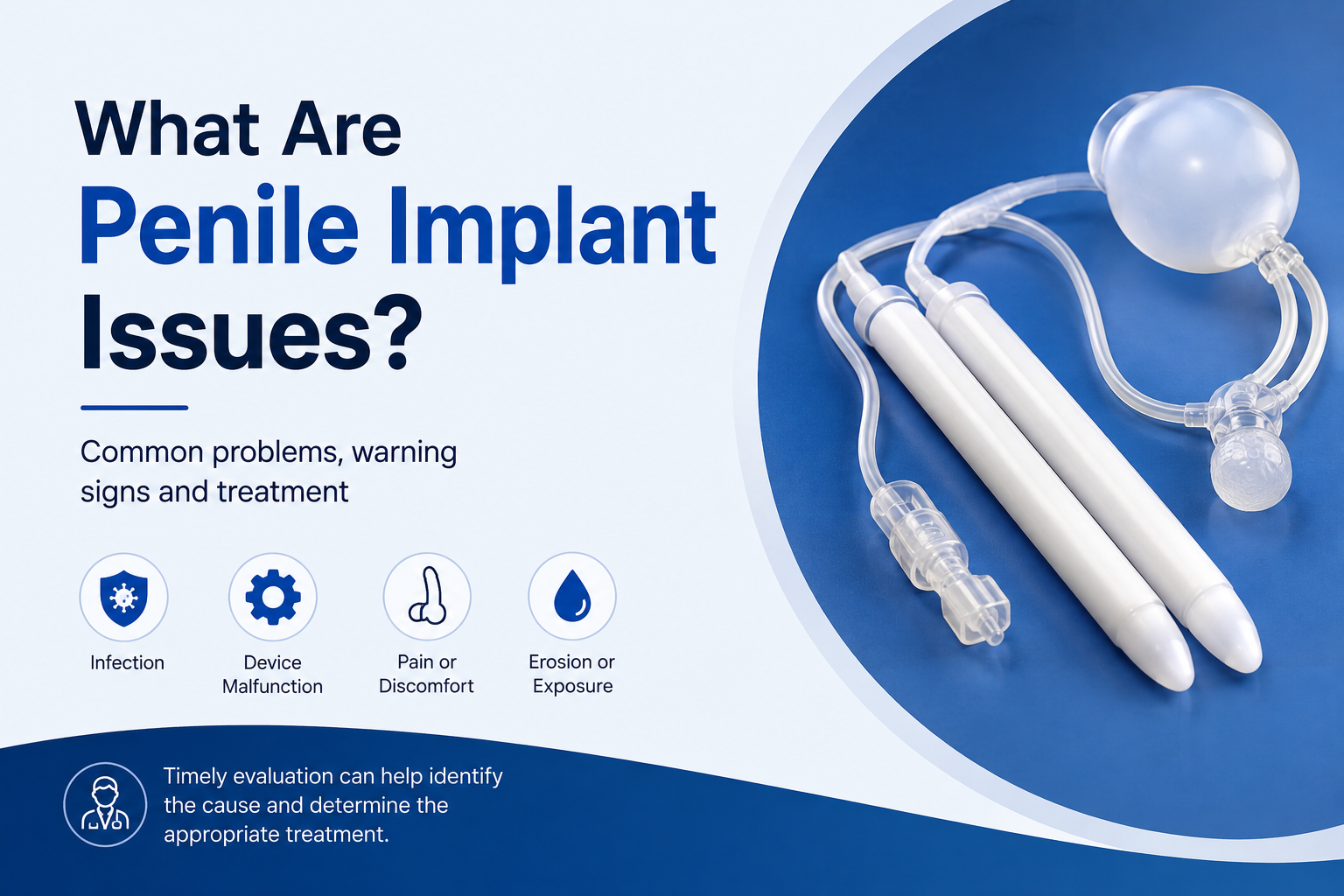
Inflatable penile implants contain several components, including cylinders, a pump and a fluid reservoir. Because they contain multiple mechanical parts, a component can occasionally malfunction. Semirigid implants have a different design and therefore a different set of potential device-related problems.
If an implant no longer works as expected, the device may need to be assessed. In cases of confirmed mechanical failure, surgical repair or replacement may be considered.
Erosion or Tissue Problems
In some situations, an implant can place pressure on surrounding tissue and contribute to erosion. Adhesion or erosion can sometimes be associated with infection and requires medical assessment.
Changes in the skin over or around the implant, unusual discomfort or any indication that part of the device is becoming exposed should be evaluated without delay.
Understanding Penile Implant Issues
| Problem | What It May Involve | Why Medical Assessment Matters |
|---|---|---|
| Infection | Pain, swelling, redness, fever or discharge | Infection involving an implant may require specific treatment and sometimes device removal |
| Mechanical malfunction | Pump, cylinder or other component not working correctly | The device may require repair or replacement |
| Erosion | Implant affecting surrounding tissue | Early assessment may help determine the extent of tissue involvement |
| Persistent pain | Ongoing or worsening discomfort | The cause needs to be identified rather than assumed to be normal healing |
| Difficulty using the device | Problems inflating or deflating an inflatable implant | May indicate a device or usage-related issue |
The presence of one of these symptoms does not automatically establish the cause. A physical examination and, when appropriate, additional evaluation are needed to determine what is happening.
When Should You See a Doctor?
A patient should seek medical advice when a penile implant behaves differently from usual or when new symptoms develop.
Medical evaluation is particularly important for:
- Persistent or increasing pain
- Fever or other signs of infection
- New swelling or redness
- Unusual discharge
- Changes in the skin around the implant
- Difficulty inflating or deflating an inflatable device
- A noticeable change in the position or function of the implant
- Suspected exposure of any part of the device
A broken implant does not necessarily require emergency treatment in every situation, but it should be assessed by an appropriately qualified healthcare professional. Mayo Clinic notes that a failed implant may require surgery for repair or replacement.
What Happens During an Evaluation?
The doctor will generally want to understand when the symptoms began, whether they are getting worse and how the implant is functioning.
The assessment may include:
Medical and Surgical History
Previous implant surgery, other procedures, medications, medical conditions and earlier complications can all be relevant.
Physical Examination
An examination can help identify swelling, tenderness, skin changes, positioning concerns or other abnormalities.
Device Assessment
For an inflatable implant, the clinician may evaluate whether the pump and other components appear to function correctly. Further testing may be considered depending on the findings.
Treatment Planning
Treatment depends entirely on the underlying problem. Some concerns may require observation or conservative management, while infection, significant erosion or confirmed mechanical failure may require surgical intervention.
Recovery and Follow-Up
The recovery period depends on whether the patient has undergone initial implant placement, revision surgery or treatment for a complication. Following the surgeon’s instructions regarding wound care, physical activity and sexual activity is important.
After penile implant surgery, patients are generally given specific instructions about when normal activities and sexual activity can resume. Mayo Clinic notes that many people can return to strenuous activity and sexual activity around four to six weeks after surgery, although individual instructions can differ.
Patients should not assume that a new symptom is simply part of normal recovery. If pain, swelling or other symptoms are worsening rather than improving, contacting the treating team is appropriate.
Frequently Asked Questions
Can a penile implant stop working?
Yes. Although penile implants are designed to be durable, mechanical failure can occur. A failed component may require surgical repair or replacement.
Is pain after penile implant surgery normal?
Some pain and tenderness can occur during recovery. However, persistent, severe or worsening pain should be discussed with a healthcare professional because it may indicate a complication.
Can a penile implant become infected years after surgery?
An infection can occur after implantation, although the timing and cause can vary. Any new signs of infection around an implant should be evaluated promptly.
What happens if a penile implant becomes exposed?
Exposure of the device through the skin is a serious concern and requires prompt medical assessment. Treatment depends on the extent of tissue involvement and whether infection is present.
Does every penile implant problem require another surgery?
No. The treatment depends on the type and severity of the problem. Some concerns may be managed without revision surgery, while mechanical failure or certain infections may require an operation.
Conclusion
Penile implant issues can range from temporary postoperative discomfort to infection, erosion or mechanical device failure. While modern penile implants are generally reliable, recognizing changes in pain, swelling, skin condition or device function is important.
A new or persistent problem should be assessed rather than managed based on assumptions. The right treatment depends on the specific implant, the underlying cause and the patient’s overall health. Professional evaluation can help determine whether monitoring, medical treatment or revision surgery is appropriate.
If you are experiencing changes or concerns after penile implant surgery, an individual assessment can help identify the underlying issue and guide the next step. At Elegance Clinic, patients can learn more about Dr. Ashutosh Shah and his surgical expertise, while the clinic’s surgical services provide an overview of the areas of care available. For patients who would like to understand the clinic and its approach before making a decision, the About Elegance Clinic page offers additional information. If you would like to discuss your concerns with the clinical team, you can book a consultation and receive guidance based on your individual situation.

