

|
Getting your Trinity Audio player ready...
|
✓ Medically reviewed by Dr. Ashutosh Shah, Plastic, Reconstructive & Cosmetic Surgeon (M.Ch., DNB)
Medical Insights By: Dr. Ashutosh Shah, M.Ch., DNB (Plastic Surgery)
Specialty: Plastic, Reconstructive & Cosmetic Surgery
Experience: 22+ Years
Position: Founder & Director, Elegance Clinic, Surat
Last Updated: August 2026
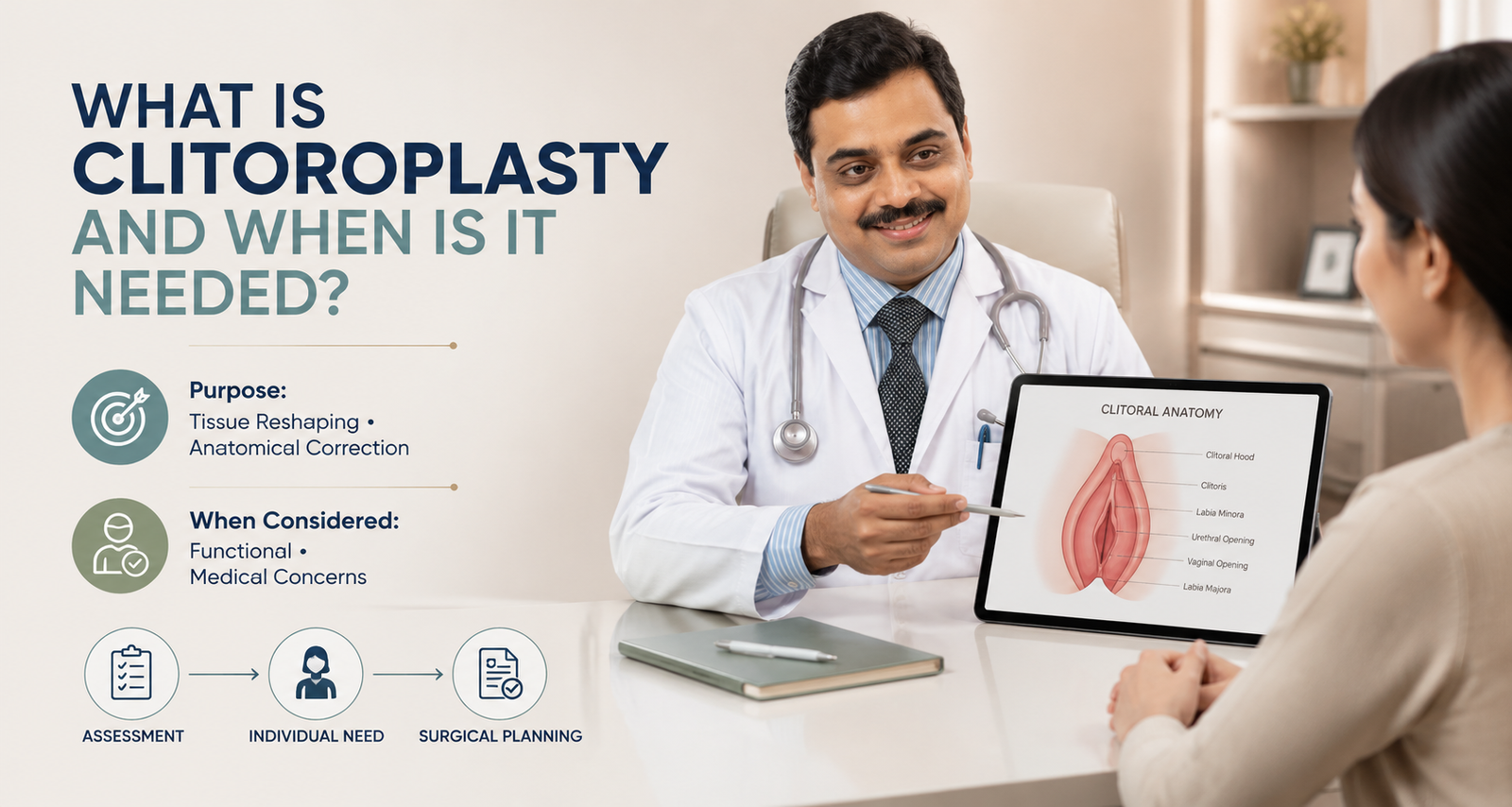
Clitoroplasty is a specialised operation involving the clitoris and surrounding anatomy. Unlike many general cosmetic procedures, surgery in this area requires particular attention to nerves, blood supply, sensation and function.
The term also needs to be used carefully. Clitoroplasty and clitoral hood reduction are not automatically the same procedure. Elegance Clinic lists them separately within its female genital treatment services.
Key Takeaways
- Clitoroplasty is surgery involving the size, shape or structure of the clitoris.
- It may be considered for selected congenital, reconstructive or other individual indications.
- Clitoral hood reduction mainly addresses excess or asymmetric hood tissue and is a different procedure.
- Natural differences in vulval anatomy are common and do not automatically require surgery.
- Preservation of sensation, nerves and blood supply is a major consideration.
- The exact operation depends on anatomy and the reason treatment is being considered.
- Swelling and discomfort are expected during early healing.
- Changes in sensation and scarring are among important risks to discuss.
- Surgery should follow a careful, confidential consultation and informed consent.
What Is Clitoroplasty?
Clitoroplasty is a specialised surgical procedure that modifies or reconstructs clitoral anatomy for selected medical, reconstructive or individual anatomical indications.
Elegance Clinic has a dedicated clitoroplasty service in Surat. Its service information describes the procedure in relation to conditions affecting clitoral size or shape, including selected congenital conditions.
Because the clitoris contains important sensory nerves and blood vessels, surgical planning should prioritise preservation of normal function wherever possible.
Why Might Someone Need Clitoroplasty?
There is no single reason.
Clitoroplasty may be discussed in selected cases involving congenital differences, reconstructive needs or concerns about anatomy.
The decision should not be based simply on comparison with photographs or assumptions about what female genital anatomy “should” look like.
There is a wide range of normal variation.
Elegance Clinic’s educational material similarly notes that differences in female genital size, shape and appearance are common and do not automatically indicate a need for surgery.
Is Clitoroplasty the Same as Clitoral Hood Reduction?
No. They should not automatically be treated as interchangeable procedures.
The clitoris is a sensory organ with both external and internal components.
The clitoral hood is the fold of tissue covering and protecting the external glans.
Clitoral hood reduction primarily reshapes or reduces selected hood tissue.
Clitoroplasty involves surgery directed at clitoral anatomy itself.
Elegance Clinic provides a separate clitoral hood reduction service, reinforcing the importance of distinguishing the procedures.
What Happens Before Clitoroplasty?
The most important part of treatment starts before surgery.
The surgeon needs to determine exactly what anatomical feature is causing concern and why surgery is being considered.
Assessment may include:
- medical history,
- onset and nature of the concern,
- examination of the external genital anatomy,
- previous surgery or trauma,
- congenital history where relevant,
- symptoms such as irritation or discomfort,
- and expectations from treatment.
This assessment also determines whether the concern actually involves the clitoris or mainly the surrounding hood or other vulval tissue.
How Is Clitoroplasty Performed?
There is no single universal clitoroplasty technique.
The surgical plan depends on anatomy, indication and the amount and type of tissue requiring correction.
The surgeon may need to reshape or reconstruct selected tissue while protecting critical neurovascular structures.
The aim should not simply be to remove as much tissue as possible.
In an area where sensation and blood supply are important, conservative anatomical planning is essential.
Why Is Preserving Nerves So Important?
The clitoris has an important sensory role.
Damage to sensory structures can potentially affect sensation.
Therefore, any procedure involving the clitoral region requires careful understanding of anatomy and attention to the neurovascular structures.
Elegance Clinic’s clitoroplasty information specifically identifies preservation of sensitivity as an important treatment goal.
No surgeon should promise that sensation can never change after surgery. Potential sensory changes should be included in informed consent.
Is Clitoroplasty a Cosmetic Surgery?
It can have different indications.
In some circumstances, surgery may be reconstructive or related to congenital anatomy. In other situations, a patient may seek consultation because of appearance or discomfort.
These situations should not be treated as identical.
The reason for surgery affects both the technique and the goals.
Patients exploring intimate procedures can review Elegance Clinic’s broader aesthetic genital surgery services to understand why different anatomical concerns require different procedures.
Does Clitoral Size Naturally Vary?
Yes.
There is normal variation in female genital anatomy.
Size, symmetry, pigmentation and tissue distribution can differ significantly from one person to another.
An anatomical difference does not automatically represent a medical abnormality.
This is particularly important in cosmetic consultations. Patients should receive neutral information rather than being made to feel that normal anatomy requires correction.
What About Clitoral Asymmetry?
Minor asymmetry is common throughout the human body, including the vulva.
If asymmetry is noticeable, examination can help establish whether it involves:
- the clitoral hood,
- surrounding vulval tissue,
- scarring,
- previous surgery,
- or another anatomical factor.
Elegance Clinic has also published guidance explaining that clitoral-region asymmetry does not automatically mean treatment is necessary.
Can Clitoroplasty Improve Sexual Sensation?
Surgery should not be presented as a guaranteed method of increasing sexual pleasure.
Sexual response involves sensory nerves, hormones, psychological factors, relationships, comfort and many other variables.
When clitoroplasty is performed, preservation of normal sensation is an important consideration, but individual outcomes can vary.
Claims of guaranteed enhancement should therefore be approached cautiously.
What Are the Risks of Clitoroplasty?
Because this is surgery in a sensitive anatomical area, risks should be discussed carefully.
Potential complications can include:
- bleeding,
- infection,
- swelling,
- bruising,
- delayed wound healing,
- scarring,
- asymmetry,
- discomfort,
- altered sensation,
- hypersensitivity or reduced sensitivity,
- dissatisfaction with appearance,
- and the possibility of additional treatment.
Individual risks depend on the exact operation being performed.
What Is Recovery Like?
Early recovery commonly involves swelling, tenderness and sensitivity around the surgical area.
Patients need to keep the area clean and follow their surgeon’s wound-care instructions.
Friction and excessive pressure should be minimised during healing.
Strenuous exercise and sexual activity generally need to be restricted until sufficient healing has occurred.
Recovery should be assessed individually rather than relying on an exact timeline found online.
When Can Normal Activities Resume?
Light daily activities may be possible earlier than strenuous activities, but the appropriate timing depends on the extent of surgery.
Activities such as:
- cycling,
- intense exercise,
- heavy lower-body workouts,
- and sexual activity
can place friction or pressure on healing tissues and may need to be avoided temporarily.
The operating surgeon should determine when these activities can safely resume.
Can Clitoroplasty Be Combined With Labiaplasty?
Different intimate procedures can sometimes be planned together when there are separate anatomical indications, but combining operations is not automatically necessary.
For example, a patient may have concerns involving both the labia and clitoral hood.
The surgeon should evaluate each anatomical area separately and explain why each proposed procedure is being considered.
More surgery does not automatically mean a better result.
How Is Clitoroplasty Different From Labiaplasty?
Labiaplasty primarily involves reshaping the labia, usually the labia minora and, in selected procedures, the labia majora.
Clitoroplasty involves clitoral anatomy.
Clitoral hood reduction involves the tissue covering the clitoral glans.
These procedures are anatomically different even though they may all be grouped under female intimate surgery.
Understanding the distinction helps patients give informed consent for the exact operation being proposed.
How Do You Know Which Procedure You Actually Need?
Do not choose a procedure solely from its name.
A woman who believes she needs clitoroplasty may actually be concerned about prominent or asymmetric clitoral hood tissue.
Another patient may have completely normal anatomy and decide against surgery after receiving an explanation.
A consultation should answer three questions:
What anatomical feature is causing the concern?
Is it within normal variation or is there a specific condition to address?
What treatment, if any, provides a reasonable balance between benefit and risk?
Why Does Surgeon Experience Matter?
Female intimate surgery requires detailed anatomical knowledge, discretion and careful surgical planning.
Dr. Ashutosh Shah holds M.Ch. and DNB qualifications in Plastic Surgery and has more than 22 years of surgical experience. Elegance Clinic’s official information identifies him as a board-certified Plastic, Reconstructive and Cosmetic Surgeon and Founder/Director of Elegance Clinic in Surat.
Patients can also learn about Dr. Ashutosh Shah and Elegance Clinic before considering a sensitive surgical procedure.
A Private Concern Deserves a Precise Diagnosis
If you are concerned about clitoral size, shape, symmetry or surrounding hood tissue, you do not need to decide which operation you need before seeing a surgeon.
The first objective should be to identify the anatomy involved.
A confidential consultation can clarify whether the concern involves the clitoris, clitoral hood, labia or normal anatomical variation and whether surgery is appropriate at all.
Patients in Surat can contact Elegance Clinic for an individual assessment and discussion of treatment options.
Frequently Asked Questions
1. What is clitoroplasty surgery?
Clitoroplasty is specialised surgery involving the size, shape or reconstruction of clitoral anatomy. The technique and purpose vary according to the indication.
2. Is clitoroplasty the same as clitoral hood reduction?
No. Clitoral hood reduction primarily reshapes excess hood tissue, whereas clitoroplasty involves clitoral anatomy itself.
3. Can clitoroplasty affect sensation?
Changes in sensation are a potential risk because the clitoral region contains important sensory nerves. Preserving neurovascular structures is therefore an important surgical consideration.
4. Is clitoroplasty necessary for asymmetry?
Not necessarily. Natural asymmetry is common. Examination is needed to determine whether there is a specific anatomical problem and whether treatment is appropriate.
5. How long does clitoroplasty take to heal?
Recovery varies with the procedure and individual healing. Swelling and tenderness are expected initially, while strenuous exercise and sexual activity generally require a longer restriction period.
6. Can clitoroplasty and labiaplasty be done together?
They may sometimes be combined when there are separate indications, but each procedure should be justified according to the patient’s anatomy and goals.
