

|
Getting your Trinity Audio player ready...
|
✓ Medically reviewed by Dr. Ashutosh Shah, Plastic, Reconstructive & Cosmetic Surgeon (M.Ch., DNB)
Reviewed By: Dr. Ashutosh Shah, M.Ch., DNB (Plastic Surgery)
Specialty: Plastic, Reconstructive & Cosmetic Surgery
Experience: 22+ Years
Position: Founder & Director, Elegance Clinic, Surat
Last Updated: August 2026
Female intimate tightening surgery is generally performed to address structural laxity of the vaginal canal and surrounding tissues. Changes may occur after childbirth, ageing or tissue stretching, but the degree and cause differ considerably between women.
At Elegance Clinic in Surat, women considering intimate procedures can undergo an individual assessment to determine whether surgery is appropriate or whether another approach may better match their concerns.
Key Takeaways
- Female intimate tightening surgery is commonly referred to as surgical vaginal tightening or vaginoplasty.
- It aims to address structural laxity rather than simply change the external appearance.
- Childbirth and tissue ageing can contribute to changes in vaginal support.
- Not every feeling of vaginal looseness requires surgery.
- Pelvic floor problems should be distinguished from tissue laxity.
- Surgical planning should be individualised to the patient’s anatomy.
- Temporary swelling, soreness and activity restrictions are expected during recovery.
- Surgery cannot guarantee a specific change in sexual sensation or satisfaction.
- Risks and alternatives should be discussed before treatment.
What Is Female Intimate Tightening Surgery?
Female intimate tightening surgery is a procedure that aims to tighten selected vaginal tissues when clinically appropriate. It is commonly described as vaginoplasty or surgical vaginal tightening.
Elegance Clinic provides a dedicated surgical vaginal tightening and vaginoplasty service for women considering treatment for vaginal laxity. The clinic identifies childbirth and ageing among factors that may contribute to changes in vaginal firmness.
The operation should not be confused with every procedure marketed as “vaginal rejuvenation.” Different treatments target different tissues and concerns.
Why Can the Vaginal Area Feel Looser?
The vagina is designed to stretch, but pregnancy, vaginal delivery, ageing and changes in connective tissue can affect the way the vaginal and perineal tissues feel.
Possible contributing factors include:
- childbirth-related stretching,
- pelvic floor weakness,
- changes in tissue elasticity,
- perineal stretching or injury,
- ageing,
- and individual anatomy.
Importantly, the patient’s perception of looseness does not automatically identify the anatomical cause.
That is why examination is important before choosing treatment.
Is Vaginal Laxity the Same as Pelvic Floor Weakness?
No.
They can occur together, but they are not identical.
Pelvic floor muscles support the bladder, bowel, uterus and surrounding structures. Weakness can contribute to symptoms that may require pelvic floor physiotherapy or gynaecological assessment.
Vaginal tissue laxity involves structural changes in the vaginal or perineal tissues.
Surgery aimed at tightening tissue should therefore not be used as a substitute for diagnosing an underlying pelvic floor disorder.
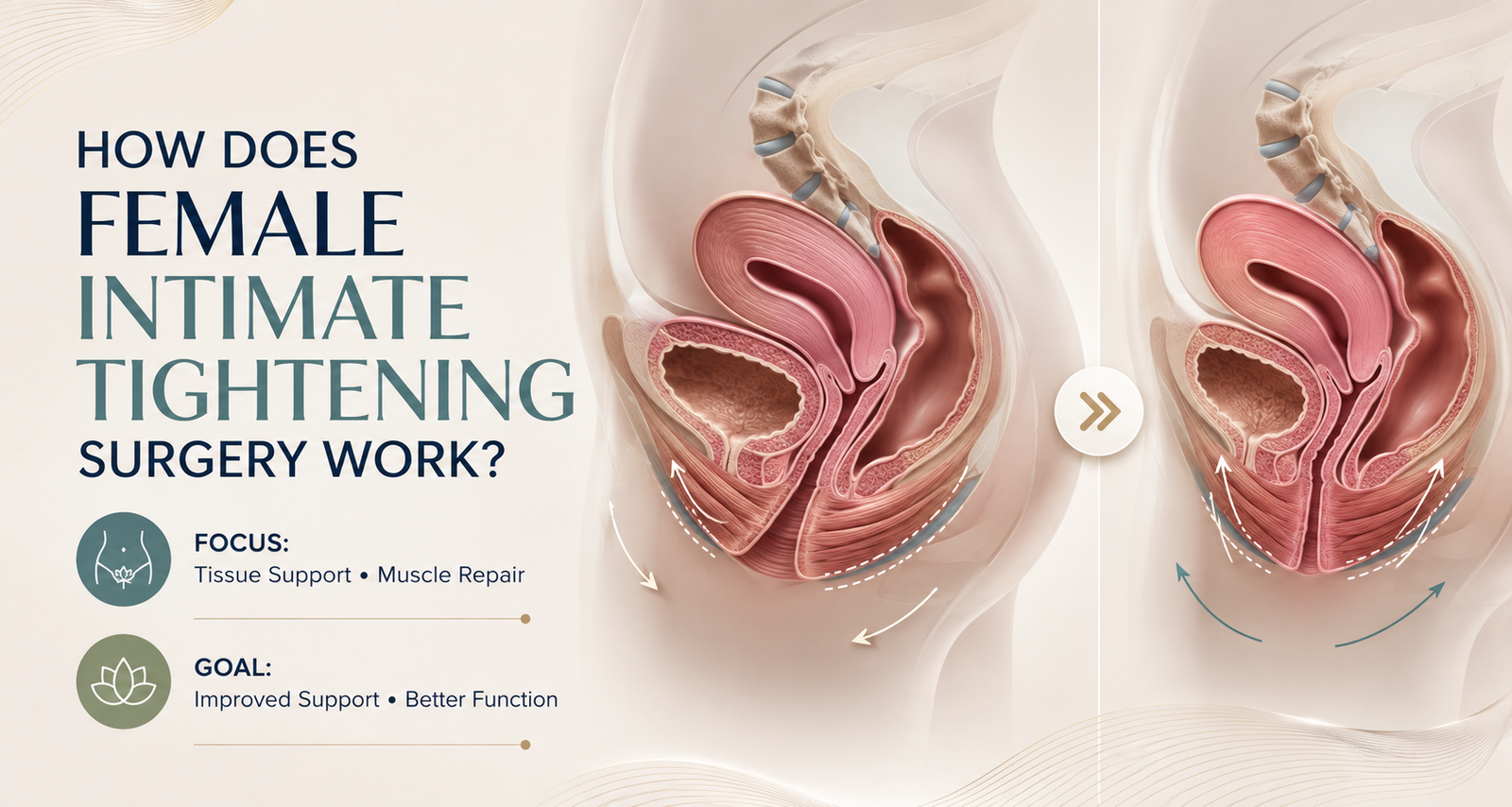
How Does Female Intimate Tightening Surgery Work?
The exact technique depends on the patient’s anatomy and surgical plan.
In general, the surgeon assesses the vaginal canal and supporting tissues, identifies areas of excess or stretched tissue and performs the planned repair or tightening.
The goal should be appropriate structural support rather than making the vaginal canal excessively tight.
Overcorrection can potentially cause discomfort, so conservative and anatomically appropriate planning matters.
What Happens During the Procedure?
Although techniques vary, treatment commonly involves several stages.
1. Preoperative Assessment
The surgeon discusses symptoms, childbirth history, previous procedures, expectations and relevant medical conditions.
2. Examination
The tissues are examined to determine where laxity is present and whether another condition could be contributing to symptoms.
3. Surgical Planning
The amount and location of correction are planned according to the individual anatomy.
4. Tissue Repair
Selected stretched tissue may be repaired or tightened according to the surgical technique.
5. Closure
The surgical area is closed carefully and postoperative instructions are provided.
Elegance Clinic’s official service describes vaginoplasty as a surgical procedure intended to tighten and rejuvenate vaginal tissues.
Female Intimate Tightening: What Surgery Can and Cannot Do
| Question | Realistic Explanation |
|---|---|
| Can surgery tighten lax tissue? | It can surgically correct selected structural laxity when appropriately indicated. |
| Can it correct every pelvic floor problem? | No. Some conditions require pelvic floor, gynaecological or other specialist management. |
| Does everyone need surgery? | No. Treatment depends on symptoms, anatomy and the underlying cause. |
| Can results vary? | Yes. Healing and outcomes vary between individuals. |
| Can it guarantee better sexual satisfaction? | No. Sexual function is influenced by many physical and psychological factors. |
| Is recovery required? | Yes. Tissue healing requires temporary restrictions and follow-up. |
Who May Consider Vaginal Tightening Surgery?
An adult woman may seek an assessment if she has persistent concerns about vaginal laxity, particularly after childbirth or other structural changes.
However, being concerned about intimate anatomy does not automatically mean surgery is required.
Natural anatomical variation is normal.
Elegance Clinic’s broader aesthetic genital treatment programme includes different procedures because intimate concerns do not all have the same cause or require the same treatment.
Is Female Intimate Tightening Surgery Only Cosmetic?
Not necessarily.
Some patients primarily seek a change in tissue tightness or appearance, while others describe functional concerns.
The reason for seeking treatment should be discussed clearly during consultation.
If symptoms suggest prolapse, urinary problems or significant pelvic floor dysfunction, additional specialist evaluation may be appropriate.
Can Exercise Tighten the Vagina Instead?
Pelvic floor exercises can strengthen pelvic floor muscles and may be useful for selected women.
However, exercise cannot surgically remove or repair significantly stretched tissue.
This is why the underlying problem matters.
A patient whose main concern is muscle weakness may need a different treatment pathway from someone with substantial structural tissue laxity.
Is Nonsurgical Vaginal Tightening the Same as Surgery?
No.
Energy-based or other nonsurgical treatments and surgical vaginoplasty work differently.
Surgery physically alters selected tissues.
Nonsurgical procedures do not reproduce the same anatomical operation.
Patients should be cautious about claims that any treatment can guarantee permanent tightening or improved sexual function.
Can Intimate Tightening Surgery Improve Sexual Sensation?
It is not appropriate to guarantee this result.
Sexual sensation and satisfaction depend on multiple factors, including nerve function, hormones, pelvic floor function, comfort, emotional health and relationships.
Surgery may change anatomy, but a specific improvement in sexual pleasure cannot be promised.
A responsible consultation should focus on the patient’s anatomical concern and realistic treatment goals.
What Is Recovery Like?
Recovery varies according to the extent of surgery and individual healing.
Temporary symptoms can include:
- swelling,
- soreness,
- bruising,
- mild spotting or discharge,
- and tightness around the treated tissues.
Patients are generally advised to avoid activities that put significant stress on the healing area until cleared by their surgeon.
Follow-up appointments allow healing to be assessed.
When Can You Return to Exercise?
Light daily activities may resume before strenuous exercise, but timing depends on healing.
Heavy lifting, cycling, intense lower-body exercise and other activities that create pressure or friction around the surgical area may need to be restricted for longer.
Your surgeon should provide individual instructions rather than relying on a fixed online recovery timeline.
When Can Sexual Activity Resume?
Penetrative sexual activity should be avoided until the surgical tissues have adequately healed and the surgeon confirms that it is appropriate.
Returning too early can place tension on healing tissues and potentially contribute to pain, bleeding or wound problems.
The appropriate timing varies between patients.
What Are the Risks?
All surgery has potential risks.
Possible complications of intimate tightening surgery can include:
- bleeding,
- infection,
- swelling,
- delayed wound healing,
- scarring,
- discomfort,
- altered sensation,
- asymmetry,
- excessive tightness,
- pain with intercourse,
- and dissatisfaction with the result.
A consultation should discuss risks relevant to the specific operation rather than presenting surgery as a guaranteed solution.
Can Childbirth Affect the Result Later?
A future vaginal delivery can stretch tissues again.
Women planning future pregnancies should discuss this with their surgeon before deciding when to undergo intimate tightening surgery.
This does not necessarily mean treatment can never be performed before future pregnancy, but reproductive plans can affect treatment timing.
How Do You Know Whether Surgery Is Right for You?
The decision should follow an individual examination.
A surgeon needs to understand:
- what bothers you,
- when the change started,
- childbirth history,
- whether there are pelvic floor symptoms,
- previous surgery,
- medical conditions,
- and what result you expect.
Treatment should address an identifiable concern rather than creating the impression that normal female anatomy requires correction.
Female Intimate Surgery at Elegance Clinic, Surat
Dr. Ashutosh Shah holds M.Ch. and DNB qualifications in Plastic Surgery and has more than 22 years of surgical experience. Elegance Clinic identifies him as a board-certified Plastic, Reconstructive and Cosmetic Surgeon and Founder/Director of the clinic.
Women considering intimate surgery can first learn about Elegance Clinic and its surgical approach and discuss whether vaginal tightening is appropriate for their individual anatomy.
Choose the Treatment for Your Anatomy, Not Just the Treatment Name
If changes after childbirth, ageing or tissue stretching are affecting your comfort or causing concern, the first step does not have to be deciding on surgery.
A confidential assessment can identify what has actually changed and whether surgical tightening, pelvic floor management or another approach is more appropriate.
Use the Elegance Clinic consultation service to discuss your concerns privately with the surgical team in Surat.
Frequently Asked Questions
1. What is female intimate tightening surgery?
It generally refers to surgical vaginal tightening or vaginoplasty performed to address selected structural laxity of vaginal tissues.
2. Is vaginal tightening surgery permanent?
Surgery can create structural changes, but ageing, future childbirth and individual tissue characteristics may affect the result over time.
3. Is intimate tightening surgery painful?
Anaesthesia is used during surgery. Temporary soreness, swelling and discomfort can occur during recovery and should be managed according to the surgeon’s postoperative plan.
4. Can vaginal tightening improve sexual pleasure?
A specific improvement cannot be guaranteed. Sexual satisfaction depends on many factors beyond vaginal tightness.
5. Can I have the procedure after childbirth?
Some women consider treatment for persistent changes after childbirth. Timing should account for tissue recovery, overall health and future pregnancy plans.
6. Do all women with vaginal looseness need surgery?
No. The appropriate treatment depends on the cause and severity of symptoms. Some women may benefit from pelvic floor management or other approaches instead.
