

|
Getting your Trinity Audio player ready...
|
✓ Medically reviewed by Dr. Ashutosh Shah, Plastic, Reconstructive & Cosmetic Surgeon (M.Ch., DNB)
Men’s Intimate Surgery Guidance by Dr. Ashutosh Shah
Dr. Ashutosh Shah, M.Ch., DNB (Plastic Surgery)
Specialty: Plastic, Reconstructive & Cosmetic Surgery
Experience: 22+ Years
Position: Founder & Director, Elegance Clinic, Surat
Dr. Ashutosh Shah has more than 22 years of surgical experience in plastic, reconstructive and cosmetic surgery. His practice at Elegance Clinic includes male intimate procedures such as frenuloplasty, where treatment is selected according to the patient’s anatomy, symptoms and functional concerns.
Last Updated: August 2026
Introduction
Pain or pulling beneath the penis during an erection may sometimes be caused by a short or tight penile frenulum. Some men also notice difficulty retracting the foreskin comfortably, repeated tearing or bleeding from the same area.
When the frenulum itself is responsible, laser frenuloplasty surgery may be discussed as a treatment option. The aim is to release or lengthen the restrictive tissue so that it moves with less tension.
However, not every foreskin problem is caused by a short frenulum. Tight foreskin, inflammation, scarring and other genital conditions can produce similar symptoms. An examination is therefore important before choosing surgery.
At Elegance Clinic, frenuloplasty is included among its male intimate and circumcision-related treatments. The clinic also provides a sutureless frenuloplasty procedure for selected patients with a short or tight penile frenulum.
Key Takeaways
- Frenuloplasty treats a short, tight or repeatedly injured penile frenulum.
- A tight frenulum can cause pulling, discomfort or tearing during erections or sexual activity.
- Frenuloplasty and circumcision are different procedures.
- Not everyone with penile tightness needs frenuloplasty.
- The procedure aims to release tension while preserving appropriate movement.
- Technique selection depends on the patient’s anatomy and condition.
- Temporary swelling, tenderness and activity restrictions can be expected during healing.
- Recurrent bleeding, worsening pain, infection signs or healing problems should be reviewed by the treating surgeon.
What Is a Short Penile Frenulum?
The penile frenulum is a small band of tissue connecting the underside of the glans to the foreskin. When it is unusually short or tight, the condition is sometimes called frenulum breve.
A normal frenulum allows the foreskin to move without excessive pulling.
When the tissue is too short, tension may develop as the foreskin retracts or during an erection. In some cases, the tissue repeatedly tears and heals, which can potentially contribute to additional scarring and tightness.
Elegance Clinic’s information on frenulum repair surgery notes that a short frenulum may be present naturally or can become problematic because of injury, inflammation or scarring.
What Are the Symptoms of a Tight Frenulum?
Symptoms vary depending on the degree of restriction.
Some men experience discomfort only during a full erection. Others notice pulling when retracting the foreskin.
Possible symptoms include:
- tightness beneath the head of the penis,
- discomfort during erections,
- pain during sexual activity,
- repeated tearing at the frenulum,
- bleeding after tearing,
- restricted foreskin movement,
- or recurrent tenderness in the same area.
These symptoms do not confirm the diagnosis by themselves.
A tight foreskin can cause similar problems, which is why distinguishing frenulum breve from phimosis is important.
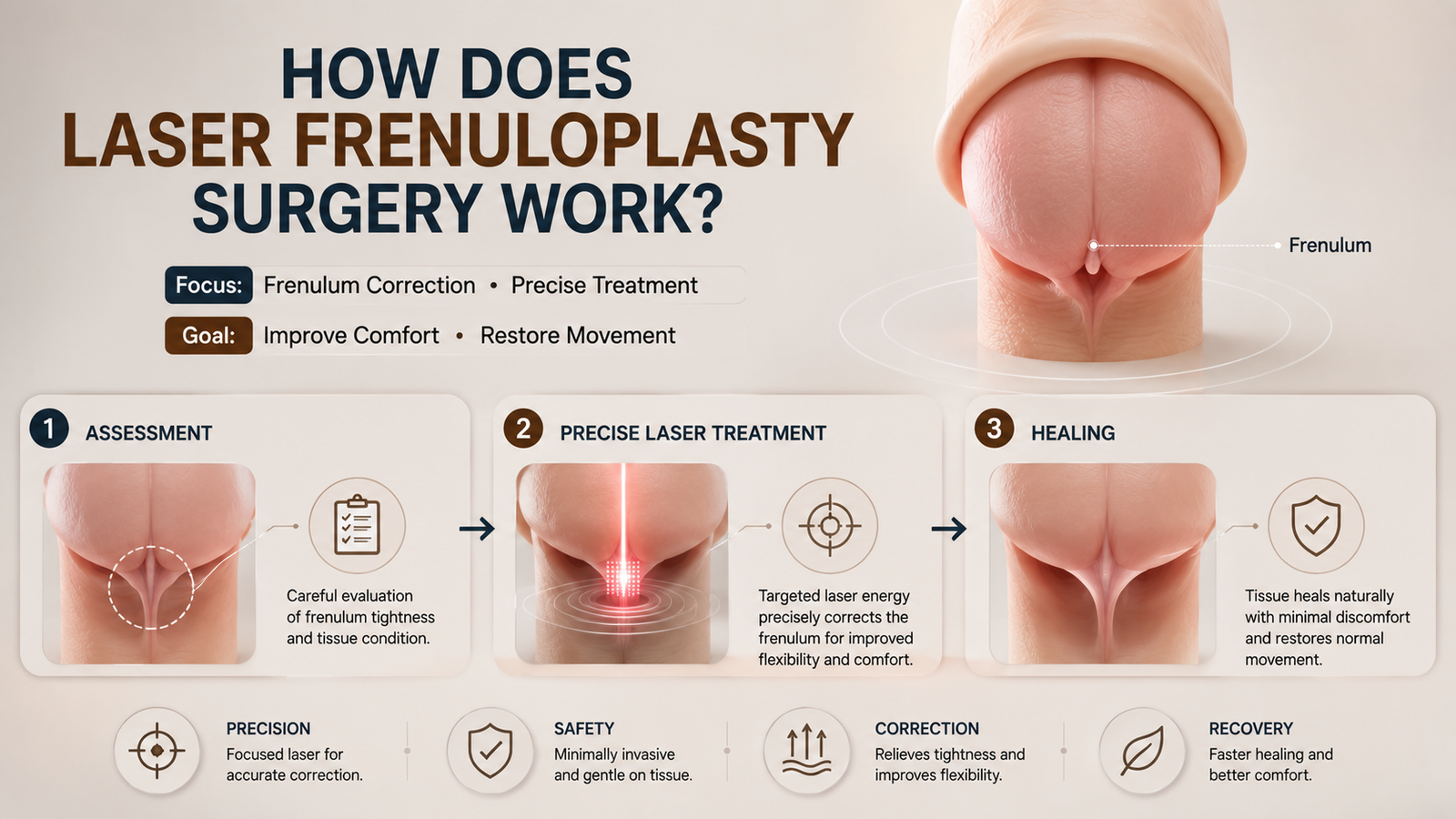
How Does Laser Frenuloplasty Surgery Work?
Frenuloplasty works by releasing or lengthening the restrictive frenulum so that excessive tension is reduced.
The exact method varies according to the technique being used and the patient’s anatomy.
The surgeon first identifies where the frenulum is restricting movement. The tight tissue is then carefully released or lengthened while protecting the surrounding structures.
When laser or other advanced surgical technology is used, the purpose remains the same: reduce restrictive tension and allow more comfortable movement.
Patients should not assume that the word “laser” means the procedure is completely risk-free or requires no healing. Tissue is still being treated and needs appropriate postoperative care.
Is Laser Frenuloplasty the Same as Sutureless Frenuloplasty?
Not necessarily.
“Laser” describes the technology that may be used during tissue treatment, whereas “sutureless” refers to a technique intended to avoid conventional stitches.
Elegance Clinic describes sutureless frenuloplasty as an option for treating a short or tight penile frenulum without conventional sutures. The clinic states that treatment is planned according to the patient’s anatomy and symptoms.
The technique appropriate for an individual patient should therefore be determined during clinical assessment rather than chosen simply because one method sounds more advanced.
Is Frenuloplasty the Same as Circumcision?
No. Frenuloplasty and circumcision address different anatomical problems.
Frenuloplasty focuses primarily on the frenulum.
Circumcision involves removal of the foreskin.
If the foreskin itself retracts adequately but the short frenulum creates pulling, frenuloplasty may sometimes address the problem while preserving the foreskin.
Elegance Clinic’s guidance on circumcision and frenuloplasty treatment specifically notes that not every patient with tightness needs circumcision and that frenuloplasty may be more appropriate when the main problem is a short frenulum.
Does Every Short Frenulum Need Surgery?
No.
The decision depends on symptoms and severity.
A person who has a slightly short frenulum but experiences no pain, tearing or functional difficulty may not necessarily require an operation.
Surgery becomes more relevant when restriction causes persistent symptoms or repeated injury.
The key question is not simply whether the frenulum looks short. It is whether it is creating clinically meaningful tension or damage.
Is Laser Frenuloplasty Painful?
The procedure is performed with anaesthesia appropriate to the planned treatment so that discomfort can be controlled during surgery.
Afterwards, some temporary tenderness, swelling or sensitivity can occur as the tissue heals.
The intensity and duration vary between patients.
Pain that becomes increasingly severe rather than gradually settling, particularly when accompanied by significant swelling, discharge, fever or bleeding, should be discussed with the treating surgeon.
How Long Does Frenuloplasty Take to Heal?
Healing occurs gradually rather than immediately after the procedure.
During early recovery, the treated area may be sensitive and swollen. Patients need to keep the area clean and follow the specific wound-care instructions provided by their surgeon.
As healing progresses, discomfort generally decreases and the treated tissue becomes more settled.
Recovery timelines should not be copied from another patient’s experience because the procedure, anatomy and healing response can differ.
When Can Sexual Activity Resume?
Sexual intercourse and masturbation should be avoided until the treated tissue has healed sufficiently and the surgeon has advised that these activities can safely resume.
Returning too early can place tension and friction on healing tissue.
This may cause discomfort, bleeding or disruption of the treated area.
Even if pain has already reduced, the deeper healing process may still be continuing.
Patients should therefore follow their postoperative review rather than deciding solely on the absence of pain.
Can the Frenulum Tear Again After Surgery?
Frenuloplasty is intended to reduce the excessive tension contributing to repeated tearing.
However, no surgical procedure should be described as having zero possibility of recurrence or complications.
Healing quality, scar formation, postoperative activity and individual anatomy can influence the result.
If the area continues to feel tight after recovery or repeatedly tears again, reassessment may be needed to determine why.
What Are the Possible Risks of Frenuloplasty?
Although frenuloplasty is generally a limited surgical procedure, it still carries potential risks.
These may include bleeding, infection, swelling, wound-healing problems, scarring, persistent tenderness, altered sensation, under-correction or recurrent tightness.
There can also be temporary discomfort during the healing period.
Discussing these possibilities before treatment is part of informed consent.
Choosing an experienced surgeon is important, but experience does not mean complications can never occur.
Can Frenuloplasty Affect Sensation?
The frenulum is a sensitive area, so temporary changes in sensation can occur while tissue is healing.
The aim of treatment is to reduce problematic tension while preserving normal function as much as possible.
Persistent or concerning sensory changes should be discussed during follow-up.
Patients should also distinguish between sensitivity caused by healing and a permanent change. Early postoperative sensations do not necessarily represent the final outcome.
What Should You Avoid After Frenuloplasty?
Patients should follow the exact aftercare instructions given by their surgeon.
During early healing, this commonly means avoiding unnecessary friction and tension on the treated area, maintaining appropriate hygiene and avoiding sexual activity until cleared.
Loose, comfortable clothing may also reduce irritation.
Do not repeatedly manipulate the wound to check whether the frenulum is “long enough” during healing.
The tissue needs time to recover before the functional result can be properly evaluated.
When Should You Contact Your Surgeon?
Seek medical review if you develop symptoms that are unexpected or worsening.
These can include persistent bleeding, increasing swelling, worsening pain, pus-like discharge, fever, wound separation or other concerning changes.
A postoperative question does not need to become an emergency before contacting the treating team.
Early review can determine whether the symptom is part of normal healing or requires treatment.
What Results Can You Expect?
The intended result of frenuloplasty is reduced restrictive tension and more comfortable movement of the frenulum and foreskin.
Results depend on the starting anatomy, degree of restriction, surgical technique and healing.
The procedure should not be promoted as a method for increasing penile size or guaranteeing improved sexual performance.
Its primary purpose is functional: correcting a short or restrictive frenulum when that tissue is responsible for symptoms.
Conclusion
Laser frenuloplasty surgery can be considered when a short or tight penile frenulum causes pain, pulling, repeated tearing or restricted movement.
The procedure works by releasing or lengthening restrictive tissue so that excessive tension is reduced.
However, penile tightness does not always come from the frenulum. Phimosis, inflammation, scarring and other conditions may cause similar symptoms.
A clinical examination is therefore important before deciding whether frenuloplasty, circumcision or another approach is appropriate.
The goal should be comfortable movement and functional correction, not simply choosing a procedure because it uses laser technology.
Male Intimate Surgery at Elegance Clinic
At Elegance Clinic, male intimate procedures include circumcision and frenuloplasty alongside other plastic and aesthetic genital treatments. The clinic’s dedicated frenuloplasty service focuses on evaluating short or tight frenulum symptoms before treatment is planned.
Dr. Ashutosh Shah, M.Ch., DNB (Plastic Surgery) is Founder and Director of Elegance Clinic and has more than 22 years of surgical experience. Patients can learn more about Dr. Ashutosh Shah and the clinic’s surgical expertise before deciding on an intimate surgical procedure.
Treat the Source of the Tightness, Not Just the Symptom
If erections or foreskin movement repeatedly cause pulling, pain or tearing beneath the penis, the first step is identifying whether the frenulum is actually responsible. Elegance Clinic offers confidential assessment for these concerns, and patients can discuss frenuloplasty treatment privately with the clinic team before deciding whether a procedure is necessary.
Frequently Asked Questions
1. What is laser frenuloplasty surgery?
It is a procedure intended to release or lengthen a short or restrictive penile frenulum. Laser technology may be used as part of the surgical technique.
2. How do I know if my frenulum is too short?
Symptoms can include pulling beneath the penis, discomfort during erections, restricted movement or repeated tearing. An examination is needed for diagnosis.
3. Do I need circumcision if I have a short frenulum?
Not necessarily. If the main problem is the frenulum rather than the foreskin, frenuloplasty may sometimes be considered while preserving the foreskin.
4. Is frenuloplasty performed with stitches?
Technique varies. Elegance Clinic also describes a sutureless frenuloplasty option that avoids conventional stitches.
5. Can I have sex immediately after frenuloplasty?
No. Sexual activity should be avoided while the treated tissue heals and resumed according to the surgeon’s advice.
6. Can the frenulum become tight again?
Recurrence is possible. Healing and scar formation vary, so persistent or recurrent tightness should be reassessed.
7. Does frenuloplasty increase penis size?
No. Frenuloplasty is intended to reduce restrictive frenulum tension, not increase penile length or girth.
8. When should I seek help after frenuloplasty?
Contact your surgeon for worsening pain, persistent bleeding, increasing swelling, discharge, fever, wound separation or another concerning symptom.

