

|
Getting your Trinity Audio player ready...
|
✓ Medically reviewed by Dr. Ashutosh Shah, Plastic, Reconstructive & Cosmetic Surgeon (M.Ch., DNB)
Written By: Dr. Ashutosh Shah
Specialty: Plastic, Reconstructive, Cosmetic & Hair Transplant Surgery
Experience: 22+ Years
Position: Founder & Director, Elegance Clinic, Surat
Dr. Ashutosh Shah holds M.Ch. and DNB qualifications in Plastic Surgery and has more than 22 years of surgical experience.
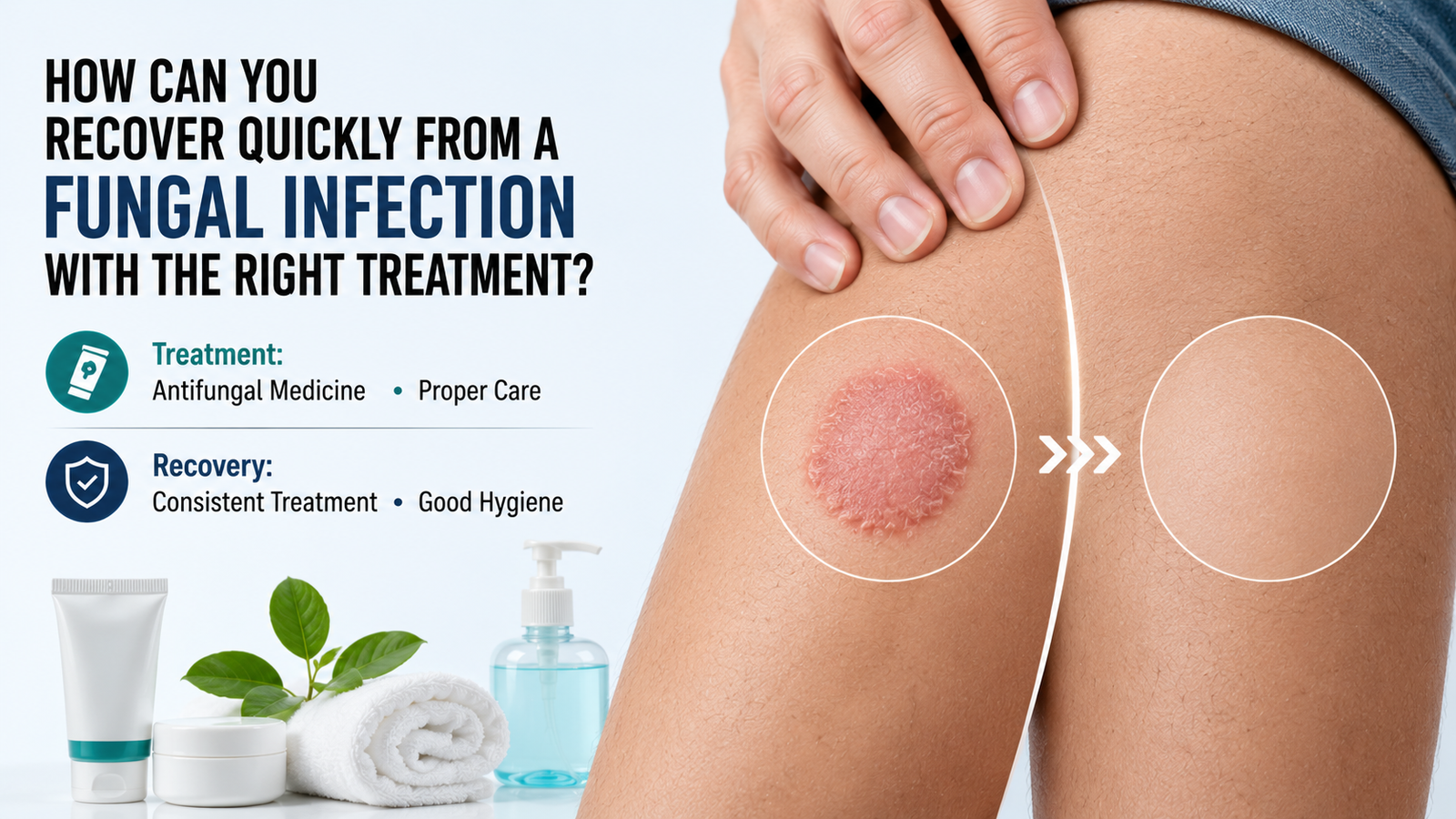
Fungal infections often improve well when the right fungus is treated with the right antifungal for the right length of time. However, “quick recovery fungal infection treatment” should not mean choosing the strongest cream or stopping treatment as soon as itching settles. Recovery depends on where the infection is, how extensive it is, whether the diagnosis is correct, and whether reinfection is occurring.
Common superficial fungal infections include ringworm, athlete’s foot, jock itch, candidal skin infections, and some nail or scalp infections. These conditions do not all behave the same way. According to the CDC, ringworm can affect the skin, scalp, and nails, and treatment varies according to the site and severity.
One practical problem is that an itchy or circular rash is not automatically fungal. Eczema, dermatitis, psoriasis, and other conditions can sometimes look similar. Using the wrong product may delay proper treatment. Another growing concern is difficult-to-treat dermatophyte infection; the CDC has reported antifungal-resistant dermatophytosis associated with Trichophyton indotineae, including outbreaks in South Asia.
For patients, the goal should therefore be correct diagnosis, appropriate treatment, prevention of spread, and complete recovery—not simply making the itching disappear quickly.
Key Takeaways
- A fungal-looking rash should not automatically be assumed to be a fungal infection.
- Treatment depends on the organism, location, extent, and severity of infection.
- Localised skin infections may respond to topical antifungals, while some scalp, nail, extensive, or resistant infections require professional assessment.
- Feeling less itchy does not always mean the infection has completely cleared.
- Keeping affected skin clean and dry and avoiding shared towels or clothing can reduce spread and reinfection.
- Steroid creams can worsen ringworm when used inappropriately.
Table of Contents
- Why Do Fungal Infections Sometimes Take Longer to Clear?
- What Treatment Can Help a Fungal Infection Improve?
- Why Can Itching Improve Before the Infection Is Gone?
- What Can Slow Down Recovery?
- How Can Reinfection Be Reduced?
- When Should You See a Specialist?
Why Do Fungal Infections Sometimes Take Longer to Clear?
Fungal infection recovery time varies because the skin, scalp, nails, and skin folds provide very different environments for fungal growth. The extent of infection, type of fungus, previous treatments, moisture, and whether the diagnosis is correct can all influence how quickly improvement occurs.
Dermatophytes: A group of fungi that infect keratin-containing tissues such as the outer skin, hair, and nails.
A small patch of ringworm on the body is different from a thickened fungal toenail or scalp infection. That is why copying another person’s treatment—or repeatedly changing creams—may not produce the expected result.
What Treatment Can Help a Fungal Infection Improve?
The appropriate fungal infection treatment depends on where the infection is and how severe it is. Antifungal medicines may be available as creams, gels, sprays, liquids, shampoos, or oral medicines. A clinician may also recommend testing when the diagnosis is uncertain or treatment is not working.
Topical antifungal treatment
Creams, gels, solutions, or sprays may be appropriate for some localised superficial infections. Antifungals work by killing fungi or preventing their growth.
Oral antifungal treatment
Some infections need prescription oral medicines rather than—or in addition to—topical treatment. The choice depends on the infection and individual medical factors. Oral antifungals can also have side effects and medicine interactions, so self-prescribing them is inappropriate.
Testing when treatment keeps failing
A persistent rash deserves a second look rather than endless switching between creams. The CDC notes that skin scraping or nail samples can sometimes help confirm ringworm when needed.
| Situation | General Treatment Approach | Important Consideration |
|---|---|---|
| Small superficial skin infection | Topical antifungal may be considered | Diagnosis still matters |
| Widespread/recurrent infection | Medical assessment may be needed | Look for treatment failure or reinfection |
| Scalp or nail involvement | Often needs different management | Usually slower than simple skin infection |
| Unclear rash | Examination/testing may be appropriate | Not every itchy rash is fungal |
| Treatment-resistant infection | Specialist assessment may be needed | Resistant fungi are an emerging concern |
Why Can Itching Improve Before the Infection Is Gone?
Symptoms and fungal clearance do not necessarily happen at the same time. Itching or soreness may improve before redness, scaling, or other visible changes disappear. For this reason, patients should follow the recommended treatment duration rather than using symptom relief alone as the signal to stop treatment.
This distinction is important. NHS guidance for clotrimazole, for example, notes that itching or soreness can improve within days while red or scaly skin may take longer.
What Can Slow Down Fungal Infection Recovery?
One useful way to understand slow recovery is to think beyond the medicine itself. Treatment may be appropriate, but the environment may continue helping the fungus spread.
Persistent moisture in skin folds or footwear can contribute. Sharing towels, clothing, bedding, or personal items can expose the skin again. Scratching can damage the skin and spread infection to another area.
Another important issue is steroid-containing creams. Steroids can temporarily reduce redness and itching, creating the impression that the rash is improving while a dermatophyte infection continues underneath. The CDC specifically advises against steroid creams for suspected ringworm because they can worsen the infection.
Antifungal resistance is another reason persistent disease should not simply be treated with more of the same medicine. Resistant dermatophyte infections are an emerging concern, including in South Asia.
How Can Reinfection Be Reduced?
Successful treatment is only part of recovery. Reducing repeated exposure can help prevent fungus from spreading back to treated skin or to other people. Keeping susceptible areas dry, maintaining personal hygiene, and avoiding shared personal items are practical parts of fungal infection care.
Patients can focus on a simple routine: keep affected skin clean and dry, change damp clothing, avoid sharing towels or clothes, wash hands after touching or treating infected areas, and avoid scratching. These measures are consistent with NHS and CDC prevention guidance.
When Should You See a Specialist?
Professional assessment is particularly useful when a presumed fungal infection is spreading, repeatedly returning, affecting the scalp or nails, failing to respond to appropriate treatment, or when the diagnosis is uncertain. People with relevant underlying medical conditions or weakened immunity may also need individual medical assessment.
Seek prompt medical care if a rash becomes severely painful, develops significant swelling or discharge, is accompanied by systemic illness, or if a medicine causes a serious reaction.
A clinician can determine whether the problem is actually fungal and whether testing or a different treatment approach is appropriate.
Frequently Asked Questions
Q: What is the fastest way to treat a fungal skin infection?
There is no single fastest treatment for every infection. Correct diagnosis, appropriate antifungal therapy, and following the recommended treatment course are more important than choosing a supposedly “strong” medicine.
Q: How quickly can a fungal infection start improving?
Some superficial infections may begin improving within days or weeks, but the timeline varies considerably by location, severity, and medicine. Nail infections can take much longer.
Q: Why does my fungal infection keep coming back?
Possible reasons include reinfection, incomplete treatment, persistent moisture, an incorrect diagnosis, or difficult-to-treat organisms. Recurrent infection deserves medical assessment rather than repeated self-treatment.
Q: Can I use a steroid cream on ringworm?
The CDC advises against steroid creams for ringworm because steroids can make the infection worse or change its appearance.
Q: Can fungal infections spread through towels?
Yes. Some superficial fungal infections can spread through contaminated personal items. Avoid sharing towels, clothes, bedding, or combs while managing an infection.
Q: Does itching stopping mean the fungal infection is cured?
Not necessarily. Symptoms may settle before the skin has fully recovered, so treatment should be used for the duration recommended by a qualified healthcare professional or product guidance.
Q: Do recurring fungal infections need testing?
Sometimes. If an infection repeatedly returns, spreads, or does not respond as expected, a clinician may consider examination and testing to confirm the diagnosis and guide treatment.
Conclusion
A quick recovery from fungal infection treatment depends less on finding a “fast cure” and more on getting the diagnosis and treatment strategy right. Localised skin infections may respond to topical antifungals, while scalp, nail, extensive, recurrent, or treatment-resistant infections can require a different approach.
Patients can also support recovery by keeping susceptible skin dry, avoiding shared personal items, reducing reinfection, and not using steroid-containing rash creams without appropriate advice. Most importantly, a rash that keeps returning or fails to improve should be reassessed rather than repeatedly self-treated.
Treatment choice and recovery time vary from person to person. An examination is needed when the diagnosis is uncertain or the infection is persistent.
About Elegance Clinic
Concerned about a persistent or recurring skin problem? A professional assessment at Elegance Clinic, Surat, can help clarify the diagnosis and determine an appropriate treatment plan.
Struggling with a fungal infection that keeps coming back or isn’t improving?
Get a professional evaluation at Elegance Clinic, Surat, to understand the cause and discuss an appropriate treatment plan for your skin.

