

|
Getting your Trinity Audio player ready...
|
✓ Medically reviewed by Dr. Ashutosh Shah, Plastic, Reconstructive & Cosmetic Surgeon (M.Ch., DNB)
Written by Dr. Ashutosh Shah, M.Ch., DNB (Plastic Surgery)
Director, Elegance Clinic, Surat
Dr. Ashutosh Shah is a Board-Certified Plastic, Cosmetic & Reconstructive Surgeon with more than 22 years of surgical experience. His practice includes cosmetic surgery, body contouring, reconstructive surgery, facial aesthetics, and related plastic surgery procedures.
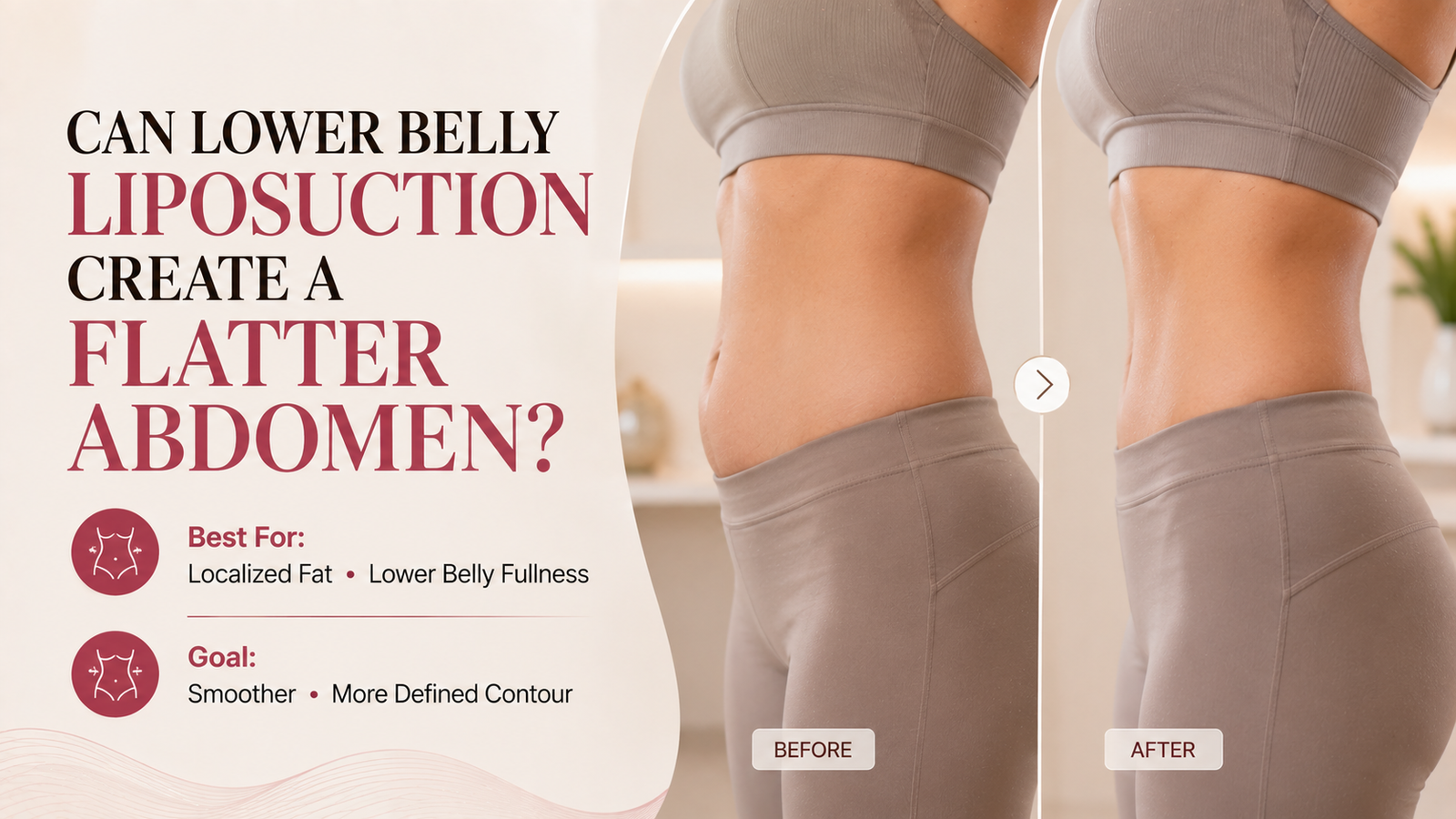
Lower belly fullness can remain even when a person follows a healthy diet and exercises regularly. For some patients, the concern comes from a localized pocket of subcutaneous fat, which sits beneath the skin and above the abdominal muscles. Lower belly liposuction can selectively remove this type of fat and improve the contour of the lower abdomen, potentially creating a flatter and more defined appearance. It is a body-contouring procedure, not a weight-loss treatment.
The result depends on several factors, including how much excess fat is present, the quality and elasticity of the skin, abdominal muscle tone, overall body weight, and whether the lower abdomen also contains loose skin or muscle separation. Removing fat alone may not create a completely flat abdomen when loose skin or other structural concerns are significant.
It is also important to understand what liposuction can and cannot do. It can reshape a localized fat deposit, but it does not remove all abdominal fat, eliminate stretch marks, repair separated muscles, or treat obesity. Patients with firm, relatively elastic skin and a stable weight generally tend to be better candidates for body contouring.
This guide explains how lower belly liposuction works, who may benefit, how it differs from other abdominal procedures, what recovery involves, and what kind of result can realistically be expected.
Key Takeaways
- Lower belly liposuction can reduce a localized pocket of fat beneath the skin and improve abdominal contour.
- It is designed for body shaping rather than major weight loss.
- The amount of skin elasticity is important because liposuction does not directly remove significant excess skin.
- A flatter abdomen may require a different or combined procedure when loose skin, muscle separation, or other abdominal concerns are present.
- Swelling and bruising are expected after surgery, so the early appearance is not the final result.
- Liposuction has surgical risks, including contour irregularities, infection, fluid collection, blood clots, and changes in sensation.
- A consultation is necessary to determine whether lower belly liposuction is suitable for your anatomy and goal
Can Lower Belly Liposuction Create a Flatter Abdomen?
Yes, lower belly liposuction can create a flatter-looking lower abdomen when excess fat beneath the skin is the main reason for abdominal fullness. The procedure removes selected fat deposits and reshapes the treated area, but the final contour depends on skin elasticity, abdominal anatomy, muscle tone, and the amount of fat present.
The important word is contour.
Liposuction does not simply remove weight from the body. A surgeon uses a small cannula to remove selected fat and create a smoother relationship between the treated area and the surrounding abdomen.
For example, a patient may have:
- A relatively slim upper abdomen
- A localized lower abdominal bulge
- Firm skin
- Stable body weight
- No major excess skin
In such a situation, removing the localized fat may produce a noticeable improvement in the abdominal profile.
On the other hand, if the lower abdomen contains a significant amount of loose skin, liposuction alone may not create the desired flat appearance.
Subcutaneous fat: Fat stored directly beneath the skin and above the abdominal muscles. This is the type of fat that liposuction is designed to remove.
What Exactly Does Lower Belly Liposuction Remove?
Lower belly liposuction removes localized deposits of subcutaneous fat rather than treating fat located deep inside the abdominal cavity. This distinction matters because abdominal fullness can have more than one cause.
The abdominal area broadly includes different tissues:
Skin: The outer covering of the abdomen. Its elasticity affects how well it contracts after fat removal.
Subcutaneous fat: The soft tissue beneath the skin that can create a visible bulge and can be targeted with liposuction.
Abdominal muscles: These form the structural wall of the abdomen and are not removed during liposuction.
Visceral fat: Fat stored around internal abdominal organs. Liposuction does not remove this fat.
This explains why a person can have a relatively small amount of external fat but still have a fuller abdomen because of deeper visceral fat, muscle anatomy, posture, or loose skin.
Liposuction is therefore most effective when the visible lower belly fullness comes primarily from a localized superficial fat deposit.
Who Is a Good Candidate for Lower Belly Liposuction?
People who have a localized lower abdominal fat pocket despite a stable, healthy lifestyle may be suitable for liposuction. Good candidates generally have reasonable skin elasticity, are medically fit for surgery, and understand that the goal is body contouring rather than major weight reduction.
A consultation may be appropriate when you have:
- Localized lower abdominal fat
- Relatively stable body weight
- Firm or reasonably elastic skin
- Realistic expectations
- Good general health
- A personal desire for body contouring
When liposuction may not be the main solution
Liposuction may not be the most appropriate procedure when the main concern is:
- Significant loose skin
- A pronounced abdominal overhang
- Major muscle separation
- Significant overall obesity
- A medical condition that makes surgery unsafe
- Expectations of dramatic weight loss
Liposuction is not a replacement for diet and exercise and is not considered a treatment for obesity.
[INTERNAL LINK: Elegance Clinic Surat → https://www.eleganceclinic.in/]
Can Liposuction Fix Loose Skin or a Hanging Lower Abdomen?
Not by itself. Liposuction removes fat, while significant excess skin requires a different approach. If loose skin is the main reason the lower abdomen looks heavy or hangs downward, removing fat alone may not produce a sufficiently flat or tight contour.
This is particularly relevant after substantial weight loss or pregnancy.
When the skin is firm
If the skin has good elasticity, it may contract to some degree after the underlying fat is reduced. This can allow the abdominal contour to look smoother.
When there is substantial excess skin
If there is a large amount of loose or hanging skin, the surgeon may discuss an abdominal skin-removal procedure rather than relying on liposuction alone.
When abdominal muscles are separated
Liposuction does not repair abdominal muscle separation. A patient with significant muscle laxity or separation may need a different surgical assessment.
Skin elasticity: The ability of the skin to stretch and contract. Good elasticity can help the skin adapt after contouring.
The correct procedure is therefore determined by what is creating the abdominal shape rather than simply by the amount of fat.
How Is Lower Belly Liposuction Performed?
Lower belly liposuction is performed as a surgical body-contouring procedure. The exact technique, anaesthesia, treatment area, and amount of fat removed are decided according to the patient’s anatomy and surgical plan.
Consultation and marking
Before surgery, the treatment area is assessed and marked while the patient is standing. The surgeon identifies the areas that need contouring and considers how the lower abdomen transitions into the waist, hips, or upper abdomen.
Local anaesthetic solution
A specialised solution containing local anaesthetic and other medication may be introduced into the treatment area. This helps prepare the tissue for fat removal and can reduce bleeding and bruising.
Cannula placement
Small access points are made through the skin, and a thin tube called a cannula is introduced into the fat layer.
Fat removal
The cannula is moved in a controlled pattern to remove selected fat deposits and create a more even contour. The aim is not simply to remove as much fat as possible.
Closing and compression
After treatment, the small access areas are managed according to the surgical technique, and a compression garment or supportive dressing may be recommended to help manage swelling during recovery.
The operation is individualised rather than performed using the same amount of fat removal for every patient.
How Does Recovery Usually Progress?
Recovery after lower belly liposuction varies with the amount treated, the surgical technique, the patient’s general health, and whether additional procedures are performed. Swelling and bruising are common, and the abdomen may look uneven or fuller than expected during the early healing period.
Early recovery
During the first several days, patients may experience:
- Swelling
- Bruising
- Tenderness
- Tightness
- Temporary numbness
- Mild to moderate discomfort
Gentle movement is generally encouraged, while strenuous activity is restricted according to the surgeon’s instructions.
First few weeks
As swelling begins to decline, the abdominal contour becomes easier to assess. Many patients can gradually return to ordinary activities, but the exact timeline depends on the procedure and occupation.
Following months
The abdomen continues to settle as residual swelling decreases and the tissues adapt. Complete contour refinement can take several months. The NHS notes that the treated area may take up to six months to settle completely.
This is why the immediate postoperative appearance should not be considered the final outcome.
What Results Can You Expect From Lower Belly Liposuction?
Lower belly liposuction can reduce a localized fat bulge and create a more contoured abdominal profile, but it does not guarantee a completely flat stomach. The final appearance depends on skin elasticity, muscle tone, the amount and distribution of fat, body weight, and individual healing.
What may improve
Patients may notice:
- Less fullness in the lower abdomen
- A smoother abdominal transition
- Improved waist-to-abdomen proportion
- Better-fitting clothing
- A more defined lower abdominal contour
What may remain
Liposuction does not necessarily eliminate:
- Loose skin
- Stretch marks
- Cellulite
- Abdominal muscle separation
- Visceral fat
- All abdominal fullness
The goal is therefore contour improvement, not perfection.
Weight stability also matters after surgery. The overall result is generally more durable when a healthy weight is maintained.
What Are the Risks and Side Effects?
Liposuction is surgery, so it carries risks even when performed for a relatively small area. Common short-term effects include bruising, swelling, tenderness, numbness, and fluid drainage from small access sites. More significant complications are less common but can occur.
Potential risks include:
- Infection
- Bleeding or a haematoma
- Fluid accumulation
- Persistent numbness
- Irregular or uneven contours
- Skin colour changes
- Poor wound healing
- Blood clots
- Anaesthesia-related complications
- Injury to deeper structures
- Need for revision surgery
The risk profile can also be affected by how much body area is treated and how much fat is removed. Larger-volume procedures may require additional precautions and monitoring.
Patients should seek prompt medical review if they develop severe pain, rapidly worsening swelling, fever, shortness of breath, chest pain, or other unexpected symptoms after surgery.
How Is Liposuction Different From a Tummy Tuck?
Liposuction and a tummy tuck address different anatomical problems. Liposuction primarily removes targeted fat, while a tummy tuck removes excess abdominal skin and can also address selected muscle separation. Some patients may benefit from one procedure, while others may need a combination based on their anatomy.
How Is Liposuction Different From a Tummy Tuck?
Liposuction and a tummy tuck are designed to address different abdominal concerns. Lower belly liposuction mainly removes localized pockets of fat beneath the skin through small access points, making it more suitable for patients who have stubborn fat but relatively good skin elasticity. A tummy tuck, on the other hand, is designed to remove excess abdominal skin and can also address selected cases of abdominal muscle separation when needed. It involves a larger incision and generally requires a more extensive recovery than liposuction. Some patients may benefit from liposuction alone, while others with excess skin or abdominal laxity may need a tummy tuck or a combination approach. The right procedure depends on whether fat, loose skin, muscle laxity, or a combination of these factors is responsible for the abdominal appearance.
Can Lower Belly Liposuction Remove Post-Pregnancy Belly Fat?
It can reduce a localized fat deposit that remains after pregnancy, but it does not automatically correct every change that can occur after pregnancy. Loose skin, abdominal muscle separation, and changes in tissue position may require separate assessment.
A patient who has regained a stable weight but still has a persistent lower abdominal fat pocket may be considered for liposuction.
However, if the main concern is stretched or hanging skin or significant abdominal wall laxity, liposuction alone may not produce the desired result.
This distinction is especially important after major weight changes or pregnancy.
Can Lower Belly Liposuction Help After Weight Loss?
Yes, selected patients who have lost weight and have a stable weight may benefit from contouring of remaining localized fat deposits. However, substantial loose skin may become more noticeable after weight loss.
In such cases, removing additional fat is not necessarily the best way to improve the abdominal shape. The surgeon must assess the balance between remaining fat, skin quality, and abdominal structure.
This is why post-weight-loss body contouring often requires more detailed planning.
How Can You Prepare for Lower Belly Liposuction?
Preparation starts with an appropriate medical assessment rather than simply scheduling surgery.
During consultation, the surgeon may discuss:
- Your desired contour
- Current and previous body weight
- Medical history
- Previous operations
- Current medications
- Allergies
- Smoking or vaping
- Skin quality
- Abdominal anatomy
- Areas that may be treated
- Recovery expectations
A surgical assessment may also include photographs and preoperative tests when appropriate. Medication, smoking, supplements, and other factors may need to be discussed because they can influence surgical risk and healing.
The surgeon should also explain what the procedure cannot achieve so expectations remain realistic.
When Should You See a Specialist?
A consultation is appropriate when lower abdominal fullness remains despite reasonable lifestyle efforts and you want to know whether the problem is primarily fat, loose skin, muscle laxity, or a combination.
A specialist can help answer:
- Is the fat located where liposuction can effectively target it?
- Is the skin elastic enough for a good contour response?
- Would liposuction alone be appropriate?
- Is there significant loose skin?
- Is muscle separation present?
- Would another body-contouring procedure be more suitable?
- What level of improvement is realistic?
The American Society of Plastic Surgeons describes liposuction as an individualized procedure and recommends assessment of health, goals, skin quality, and the specific fat deposits being treated.
For patients considering treatment in Surat, an individual consultation at Elegance Clinic can help determine the appropriate approach.
Frequently Asked Questions
Q: Can lower belly liposuction make the stomach flat?
A: It can reduce a localized lower abdominal fat pocket and create a flatter-looking contour, but a completely flat abdomen cannot be guaranteed. Skin quality, muscle tone, and abdominal anatomy also affect the result.
Q: Is lower belly liposuction a weight-loss treatment?
A: No. Liposuction is intended for body contouring and localized fat reduction rather than treating obesity or producing major weight loss.
Q: Can liposuction remove belly fat after pregnancy?
A: It may reduce localized fat after pregnancy when weight is stable and the skin is suitable. Loose skin or muscle separation may require a different treatment.
Q: How long does lower belly liposuction take to heal?
A: Early swelling and bruising usually improve gradually, but the final abdominal contour can take several months to settle. Individual recovery varies.
Q: Does lower belly liposuction leave scars?
A: Liposuction requires small access incisions, which can leave small scars. Their appearance varies with incision placement and individual healing.
Q: Can lower belly fat return after liposuction?
A: The treated fat cells are removed, but remaining fat cells can enlarge with significant weight gain. Maintaining a stable weight helps preserve the contour.
Q: Is liposuction better than a tummy tuck?
A: Neither procedure is universally better. Liposuction mainly targets localized fat, while a tummy tuck is designed to address excess abdominal skin and can address selected muscle laxity.
About Dr. Ashutosh Shah and Elegance Clinic
Dr. Ashutosh Shah, M.Ch., DNB (Plastic Surgery) is a Board-Certified Plastic, Cosmetic and Reconstructive Surgeon and Director of Elegance Clinic, Surat. He has more than 22 years of surgical experience and completed M.Ch. in Plastic Surgery from The M.S. University of Baroda and DNB in Plastic Surgery. He also received advanced training in microvascular surgery and cosmetic surgery.
Elegance Clinic, established in Surat in 2014, provides cosmetic surgery, plastic surgery, dermatology, hair restoration, laser treatments, and reconstructive procedures. The clinic has centres in Adajan and Vesu and focuses on personalised planning, patient safety, and natural-looking body-contouring results.
Want to learn more about lower belly liposuction? Explore our [Liposuction Treatment] service to understand how targeted fat removal can help improve abdominal contour and create a more proportionate appearance.
Lower belly liposuction can create a flatter and more defined abdominal appearance when a localized pocket of superficial fat is the main reason for lower abdominal fullness. It can be particularly useful for people who are near a stable weight but have stubborn fat that remains despite healthy lifestyle measures.
However, liposuction is not designed to remove obesity-related fat, tighten significant excess skin, repair abdominal muscle separation, or guarantee a completely flat stomach. Skin elasticity and the underlying abdominal structure have a major influence on the final contour.
Recovery involves swelling, bruising, tenderness, and gradual tissue settling, so results should be assessed over time rather than immediately after surgery. Potential complications also need to be considered before treatment.
The best way to know whether lower belly liposuction is appropriate is through an individual examination by a qualified plastic surgeon.
Book a Consultation at Elegance Clinic Surat to discuss your lower abdominal contour, treatment options, expected recovery, and realistic results.

