

|
Getting your Trinity Audio player ready...
|
✓ Medically reviewed by Dr. Ashutosh Shah, Plastic, Reconstructive & Cosmetic Surgeon (M.Ch., DNB)
Written by Dr. Ashutosh Shah, M.Ch., DNB (Plastic Surgery)
Director, Elegance Clinic, Surat
Dr. Ashutosh Shah is a Board-Certified Plastic, Cosmetic and Reconstructive Surgeon with more than 22 years of surgical experience. He completed his M.Ch. in Plastic Surgery from The M.S. University of Baroda and DNB in Plastic Surgery. He also received advanced training in microvascular surgery at Ganga Hospital, Coimbatore, and cosmetic surgery at Apollo Hospital, Chennai. He has performed thousands of cosmetic and reconstructive procedures.
Elegance Clinic was established in Surat in 2014 and provides cosmetic surgery, dermatology, hair restoration, laser treatments, and reconstructive procedures.
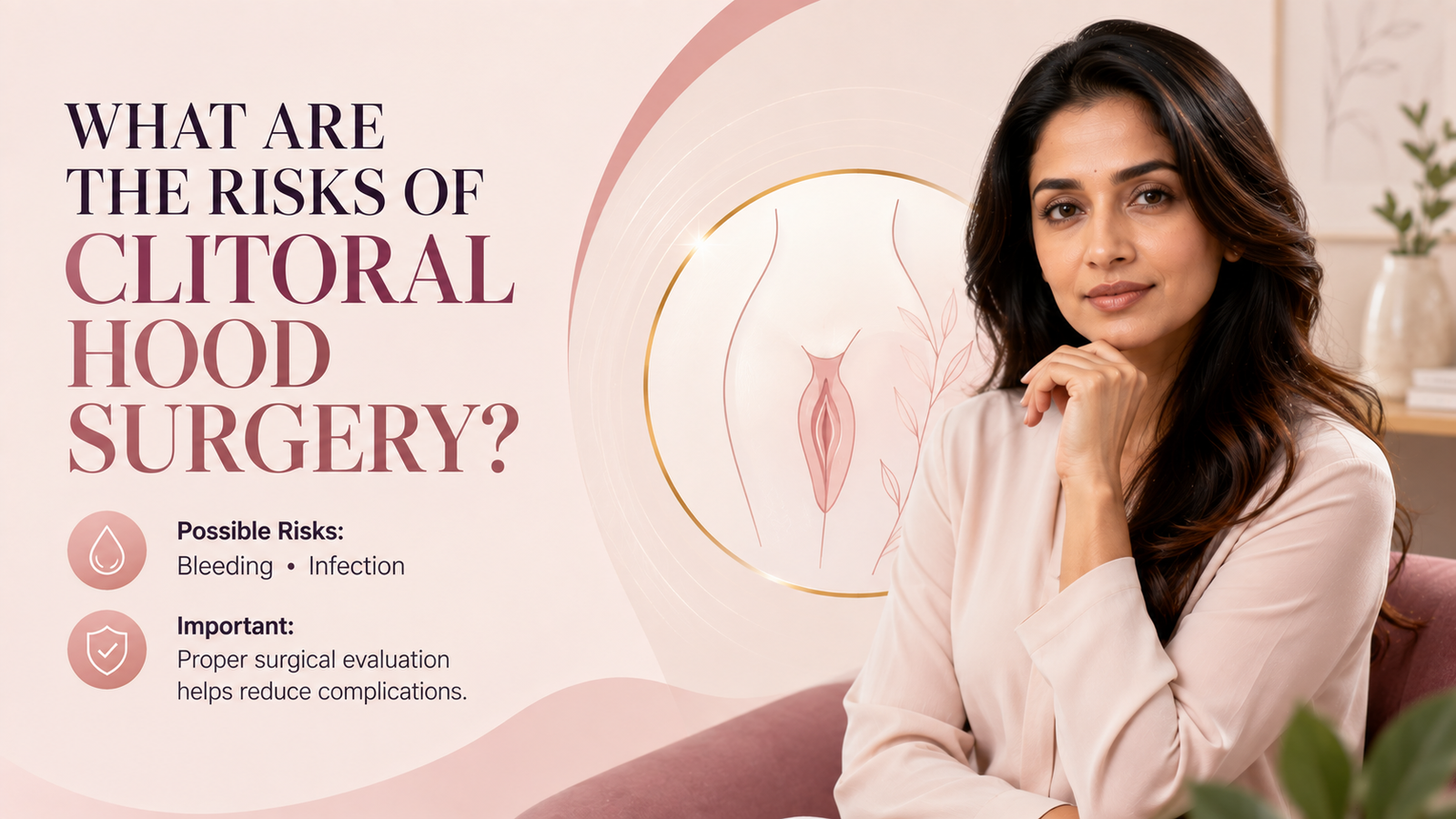
Clitoral hood surgery, also called clitoral hood reduction, is a delicate procedure that removes or reshapes selected excess skin covering the clitoris. Clitoral hood surgery risks can include bleeding, infection, swelling, scarring, changes in sensation, pain, wound-healing problems, and the possibility of needing additional treatment. Because the clitoral hood protects a highly sensitive area, removing too much tissue can potentially cause persistent sensitivity or discomfort.
The procedure may be considered by some adult women who have concerns about excess tissue, physical irritation, asymmetry, or appearance. However, genital anatomy naturally varies considerably, and there is no single “normal” appearance. The decision to undergo surgery should therefore be based on an individual consultation rather than comparisons with photographs, social media, or other people’s anatomy.
A careful assessment is particularly important because high-quality evidence about elective female genital cosmetic procedures remains limited. A qualified surgeon should explain the potential benefits, limitations, possible complications, alternatives, expected recovery, and realistic results before treatment. This article explains the main risks of clitoral hood surgery and what patients should consider before making a decision.
Key Takeaways
- Clitoral hood surgery is a delicate procedure involving tissue close to the highly sensitive clitoris.
- Potential risks include bleeding, infection, scarring, altered sensation, pain, and wound-healing problems.
- Removing too much tissue may result in excessive exposure or persistent sensitivity and discomfort.
- Removing too little tissue may lead to dissatisfaction or, in some cases, consideration of another procedure.
- Natural variation in vulvar and clitoral hood appearance is wide, so surgery is not automatically necessary because of appearance alone.
- Individual anatomy, expectations, medical history, and the surgeon’s experience should be assessed before treatment.
- A detailed consultation and informed consent are important before deciding whether surgery is appropriate.
What Is Clitoral Hood Surgery?
The clitoral hood, also known as the clitoral prepuce, is a fold of tissue that partially covers and protects the clitoral glans. Its size and appearance naturally differ from person to person.
Clitoral hood reduction is a surgical procedure intended to reduce or reshape selected tissue around the clitoral hood. It may be performed on its own or alongside another procedure, such as labiaplasty. Cleveland Clinic notes that the procedure is elective and may be considered for aesthetic concerns or irritation caused by tissue rubbing against clothing or during physical activity.
The important point is that the clitoral hood is not simply excess skin that can be removed without careful planning. It has a protective role, and the underlying area contains highly sensitive structures. Surgical planning therefore needs to preserve appropriate tissue and avoid unnecessary injury.
Why Do Some Women Consider Clitoral Hood Reduction?
Women may consider this procedure for different reasons. Some are concerned about the appearance or symmetry of the external genital area, while others report irritation or discomfort associated with excess tissue.
Potential reasons discussed during consultation may include:
- Concern about excess or prominent hood tissue
- Asymmetry
- Irritation caused by rubbing against clothing
- Discomfort during certain physical activities
- Concerns about genital appearance
- Changes in appearance associated with ageing or other life changes
- A desire for a different external contour
However, appearance alone does not establish a medical need for surgery. The American College of Obstetricians and Gynecologists notes that female genital anatomy has substantial normal variation and that evidence supporting elective cosmetic genital surgery remains limited.
A consultation should therefore focus on the patient’s actual concern, anatomy, expectations, and whether surgery is likely to address that concern safely.
What Are the Main Risks of Clitoral Hood Surgery?
Like other surgical procedures, clitoral hood reduction carries potential complications. Because the operation is performed close to the clitoris, careful tissue handling is particularly important.
Bleeding and Hematoma
Some bleeding and swelling can occur after surgery. In some cases, blood may collect beneath the skin, creating a hematoma.
A small amount of postoperative spotting or swelling may be part of normal healing, but significant bleeding, rapidly increasing swelling, or severe pain should be assessed promptly by the treating medical team.
Infection
Any procedure involving an incision carries a risk of infection. Signs that require medical review can include increasing redness, worsening pain, fever, unusual discharge, or an unpleasant odour from the surgical area.
Following the surgeon’s wound-care and hygiene instructions can help support uncomplicated healing.
Swelling and Bruising
Temporary swelling and bruising are common considerations after genital surgery. Because the area contains delicate tissues, swelling may initially make the treated area appear different from the expected final result.
Early postoperative appearance should therefore not be confused with the final outcome.
Scarring
Surgical incisions can result in scars. In many cases, scars gradually become less noticeable as healing progresses, but scar appearance varies between individuals.
Some patients may develop thicker, firmer, or more noticeable scar tissue. Scarring can occasionally contribute to discomfort or changes in the appearance of the treated area.
Changes in Sensation
One of the most important concerns with clitoral hood surgery is a possible change in sensation.
The clitoral area is highly sensitive, and surgical alteration near it can potentially affect sensation. Patients may experience temporary altered sensitivity during healing, while more significant or persistent changes are less common but possible.
ACOG specifically lists altered sensation among the potential complications that should be discussed before female genital cosmetic surgery.
Pain or Persistent Discomfort
Temporary tenderness is expected with many surgical procedures. However, persistent or significant pain is not something patients should simply ignore.
Cleveland Clinic also identifies nerve damage as a potential complication of clitoral hood reduction.
Over-Resection
Over-resection means that more tissue than intended is removed.
This is an important concern because the clitoral hood provides protection to the clitoris. Excessive removal may leave sensitive tissue more exposed and can potentially contribute to persistent irritation, discomfort, or unwanted changes in sensation.
Cleveland Clinic notes that there is no simple way to reverse an over-resection once too much tissue has been removed.
Under-Resection
Under-resection means that less tissue is removed than intended.
The result may not fully address the patient’s original concern, which can lead to dissatisfaction. In some cases, a further procedure may be considered, although additional surgery also carries its own risks.
Wound-Healing Problems
Incisions in delicate areas can sometimes heal more slowly or separate partially. Factors such as individual healing characteristics, infection, tissue tension, and postoperative care can influence wound healing.
Any wound separation, unusual discharge, increasing pain, or other concerning changes should be evaluated by the treating surgeon.
Can Clitoral Hood Surgery Affect Sensation?
Yes. Changes in sensation are one of the important risks that should be discussed before surgery.
The clitoris is a highly sensitive structure, and the clitoral hood partially protects it. Surgery should therefore be planned with the goal of preserving appropriate anatomy and avoiding unnecessary disruption of sensitive tissues.
Some temporary changes in sensitivity may occur while swelling and inflammation settle. However, patients should understand that sensory outcomes cannot be guaranteed.
It is also important not to assume that removing more hood tissue will automatically increase sexual pleasure or sensitivity. Cleveland Clinic specifically cautions that excessive exposure of the clitoral glans can produce unpredictable results and may cause frequent clitoral pain.
ACOG also states that there is not enough high-quality evidence to establish the effectiveness of elective female genital cosmetic surgery for improving sexual function or satisfaction.
What Happens If Too Much or Too Little Tissue Is Removed?
The amount of tissue removed needs to be carefully individualized.
If too much tissue is removed:
- The clitoris may become more exposed than intended.
- Irritation or discomfort may occur.
- Sensation may change.
- Persistent pain is possible.
- Further corrective treatment may be difficult.
If too little tissue is removed:
- The original cosmetic concern may remain.
- The patient may feel that the result is incomplete.
- Additional surgery may sometimes be considered.
This is why the goal should not simply be to remove as much tissue as possible. The objective is to address the specific concern while respecting normal anatomy and preserving appropriate protective tissue.
How Can the Risks Be Reduced?
Risk cannot be completely eliminated, but careful planning can help reduce avoidable complications.
Choose an Appropriately Qualified Surgeon
Patients should look for a surgeon with appropriate training and specific experience in the procedure being considered.
ACOG recommends that patients ask about the surgeon’s experience with these procedures and their surgical outcomes.
Have a Detailed Consultation
The consultation should cover:
- The reason for considering surgery
- Relevant medical history
- Previous surgeries
- Current medications and health conditions
- Anatomy and asymmetry
- Desired outcome
- Possible alternatives
- Potential complications
- Expected recovery
- Possibility of dissatisfaction or revision
Discuss Expectations Honestly
A good surgical plan should be based on what is realistically achievable rather than an idealized image.
Patients should understand that cosmetic surgery can change anatomy, but it cannot guarantee a particular appearance, sensation, sexual experience, or level of confidence.
Follow Postoperative Instructions
Aftercare is an important part of recovery. Patients should follow the surgeon’s instructions regarding wound care, hygiene, physical activity, sexual activity, and follow-up appointments.
What Is Recovery Like After Clitoral Hood Surgery?
Recovery varies depending on the surgical technique, the amount of tissue treated, whether another procedure is performed at the same time, and individual healing.
During the early recovery period, patients may experience:
- Swelling
- Bruising
- Tenderness
- Mild discomfort
- Temporary changes in sensitivity
The appearance of the area can change as swelling decreases and tissues heal. It is therefore important to avoid judging the final cosmetic result too early.
Cleveland Clinic describes clitoral hood reduction as an outpatient procedure in many cases, with the exact anesthesia and surgical approach determined according to the individual case.
When Should You Contact Your Surgeon?
Prompt medical assessment is appropriate if you develop:
- Heavy or persistent bleeding
- Rapidly increasing swelling
- Severe or worsening pain
- Fever
- Foul-smelling discharge
- Significant wound separation
- Other unexpected symptoms that concern you
These symptoms do not necessarily mean that a serious complication has occurred, but they should not be ignored.
Is Clitoral Hood Surgery Safe?
There is no surgical procedure that can be described as completely risk-free.
Clitoral hood surgery requires particular care because it involves tissue close to the clitoris. Potential complications include bleeding, infection, scarring, altered sensation, pain, nerve injury, over-resection, under-resection, and possible reoperation.
ACOG emphasizes that high-quality evidence regarding the safety and effectiveness of elective female genital cosmetic surgery remains limited. Patients should therefore receive balanced information before deciding to proceed.
The safest decision is not necessarily to have surgery. For some women, understanding that their anatomy falls within normal variation may be reassuring. For others with persistent concerns or physical symptoms, an individualized assessment can help determine whether treatment is appropriate.
Who May Be a Suitable Candidate?
Suitability should be determined individually rather than by appearance alone.
A consultation may be appropriate for an adult woman who:
- Has a specific concern about the clitoral hood
- Experiences persistent physical irritation or discomfort
- Has realistic expectations
- Understands the potential risks
- Is considering surgery for personal reasons rather than pressure from another person
- Is medically suitable for the procedure
It is also important to understand that the external female genital area has a broad range of normal appearances. ACOG states that there is no single correct size, shape, or colour of the vulva.
Concerns about appearance should therefore be discussed sensitively and without assuming that a natural variation requires correction.
Which Treatment Is Right for You?
There is no single treatment that is suitable for every woman. The right approach depends on the individual’s anatomy, symptoms, concerns, medical history, and expectations. If there is no significant discomfort or functional concern, observation and reassurance may be the most appropriate choice because natural variation in the genital area is common. For women experiencing irritation or discomfort, conservative management may be considered depending on the underlying cause. Clitoral hood reduction may be an option for selected women with specific concerns about excess or prominent hood tissue, but it involves surgical risks and possible changes in sensation. If concerns involve more than one area, a combined genital procedure may sometimes be discussed. A consultation with a qualified surgeon can help determine whether treatment is necessary and which approach is most appropriate.
What Should You Ask Before Clitoral Hood Surgery?
Before deciding on surgery, consider asking your surgeon:
- Why is this procedure appropriate for my specific concern?
- What tissue would be removed or reshaped?
- How will the clitoris and its protective tissues be preserved?
- What sensory changes are possible?
- What are the most common complications in your experience?
- What happens if I am unhappy with the result?
- What will recovery involve?
- When can normal activities and sexual activity usually be resumed?
- Are there non-surgical alternatives?
- What results are realistically achievable in my anatomy?
These questions can help you make a more informed decision rather than focusing only on photographs or advertised benefits.
Dr. Ashutosh Shah, M.Ch., DNB (Plastic Surgery), is a Board-Certified Plastic, Cosmetic and Reconstructive Surgeon and Director of Elegance Clinic, Surat. With more than 22 years of surgical experience, he has worked across cosmetic, reconstructive, and plastic surgery.
Elegance Clinic was established in Surat in 2014 and provides cosmetic surgery, dermatology, hair restoration, laser treatments, and reconstructive procedures. For women considering intimate procedures, the clinic provides confidential consultations and individualized treatment planning.
Patients considering clitoral hood reduction can review the clinic’s dedicated clitoral hood removal service for additional information about the procedure. Clitoral Hood Removal at Elegance Clinic
Clitoral hood surgery can address specific concerns involving the appearance, shape, or excess tissue of the clitoral hood, but it is a delicate procedure with important potential risks. These include bleeding, infection, scarring, altered sensation, pain, nerve injury, wound-healing problems, and the possibility of removing too much or too little tissue.
Because normal genital anatomy varies widely, surgery should not be based on comparisons with other women or idealized images. A careful consultation should consider your anatomy, symptoms, expectations, medical history, and alternatives before treatment is recommended. A qualified surgeon should also explain the limitations of current evidence and the possibility of complications or dissatisfaction.
If you are considering clitoral hood surgery and want to understand whether it is appropriate for your individual anatomy and concerns, a private consultation with a qualified plastic surgeon can help you make an informed decision.
Elegance Clinic, Surat provides confidential consultations for women considering aesthetic genital procedures.

