

|
Getting your Trinity Audio player ready...
|
✓ Medically reviewed by Dr. Ashutosh Shah, Plastic, Reconstructive & Cosmetic Surgeon (M.Ch., DNB)
Varicose veins do not always need immediate treatment. Mild visible veins without significant symptoms can often be monitored with lifestyle measures and compression when appropriate. Treatment becomes more important when there is persistent pain, swelling, heaviness, skin discoloration, inflammation, bleeding or an ulcer. An active venous ulcer needs vascular assessment without delay.
Many people notice enlarged veins in their legs and immediately wonder whether they are dangerous. Others live with varicose veins for years because they assume they are only a cosmetic problem.
The answer usually depends on the symptoms, skin changes and stage of venous disease.
This guide explains when do varicose veins need treatment, when observation may be reasonable and which changes should prompt a vascular assessment.
What Are Varicose Veins and Why Do They Form?
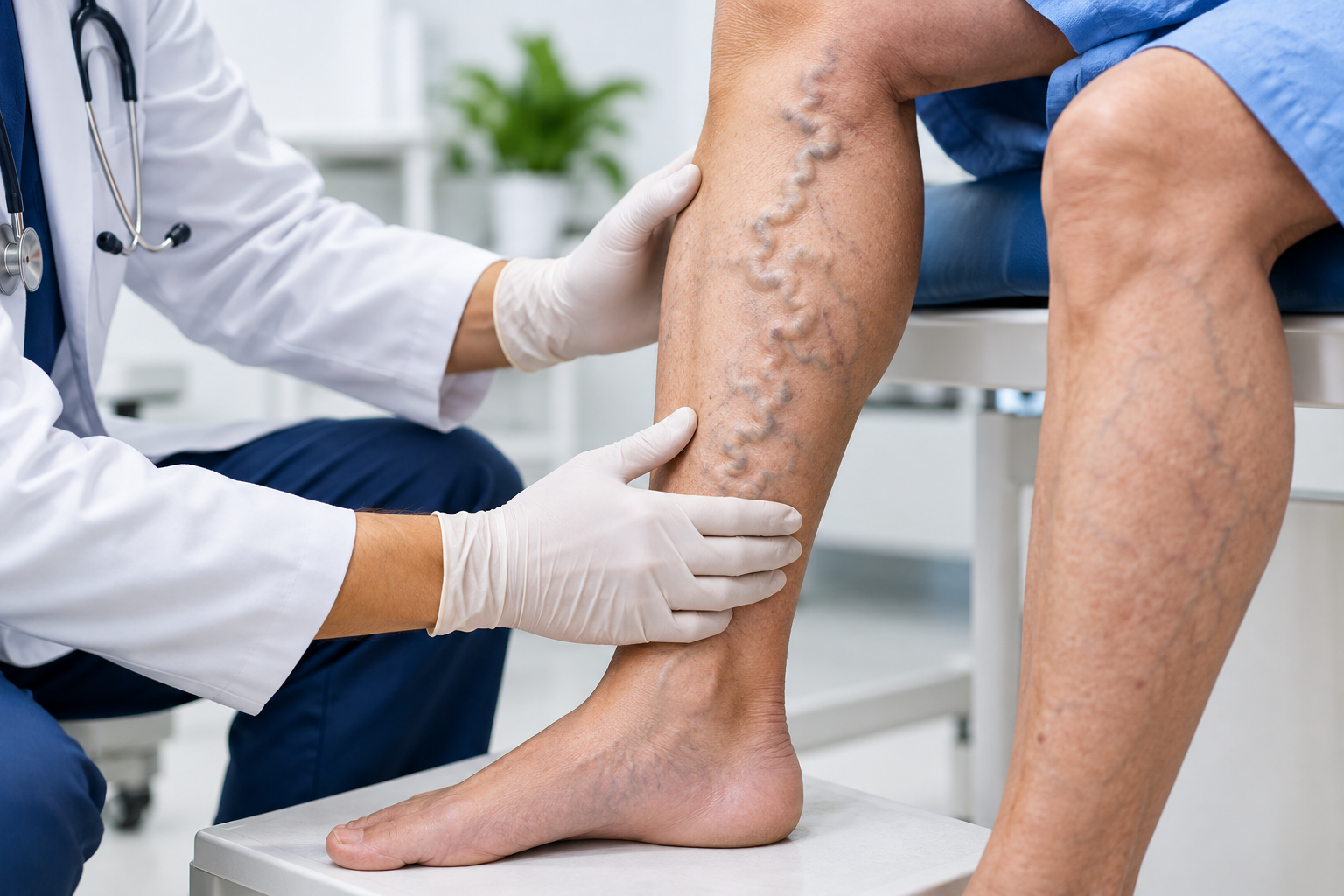
Varicose veins are enlarged, twisted superficial veins, most commonly affecting the legs.
Veins carry blood back toward the heart. Inside many leg veins are one way valves that help prevent blood from flowing backwards.
When these valves do not function properly, blood can flow backwards and pool within the vein. This increases pressure inside the vein and can gradually make it enlarged and tortuous.
Risk factors can include family history, increasing age, pregnancy, prolonged standing, excess body weight and previous vein problems.
Some people have obvious veins without major discomfort. Others develop significant varicose veins symptoms even when the visible veins do not initially appear severe.
When Are Varicose Veins Only a Cosmetic Problem?
Visible veins may primarily be a cosmetic concern when they cause no significant pain, swelling, skin changes, inflammation or ulceration.
In these situations, immediate medical treatment may not always be necessary.
A clinician may recommend observation, regular activity, weight management where relevant, avoiding prolonged periods of immobility and other conservative measures.
However, appearance alone does not reliably tell you how well the underlying veins are functioning.
If veins are becoming increasingly prominent or new symptoms appear, a clinical assessment can help determine whether there is significant venous reflux.
Which Symptoms Change the Answer?
The decision becomes more important when varicose veins are accompanied by symptoms such as:
- aching or throbbing in the legs
- heaviness or tiredness
- swelling around the ankle or lower leg
- itching around affected veins
- burning or discomfort
- night cramps
- tenderness around a vein
- symptoms that worsen after prolonged standing
- skin discoloration around the ankle
- hardening or inflammation of the surrounding skin
- bleeding from a superficial vein
- a wound around the ankle or lower leg that is slow to heal
These changes may indicate that the problem is no longer purely cosmetic.
People experiencing persistent symptoms can discuss varicose and vascular surgery options after an appropriate examination.
Varicose Vein Stages: C0 to C6 Explained
Doctors commonly use the CEAP clinical classification to describe the visible clinical stage of chronic venous disease.
Here is a simplified patient friendly version of the varicose vein stages.
| Stage | What You See or Feel | What May Be Happening | What Is Usually Recommended | How Urgent Is It? |
|---|---|---|---|---|
| C0 | Symptoms may be present but there are no visible or palpable signs | Early venous symptoms may exist without obvious surface changes | Clinical assessment if symptoms persist | Usually not urgent |
| C1 | Spider veins or small visible veins | Small superficial veins have become enlarged | Observation or treatment if symptomatic or cosmetically concerning | Usually not urgent |
| C2 | Clearly enlarged, twisted varicose veins | Superficial venous reflux may be present | Vascular assessment if symptomatic; ultrasound may be recommended | Routine unless complications occur |
| C3 | Leg or ankle swelling | Venous pressure may be contributing to fluid accumulation | Medical assessment and management of the underlying venous problem | Should be assessed |
| C4 | Skin pigmentation, eczema, inflammation or hardening around the lower leg | Long term venous hypertension is affecting the skin and tissues | Vascular assessment and treatment planning | Important to treat |
| C5 | Skin changes with a previous venous ulcer that has healed | Advanced chronic venous disease remains even though the wound has closed | Vascular assessment to reduce further complications and ulcer recurrence | Prompt assessment recommended |
| C6 | An active open venous ulcer, often near the ankle | Advanced venous disease is affecting skin integrity and wound healing | Wound care plus assessment and treatment of the underlying venous problem | Active ulcer needs a vascular opinion without delay |
The CEAP stage is only one part of assessment. Symptoms, ultrasound findings, general health and previous vein problems also influence treatment decisions.
Do I Need Treatment Right Now or Can I Wait?
If varicose veins are visible but comfortable and there are no significant skin changes or swelling, monitoring may be reasonable after appropriate assessment.
Conservative measures may also help control symptoms.
These can include regular walking, calf muscle activity, avoiding long periods of standing or sitting, leg elevation and weight management where appropriate.
Compression stockings may be recommended for selected patients.
You can learn more about conservative management of varicose veins when symptoms are mild or when an intervention is not currently required.
Waiting becomes less appropriate when symptoms persist or progress.
Increasing swelling, skin changes, recurrent inflammation, bleeding or ulceration deserve medical assessment.
Are Varicose Veins Dangerous?
Most uncomplicated varicose veins are not an immediate medical emergency.
However, varicose veins should not always be dismissed as harmless.
Chronic venous disease can progress in some people and may lead to persistent swelling, skin inflammation, pigmentation, hardening of tissues or venous ulceration.
Superficial veins can occasionally bleed, particularly when enlarged veins lie close to fragile skin.
A painful, red or hard vein may represent superficial thrombophlebitis and should be assessed.
Sudden one sided leg swelling, significant pain, warmth or unexplained shortness of breath requires prompt medical attention because these symptoms can have causes other than uncomplicated varicose veins, including potentially serious blood clots.
What Happens When Skin Changes Begin?
Brownish pigmentation around the ankle, persistent itching, eczema like changes or hardening of the lower leg can indicate more advanced chronic venous disease.
These changes occur because prolonged venous hypertension affects the skin and surrounding tissues.
At this stage, simply watching the visible veins may no longer be sufficient.
Assessment commonly includes examination and, when appropriate, duplex ultrasound to identify abnormal blood flow and determine which veins are affected.
Treatment can then target the underlying venous reflux rather than only the appearance of the veins.
What Happens If a Venous Ulcer Develops?
A venous ulcer is an open wound caused or maintained by chronic venous hypertension, usually affecting the lower leg around the ankle region.
It may begin after a minor injury or appear in skin that has already become unhealthy due to longstanding venous disease.
An active ulcer corresponds to C6 disease in the CEAP clinical classification.
It should not simply be covered with a dressing and left to heal without investigating the underlying circulation.
Effective varicose vein ulcer management generally involves appropriate wound care, assessment of arterial circulation where indicated, compression when safe and suitable, and management of the underlying venous disease.
An active venous ulcer needs a vascular opinion without delay.
Early assessment is important because longstanding or recurrent wounds can become increasingly difficult to manage.
Do Compression Stockings Actually Work?
Compression stockings can help control symptoms such as swelling, heaviness and aching in selected patients.
They work by applying graduated external pressure to the leg, supporting venous return and reducing venous pooling.
However, compression does not necessarily eliminate the underlying abnormal vein or permanently correct venous reflux.
The correct compression level and suitability should be determined carefully, particularly in patients who may also have arterial circulation problems.
Stockings should therefore be viewed as one part of management rather than a universal cure.
When Is a Procedure Considered?
A procedure may be considered when symptoms remain troublesome despite conservative measures or when there are complications such as significant swelling, skin changes, recurrent inflammation, bleeding or ulceration.
Duplex ultrasound is commonly used to map the veins and identify reflux before planning treatment.
Depending on the anatomy and clinical situation, treatment options may include endovenous procedures, sclerotherapy or surgery.
The goal is not simply to remove a visible vein. Treatment aims to address the abnormal venous pathway responsible for the symptoms or complications.
Is Laser Better Than Open Surgery?
There is no single procedure that is best for every patient.
Endovenous laser treatment closes an abnormal vein from inside using thermal energy. It is minimally invasive and can offer a relatively quick recovery in appropriately selected patients.
Patients considering this approach can learn more about laser for varicose veins and how the procedure is performed.
Traditional surgery still has a role in selected situations depending on the vein anatomy, previous procedures and availability of treatment options.
A duplex ultrasound and clinical assessment help determine which technique is suitable.
Will Varicose Veins Come Back After Treatment?
Treatment can successfully close or remove problematic veins, but it cannot guarantee that a person will never develop another varicose vein.
Venous disease can progress over time.
New veins may become abnormal, previously small branches may enlarge or recurrence can occur around previously treated areas.
Good treatment planning, accurate ultrasound assessment and follow up can help identify and manage recurrence when it occurs.
How Do I Know If Varicose Veins Have Reached the Ulcer Stage?
The ulcer stage means there is an active open wound associated with chronic venous disease.
Venous ulcers commonly occur around the ankle or lower part of the leg. The surrounding skin may already show brown pigmentation, inflammation, swelling or hardening.
A wound that is not healing should not automatically be assumed to be a venous ulcer because wounds can have several causes.
A proper assessment is needed to determine the cause and check the circulation.
When Should You Seek Urgent Medical Attention?
Routine varicose veins usually do not require emergency care, but certain symptoms should not be ignored.
Seek prompt medical assessment for significant bleeding from a vein, rapidly increasing redness or swelling, severe unexplained leg pain or a newly developed ulcer.
Sudden swelling of one leg, particularly with pain or warmth, also requires prompt assessment.
Chest pain, sudden breathlessness or coughing blood requires emergency medical attention because these symptoms can indicate a serious condition and should not be attributed to ordinary varicose veins.
Final Takeaway
So, when do varicose veins need treatment?
Visible veins without troublesome symptoms or skin changes can sometimes be monitored and managed conservatively. Treatment becomes more important when there is persistent pain, heaviness, swelling, inflammation, skin pigmentation, eczema, bleeding or ulceration.
The progression from C0 to C6 provides a useful way to understand how chronic venous disease can change over time.
Most importantly, do not wait for an advanced wound before seeking an assessment. If an active venous ulcer has developed, obtain a vascular opinion without delay.
Frequently Asked Questions
Are varicose veins dangerous?
Uncomplicated varicose veins are usually not immediately dangerous, but chronic venous disease can lead to swelling, skin changes, inflammation, bleeding and ulcers in some patients. New or worsening symptoms should be medically assessed.
Do I need treatment right now or can I wait?
Mild, symptom free veins may sometimes be monitored. Persistent pain, swelling, skin changes, bleeding or an ulcer changes the situation and should prompt assessment.
Do compression stockings actually work?
Compression stockings can reduce swelling, heaviness and discomfort in suitable patients. They support venous circulation but do not necessarily eliminate the underlying abnormal vein.
Will varicose veins come back after treatment?
They can. Treatment can close or remove the veins causing current problems, but venous disease may progress and new varicose veins can develop later.
Is laser better than open surgery?
Laser is a minimally invasive option suitable for many patients, but it is not automatically the best treatment for everyone. Vein anatomy, ultrasound findings and previous treatment help determine the appropriate technique.
How do I know if it has reached the ulcer stage?
An active open wound associated with chronic venous disease represents the C6 stage. Venous ulcers commonly develop around the ankle or lower leg and require vascular assessment without delay.

