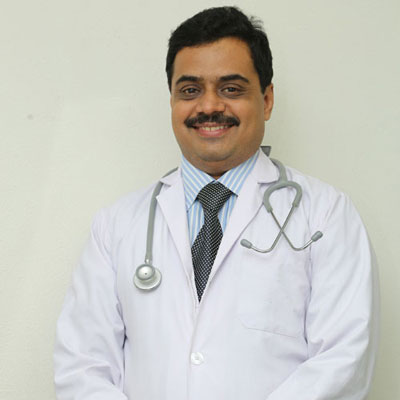

✓ Medically reviewed by Dr. Ashutosh Shah, Plastic, Reconstructive & Cosmetic Surgeon (M.Ch., DNB)
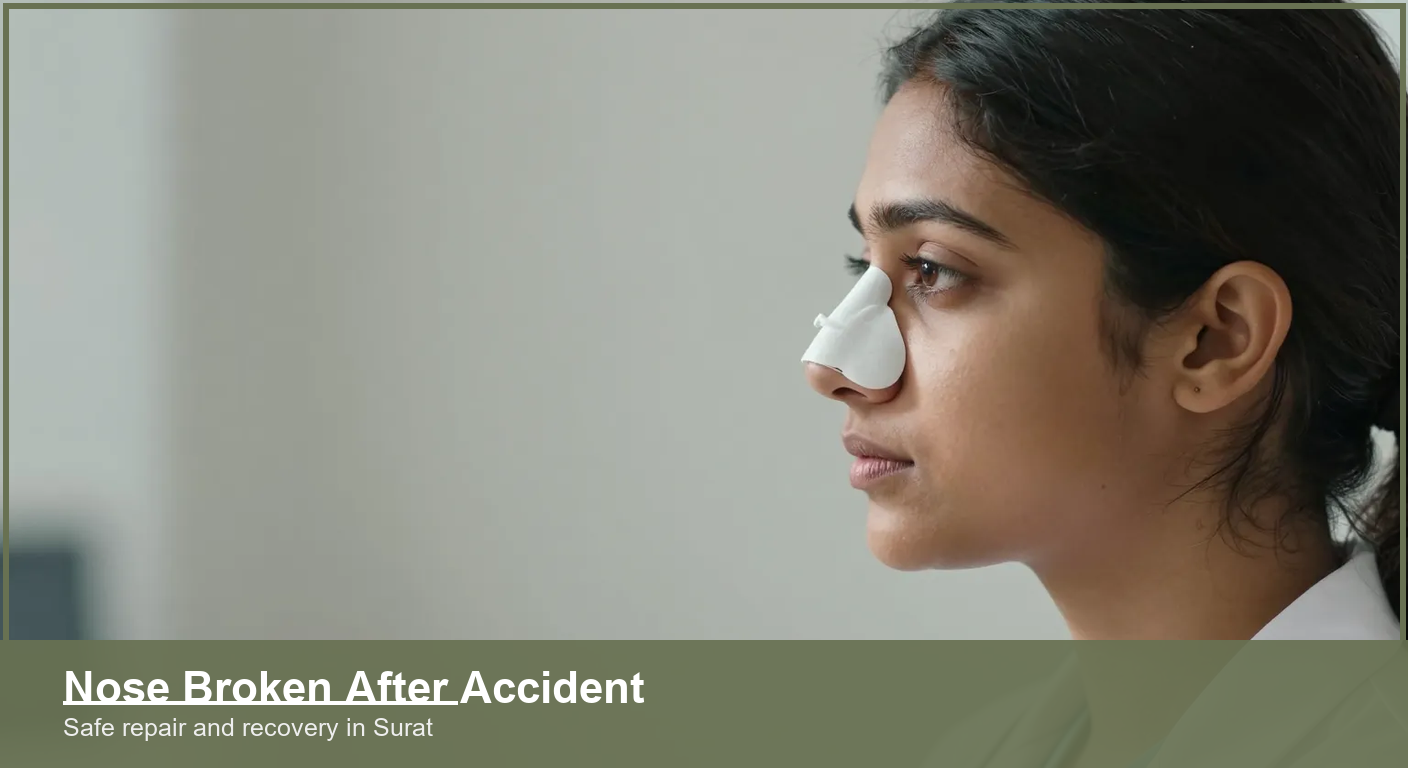
A nose broken after accident usually needs prompt attention, because the right care protects both your breathing and your appearance. Most nasal fractures heal well when a surgeon checks them early and resets the bones within the correct window. Moreover, quick assessment lowers the risk of a crooked nose or a blocked airway later. At Elegance Clinic in Surat, we treat these injuries often, so we guide each patient calmly through first aid, assessment, treatment and recovery. This guide explains what to do right away, how repair works, and when surgery becomes the smarter choice.
Key Takeaways
- A nose broken after accident often heals well when treated early, ideally within one to two weeks.
- Swelling, pain, a crooked shape, bleeding and trouble breathing are common warning signs.
- Doctors can reset many fresh fractures without major surgery using a closed reduction.
- Surgery, often rhinoplasty, helps when the nose stays crooked or the airway stays blocked.
- Most people return to normal routines within two weeks, while full healing takes longer.
- Early expert assessment lowers the chance of a permanently bent nose or breathing problem.
Table of Contents
- What should you do first when your nose is broken after an accident?
- How do you know if your nose is actually fractured?
- How is a nose broken after accident treated?
- When is surgery needed for a broken nose?
- What does recovery look like after nasal injury repair?
- Why choose Elegance Clinic in Surat for broken nose repair?
- Frequently Asked Questions
What should you do first when your nose is broken after an accident?
Right after the injury, sit upright, lean slightly forward and apply a cold pack to reduce swelling. Avoid pressing or trying to straighten the nose yourself. Furthermore, control any bleeding with gentle pressure and see a doctor soon, because early review shapes the whole recovery.
In the first hour, stay calm and breathe through your mouth if the nose feels blocked. Cold compresses help for the first day or two, since they limit bruising and swelling. However, never apply ice directly to the skin, because that can cause its own damage. Wrap it in a thin cloth instead.
You should also watch for warning signs that need urgent care. Heavy bleeding that will not stop, clear fluid leaking from the nose, severe pain, or breathing that keeps getting worse all call for an emergency visit. Likewise, a knock hard enough to cause fainting, confusion or neck pain needs immediate medical review for safety.
How do you know if your nose is actually fractured?
A nose may be fractured if you notice swelling, tenderness, a crooked shape, ongoing bleeding, or a crunching feel when you touch the bridge. Trouble breathing through one side is another strong clue. Still, only a clinical exam, and sometimes a scan, can confirm the fracture clearly.
Soft tissue swelling often hides the true shape for several days. Therefore, doctors sometimes wait a short time for swelling to settle before judging whether the bone has shifted. Common signs of a broken nose include:
- Visible bending or flattening of the bridge
- Bruising around the nose and under both eyes
- Blocked airflow on one or both sides
- A grating sensation when the nose is gently moved
- Bleeding from one or both nostrils
Some injuries look minor yet hide a deeper problem. For instance, a blood clot inside the wall between the nostrils, called a septal haematoma, needs quick drainage. If ignored, it can damage cartilage and lead to a collapsed bridge. Consequently, an expert check matters even when the injury seems small.
How is a nose broken after accident treated?
Treatment for a nose broken after accident depends on how far the bones have moved. Minor fractures with little shift often heal on their own with rest, cold packs and pain relief. When bones are clearly displaced, a doctor can reset them through a procedure called closed reduction, usually within one to two weeks.
During closed reduction, the surgeon gently pushes the bones back into place using local or general anaesthesia. Because fresh fractures stay flexible for a short time, this window is important. After about two weeks, the bones begin to set, so realignment becomes harder and may later need formal nasal surgery.
What if the nose has already healed crooked?
Sometimes people reach a clinic weeks or months after the injury, once the nose has healed in a bent position. In these cases, closed reduction no longer works. Instead, a planned operation reshapes the bone and cartilage. Our team explains these options during a rhinoplasty surgery consultation, so you understand every step before deciding.
Throughout treatment, Dr. Ashutosh Shah focuses on two goals together, a straight comfortable airway and a natural looking shape. Both matter, because a nose should work as well as it looks. You can review the full range of related procedures on our services page.
When is surgery needed for a broken nose?
Surgery is needed when the nose stays crooked after swelling settles, when breathing stays blocked, or when the injury arrives too late for simple resetting. A surgical repair, often a form of rhinoplasty or septorhinoplasty, corrects both the visible bend and the internal wall that controls airflow.
Doctors usually wait until early swelling eases before planning surgery, since clear anatomy gives better results. Two common operations help here:
- Rhinoplasty, which reshapes the outer bone and cartilage for a balanced, natural profile.
- Septorhinoplasty, which also straightens the septum, the inner wall, to open a blocked airway.
Dr. Ashutosh Shah plans each case around the patient’s facial proportions, breathing needs and goals. Because every nose differs, there is no single fixed approach. For injuries that also affect the wider facial structure, a combined plan with our face makeover surgery team may suit better. The aim stays the same, restore form and function safely.
What does recovery look like after nasal injury repair?
Recovery usually feels easier than people expect. After a closed reduction, most patients return to light activity within a week. Swelling and bruising fade over two to three weeks, while the deeper tissues keep settling for several months. After surgery, recovery takes a little longer but follows a similar steady path.
In the first week, you may wear a small splint to protect the new shape. Sleeping with the head raised helps reduce swelling. Additionally, avoiding glasses on the bridge, heavy lifting and contact sports protects the healing bones. Most people feel comfortable in public again within ten to fourteen days.
How can you support healing at home?
Simple habits speed recovery. Keep cold packs handy for the first days, take prescribed medicine on time, and avoid blowing the nose hard. Moreover, staying hydrated and resting well gives tissues the energy to repair. If pain suddenly worsens or breathing drops, contact your clinic promptly rather than waiting.
Final shape becomes clear gradually, since subtle swelling can linger for months. Patience pays off here. Our team reviews progress at follow up visits, and you can reach us any time through the contact page if a concern arises between appointments.
Why choose Elegance Clinic in Surat for broken nose repair?
Patients across Surat and Gujarat choose Elegance Clinic for nasal injury care because the clinic combines surgical skill with honest guidance. Dr. Ashutosh Shah brings over twenty two years of plastic and reconstructive experience, with advanced centres at Adajan and Vesu. As a result, both straightforward resets and complex repairs are handled under one roof.
Beyond experience, the clinic values clear communication. The team explains your options, the likely outcome and the cost factors before anything begins. Costs depend on the type of fracture and the chosen procedure, so we suggest an in person assessment rather than a fixed number over the phone. This honest, step by step approach helps you decide with confidence.
A nose broken after accident does not have to mean a permanently changed face. With early care, skilled hands and a calm recovery plan, most patients regain both comfortable breathing and a natural shape. To start, book a consultation today at Elegance Clinic, Surat, and let the team assess your injury and plan the safest path forward.
Frequently Asked Questions
How long after a nose injury can it still be reset?
Most fresh fractures can be reset within one to two weeks, while the bones stay flexible. After that window the bone begins to harden, so realignment becomes harder and may later need a planned surgical correction instead.
Can a broken nose heal on its own without treatment?
A minor fracture with no shift in shape or breathing can heal on its own with rest and cold packs. However, a displaced or crooked nose usually needs professional resetting to avoid a lasting bend or blocked airway.
Is resetting a broken nose painful?
Doctors use local or general anaesthesia during the procedure, so you feel little or no pain at the time. Mild soreness and pressure afterward are normal and usually settle within a few days with simple pain relief.
Will a broken nose affect my breathing permanently?
Not usually, if it is treated properly. A timely reset or surgery can restore clear airflow. Breathing problems mostly persist when an injury, especially a shifted septum, is left untreated for too long after the accident.
When should I go to an emergency department after a nose injury?
Seek urgent care for heavy bleeding that will not stop, clear fluid leaking from the nose, severe pain, trouble breathing, fainting, confusion, or neck pain. These signs may point to a deeper injury needing immediate review.
Does insurance cover surgery for a broken nose?
Coverage often depends on whether surgery is needed for breathing or function rather than appearance alone. Policies vary widely, so check the exact terms with your insurer and ask the clinic for documentation that supports your claim.
How soon can I exercise after a broken nose?
Light walking is usually fine within days, but avoid heavy lifting and contact sports for several weeks. Returning too early risks reinjuring the healing bones, so follow your surgeon’s specific timeline before resuming intense activity.