

|
Getting your Trinity Audio player ready...
|
✓ Medically reviewed by Dr. Ashutosh Shah, Plastic, Reconstructive & Cosmetic Surgeon (M.Ch., DNB)
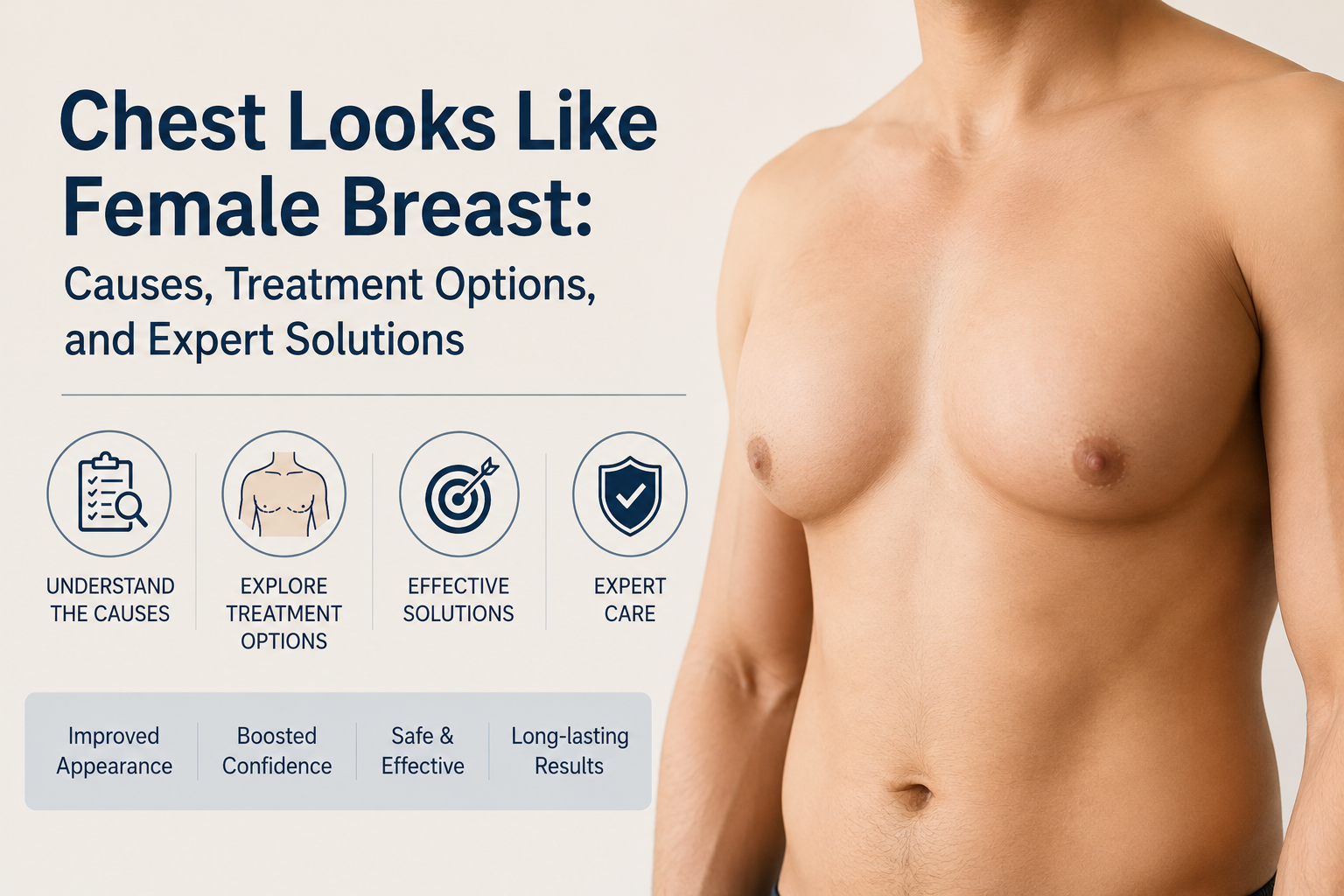
Many men become concerned when their chest looks like female breast tissue. This condition can affect physical appearance, clothing choices, confidence, and self-esteem. While some individuals assume the problem is always gynecomastia, several factors can contribute to a fuller or enlarged male chest.
One common cause is Pseudo Gynecomastia, a condition characterized by excess fat accumulation in the chest area rather than enlargement of breast gland tissue. Fortunately, modern body contouring and male chest correction procedures can help address this concern and create a more masculine chest appearance.
At Elegance Clinic, Dr. Ashutosh Shah provides personalized evaluation and treatment planning for men seeking solutions for chest enlargement and body contour concerns.
Why Does My Chest Look Like Female Breast Tissue?
If your chest looks like female breast tissue, the cause may be excess chest fat, glandular breast enlargement, weight gain, hormonal influences, or a condition known as Pseudo Gynecomastia. A professional evaluation helps determine the exact cause and identify the most appropriate treatment option.
What Is Pseudo Gynecomastia?
Pseudo Gynecomastia occurs when excess fat accumulates in the male chest, creating a breast-like appearance.
Unlike true gynecomastia, Pseudo Gynecomastia does not primarily involve enlargement of glandular breast tissue. Instead, the chest appears enlarged because of localized fat deposits.
As a result, many men notice:
- A fuller chest appearance
- Reduced chest definition
- Difficulty wearing fitted clothing
- Loss of confidence in social situations
- Concerns about body image
Therefore, accurate diagnosis is essential before selecting a treatment plan.
Common Reasons a Chest Looks Like Female Breast Tissue
Several factors can contribute to chest enlargement.
Excess Chest Fat
Weight gain often leads to fat accumulation in the chest area.
Pseudo Gynecomastia
Localized chest fat can create a breast-like appearance without glandular enlargement.
Hormonal Changes
Hormonal fluctuations may influence body fat distribution and chest appearance.
Genetics
Some individuals naturally store more fat in the chest region.
Lifestyle Factors
Poor diet, limited physical activity, and weight gain can increase chest fullness.
Consequently, identifying the underlying cause is an important step in treatment planning.
How Is Pseudo Gynecomastia Diagnosed?
A thorough evaluation helps distinguish Pseudo Gynecomastia from other causes of chest enlargement.
The assessment typically includes:
Medical History Review
The doctor evaluates symptoms, weight changes, and treatment goals.
Physical Examination
The chest is examined to assess fat distribution and tissue characteristics.
Personalized Treatment Planning
Recommendations are based on individual anatomy and aesthetic concerns.
Because treatment varies according to the cause, accurate diagnosis is essential.
Treatment Options for Pseudo Gynecomastia
The most appropriate treatment depends on the severity of chest enlargement and the patient’s goals.
Lifestyle Modification
Some individuals benefit from weight management and exercise programs.
Body Contouring Procedures
Targeted fat reduction techniques may help improve chest definition.
Pseudo Gynecomastia Correction
For suitable candidates, surgical chest contouring may help remove excess fat and create a flatter, more masculine chest appearance.
Therefore, treatment plans are customized to each patient’s needs.
Benefits of Pseudo Gynecomastia Treatment
Many men choose treatment because it may provide several advantages.
Improved Chest Contour
Treatment can help create a more defined chest appearance.
Better Clothing Fit
Many patients feel more comfortable wearing fitted clothing.
Enhanced Body Confidence
A flatter chest often improves self-image and confidence.
Long-Term Results
Appropriate treatment may provide lasting improvement when combined with a healthy lifestyle.
Who May Be a Candidate for Treatment?
You may be a candidate if you:
- Feel your chest looks like female breast tissue
- Have excess fat in the chest area
- Experience reduced confidence because of chest appearance
- Maintain realistic treatment expectations
- Desire improved chest contour
However, a professional evaluation is necessary to determine suitability.
What Results Can Patients Expect?
Results vary among individuals.
However, many patients report:
- Improved chest definition
- Reduced fullness
- Better body proportions
- Greater confidence
- Improved comfort in clothing
Because every patient is unique, outcomes depend on individual anatomy and treatment planning.
Why Choose Elegance Clinic?
Patients choose Elegance Clinic because of:
- Personalized treatment planning
- Comprehensive patient evaluation
- Advanced body contouring expertise
- Focus on natural-looking outcomes
- Patient-centered care
Additionally, Dr. Ashutosh Shah works closely with patients to develop customized treatment strategies that address their specific concerns and goals.
Why Do Patients from Gujarat Choose Elegance Clinic?
Many patients from Surat, Ahmedabad, Bharuch, Navsari, Vapi, Vadodara, Anand, and other regions of Gujarat visit Elegance Clinic for male chest contouring consultations and body contouring procedures.
The combination of expertise, individualized care, and modern treatment options makes Elegance Clinic a preferred destination for chest correction treatments.
Conclusion
If your chest looks like female breast tissue, you are not alone. Conditions such as Pseudo Gynecomastia can affect men of various ages and body types. Fortunately, modern treatment options can help improve chest contour, restore confidence, and create a more masculine appearance.
At Elegance Clinic, Dr. Ashutosh Shah provides comprehensive evaluation and personalized treatment planning for men seeking solutions for chest enlargement and body contour concerns. Understanding the underlying cause is the first step toward selecting the most appropriate treatment.
Schedule Your Consultation Today
If you are concerned that your chest looks like female breast tissue and would like to explore treatment options for Pseudo Gynecomastia, schedule a consultation with Dr. Ashutosh Shah at Elegance Clinic.
A personalized assessment can help identify the cause of your chest enlargement and create a customized treatment plan designed to achieve natural-looking and confidence-boosting results.
FAQs
Why does my chest look like female breast tissue?
A male chest may look like female breast tissue because of excess chest fat, weight gain, hormonal influences, genetics, or a condition called Pseudo Gynecomastia. A professional evaluation can help identify the underlying cause and determine the most appropriate treatment option.
What is Pseudo Gynecomastia?
Pseudo Gynecomastia is a condition in which excess fat accumulates in the male chest, creating a breast-like appearance without significant enlargement of breast gland tissue. It differs from true gynecomastia, which primarily involves glandular tissue enlargement.
Can Pseudo Gynecomastia go away with exercise?
Exercise and weight management may help reduce overall body fat and improve chest appearance. However, some men continue to experience persistent chest fullness despite lifestyle changes and may benefit from professional treatment options.
Can Pseudo Gynecomastia be treated permanently?
Treatment results can be long-lasting when excess chest fat is effectively addressed and patients maintain a stable weight and healthy lifestyle. A consultation with a qualified specialist can help determine the most suitable treatment approach.
What is the best treatment if my chest looks like female breast tissue?
The best treatment depends on the cause of the enlargement. For men with excess chest fat, Pseudo Gynecomastia treatment and chest contouring procedures may help improve chest definition and create a flatter, more masculine appearance.
Where can I get treatment for Pseudo Gynecomastia in Surat?
Men seeking treatment for Pseudo Gynecomastia in Surat can consult Dr. Ashutosh Shah at Elegance Clinic for personalized evaluation, diagnosis, and treatment planning tailored to their individual concerns and goals.

