

|
Getting your Trinity Audio player ready...
|
✓ Medically reviewed by Dr. Ashutosh Shah, Plastic, Reconstructive & Cosmetic Surgeon (M.Ch., DNB)
An arm lift, medically called brachioplasty, removes excess skin from the upper arms and may improve their contour after significant weight loss or ageing. Patients considering treatment usually begin with a surgical consultation, complete necessary health assessments, and plan recovery and follow-up visits. The procedure, hospital stay, costs, and healing time depend on individual needs.
Loose upper-arm skin can make clothing uncomfortable, cause irritation, or affect confidence. Although exercise strengthens underlying muscles, it cannot reliably tighten significantly stretched skin.
At Elegance Clinic, Dr. Ashutosh Shah (MS, MCh, DNB) provides consultations for plastic and reconstructive surgery. Patients considering an arm lift in athwa surat can discuss treatment options, possible scars, recovery expectations, and whether surgery is appropriate for their concerns.
1. What Is an Arm Lift and Who Is It For?
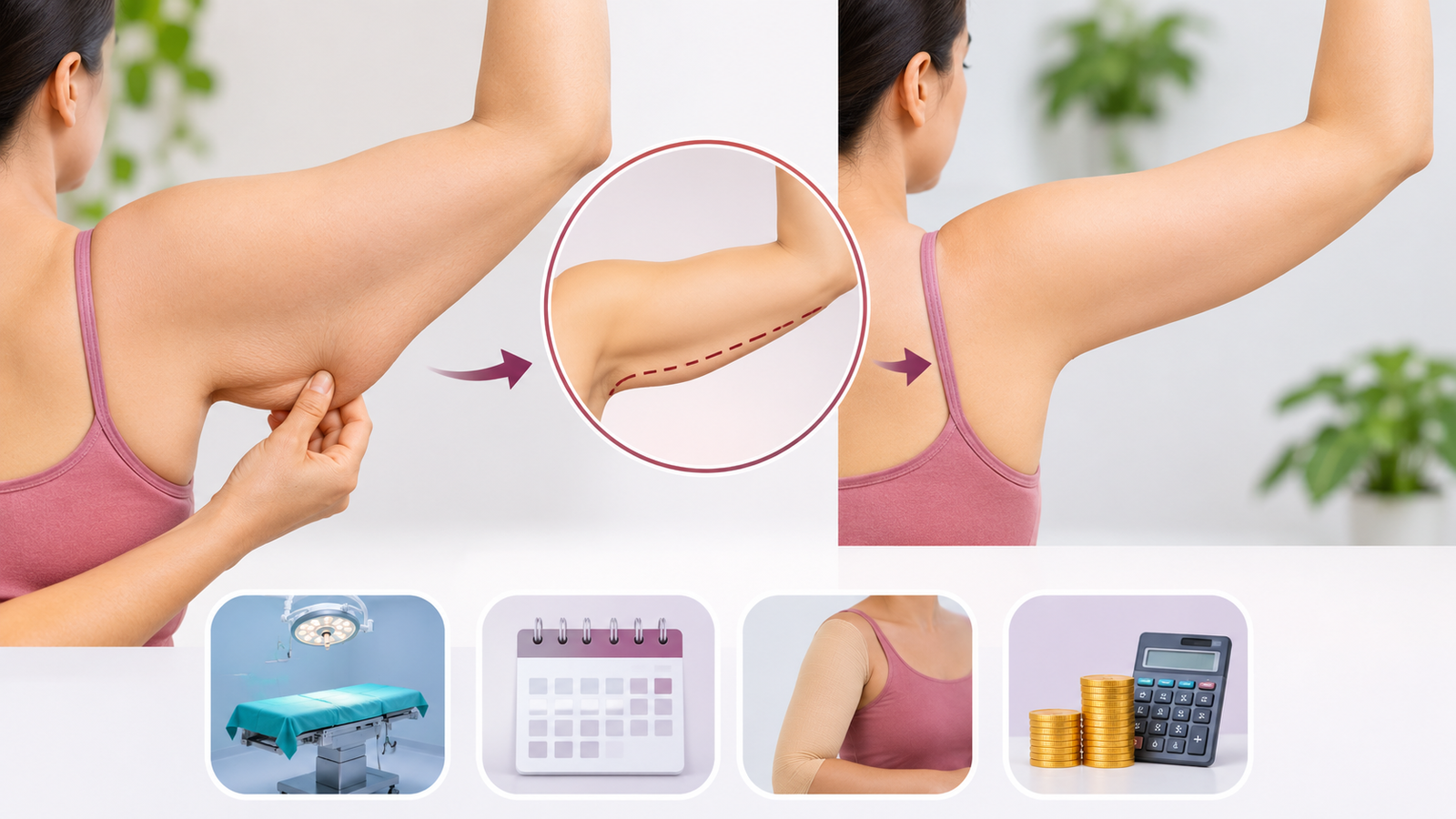
An arm lift, or brachioplasty, is a body-contouring operation that removes excess upper-arm skin and sometimes underlying fat. Its purpose is to improve the shape of the arms when skin has lost elasticity.
It is particularly relevant after substantial weight loss, when stretched skin may not contract sufficiently.
Who may benefit from brachioplasty?
An arm lift may be considered by adults who:
- Have loose or hanging skin between the armpit and elbow.
- Experience rubbing, irritation, or difficulty with clothing.
- Have maintained a relatively stable body weight.
- Are in suitable general health for elective surgery.
- Understand that surgery creates permanent scars.
- Have realistic expectations about improvement.
Patients with uncontrolled medical conditions, active infections, or significant ongoing weight changes may need further assessment before surgery.
Arm lift versus liposuction
Liposuction removes fat but does not directly remove excess skin. When skin elasticity is good, liposuction alone may be considered. However, when substantial loose skin is present, brachioplasty may provide a more appropriate correction.
Some patients require both skin removal and fat reduction.
For an example of body contouring after major weight loss, read arm lift after weight loss in surat complete body transformation case study by elegance clinic.
The best approach depends on examination rather than appearance alone.
2. How the Arm Lift Procedure Is Done, Step by Step
Understanding the arm lift procedure steps helps patients prepare for consultation and make informed decisions.
Step 1: Consultation and examination
The surgeon examines skin looseness, fat distribution, arm shape, and previous scars. Medical history, current medicines, smoking habits, and weight stability are also reviewed.
Patients should explain what bothers them and what improvement they expect.
Step 2: Preoperative assessment
Depending on health history and the planned operation, the surgeon may recommend blood tests, an anaesthesia assessment, or other investigations.
Patients must disclose prescription medicines, supplements, allergies, and previous surgical complications.
Never stop prescribed medicines without medical advice.
Step 3: Choosing the surgical technique
The incision pattern depends on the amount and location of loose skin.
A limited-incision technique may be considered for selected patients with relatively small amounts of excess skin near the armpit.
More extensive skin looseness may require an incision along the upper arm, potentially extending towards the elbow.
The surgeon should explain scar placement before obtaining consent.
Step 4: Surgery and skin tightening
During brachioplasty, excess skin is removed and the remaining tissues are repositioned. Liposuction may be added when appropriate.
The wound is closed with sutures, and dressings or supportive garments may be used.
Step 5: Recovery and follow-up
After surgery, the team monitors discomfort, circulation, wound condition, and any early complications.
Patients receive instructions about medicines, wound care, arm movements, sleeping positions, and follow-up appointments.
Arm Lift Quick Facts
| Factor | What Patients Should Know |
|---|---|
| Procedure duration | [Surgeon to confirm typical duration] |
| Anesthesia | [Surgeon to confirm usual approach] |
| Hospital stay | [Confirm day-care or admission requirements] |
| Return to work | [Confirm based on job demands and healing] |
| Follow-up visits | [Confirm schedule and dressing requirements] |
These details must be individualized before surgery.
3. Recovery: What the First Weeks Look Like
Arm lift recovery involves wound healing, swelling reduction, gradual return to activity, and longer-term scar maturation.
The recovery experience differs according to incision length, whether liposuction was performed, general health, and the amount of tissue removed.
The first few days
Swelling, bruising, tightness, and discomfort are expected after surgery. Dressings and a compression garment may be recommended.
Patients should follow instructions about arm elevation and movement. Excessive stretching or lifting may place tension on the incisions.
Short, gentle walking may be encouraged when medically appropriate.
The first few weeks
Swelling gradually improves, although some tightness can remain.
The surgeon may restrict heavy lifting, strenuous exercise, and movements that stretch the surgical wounds.
Returning to desk work may be possible before returning to physically demanding employment, depending on recovery.
[Surgeon to confirm typical return-to-work and activity timelines.]
Longer-term healing
Scars initially may appear pink, red, or raised. Their color and texture generally change over time, and maturation may continue for months.
Scar visibility depends on skin characteristics, incision placement, wound healing, and individual scarring tendencies.
No surgeon can guarantee invisible scars or perfectly symmetrical arms.
Warning signs during recovery
Contact the treating team promptly if there is increasing redness, fever, worsening pain, unusual discharge, or wound separation.
Sudden breathing difficulty, chest pain, or other severe symptoms require emergency medical attention.
Patients should not delay evaluation while waiting for a routine appointment.
4. Which Factors Change the Cost?
The cost of an arm lift varies because patients do not all need the same operation.
A reliable estimate should follow an examination and explain what is included in the proposed treatment.
Main cost factors
Extent of skin removal: A limited procedure and an extensive upper-arm lift may require different surgical resources.
Additional liposuction: Combining fat reduction with skin removal can change operative complexity and cost.
Anesthesia: Anesthesia services and monitoring requirements depend on the planned procedure.
Hospital facilities: Operating theatre charges, admission arrangements, and postoperative care may influence the total.
Investigations and medicines: Preoperative testing, prescriptions, dressings, and garments may be billed separately.
Follow-up care: Patients should ask which reviews are included and whether additional treatment involves separate charges.
What should a written quotation include?
Request clarification about surgeon fees, anaesthesia, facility charges, tests, garments, medicines, follow-ups, and management of complications.
Patients comparing body-contouring procedures may also find blogs about breast lift with implants useful for understanding a different surgical approach.
Similarly, how long does a breast lift last discusses durability in breast surgery. Its timelines should not be applied to arm lift results.
Arm lift surgery is generally elective when performed for cosmetic reasons. Insurance eligibility depends on the specific medical indication and policy terms.
5. Planning an Arm Lift in Athwa Surat: Reaching the Clinic
Planning treatment involves more than choosing an operation date. Patients should consider consultation, medical clearance, recovery assistance, transport, and postoperative reviews.
Before your consultation
Prepare a list of concerns and questions. Bring relevant medical records, previous surgical details, current medicines, and information about any major weight changes.
Photographs may help document concerns, but they do not replace physical examination.
Ask whether a preliminary remote discussion is available.
Planning the treatment day
Confirm the appointment location, expected reporting time, fasting instructions if applicable, and whether someone must accompany you.
Arrange transport after surgery rather than assuming you can drive yourself.
If sedation or general anesthesia is used, the medical team will provide specific discharge and supervision instructions.
Preparing your home
Keep frequently used items within easy reach. Arrange help with shopping, household work, and activities requiring arm strength.
Loose, comfortable clothing may make dressing easier while the arms are sensitive.
Ask the clinic how long you should wear any prescribed compression garment.
Organising follow-up appointments
Confirm when the first dressing review is expected and how to contact the surgical team if concerns arise.
Patients considering different forms of chest or body-contouring surgery can also read book ftm chest surgery surat guide. This describes a separate procedure with different indications and recovery requirements.
The most useful travel plan is one that allows safe postoperative assessment rather than rushing home immediately after treatment.
6. Questions to Ask Before You Decide
Choosing brachioplasty requires understanding both the potential improvement and the trade-offs.
Before consenting to surgery, discuss the following points with your surgeon:
- Is my concern mainly excess skin, excess fat, or both?
- Would liposuction alone be appropriate?
- Where will the incision and final scar be located?
- What degree of improvement is realistic for my arms?
- What are the risks of infection, fluid collection, asymmetry, or wound-healing problems?
- How will future weight changes affect the outcome?
- When can I return to work, driving, and exercise?
- What happens if healing is delayed or revision surgery becomes necessary?
Consultation with Dr. Ashutosh Shah
Dr. Ashutosh Shah, a plastic and reconstructive surgeon associated with Elegance Clinic, can assess whether brachioplasty is appropriate after reviewing the patient’s concerns and medical condition.
The consultation should explain alternatives, expected scars, risks, recovery responsibilities, and follow-up requirements.
Frequently Asked Questions
1. How long does an arm lift take on the day?
The total time depends on the amount of excess skin, incision pattern, whether liposuction is combined, and anaesthesia requirements. Patients also need time for preparation and postoperative observation. The surgeon will provide an individual estimate after examination.
2. How many follow-up visits are needed?
Arm lift follow-up visits depend on wound healing, dressings, sutures, and the extent of surgery. Early reviews help identify swelling, fluid collections, or wound problems. Additional appointments may be needed to monitor scars and arm movement.
3. Can the first consultation be online?
Patients considering an arm lift in athwa surat can ask whether an initial online consultation is available. Medical history and photographs may support preliminary discussion, but a physical examination is usually necessary to assess skin looseness and plan incisions.
4. When can I travel after treatment?
Travel depends on the operation, anaesthesia, pain control, mobility, and risk of complications. Patients should avoid assuming that immediate long-distance travel is appropriate. Discuss transport, assistance, and follow-up arrangements before surgery. The treating surgeon should confirm when travel is safe for your individual recovery.
5. When will the final result show?
An initial contour change may be visible after surgery, but swelling can temporarily affect arm shape. Scars also continue changing as tissues heal. Final appearance varies with the technique, skin quality, and individual healing. Ask your surgeon about realistic expectations and the likely period of scar maturation.
Conclusion
An arm lift can improve upper-arm contour when excess skin does not respond adequately to exercise or weight management. However, brachioplasty involves permanent scars, recovery restrictions, and potential complications.
Patients should understand the proposed technique, written costs, follow-up arrangements, and realistic outcomes before proceeding.
