

✓ Medically reviewed by Dr. Ashutosh Shah, Plastic, Reconstructive & Cosmetic Surgeon (M.Ch., DNB)
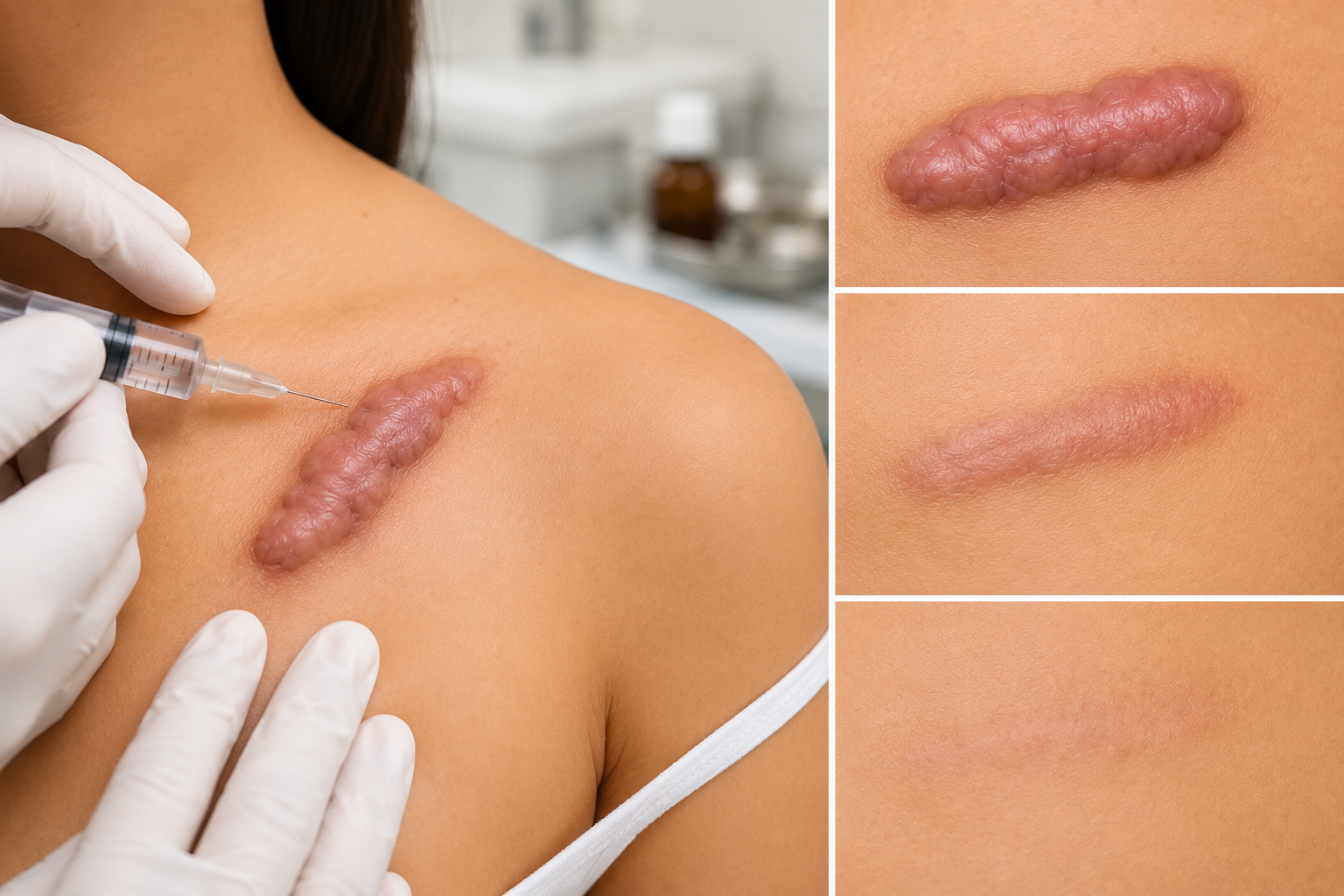
The best keloid treatment near me usually combines more than one method, because keloids return often after single treatments. Steroid injections, surgical excision with immediate follow up therapy, pressure therapy, silicone sheets and laser sessions all play a role. A specialist decides the mix after examining the scar.
Key Takeaways
- A keloid is scar tissue that grows beyond the boundary of the original wound.
- Surgery alone carries a high recurrence rate, so surgeons always add a second treatment afterwards.
- Steroid injections remain the most common first line option for small and medium keloids.
- Early treatment works better than waiting, because young scars respond faster than old thick ones.
- Keloids can return years later, so long term follow up forms part of any honest treatment plan.
- Elegance Clinic in Surat assesses keloids at both the Adajan and Vesu centres.
Table of Contents
- What exactly is a keloid scar?
- What is the best keloid treatment near me?
- Why do keloids come back after treatment?
- Where can you get keloid treatment in Surat?
- How much does keloid treatment cost?
- How can you prevent new keloids from forming?
- When should you see a specialist about a scar?
- Frequently Asked Questions
What exactly is a keloid scar?
A keloid is an overgrown scar that spreads past the edges of the original injury and does not shrink on its own. The body produces too much collagen during healing. As a result, the scar becomes raised, firm, shiny and often darker than surrounding skin.
Keloids differ from hypertrophic scars, which stay inside the wound boundary and usually flatten over one or two years. This distinction guides treatment. Hypertrophic scars often settle with conservative care, whereas keloids need active intervention because they keep expanding.
Where keloids commonly appear
- Earlobes, especially after piercing
- Chest and breastbone area
- Shoulders and upper back
- Jawline and neck, often after acne or shaving
- Surgical scars, including caesarean and thyroid incisions
What triggers them
Any break in the skin can start a keloid. Piercings, acne, burns, chickenpox marks, vaccination sites, insect bites and surgical cuts all count. Genetics play a strong role too, so keloids often run in families. People with darker skin tones develop them more frequently, and the tendency usually shows itself before the age of thirty.
What is the best keloid treatment near me?
No single treatment suits every keloid. Doctors choose based on size, location, age of the scar, previous treatments and how the skin behaves. Small keloids often respond to injections alone. Large, thick or repeatedly recurring keloids usually need surgery combined with an additional therapy.
Main treatment options explained
| Treatment | How it works | Typical use |
|---|---|---|
| Steroid injection | Softens and flattens scar tissue | Small to medium keloids, several sessions |
| Surgical excision | Removes the keloid completely | Large keloids, always with follow up therapy |
| Pressure therapy | Constant pressure limits regrowth | Earlobe keloids after removal |
| Silicone sheets or gel | Hydrates and flattens the scar | Early scars and maintenance |
| Laser sessions | Reduces redness, thickness and itching | Colour and texture improvement |
| Cryotherapy | Freezes and shrinks scar tissue | Small firm keloids |
Why combination therapy wins
Removing a keloid surgically leaves a fresh wound, and that wound can form a new keloid. Therefore surgeons pair excision with injections, pressure devices, silicone or radiotherapy in selected cases. Combination protocols reduce recurrence considerably compared with surgery on its own. Ask any clinic exactly which second treatment they plan to add.
What treatment feels like
Steroid injections take a few minutes. The needle stings briefly, and the scar softens gradually across several sessions spaced three to six weeks apart. Surgical removal happens under local anaesthesia for most sites. Patients walk out the same day and return for follow up injections during the healing period.
Why do keloids come back after treatment?
Keloids recur because the underlying healing tendency does not disappear. Treatment reduces existing scar tissue, yet the skin keeps its instruction to overproduce collagen. Consequently, any new wound in that area, including the treatment wound itself, can trigger fresh growth.
Recurrence risk drops when treatment starts early, when follow up continues for months rather than weeks, and when the patient protects the area from friction and further injury. Skipping follow up appointments is the most common reason a good result slips away.
Signs a keloid is returning
- The scar edge starts to feel firm again
- Itching or a stinging sensation comes back
- The colour deepens to red, purple or dark brown
- The surface begins to lift above the surrounding skin
Report any of these early. A returning keloid caught at four weeks responds far better than one reported at four months.
Where can you get keloid treatment in Surat?
Elegance Clinic offers keloid and raised scar management in Surat at its Adajan and Vesu centres. A plastic surgeon assesses the scar, discusses realistic outcomes, and builds a plan that usually combines two or more methods. Consultations cover treatment sequence, session count and aftercare.
The clinic’s keloid and raised scar treatment service handles earlobe keloids, chest and shoulder keloids, acne related keloids on the jaw, and keloids left by earlier surgery. Cases needing tissue rearrangement fall under reconstructive plastic surgery.
Dr. Ashutosh Shah leads the clinic as a board certified Plastic, Reconstructive and Cosmetic Surgeon with over twenty two years of surgical experience. Elegance Clinic has treated patients from across Gujarat since 2014, and Dr. Ashutosh Shah reviews scar cases personally before any procedure begins.
Where redness and texture need softening, the team may add sessions from the laser treatment range alongside injections. You can arrange an assessment through the clinic contact page.
How much does keloid treatment cost?
Keloid treatment cost depends on scar size, the number of sessions required, and whether surgery forms part of the plan. Injection courses cost less than surgical removal with combined therapy. A clinic can only quote fairly after seeing the scar in person.
Be wary of one visit promises. Keloid care is a course, not a single appointment, so a quote covering only one session may understate the real total. Ask for the expected number of visits, what each visit costs, and what happens if the scar returns within the follow up period.
How can you prevent new keloids from forming?
Prevention starts with avoiding unnecessary skin injury. If you already form keloids, skip elective piercings and tattoos, treat acne early, and tell any surgeon about your scarring history before a planned operation. Careful wound closure and early scar care reduce risk substantially.
Practical steps that help
- Keep new wounds clean, moist and covered while they heal
- Start silicone gel or sheeting once the wound closes fully
- Avoid stretching or straining the healing area
- Protect the scar from sun exposure for several months
- Ask about preventive injections if you have a strong keloid history
A note on home remedies
Onion extract gels, vitamin E oil and various kitchen remedies circulate widely online. Evidence for flattening true keloids remains weak. These products may help mild scars stay supple, yet they rarely change an established keloid. Spending months on them delays treatment that would have worked.
When should you see a specialist about a scar?
See a specialist when a scar grows beyond the original wound, itches persistently, hurts, restricts movement, or keeps thickening after three months. Early assessment gives more options, because young scars respond to simpler treatment than old, hardened ones.
Book sooner if the scar sits on the earlobe, chest or shoulder, since these sites carry a higher recurrence risk and benefit from a structured plan. Similarly, anyone planning surgery who has formed keloids before should raise it during the pre operative discussion rather than afterwards.
Finding the best keloid treatment near me
The best keloid treatment near me is a planned combination delivered by a qualified plastic surgeon, with follow up built into the schedule from day one. Judge a clinic on how clearly it explains recurrence risk, not on how confidently it promises a permanent cure.
Book a consultation today at Elegance Clinic, Surat, for an assessment of your scar and a treatment plan matched to its size, site and history.
Frequently Asked Questions
Can a keloid go away on its own?
Keloids rarely disappear without treatment. Unlike ordinary scars, they keep producing excess collagen and often continue growing slowly for months or years. Active treatment is usually needed to flatten and soften the tissue.
Is keloid removal surgery permanent?
Surgery removes the existing keloid, yet the tendency to form one remains. Recurrence is common when excision is done alone, which is why surgeons combine it with injections, pressure therapy or other follow up treatment.
How many steroid injections does a keloid need?
Most keloids need three to six injection sessions, spaced roughly three to six weeks apart. Thicker or older scars may need more. Response is checked at each visit, and the plan adjusts based on how the scar softens.
Are keloids dangerous?
Keloids are not cancerous and do not spread to other organs. However, they can itch, hurt, restrict joint movement and cause significant distress when visible. Treatment addresses comfort and appearance rather than any threat to health.
Do keloids run in families?
Yes, a family history strongly increases the chance of forming keloids. People with darker skin tones develop them more often, and the tendency usually appears before the age of thirty. Mention family history at consultation.
Can laser treatment remove a keloid completely?
Laser sessions reduce redness, thickness, itching and texture, but rarely remove a keloid on their own. Lasers work best as part of a combined plan alongside injections or after surgical removal.
What happens if a keloid is left untreated?
An untreated keloid may keep enlarging, darkening and hardening. Symptoms such as itching and tenderness can worsen over time. Large keloids also become harder to treat, so early assessment gives better outcomes.
Can I get my ears pierced again after keloid removal?
Repiercing the same area carries a real risk of a new keloid forming. Most specialists advise against it. If piercing matters to you, discuss preventive measures with a scar specialist before making any decision.