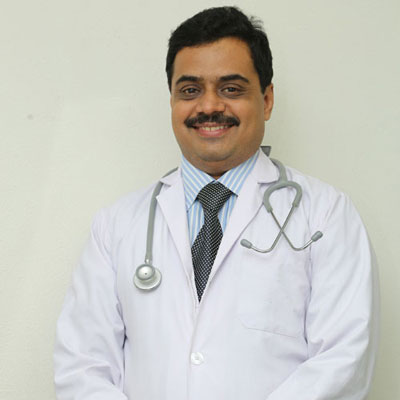

✓ Medically reviewed by Dr. Ashutosh Shah, Plastic, Reconstructive & Cosmetic Surgeon (M.Ch., DNB)
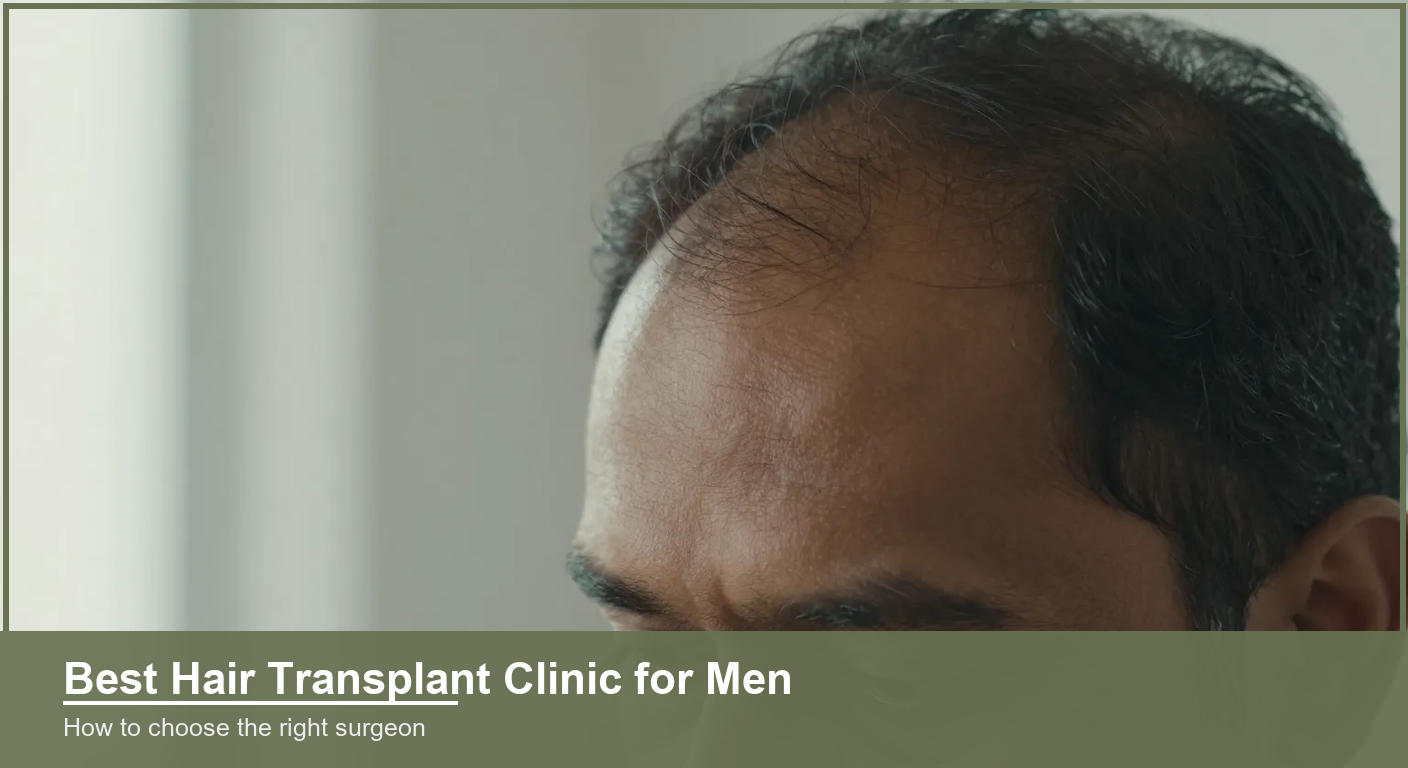
The best hair transplant clinic for men near me is the one run by a qualified plastic surgeon who examines your scalp in person, counts your donor grafts honestly, and shows real patient photos taken at the same angle. Certification, surgeon involvement and hygiene matter far more than price or advertising.
Key Takeaways
- A qualified plastic surgeon, not a technician, should plan and perform your hair transplant.
- Ask who actually makes the incisions and places the grafts, because many centres hand this to junior staff.
- Real before and after photos of male patients, shot from matching angles, tell you more than any award badge.
- Donor area quality decides your final density, so a clinic that promises unlimited grafts is not being honest.
- Operating theatre standards, sterile instruments and proper anaesthesia support protect you from infection.
- Elegance Clinic in Surat offers hair transplant consultations at both the Adajan and Vesu centres.
Table of Contents
- What makes a hair transplant clinic the best for men?
- Who should actually perform your hair transplant?
- Which hair transplant method suits male pattern baldness?
- What should you check before booking a hair transplant?
- Why do men choose Elegance Clinic in Surat for hair transplant?
- How much does a hair transplant cost for men?
- How long do hair transplant results take to appear?
- Frequently Asked Questions
What makes a hair transplant clinic the best for men?
The best hair transplant clinic for men near me combines a board certified surgeon, a properly equipped operating theatre, honest graft planning and documented patient results. Marketing budgets do not create good hairlines. Surgical judgement, careful graft handling and a natural angle of placement create them.
Male pattern baldness follows a predictable pattern. The hairline recedes at the temples, then the crown thins, and the two areas eventually meet. A skilled surgeon plans around that pattern rather than around today’s appearance. Consequently, a good clinic designs a hairline that will still look natural when you are fifty five, not only next year.
Signs of a clinic worth trusting
- The surgeon personally examines your scalp and measures donor density before quoting anything.
- You receive a written graft estimate with a realistic range, not a rounded marketing number.
- The clinic explains what the procedure cannot achieve, including areas it will leave thinner.
- Photographs of previous male patients appear at matching lighting and angles.
- Post operative follow up visits sit inside the plan rather than as a separate sale.
Warning signs worth walking away from
Some centres quote a fixed price over the phone without seeing your scalp. Others promise a specific number of grafts before examining the donor area. Moreover, a few advertise permanent results after a single session for advanced baldness, which no surgeon can guarantee. Treat these claims as a reason to look elsewhere.
Who should actually perform your hair transplant?
A qualified plastic or dermatological surgeon should plan the hairline, create the recipient sites and supervise every stage. Trained technicians may assist with graft dissection and placement, which is normal practice. However, the surgeon must remain present and responsible throughout the procedure.
This distinction matters because hairline design is surgical artistry. Angle, direction and density all change across the scalp. Frontal hairs grow forward at a sharp angle, crown hairs swirl in a whorl pattern, and temple hairs sit finer and softer. Getting these wrong produces the pluggy, doll like look that people associate with older transplant work.
At Elegance Clinic, Dr. Ashutosh Shah is a board certified Plastic, Reconstructive and Cosmetic Surgeon with over twenty two years of surgical experience. He has trained more than ninety plastic surgeons in hands on hair transplant workshops, and he speaks as national and international faculty on the subject. That teaching background shapes how the surgical team here approaches every case.
Ask any clinic one direct question during your consultation. Who will hold the instruments? A confident answer, given without hesitation, tells you a great deal about the place.
Which hair transplant method suits male pattern baldness?
Follicular Unit Extraction, known as FUE, removes individual follicular units directly from the back and sides of the scalp using a small punch. Follicular Unit Transplantation, or FUT, removes a thin strip of donor skin and dissects grafts from it. Both methods move permanent hair to bald zones.
FUE leaves tiny dot scars scattered across the donor area, so it suits men who keep their hair very short. FUT leaves a single fine line, hidden under longer hair, and it often yields a higher graft count in one sitting. Neither approach is universally superior. The right choice depends on your donor density, scalp laxity, hair calibre and how much coverage you need.
Comparing the two main techniques
| Factor | FUE | FUT |
|---|---|---|
| Donor scarring | Small scattered dots | One fine linear scar |
| Suits very short hairstyles | Yes | Less suitable |
| Grafts per single session | Moderate to high | Often higher |
| Donor area healing | Faster surface healing | Sutures removed later |
| Shaving of donor area | Usually required | Limited to the strip |
Treatments that support a transplant
Surgery replaces hair that has already gone. It does not stop ongoing thinning in the hair you still have. Therefore surgeons usually pair a transplant with medical therapy so that native hair keeps its place. Options include topical minoxidil, prescribed oral medication where suitable, and scalp treatments such as mesotherapy for bald spots. A clinic that skips this conversation is planning only half your result.
What should you check before booking a hair transplant?
Check the surgeon’s qualification, the clinic’s registration, the sterility of the operating area, the written graft plan and the follow up schedule. Also confirm what happens if growth falls short of expectation. These five checks separate a serious surgical centre from a cosmetic salon offering surgery.
Questions worth asking at consultation
- How many grafts does my donor area realistically hold across my lifetime?
- Will one session cover the area I care about, or should we stage it?
- What medication should I take before and after surgery, and for how long?
- How does the team sterilise the theatre, and who monitors me during the procedure?
- What does the quoted price include, and what costs extra?
Look at the donor area, not the bald area
Most men focus on the bald patch. Surgeons focus on the donor supply behind and above the ears, because that hair resists the hormone that causes male pattern baldness. Donor density, hair thickness and scalp flexibility set a ceiling on what surgery can achieve. A clinic that examines your donor area carefully is giving you an honest answer, even when the answer is smaller than you hoped.
Why do men choose Elegance Clinic in Surat for hair transplant?
Men across Surat and Gujarat come to Elegance Clinic because a board certified plastic surgeon leads every case, the theatre meets surgical standards, and the team explains the plan in plain language. The clinic has served patients since 2014 and runs advanced centres at Adajan and Vesu.
Our hair transplant surgery service covers hairline restoration, crown coverage, beard and moustache grafting, and repair of unsatisfactory transplants done elsewhere. Dr. Ashutosh Shah reviews each scalp personally, and the wider clinical team supports the procedure from preparation through recovery.
Patients travelling from outside Gujarat, and NRI patients planning a trip home, can arrange combined consultation and surgery dates. Furthermore, treatment finance is available, so you can review EMI options before committing.
How much does a hair transplant cost for men?
Hair transplant cost depends on graft count, technique, session length and the surgeon’s experience, so a fair quote only follows a physical examination. Clinics normally price per graft or per session. Ask for the total, in writing, including medication and follow up visits.
Be cautious with very low advertised rates. Extremely cheap per graft pricing usually means larger multi hair units get counted generously, or that unsupervised technicians perform the work. Conversely, a high price alone proves nothing. Value comes from the number of grafts that actually survive and grow, and from a hairline you will still like in a decade.
For a personal estimate, the clinic team will review your scalp and discuss a plan during consultation. You can reach either centre through the appointment booking page.
How long do hair transplant results take to appear?
Transplanted hairs shed within two to six weeks, which alarms many patients. New growth begins around three to four months, thickens by six to nine months, and reaches final density near twelve to eighteen months. Patience is part of the treatment.
Recovery itself is quicker than people expect. Mild swelling settles within a few days, crusts fall away in about a week, and most men return to desk work within three to five days. Meanwhile, heavy exercise, swimming and direct sun exposure should wait for the period your surgeon specifies.
Protecting your result over time
Transplanted follicles are permanent, yet the surrounding native hair can continue to thin. Regular follow up, prescribed medication and scalp care keep the overall picture balanced. Book a review appointment each year, so that any new thinning gets addressed early rather than after visible loss.
Choosing the best hair transplant clinic for men near me
Finding the best hair transplant clinic for men near me comes down to evidence you can verify. Meet the surgeon, look at male patient photographs, understand your donor limits, and read the written plan before paying anything. A clinic willing to slow down and answer questions is usually the clinic worth choosing.
Book a consultation today at Elegance Clinic, Surat, and get an honest assessment of your scalp, your donor supply and your realistic options.
Frequently Asked Questions
Is a hair transplant painful?
Local anaesthesia numbs the scalp, so the procedure itself is not painful. Most men feel only pressure and mild tugging. Some soreness follows for two or three days, and simple pain relief usually controls it comfortably.
How many grafts do men usually need?
Graft numbers vary widely with the pattern of loss. A receding hairline may need around one thousand five hundred to two thousand five hundred grafts, while crown and frontal coverage together often needs more. Only a physical scalp examination gives an accurate figure.
Will transplanted hair fall out again?
Hair taken from the back and sides of the scalp resists the hormone that drives male pattern baldness. Those grafts normally last for life. However, untreated native hair around them can keep thinning, which is why medical therapy often continues afterwards.
What age is right for a hair transplant?
Surgeons usually prefer patients above twenty five years, because the pattern of loss becomes clearer by then. Operating too early risks a hairline that looks out of place as further thinning occurs. Younger patients often start on medical treatment first.
Can a hair transplant fix a receding hairline only?
Yes, a transplant can rebuild the frontal hairline alone, and this is one of the most common requests. Restoring the front frames the face and gives the biggest visual improvement. The crown can wait for a separate session later.
How long does the procedure take?
Most sessions run between five and eight hours, depending on graft numbers. Larger cases sometimes split across two consecutive days. Patients stay awake, take breaks, and can eat and use the washroom during the session.
Are there risks with hair transplant surgery?
Risks include infection, poor graft survival, temporary shock loss of surrounding hair, and visible scarring if technique is poor. Choosing a qualified surgeon and following aftercare instructions reduces these risks considerably. Discuss your full medical history before surgery.
When can I wash my hair after surgery?
Gentle washing usually begins two to three days after the procedure, following the exact method your surgeon demonstrates. Avoid rubbing, scratching or high pressure water on the grafts. Normal washing habits typically resume after about two weeks.