

|
Getting your Trinity Audio player ready...
|
✓ Medically reviewed by Dr. Ashutosh Shah, Plastic, Reconstructive & Cosmetic Surgeon (M.Ch., DNB)
What to avoid after facelift surgery includes strenuous activity, smoking, alcohol, pressure on healing tissues, direct sunlight on fresh scars and missed follow-up appointments. During early recovery, patients should protect their incisions and follow prescribed aftercare instructions. These precautions support healing and help reduce the risk of complications.
A facelift, medically called rhytidectomy, improves selected signs of facial ageing by repositioning tissues and removing excess skin.
However, surgery is only one part of treatment. Proper postoperative care also influences healing and comfort.
At Elegance Clinic, Dr. Ashutosh Shah, M.S., M.Ch., D.N.B., provides personalised surgical guidance and recovery instructions.
This guide explains essential facelift precautions, including bathing, sleeping, travel, food and warning signs.
1. What to Avoid in the First Week
The initial recovery period requires careful attention because facial tissues and incisions are still healing.
Understanding the facelift procedure and its recovery requirements before surgery can help patients prepare for postoperative care. For additional information about treatment suitability and surgical planning, read our guide on when and where do you need a facelift.
Although mild swelling, bruising and tightness may occur, unnecessary strain can increase discomfort.
Avoid strenuous physical activity.
Heavy lifting, bending repeatedly and vigorous exercise may increase pressure around healing tissues.
Therefore, avoid strenuous activities until your surgeon confirms that you can resume them.
Gentle walking may be appropriate when medically advised.
Do not touch or massage the treated area.
Patients should avoid unnecessary rubbing, scratching or massaging around incisions.
Additionally, do not apply skincare products, makeup or home remedies without approval.
Even gentle pressure may irritate healing tissues.
Avoid smoking and nicotine
Smoking can reduce oxygen delivery to tissues and interfere with wound healing.
Consequently, nicotine exposure may increase the risk of complications.
Patients should follow their surgeon’s instructions about stopping smoking before surgery and remaining nicotine-free during recovery.
Do not skip prescribed medicines
Take medicines according to the postoperative plan.
Furthermore, avoid starting additional painkillers, herbal supplements or blood-thinning products without medical advice.
Some substances may increase bleeding risk or interact with prescribed treatment.
Do’s and Don’ts During Recovery
| Recovery Stage | Do | Don’t |
|---|---|---|
| Days 1–3 | Rest, take prescribed medicines and follow wound-care instructions | Rub incisions, smoke or perform strenuous activity |
| Days 4–7 | Attend scheduled reviews and monitor swelling | Resume exercise or apply unapproved skincare |
| Week 2 | Continue approved hygiene and gentle activity | Drive or travel without appropriate clearance |
| Weeks 3–4 | Protect healing scars and follow activity guidance | Expose fresh scars to direct sunlight |
| After Week 4 | Increase activities only as advised | Assume complete healing without examination |
2. When Can You Shower, Travel and Drive?
Understanding what to avoid after facelift surgery also means knowing when ordinary activities can safely resume.
Although patients may feel better gradually, external healing does not always indicate complete internal recovery.
Bathing and showering
Your surgeon will explain when you can wash your hair, face and surgical areas.
Until then, keep dressings dry if instructed.
Additionally, avoid hot water, vigorous rubbing and direct water pressure over incisions.
Travelling after surgery
Long journeys may be uncomfortable during early recovery.
Moreover, travel can make follow-up appointments and urgent medical assessment more difficult.
Therefore, discuss your journey before booking transport.
Returning to driving
Avoid driving while taking sedating pain medicines or experiencing restricted movement.
Even when discomfort improves, driving requires adequate alertness and mobility.
3. Food, Smoking, and Alcohol Rules
Good nutrition and suitable lifestyle choices support recovery.
However, patients should follow individual medical advice rather than relying on general recovery tips alone.
Eat balanced meals.
Include appropriate sources of protein, fruits, vegetables, and other nutritious foods.
Also, stay well hydrated unless your medical team recommends fluid restrictions.
If chewing causes discomfort, ask whether softer foods would be suitable temporarily.
Avoid alcohol until cleared.
Alcohol may interact with medicines and contribute to dehydration or other postoperative concerns.
Therefore, avoid drinking until your surgeon confirms that it is safe.
Continue avoiding nicotine.
Nicotine exposure remains a concern during wound healing.
Consequently, cigarettes, vaping products, and other nicotine-containing products should be discussed with the surgical team.
Review supplements.
Some herbal products and supplements can affect bleeding or interact with medicines.
Before restarting them, confirm their safety with your surgeon.
These simple facelift dos and don’ts help patients maintain a consistent recovery routine.
4. Clothing, Garments, and Sleep Position After Facelift in Valsad
Patients recovering after facial surgery should minimize pressure and friction around healing tissues.
For this reason, pay attention to clothing choices, sleeping arrangements, and postoperative garments.
Choose comfortable clothing.
Loose-fitting clothes with front openings may make dressing easier.
In contrast, tight necklines can rub against sensitive areas when pulled over the head.
Therefore, prepare suitable clothing before surgery.
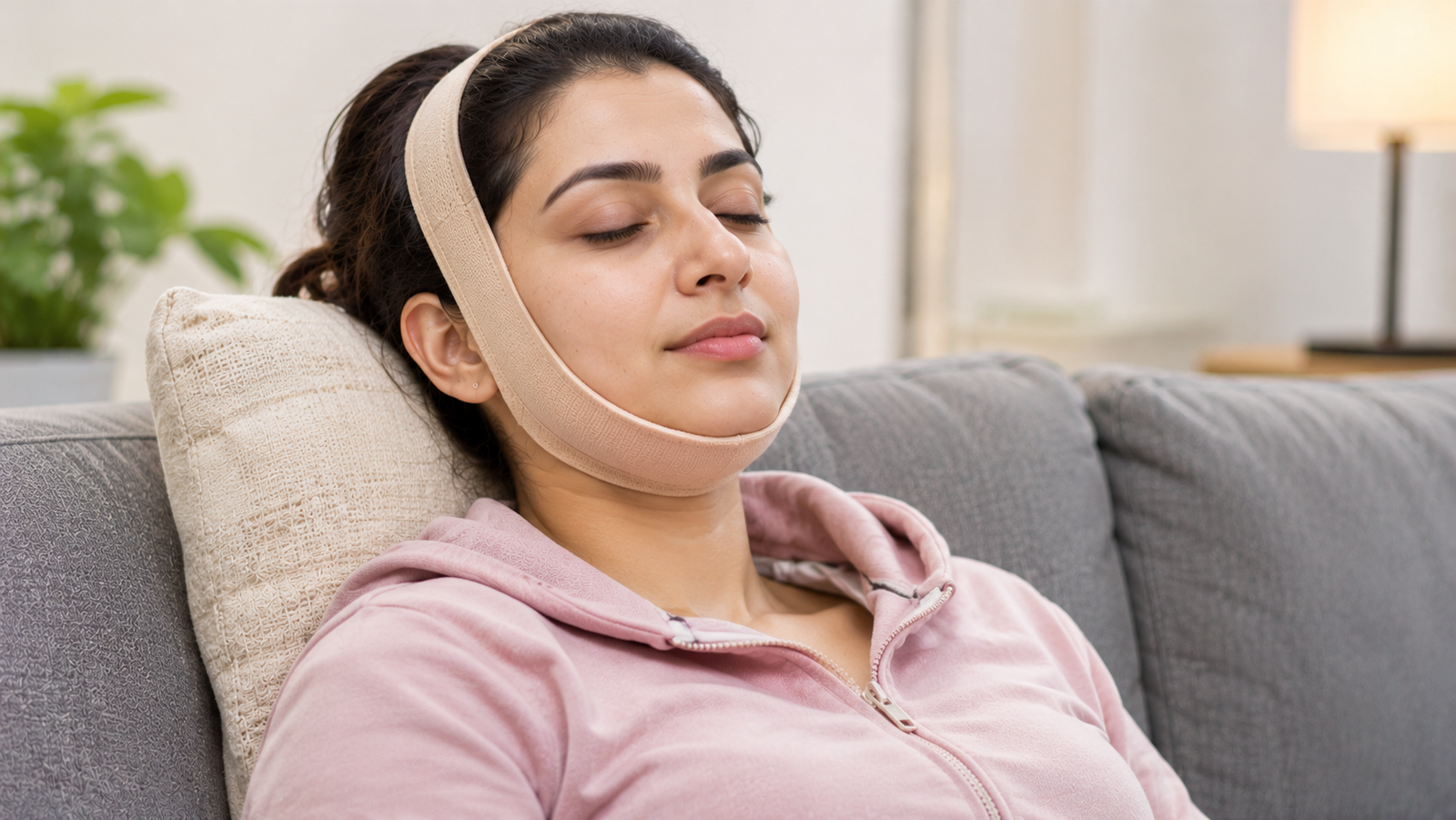
Follow garment instructions.
Some patients may receive specific instructions about facial dressings or support garments.
However, not every facelift requires the same postoperative support.
Use only the garments recommended by your surgeon.
Sleep in the recommended position.
A supported sleeping position may help reduce discomfort and protect healing tissues.
Nevertheless, avoid sleeping directly on surgical areas until cleared.
Protect healing scars from sunlight.
Fresh scars may become more noticeable with excessive sun exposure.
Consequently, patients should follow instructions about shade, protective clothing, and suitable sunscreen once incisions have healed sufficiently.
Do not apply sunscreen directly to unhealed wounds unless advised.
5. Which Signs Need a Call to the Clinic?
Knowing what to avoid after facelift is important, but recognizing possible complications is equally essential.
Some swelling, bruising, and tightness may be expected during recovery.
However, symptoms should generally improve rather than suddenly worsen.
Contact your surgeon for these symptoms.
Seek prompt medical advice if you notice:
- Sudden or rapidly increasing facial swelling.
- Severe or worsening pain.
- Increasing redness or warmth.
- Fever or unusual wound discharge.
- Significant bleeding.
- Wound separation or unexpected skin changes.
Additionally, report persistent symptoms that do not match your recovery instructions.
When is emergency care necessary?
Severe bleeding, breathing difficulty, chest pain or fainting requires emergency medical attention.
Do not wait for a scheduled appointment if these symptoms occur.
Why follow-up visits matter
Postoperative instructions vary depending on the surgical procedure. For example, patients considering other types of reconstructive surgery can explore our book ftm chest surgery surat guide for procedure-specific planning information. However, facelift patients should follow their own surgeon’s aftercare instructions.
Therefore, attend every recommended appointment even when you feel comfortable.
At Elegance Clinic, Dr. Ashutosh Shah can review postoperative concerns and advise on appropriate next steps.
Frequently Asked Questions
1. When can I take a bath?
Bathing instructions depend on incision healing, dressings and the surgeon’s postoperative plan. Although gentle washing may become possible during recovery, avoid soaking wounds or applying direct water pressure until cleared. Therefore, ask your surgical team when showering, hair washing and normal bathing can safely resume.
2. Can I travel by bus or train?
Travelling after surgery depends on your recovery, comfort and follow-up requirements. Patients considering facelift in valsad should discuss their return journey before treatment. Long journeys may be uncomfortable during early healing. Therefore, obtain medical clearance and arrange assistance if your surgeon recommends it.
3. When can I drink alcohol again?
Alcohol should be avoided until your surgeon confirms that it is safe. It may interact with prescribed medicines and affect postoperative recovery. Additionally, drinking while taking sedating pain medicines can be dangerous. Follow your individual instructions rather than assuming a standard waiting period applies to everyone.
4. Can I sleep on my side?
Sleeping on your side may place pressure on healing facial tissues and incisions. Consequently, your surgeon may recommend a supported sleeping position during early recovery. Avoid changing positions against medical advice. The appropriate sleeping arrangement and duration depend on the technique and your healing progress.
5. When can I go out in the sun?
Outdoor activity may resume when your surgeon considers it appropriate. However, fresh scars require protection because sun exposure can worsen pigmentation. Use shade and protective clothing, and apply sunscreen only when approved. Additionally, avoid prolonged heat exposure if it increases swelling or discomfort during recovery.
Conclusion
Understanding what to avoid after facelift surgery helps patients make informed recovery decisions.
Avoiding unnecessary strain, nicotine, alcohol and pressure on healing tissues can support safer postoperative care.
Moreover, following medical instructions and attending scheduled reviews helps identify concerns early.
For personalised advice, consult Dr. Ashutosh Shah at Elegance Clinic.
