

|
Getting your Trinity Audio player ready...
|
✓ Medically reviewed by Dr. Ashutosh Shah, Plastic, Reconstructive & Cosmetic Surgeon (M.Ch., DNB)
No, not every wisdom tooth needs removal. If a wisdom tooth grows normally, stays healthy and is easy to clean, your dentist may recommend keeping it.
However, some wisdom teeth cause pain, infection, tooth decay or damage to nearby teeth. In these cases, wisdom tooth removal may be the safest option.
Many people believe that all four wisdom teeth must come out. Others think that an impacted wisdom tooth always needs surgery. Neither statement is true for every patient.
The right decision depends on your symptoms, oral examination and dental X-rays.
This Myth vs Fact guide explains when wisdom teeth can stay, when removal makes sense and what to expect during recovery.
What Are Wisdom Teeth?
Wisdom teeth are the third molars at the back of your mouth.
They usually begin appearing during the late teenage years or early adulthood. However, some people develop them later, while others never develop all four.
Why Do Wisdom Teeth Cause Problems?
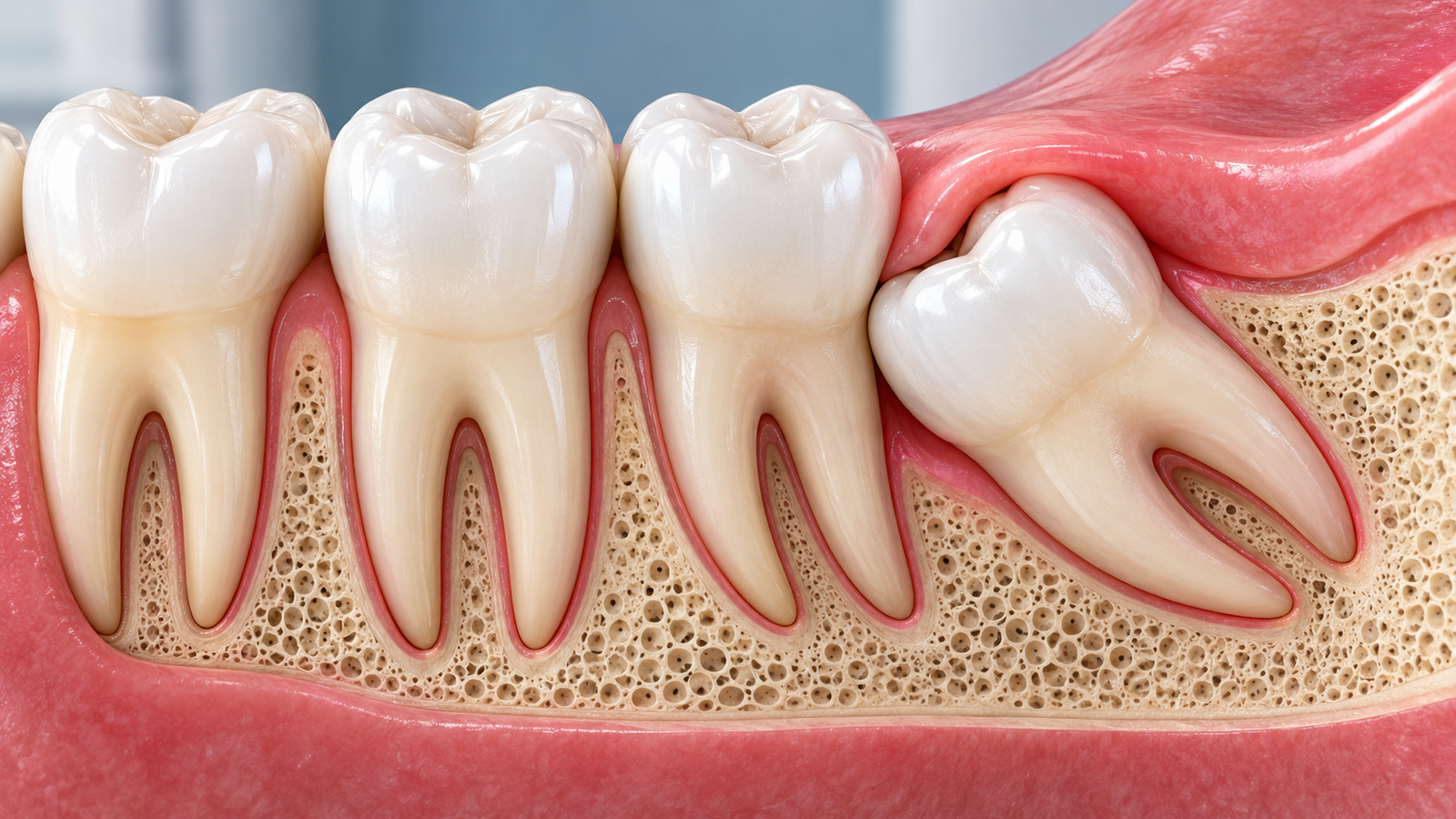
Sometimes, the jaw does not have enough space for another molar.
As a result, a wisdom tooth may grow at an angle or remain partly beneath the gum.
Dentists call this an impacted wisdom tooth.
However, an impacted tooth does not always cause symptoms. Some remain free of disease for years.
Therefore, your dentist should assess the individual tooth rather than recommend surgery based on age alone.
Myth 1: All Wisdom Teeth Must Be Removed
Myth: Everyone needs wisdom tooth removal eventually.
Fact: Healthy, fully erupted wisdom teeth may remain in place.
A dentist may recommend monitoring a wisdom tooth when it:
- Has fully emerged.
- Has enough space.
- Functions without causing problems.
- Has no decay or gum disease.
- Can be cleaned properly.
- Shows no concerning changes on examination or imaging.
When Is Monitoring Appropriate?
If the tooth remains healthy, your dentist may advise regular dental examinations.
However, monitoring does not mean ignoring it forever.
The dentist should check for changes in gum health, decay and nearby tooth damage.
You can read more about wisdom teeth treatment.
Myth 2: An Impacted Wisdom Tooth Always Needs Surgery
Myth: Every impacted wisdom tooth must come out immediately.
Fact: Impaction alone does not always justify removal.
An impacted wisdom tooth may sit partly or completely beneath the gum or bone.
Some impacted teeth cause no disease. In these cases, the dentist may recommend monitoring.
However, removal may become appropriate if the tooth causes repeated infections, decay, cyst formation or damage to the neighbouring molar.
What Makes an Impacted Tooth Risky?
A partly erupted tooth can create a small pocket beneath the gum.
Food and bacteria may collect there.
Consequently, the surrounding gum can become inflamed or infected. Dentists call this condition pericoronitis.
In addition, an angled wisdom tooth may make the adjacent molar harder to clean.
Therefore, the dentist must consider both the wisdom tooth and the tooth beside it.
Myth 3: Wisdom Tooth Pain Always Means Extraction
Myth: If your wisdom tooth hurts, removal is the only solution.
Fact: Treatment depends on the cause of the pain.
Wisdom tooth pain may result from gum inflammation, decay, infection or pressure on nearby tissues.
However, pain at the back of the mouth can also come from another tooth or jaw problem.
Can Medicines Solve the Problem?
Pain relief may reduce discomfort temporarily.
Likewise, a dentist may recommend cleaning or other treatment for gum inflammation.
However, medicine does not correct every underlying problem.
For example, repeated infections around a partly erupted wisdom tooth may make removal a reasonable long-term option.
Therefore, avoid taking repeated courses of antibiotics without a dental diagnosis.
When Should You See a Dentist?
Book an assessment if you notice:
- Repeated pain behind the last molar.
- Swelling around the gum.
- Difficulty opening your mouth.
- Bad taste or discharge.
- Pain while chewing.
- Food repeatedly getting trapped.
Seek urgent care for rapidly increasing facial swelling, fever or difficulty swallowing. Breathing difficulty requires emergency care.
Myth 4: Wisdom Tooth Removal Is Always a Major Operation
Myth: Every wisdom tooth needs complex surgery.
Fact: Some wisdom teeth need only a simple extraction.
If the tooth has fully emerged and the dentist can reach it easily, a simple extraction may be suitable.
However, a tooth trapped beneath the gum or bone may need a surgical approach.
Simple Extraction
First, the dentist numbs the area with local anaesthesia.
Next, they loosen and remove the visible tooth using dental instruments.
The procedure usually does not require a gum incision.
Learn about simple tooth extraction.
Surgical Extraction
An impacted tooth may require a small incision in the gum.
Sometimes, the surgeon removes a limited amount of bone or divides the tooth into sections.
The surgeon then cleans the area and may place stitches.
Read more about surgical tooth extraction.
Myth 5: Wisdom Tooth Removal Is Extremely Painful
Myth: Wisdom tooth removal always causes severe pain.
Fact: Local anaesthesia usually controls pain during the procedure.
You may feel pressure or movement. However, you should tell the dentist if you experience sharp pain.
After the procedure, mild to moderate discomfort and swelling are common.
How Can You Manage Discomfort?
Your dentist may recommend suitable pain relief and a cold compress.
In addition, you should rest and follow the aftercare instructions.
However, severe or worsening pain needs review.
For example, intense pain developing several days after extraction may indicate a dry socket.
Therefore, contact your dentist rather than trying to treat persistent pain yourself.
Myth 6: Wisdom Teeth Always Push Other Teeth Out of Place
Myth: Wisdom teeth inevitably cause crowding of the front teeth.
Fact: Research does not support routine wisdom tooth removal solely to prevent front tooth crowding.
Teeth can shift over time for several reasons.
These include natural changes in the jaw, bite and tooth position.
Therefore, a dentist should not recommend extraction based only on the assumption that wisdom teeth will make the front teeth crooked.
However, a wisdom tooth that damages the adjacent molar is a different concern.
When Is Wisdom Tooth Removal Recommended?
The dentist may recommend removal when the benefits outweigh the risks.
Common Reasons for Removal
| Dental finding | Why removal may help |
|---|---|
| Repeated gum infection | Reduces recurring inflammation around the tooth |
| Severe decay | Removes a tooth that cannot be restored |
| Damage to the neighbouring molar | Helps prevent further damage |
| Pain linked to the wisdom tooth | Treats the underlying source when other care is unsuitable |
| Cyst or other disease | Allows treatment of the affected area |
| Tooth position that prevents adequate cleaning | May reduce ongoing disease risk |
However, each case needs an individual assessment.
A healthy wisdom tooth should not automatically be removed simply because it exists.
How Does a Dentist Decide Whether to Remove a Wisdom Tooth?
The dentist begins by asking about your symptoms.
Next, they examine the gums, teeth and surrounding tissues.
Why Are Dental X-Rays Important?
An X-ray helps show the position of the wisdom tooth.
It may also reveal decay, bone changes or damage to nearby teeth.
For lower wisdom teeth, imaging can help assess the relationship between the roots and the nearby nerve canal.
In selected cases, the surgeon may recommend three-dimensional imaging when it could change treatment planning.
However, not every patient needs a CT scan.
What About the Risks of Surgery?
Wisdom tooth removal has possible complications.
These include bleeding, infection, swelling and dry socket.
In addition, lower wisdom tooth surgery may occasionally affect nearby nerves, causing temporary or sometimes lasting altered sensation.
Therefore, the dentist should explain the benefits, risks and alternatives before treatment.
You can explore the clinic’s tooth extraction services.
What Happens After Wisdom Tooth Removal?
Recovery depends on the tooth position and extraction method.
A simple extraction may cause less swelling than a complex surgical removal.
However, healing varies between patients.
During the First 24 Hours
Follow the dentist’s instructions carefully.
For example:
- Bite on gauze as instructed if bleeding occurs.
- Rest and avoid strenuous activity.
- Avoid smoking and drinking through a straw.
- Avoid vigorous rinsing or spitting.
- Eat soft, comfortable foods once the anaesthetic wears off.
During the Following Days
Swelling and discomfort may peak during the first few days.
However, these symptoms should gradually improve.
After the first 24 hours, your dentist may recommend gentle saltwater rinses.
Also, continue brushing your other teeth carefully.
When Should You Call the Dentist?
Contact the clinic if you develop worsening pain, persistent bleeding, fever, pus or increasing swelling.
Seek emergency care if swelling affects breathing or swallowing.
Myth vs Fact: Quick Summary
| Myth | Fact |
|---|---|
| Everyone must remove their wisdom teeth | Healthy wisdom teeth may remain |
| Every impacted wisdom tooth needs surgery | Some disease-free impacted teeth can be monitored |
| Wisdom tooth pain always means extraction | The cause must be diagnosed first |
| All extractions are major operations | Some are simple procedures |
| Extraction always causes severe pain | Anaesthesia usually controls procedural pain |
| Wisdom teeth always cause front tooth crowding | Routine removal solely to prevent crowding is not supported |
Frequently Asked Questions
Do All Wisdom Teeth Need to Be Removed?
No. Healthy wisdom teeth that grow properly, function well and remain easy to clean may not need removal. However, regular dental examinations help identify new problems.
What Happens If I Do Not Remove My Wisdom Teeth?
Nothing may happen if the teeth remain healthy. However, some wisdom teeth later develop decay, gum infection or damage to neighbouring teeth. Your dentist can recommend a monitoring plan.
Can an Impacted Wisdom Tooth Stay in Place?
Yes, sometimes. An impacted wisdom tooth without symptoms or disease may be monitored. However, the decision depends on its position, nearby structures and future risk.
When Is Wisdom Tooth Removal Necessary?
Removal may be appropriate for repeated infection, severe decay, cysts, damage to adjacent teeth or other diagnosed problems. The dentist should explain why extraction is preferable to monitoring or other treatment.
Is Wisdom Tooth Removal Painful?
Local anaesthesia usually prevents pain during the procedure. However, you may feel pressure. Some soreness and swelling afterward are normal, and your dentist can recommend suitable pain relief.
How Long Does Wisdom Tooth Removal Take to Heal?
Many patients feel noticeably better within several days. However, gum and bone healing take longer. Surgical extractions may need more recovery time than simple extractions.
Can Wisdom Tooth Pain Go Away Without Extraction?
Sometimes. Mild gum inflammation may improve with appropriate treatment. However, repeated pain or infection needs dental assessment because the underlying problem may remain.
Do I Need All Four Wisdom Teeth Removed at Once?
Not necessarily. Your dentist should assess each tooth separately. Some patients need only one tooth removed, while others may benefit from treating several teeth during one planned appointment.
At What Age Should Wisdom Teeth Be Removed?
There is no single age that suits everyone. Dentists base the decision on symptoms, disease, tooth position, medical history and treatment risks.
Should I Remove a Wisdom Tooth That Does Not Hurt?
Not automatically. A painless wisdom tooth may still have decay or another problem, but a healthy tooth may only need monitoring. A clinical examination and suitable imaging can guide the decision.
Conclusion
Wisdom tooth removal is not necessary for everyone.
Some wisdom teeth grow normally and remain healthy for years. Therefore, these teeth may only need routine monitoring.
However, repeated infection, decay, pain or damage to nearby teeth can make extraction the better option.
The safest decision comes from a dental examination, appropriate imaging and a clear discussion of treatment choices.
To learn more about dental care, visit Elegance Clinic.
