

|
Getting your Trinity Audio player ready...
|
✓ Medically reviewed by Dr. Ashutosh Shah, Plastic, Reconstructive & Cosmetic Surgeon (M.Ch., DNB)
Introduction
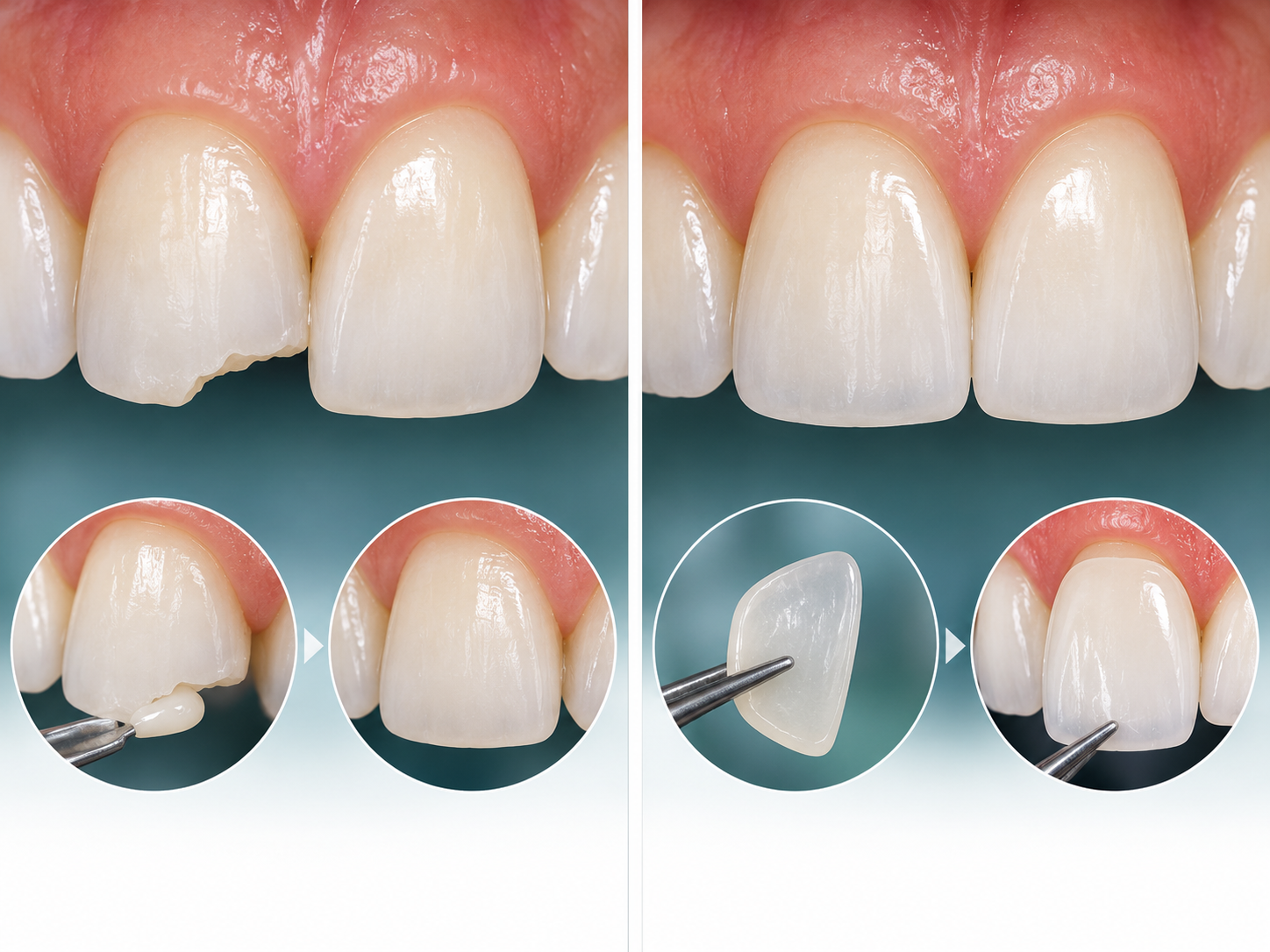
Dental bonding vs veneers comes down to your dental concerns, desired appearance, budget, and long-term expectations. Composite bonding uses tooth-coloured resin to repair small chips, close selected gaps, or reshape teeth, while porcelain veneers are thin coverings bonded to the front surfaces of teeth. A dentist can assess which option suits your needs.
What Is Dental Bonding?
Dental bonding is a cosmetic dental procedure in which a tooth-coloured composite resin is applied to a tooth and shaped to improve its appearance. The material is hardened with a curing light and polished to blend with the surrounding teeth.
Dentists may recommend bonding for minor chips, small gaps, uneven edges, or limited changes to tooth shape. It is often completed in a single appointment, depending on the number of teeth treated and the complexity of the work.
One advantage of composite bonding is that it may require little or no removal of natural tooth structure. However, this depends on the individual case, and bonded resin can stain, chip, or wear over time.
What Are Porcelain Veneers?
Porcelain veneers are thin, custom-made shells designed to cover the front surfaces of teeth. They are generally used to improve the colour, shape, size, or appearance of selected visible teeth.
The process usually involves a dental examination, treatment planning, preparation of the teeth when required, and placement of custom-made veneers. Some natural tooth enamel may need to be removed, making many conventional veneer treatments irreversible.
Porcelain veneers can provide a natural-looking appearance and good stain resistance. However, they may chip or become damaged, and repair or replacement may eventually be necessary.
Learn about available cosmetic dental procedures to understand the treatment options that may be suitable for improving your smile.
Dental Bonding vs Veneers: Key Differences
| Feature | Composite bonding | Porcelain veneers |
|---|---|---|
| Material | Tooth-coloured composite resin | Custom-made dental porcelain |
| Typical use | Minor chips, small gaps, and limited reshaping | Changes to tooth colour, shape, and visible surface appearance |
| Treatment time | Often one appointment | Usually multiple appointments |
| Tooth preparation | Often minimal; depends on the case | Often requires some enamel removal |
| Stain resistance | More prone to staining over time | Generally more stain-resistant |
| Durability | May need polishing, repair, or replacement sooner | Often lasts longer with appropriate care |
| Repair | Minor damage may be repairable with resin | Repair options depend on the type and extent of damage |
| Cost | Generally less expensive initially | Generally more expensive initially |
| Reversibility | May be reversible in selected cases | Conventional veneers are usually irreversible |
Actual treatment time, cost, and lifespan vary with the number of teeth treated, material, oral habits, and individual dental condition.
Composite Bonding vs Porcelain Veneers: Which Looks More Natural?
Both composite bonding and porcelain veneers can produce natural-looking results when carefully planned and performed.
Composite resin can be shaped and colour-matched directly to the tooth. It can work well for small repairs or subtle changes, although its surface may lose polish or become stained over time.
Porcelain veneers are individually designed to match the desired tooth shade, shape, and proportions. Porcelain can reproduce aspects of natural enamel translucency and is generally more resistant to staining than composite resin.
The most suitable option depends on the condition of your existing teeth and the degree of change you want. A conservative treatment that preserves healthy tooth structure may be preferable when it can achieve an appropriate result.
How Long Do Dental Bonding and Veneers Last?
Neither treatment lasts forever. Longevity depends on the material, the quality of placement, oral hygiene, bite forces, and habits such as nail-biting or chewing hard objects.
Composite bonding may require maintenance, polishing, or repair because the resin can chip or discolour. Porcelain veneers often last longer, but they can still fracture, loosen, or require replacement.
To support either treatment:
- Brush twice daily with fluoride toothpaste.
- Clean between your teeth every day.
- Attend regular dental check-ups.
- Avoid biting hard objects or using your teeth to open packaging.
- Ask your dentist about a protective night guard if you grind your teeth.
Your dentist can recommend an appropriate maintenance schedule based on your treatment and oral health.
Is Dental Bonding Cheaper Than Porcelain Veneers?
Composite bonding is generally less expensive initially because it usually involves fewer laboratory steps and may be completed in one visit. Porcelain veneers tend to cost more because they require custom fabrication and additional clinical planning.
However, the total cost depends on the number of teeth treated, the materials used, the complexity of the case, and future maintenance. Bonding may need more frequent repairs, while veneers may involve a higher initial expense and eventual replacement.
Ask your dentist for a personalised treatment plan and a breakdown of the expected costs before deciding.
Who Is a Suitable Candidate for Each Treatment?
Dental bonding may be suitable if:
- You have small chips, minor gaps, or slightly uneven tooth edges.
- You want a limited cosmetic improvement.
- You prefer a treatment that may preserve more natural tooth structure.
- Your teeth and gums are healthy enough for the procedure.
Porcelain veneers may be suitable if:
- You want to improve the appearance of several visible front teeth.
- You have discolouration that may not respond adequately to whitening.
- You want to change the shape or proportions of selected teeth.
- You understand the preparation, maintenance, and replacement considerations.
Neither treatment is suitable for every dental concern. Untreated decay, gum disease, significant tooth damage, or bite problems may need attention first. Veneers are not a substitute for orthodontic treatment when substantial tooth movement is needed.
How Can You Choose the Right Option?
Start by identifying what you want to change: a chipped edge, a small gap, uneven tooth shape, or the colour of several front teeth. Then ask your dentist to assess your enamel, bite, gum health, and the amount of natural tooth structure that can be preserved.
For a small cosmetic defect, composite bonding may provide a conservative solution. For broader changes to the appearance of front teeth, porcelain veneers may be worth discussing. The choice should be based on dental health and realistic expectations rather than appearance alone.
You can explore cosmetic dental treatment options before discussing your goals with a qualified dental professional.
Frequently Asked Questions
1. What is the main difference between dental bonding and veneers?
Dental bonding uses composite resin applied directly to the tooth, while porcelain veneers are custom-made shells attached to the front surface of a tooth. Bonding is often suitable for minor corrections, whereas veneers may offer a more extensive cosmetic change. Both options require appropriate dental assessment and maintenance.
2. Is composite bonding better than porcelain veneers?
Neither option is universally better. Composite bonding is generally more affordable initially and may preserve more natural tooth structure. Porcelain veneers are usually more stain-resistant and may last longer. The right choice depends on your dental condition, cosmetic goals, budget, and willingness to maintain or replace the restoration.
3. Do porcelain veneers damage natural teeth?
Conventional porcelain veneers often require some enamel removal to create a suitable fit. This makes the procedure generally irreversible. The amount of preparation varies, and some selected cases may require minimal preparation. Your dentist should explain the proposed preparation and alternatives before treatment.
4. Can dental bonding fix gaps between teeth?
Yes, composite bonding can close selected small gaps by adding tooth-coloured resin to the sides of the teeth. However, it is not appropriate for every gap, especially when the spacing is substantial or caused by an underlying bite or alignment problem. Your dentist can assess whether bonding or another treatment is more suitable.
5. Which treatment lasts longer, bonding or veneers?
Porcelain veneers generally last longer than composite bonding, although neither has a guaranteed lifespan. Bonding may require more frequent polishing or repair because composite resin can stain or chip. Both treatments benefit from good oral hygiene, routine dental visits, and avoiding habits that place excessive pressure on the teeth.
6. Can I replace dental bonding with porcelain veneers later?
In some cases, bonding can later be replaced with veneers, but suitability depends on the condition of the teeth and the amount of healthy enamel remaining. Veneers may require irreversible tooth preparation. Discuss the long-term implications and less invasive alternatives with your dentist before choosing a treatment.
Conclusion
Dental bonding vs veneers is a decision based on the type of correction needed, tooth health, appearance, cost, and long-term maintenance. Composite bonding often works well for small cosmetic repairs, while porcelain veneers may suit broader changes to visible teeth. A dental examination can help you compare both options and choose an appropriate treatment plan.
