

|
Getting your Trinity Audio player ready...
|
✓ Medically reviewed by Dr. Ashutosh Shah, Plastic, Reconstructive & Cosmetic Surgeon (M.Ch., DNB)
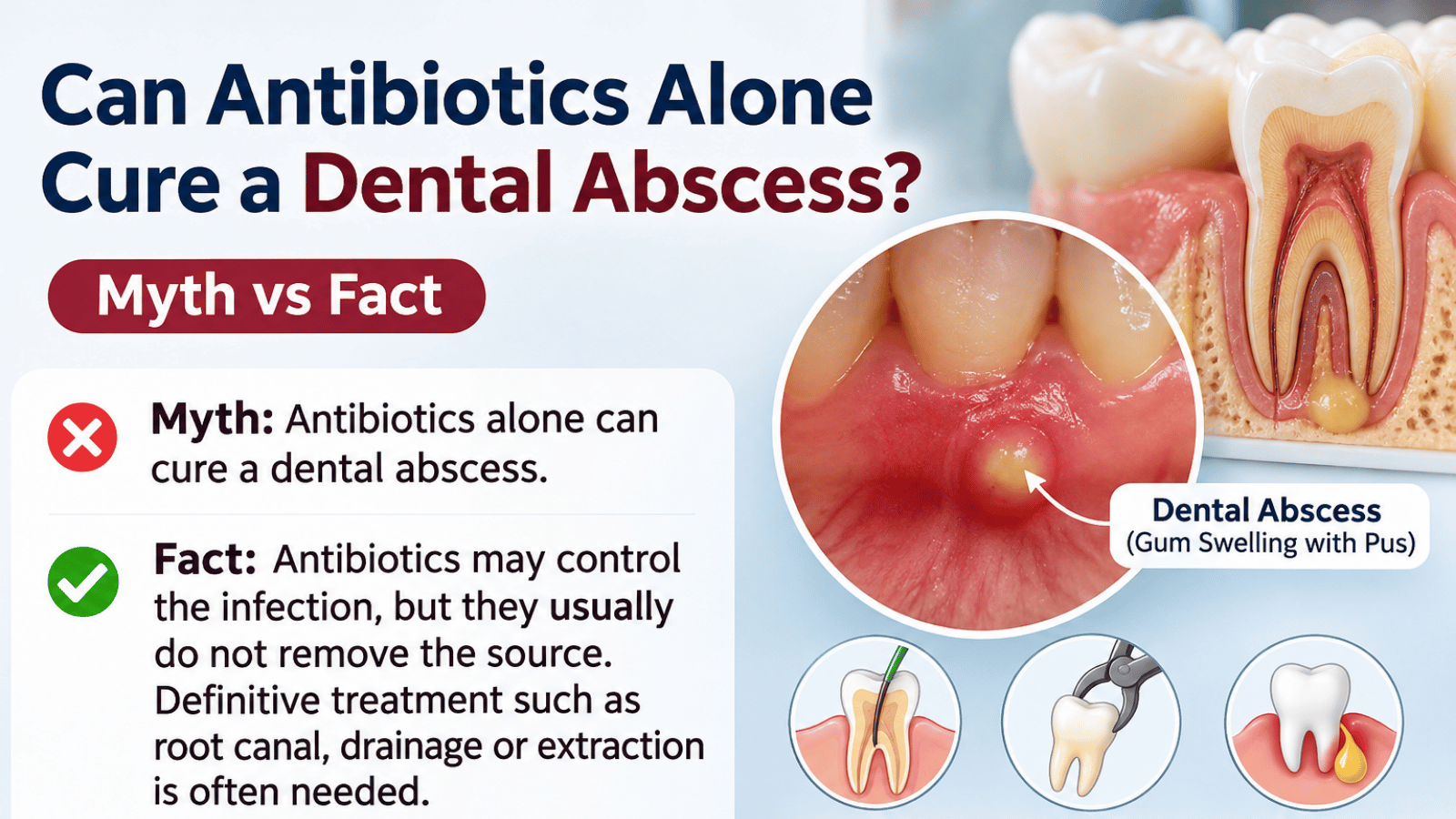
Can antibiotics alone cure a dental abscess? Usually, no. Antibiotics can help control certain bacterial infections, especially when an infection is spreading. However, they generally cannot remove the underlying source of a dental abscess. Effective dental abscess treatment usually requires drainage, root canal treatment, periodontal treatment, or tooth extraction.
A dental abscess is a collection of pus caused by a bacterial infection in or around a tooth. It may cause severe toothache, gum swelling, tenderness, and difficulty chewing. Some patients also notice a small swelling on the gums that releases pus.
Although antibiotics may temporarily reduce symptoms, the infection can return if the affected tooth or gum is not properly treated.
Therefore, understanding the difference between controlling an infection and eliminating its source is important.
This guide explains why antibiotics alone are often insufficient, which dental procedures may be needed, and when an abscess becomes an emergency.
What Is a Dental Abscess?
A dental abscess develops when bacteria cause an infection that results in a collection of pus.
The infection may begin inside the tooth, around the root, or within the supporting gum tissues.
Without appropriate treatment, it can spread into nearby tissues.
Types of Dental Abscesses
1. Periapical Abscess
A periapical abscess develops near the tip of a tooth root.
It often occurs when bacteria enter the tooth pulp through deep decay, a crack, or previous damage.
2. Periodontal Abscess
A periodontal abscess forms in the tissues supporting the tooth.
It is often associated with gum disease, deep periodontal pockets, or trapped debris.
3. Gingival Abscess
A gingival abscess affects the gum tissue, sometimes after a foreign object becomes trapped beneath the gum.
The correct treatment depends on the location and cause of the infection.
Can Antibiotics Alone Cure a Dental Abscess?
Antibiotics alone usually cannot eliminate a dental abscess because the source of infection often remains inside the tooth or periodontal tissues.
For example, when the tooth pulp becomes infected and dies, its blood supply is lost.
As a result, antibiotics circulating through the bloodstream may not adequately reach bacteria inside the dead pulp tissue.
Similarly, a collection of pus may require drainage rather than medication alone.
What Do Antibiotics Actually Do?
Antibiotics can help control bacterial infection in surrounding tissues when clinically indicated.
They may be necessary if a patient develops:
- Fever or systemic illness
- Spreading facial swelling
- Cellulitis
- Certain higher-risk infections
- Other complications requiring medical assessment
However, antibiotics do not repair tooth decay, remove infected pulp, or clean a deep periodontal pocket.
Therefore, dental treatment remains essential.
Why Does Pain Sometimes Improve After Antibiotics?
Antibiotics may reduce inflammation and infection in surrounding tissues.
Consequently, pain and swelling can temporarily improve.
However, the original infection may remain.
Once medication is stopped, symptoms can return.
This is why a dentist must assess the source rather than relying only on symptom relief.
Why Antibiotics Cannot Always Remove a Tooth Infection
A tooth infection differs from many infections elsewhere in the body.
The internal structure of the tooth can make it difficult to eliminate bacteria using medication alone.
1. Infected Pulp May Have No Blood Supply
When the pulp dies, blood circulation within that tissue stops.
Therefore, antibiotics cannot reliably reach the infected root canal system.
Root canal treatment or extraction may be needed.
2. Pus May Need Drainage
An abscess contains inflammatory material, bacteria, and damaged cells.
Removing the pus can reduce pressure and help control the infection.
However, drainage alone may not eliminate the underlying cause.
3. The Original Dental Problem Remains
Deep decay, a cracked tooth, or advanced gum disease can continue to support infection.
Unless the cause is addressed, the abscess may recur.
4. Repeated Antibiotics Have Risks
Unnecessary antibiotic use can cause side effects, allergic reactions, and antibiotic resistance.
Therefore, antibiotics should be prescribed only when clinically appropriate.
Dental Abscess Treatment: What Actually Works?
The best dental abscess treatment depends on the affected tooth, infection severity, and surrounding tissue condition.
A dentist may recommend one or more procedures.
1. Root Canal Treatment
Root canal treatment may save a tooth when infection originates inside its pulp.
During the procedure, the dentist removes infected or dead pulp tissue, cleans the root canal system, and seals the canals.
A suitable restoration is then needed to protect the tooth.
Root canal treatment aims to eliminate the source of infection while preserving the natural tooth.
2. Abscess Drainage
If pus has collected in a suitable location, the dentist may create an opening to drain it.
Drainage can reduce pressure and discomfort.
However, further treatment is often required to eliminate the source.
3. Tooth Extraction
Extraction may be necessary when the tooth cannot be restored.
For example, a severely fractured tooth or one with extensive structural damage may not be suitable for root canal treatment.
Removing the affected tooth can eliminate the infected source.
4. Periodontal Treatment
When an abscess originates from gum disease, treatment may involve drainage, cleaning the periodontal pocket, and addressing the underlying gum condition.
Patients can review available dental procedures and treatment services to understand different approaches to dental problems.
Dental Abscess Treatment Comparison
| Treatment | Main Purpose | When It May Be Used |
|---|---|---|
| Root canal | Remove infected pulp and preserve tooth | Tooth-root infection in a restorable tooth |
| Drainage | Release collected pus | Localised drainable abscess |
| Extraction | Remove infected tooth | Tooth cannot be saved |
| Periodontal treatment | Address gum-related infection | Periodontal abscess |
| Antibiotics | Control certain spreading or systemic infections | When clinically indicated |
Antibiotics are not a substitute for the necessary dental procedure.
When Are Antibiotics Actually Needed?
Not every dental abscess requires antibiotics.
For many localised dental infections, definitive dental treatment is preferred when it is available promptly.
Antibiotics may be prescribed when the infection has spread beyond the immediate tooth area or when the patient has systemic symptoms.
Signs That May Require Antibiotics
- Fever
- General illness or malaise
- Spreading swelling
- Facial cellulitis
- Certain high-risk medical circumstances
The dentist considers the patient’s medical history, allergies, severity of infection, and access to definitive treatment.
Which Antibiotics Are Used for Tooth Infections?
When antibiotics are indicated, a clinician may consider medicines such as amoxicillin or penicillin V, depending on the patient’s circumstances and applicable guidelines.
Other medicines may be selected when clinically appropriate.
However, no single antibiotic is suitable for everyone.
Patients should never start leftover antibiotics, share prescriptions or change doses without medical advice.
The dentist must also decide whether urgent drainage, root canal treatment or extraction is required.
Myth vs Fact: Common Beliefs About Dental Abscesses
| Myth | Fact |
|---|---|
| Antibiotics always cure a dental abscess | The infection source usually requires dental treatment |
| Pain relief means the infection has disappeared | Symptoms can improve while infection remains |
| A burst abscess is completely healed | Drainage may relieve pressure, but the cause can remain |
| Every abscess needs antibiotics | Many localised abscesses are treated primarily with dental procedures |
| A painless abscess is harmless | Chronic infections can persist without severe pain |
| Home remedies can replace a dentist | Home care may ease discomfort but cannot remove the source |
What Happens If a Dental Abscess Is Left Untreated?
An untreated dental abscess may continue to damage surrounding tissues.
Sometimes pain temporarily decreases because pressure is released or the tooth nerve dies.
However, reduced pain does not necessarily mean recovery.
Possible Complications
Spread Into Surrounding Tissues
Infection may spread from the tooth into nearby gum, facial or jaw tissues.
Facial Swelling
Swelling may become more extensive and painful.
Bone Damage
A long-standing infection may affect the bone surrounding the tooth root.
Tooth Loss
Severe decay or infection may eventually make the tooth impossible to save.
Deep Facial or Neck Infection
Rarely, a dental infection can spread into deeper spaces and become life-threatening.
Therefore, prompt assessment is important even when symptoms appear manageable.
Gum Swelling With Pus: What Does It Mean?
Gum swelling with pus may indicate an abscess.
Some patients notice a small pimple-like bump on the gum.
This may be a draining sinus tract connected to an infection near a tooth root.
Common Symptoms
- A swollen or tender gum
- Pus or a bad taste in the mouth
- Pain when biting
- Persistent toothache
- Bad breath
- Facial swelling
- Tooth sensitivity
- A loose tooth in some cases
However, not every gum swelling is caused by an abscess.
Other conditions can produce similar symptoms.
Therefore, a clinical examination is necessary.
What If the Abscess Bursts?
If an abscess drains spontaneously, pressure and pain may decrease.
However, the source of infection usually remains.
Patients should not squeeze, puncture, or attempt to drain an abscess at home.
Instead, arrange a dental examination.
How Is a Dental Abscess Diagnosed?
A dentist usually begins by reviewing symptoms and examining the affected tooth and gums.
The assessment may include:
Clinical Examination
The dentist checks for swelling, tenderness, decay, gum disease, and visible drainage.
Percussion Testing
Gentle tapping may help identify tenderness associated with inflammation around the root.
Pulp Sensibility Testing
Cold or electrical tests may help evaluate the response of the tooth’s pulp nerves.
These tests contribute to diagnosis but do not directly measure blood circulation within the pulp.
Dental X-rays
X-rays may reveal deep decay, bone changes, or abnormalities near the tooth root.
However, an early infection may not always produce obvious X-ray findings.
Additional imaging may be needed in selected complicated cases.
Patients requiring more extensive assessment can explore oral and maxillofacial procedures.
How Long Does Dental Abscess Treatment Take?
Treatment duration depends on the cause and severity.
Some patients receive initial drainage or other urgent dental treatment during the first visit.
Root canal treatment may be completed in one or more appointments, depending on the tooth and clinical circumstances.
Extraction may be performed when the tooth cannot be preserved.
However, swelling and tenderness may take additional time to settle after the infection source has been addressed.
Does Pain Stop Immediately?
Pain may improve soon after pressure is relieved or definitive treatment begins.
Nevertheless, some postoperative tenderness can continue for several days.
Patients should follow their dentist’s aftercare instructions and attend recommended follow-up visits.
Persistent or worsening symptoms require reassessment.
What Can You Do While Waiting for a Dental Appointment?
Temporary self-care may help reduce discomfort, but it cannot cure the abscess.
Helpful Measures
- Arrange an urgent dental appointment.
- Maintain gentle oral hygiene.
- Eat softer foods if chewing is painful.
- Avoid chewing on the affected side.
- Use appropriate over-the-counter pain relief if medically suitable.
- Follow any treatment instructions already provided by a clinician.
What Should You Avoid?
Do not:
- Attempt to burst the swelling.
- Apply aspirin directly to the gum.
- Take leftover antibiotics.
- Ignore spreading swelling.
- Delay treatment because pain temporarily improves.
A dental abscess requires professional assessment.
When Is a Dental Abscess an Emergency?
Some dental infections require emergency medical care rather than waiting for a routine appointment.
Seek Emergency Care Immediately If You Have:
- Difficulty breathing
- Difficulty swallowing
- Rapidly spreading facial or neck swelling
- Swelling beneath the tongue or floor of the mouth
- Severe difficulty opening the mouth
- Swelling around the eye or visual changes
- Severe illness, confusion or rapidly worsening symptoms
These symptoms may indicate a serious spreading infection.
Do not wait for antibiotics to work if breathing, swallowing, or rapidly progressing swelling becomes a concern.
Professional Dental Assessment and Treatment
At Elegance Superspeciality Dental Clinic, patients can seek assessment of dental pain, tooth infections, gum swelling, and related oral health concerns. Dr. Ashutosh Shah (MBBS, MS, MCh, DNB), a Plastic, Reconstructive and Cosmetic Surgeon with over 22 years of experience, is associated with Elegance Clinic. Dental abscesses require assessment and treatment by an appropriately qualified dental professional.
A proper dental evaluation helps determine whether root canal treatment, drainage, periodontal treatment, or extraction is needed. Antibiotics are prescribed when indicated by the patient’s symptoms and clinical findings.
Frequently Asked Questions
1. Can a Dental Abscess Go Away With Antibiotics Alone?
Usually not. Antibiotics may control certain spreading infections, but they generally cannot remove infected tooth pulp or eliminate the underlying dental problem. Definitive treatment often requires root canal therapy, drainage, periodontal treatment or extraction. Even if swelling and pain improve after antibiotics, the infection may return without proper dental care.
2. Which Antibiotics Are Used for Tooth Infections?
When clinically indicated, dentists may prescribe antibiotics such as amoxicillin or penicillin V, depending on allergies, medical history and local guidelines. However, many localised tooth infections do not require antibiotics when definitive dental treatment is available. Patients should never self-prescribe antibiotics because inappropriate use can cause complications and antibiotic resistance.
3. Can a Dental Abscess Burst and Heal on Its Own?
A dental abscess may drain spontaneously, temporarily reducing pain and pressure. However, this does not usually eliminate the source of infection. Bacteria may remain inside the tooth or surrounding tissues. Therefore, patients should arrange a dental examination even if swelling decreases or pus stops draining.
4. Is Root Canal Treatment Necessary for a Dental Abscess?
Root canal treatment may be necessary when an abscess originates from infected tooth pulp and the tooth can be saved. However, not every abscess requires a root canal. Periodontal abscesses may need gum treatment, while severely damaged teeth may require extraction. The dentist selects treatment after examining the affected area.
5. How Quickly Can a Tooth Infection Spread?
The progression of a tooth infection varies considerably. Some infections remain localised, while others spread into nearby tissues more quickly. Rapidly increasing swelling, fever, difficulty swallowing or difficulty breathing requires urgent assessment. Patients should not assume an infection is safe simply because symptoms began recently or pain remains manageable.
6. When Is Dental Swelling an Emergency?
Dental swelling becomes an emergency when it affects breathing, swallowing, the floor of the mouth, the neck or the area around the eye. Rapid progression or severe systemic illness also requires immediate attention. These symptoms can indicate a serious infection that needs emergency medical assessment and treatment.
Conclusion
Dental abscess treatment usually requires more than antibiotics.
Although antibiotics can help manage certain bacterial infections, they generally cannot remove infected tooth pulp, drain a collection of pus, or repair the underlying dental problem.
Root canal treatment, drainage, periodontal care, or extraction may be necessary depending on the cause.
Most importantly, temporary pain relief does not always mean the infection has disappeared.
Patients experiencing toothache, gum swelling, or pus should arrange a prompt dental examination.
