

|
Getting your Trinity Audio player ready...
|
✓ Medically reviewed by Dr. Ashutosh Shah, Plastic, Reconstructive & Cosmetic Surgeon (M.Ch., DNB)
Many parents wonder when their child should first visit a dentist. Should they wait until all the baby teeth appear? Or should they book an appointment only when their child complains of tooth pain?
The answer is simple: children’s dental care should begin much earlier than most parents expect.
Dental professionals generally recommend scheduling a child’s first dental visit when the first tooth appears or by their first birthday, whichever comes first.
Early visits help identify potential problems, establish healthy brushing habits and make children comfortable with dental examinations.
Most importantly, preventive visits can reduce the risk of cavities and support healthy dental development.
This guide explains when to start dental check-ups, what happens during appointments and how parents can protect their children’s teeth.
Why Is Children’s Dental Care Important?
Healthy teeth play an important role in a child’s growth and development.
Baby teeth help children chew food, speak clearly and maintain space for permanent teeth.
However, these teeth can develop cavities just like adult teeth.
Untreated decay may cause pain, infection, eating difficulties and disturbed sleep.
Therefore, early dental care is essential even though baby teeth eventually fall out.
Benefits of Early Dental Visits
Preventive appointments help dentists:
- Identify early signs of tooth decay.
- Monitor the development of baby teeth.
- Assess gum health and oral hygiene.
- Guide parents on brushing and fluoride.
- Discuss feeding habits and sugar exposure.
- Identify habits that may affect dental development.
- Help children become familiar with dental care.
Early attention can prevent minor concerns from becoming more complicated problems.
When Should a Child Have Their First Dental Visit?
The recommended time for a child’s first dental visit is within six months of the first tooth appearing and no later than 12 months of age.
For example, if a baby’s first tooth appears at seven months, parents can arrange a dental appointment during the following months.
However, they should not wait until the child develops pain.
Why Visit Before the First Birthday?
Early childhood cavities can develop soon after teeth emerge.
A dentist can assess the child’s mouth and explain how to clean new teeth safely.
The appointment also helps parents understand feeding habits, fluoride use and teething.
As a result, families can establish preventive routines from the beginning.
What If My Child Is Already Older?
It is never too late to begin preventive dental visits.
If your child has never visited a dentist, arrange an appointment rather than waiting for a problem.
The dentist can assess existing teeth and recommend a suitable care plan.
Children’s Dental Care Timeline by Age
Dental needs change as children grow.
The following timeline explains the main preventive priorities.
| Age | Dental development | Recommended preventive care |
|---|---|---|
| Birth to 6 months | Gums and early oral development | Gentle oral hygiene and feeding guidance |
| 6–12 months | First baby teeth may appear | First dental visit and fluoride advice |
| 1–3 years | More baby teeth emerge | Supervised brushing and cavity prevention |
| 3–5 years | Most baby teeth are present | Routine check-ups and habit assessment |
| 6–9 years | Permanent teeth begin emerging | Evaluate molars, bite and sealant needs |
| 10–12 years | More permanent teeth appear | Monitor alignment and oral hygiene |
| Teen years | Permanent dentition develops | Gum care, cavity prevention and orthodontic assessment when indicated |
This is a general guide. Individual dental development varies.
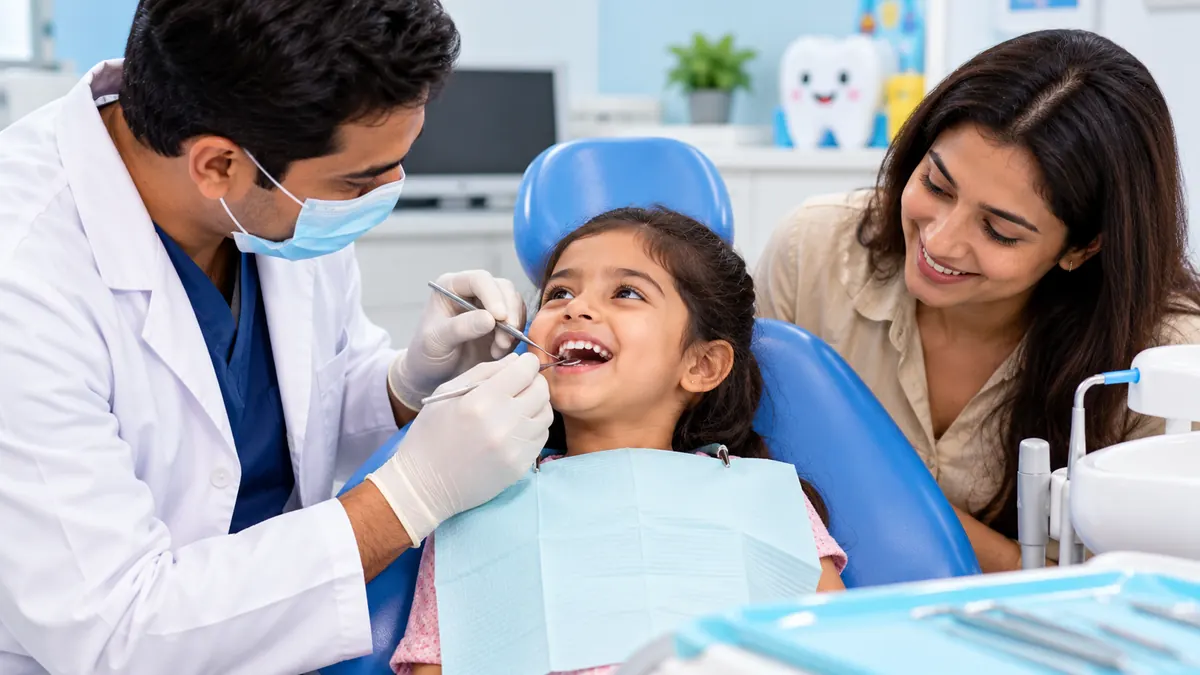
What Happens During a Child’s First Dental Appointment?
The first visit is usually short and focused on comfort.
The dentist may examine the child’s mouth while the child sits on a parent’s lap.
The appointment generally includes several steps.
1. Reviewing Medical and Dental History
The dentist may ask about:
- Medical conditions and medicines.
- Feeding and drinking habits.
- Toothbrushing routines.
- Previous dental symptoms.
- Thumb-sucking or pacifier use.
- Family history of dental problems.
These details help identify individual risk factors.
2. Examining Teeth and Gums
The dentist gently checks the teeth, gums and other oral tissues.
They look for early cavities, developmental changes and signs of irritation.
Dental X-rays are not automatically required at the first visit. They are recommended only when clinically justified.
3. Providing Preventive Guidance
Parents receive advice about brushing, fluoride toothpaste, diet and future appointments.
The dentist may also explain which changes require earlier assessment.
For a broader overview, read Elegance Clinic’s guide to the first dental consultation.
What Is Preventive Dental Care for Children?
Preventive dental care for children focuses on reducing the risk of dental disease before treatment becomes necessary.
It combines home care, professional examinations and selected preventive procedures.
Regular Dental Check-Ups
Dental visits help identify problems before they cause discomfort.
The dentist also monitors tooth eruption and bite development.
Some children may need appointments every six months. However, the interval should depend on their individual cavity risk and oral health.
Fluoride Treatment
Fluoride strengthens tooth enamel and helps protect against cavities.
A dentist may recommend professional fluoride varnish for children who would benefit from additional protection.
The frequency depends on age and cavity risk.
Dental Sealants
Sealants are thin protective coatings placed on the chewing surfaces of suitable back teeth.
They help prevent food and bacteria from collecting in deep grooves.
Sealants are commonly considered when permanent molars emerge.
However, not every tooth requires a sealant.
Professional Cleaning
Some children benefit from professional cleaning to remove plaque or deposits that are difficult to manage at home.
The dentist decides whether cleaning is necessary based on the child’s age and oral health.
Learn more about the clinic’s dental services and preventive treatment options.
How Can Parents Prevent Cavities at Home?
Good daily habits are the foundation of children’s dental health.
Fortunately, parents can begin these habits early.
Brush Twice Daily
Start brushing as soon as the first tooth appears.
Use a soft, age-appropriate toothbrush.
For children younger than three, use a smear of fluoride toothpaste about the size of a grain of rice.
For children aged three to six, use a pea-sized amount.
Parents should supervise brushing and help children avoid swallowing toothpaste.
Clean Between Teeth
Once two teeth touch, brushing alone may not clean the contact area adequately.
A dentist can show parents how to floss safely.
Limit Frequent Sugary Snacks
Frequent exposure to sugar increases the risk of cavities.
Try to limit sugary drinks, sticky sweets and repeated snacking throughout the day.
Offer water between meals when appropriate.
Avoid Sleeping With Sugary Drinks
Do not put a child to bed with a bottle containing juice or sweetened drinks.
Prolonged exposure to sugars can increase the risk of early childhood cavities.
Encourage Healthy Eating Habits
A balanced diet supports general growth and oral health.
Choose age-appropriate nutritious foods and encourage water instead of sugary beverages.
How Often Should Children Visit the Dentist?
Many children benefit from dental examinations approximately every six months.
However, there is no single schedule that suits everyone.
Children with frequent cavities, enamel problems or other risk factors may need more frequent visits.
Meanwhile, children with healthy teeth and a low risk of decay may follow a different schedule recommended by their dentist.
The goal is to identify problems early and reinforce healthy habits.
When Should Parents Seek Dental Care Earlier?
Preventive appointments are important, but certain symptoms should not wait for a routine visit.
Arrange a dental assessment if your child has:
- Persistent toothache.
- White, brown or black spots on teeth.
- Swollen or bleeding gums.
- Difficulty chewing.
- Persistent bad breath.
- A broken or injured tooth.
- Sensitivity to hot or cold foods.
- Swelling around a tooth.
Facial swelling with fever, severe pain or suspected dental infection needs prompt assessment.
Difficulty breathing or swallowing requires emergency medical care.
How to Prepare Your Child for a Dental Visit
A positive first experience can make future appointments easier.
Use Simple, Positive Language
Explain that the dentist will count and check their teeth.
Avoid frightening descriptions or promises that nothing will ever feel uncomfortable.
Read a Dental Story Together
Children often feel more confident when they understand what will happen.
Picture books or simple role-playing activities can help.
Choose a Suitable Appointment Time
Younger children may cooperate better when they are rested and have eaten appropriately.
Avoid scheduling appointments during their usual nap time.
Stay Calm
Children often notice a parent’s anxiety.
A relaxed approach can help them feel more comfortable.
Praise Their Effort
After the visit, acknowledge their cooperation.
Positive reinforcement can build confidence for future check-ups.
Choosing a Kids Dentist in Surat
Parents searching for a kids dentist in Surat should look for a qualified dental professional who is comfortable examining and treating children.
A suitable dental team should explain procedures clearly, encourage preventive care and adapt appointments to the child’s age.
Consider whether the clinic offers:
- Child-friendly communication.
- Preventive dental examinations.
- Fluoride and cavity-prevention guidance.
- Assessment of dental development.
- Appropriate referrals when specialist care is needed.
- Clear explanations for parents.
Elegance Clinic describes paediatric dentistry and preventive services within its dental and maxillofacial clinic.
Parents can contact the clinic to confirm which children’s dental services and appointments are currently available.
Common Myths About Children’s Dental Care
Myth 1: Baby Teeth Do Not Need Treatment
Fact: Baby teeth support chewing, speech and the development of permanent teeth.
Untreated decay can cause pain and infection.
Myth 2: Children Need a Dentist Only When They Have Pain
Fact: Cavities may develop without noticeable symptoms.
Preventive visits can identify early changes.
Myth 3: Fluoride Toothpaste Is Unsafe for All Young Children
Fact: Age-appropriate amounts of fluoride toothpaste are recommended for cavity prevention.
Parents should supervise brushing and use the correct quantity.
Myth 4: The First Dental Visit Will Be Painful
Fact: An uncomplicated preventive appointment generally involves a gentle examination and parental guidance.
Treatment is recommended only when clinically necessary.
Frequently Asked Questions
1. At what age should a child first visit the dentist?
Children should generally have their first dental appointment when the first tooth appears or by their first birthday, whichever comes first.
2. Can children attend dental appointments without having tooth pain?
Yes. Preventive dental visits are recommended even when a child has no symptoms. They help monitor development and identify early dental problems.
3. How often should children have dental check-ups?
Many children attend approximately every six months. However, the dentist may recommend a different interval based on cavity risk and individual needs.
4. Are dental check-ups safe for toddlers?
Yes. Routine examinations are generally safe and can be adapted to the child’s age and cooperation level.
5. Do baby teeth need fillings?
Sometimes. If a baby tooth develops a cavity, treatment may be needed to prevent pain, infection or further damage. The dentist will recommend an appropriate approach.
6. What toothpaste should children use?
Children should use fluoride toothpaste in an age-appropriate amount. A rice-grain-sized smear is generally recommended below age three, while a pea-sized amount is used from ages three to six.
7. Can fluoride treatments prevent cavities?
Fluoride treatments can reduce cavity risk, particularly in children who are more susceptible to tooth decay. However, they work best alongside regular brushing and healthy dietary habits.
8. Do children need dental X-rays at every visit?
No. Dental X-rays should be recommended according to clinical need, cavity risk and the information required for diagnosis.
9. What should I do if my child is afraid of the dentist?
Use calm, positive explanations and tell the dental team about your child’s concerns. A gradual, child-friendly approach can help build confidence.
10. Where can I arrange preventive dental care for my child?
You can contact Elegance Clinic to enquire about children’s dental examinations and available preventive services.
Conclusion
Children’s dental care should begin early, ideally when the first tooth appears or by the first birthday.
Preventive visits help dentists monitor tooth development, identify early cavities and guide parents on daily oral hygiene.
However, dental care does not end at the clinic.
Brushing twice daily, using the correct amount of fluoride toothpaste and limiting frequent sugar exposure are equally important.
By combining healthy home habits with appropriate dental examinations, parents can help protect their children’s smiles as they grow.
To learn more about available dental services, visit Elegance Clinic.
