

|
Getting your Trinity Audio player ready...
|
✓ Medically reviewed by Dr. Ashutosh Shah, Plastic, Reconstructive & Cosmetic Surgeon (M.Ch., DNB)
In most breast lift procedures, the surgeon does not remove the nipple. Nipple repositioning in breast lift surgery usually involves moving the nipple-areola complex higher while keeping it attached to underlying breast tissue. This connection maintains blood circulation and may preserve sensation. Only selected complex cases require complete nipple detachment and reattachment as a graft.
Many women considering breast lift surgery worry about what happens to their nipples during the procedure.
Some imagine that the surgeon removes the nipple completely and stitches it back into a higher position. Others worry that moving the nipple will permanently affect sensation or breastfeeding.
In reality, modern breast lift techniques usually preserve the nipple’s connection to the underlying breast tissue.
Understanding how surgeons perform nipple repositioning can help patients distinguish common myths from medical facts and make informed decisions about surgery.
Is the Nipple Removed During a Breast Lift? Myth vs Fact
The belief that surgeons routinely remove and reattach the nipple during breast lift surgery is incorrect.
In most procedures, surgeons reposition the nipple while preserving its blood supply through a supporting tissue attachment.
| Common Myth | Medical Fact |
|---|---|
| Surgeons completely remove the nipple during every breast lift. | Most breast lifts preserve the nipple’s connection to underlying tissue. |
| Moving the nipple always causes permanent numbness. | Sensation may change, but some patients recover sensation over time. |
| Breast lift surgery always prevents breastfeeding. | Breastfeeding may remain possible, although surgery can affect milk production. |
| Every breast lift requires major nipple repositioning. | The amount of repositioning depends on breast anatomy and sagging. |
| Nipple repositioning leaves no scars. | Breast lift surgery creates scars, and the pattern depends on the technique. |
| A higher nipple position guarantees perfect symmetry. | Surgeons aim for balance, but complete symmetry cannot be guaranteed. |
The most suitable approach depends on breast shape, skin elasticity, nipple position and the degree of lifting required.
What Is Nipple Repositioning in Breast Lift Surgery?
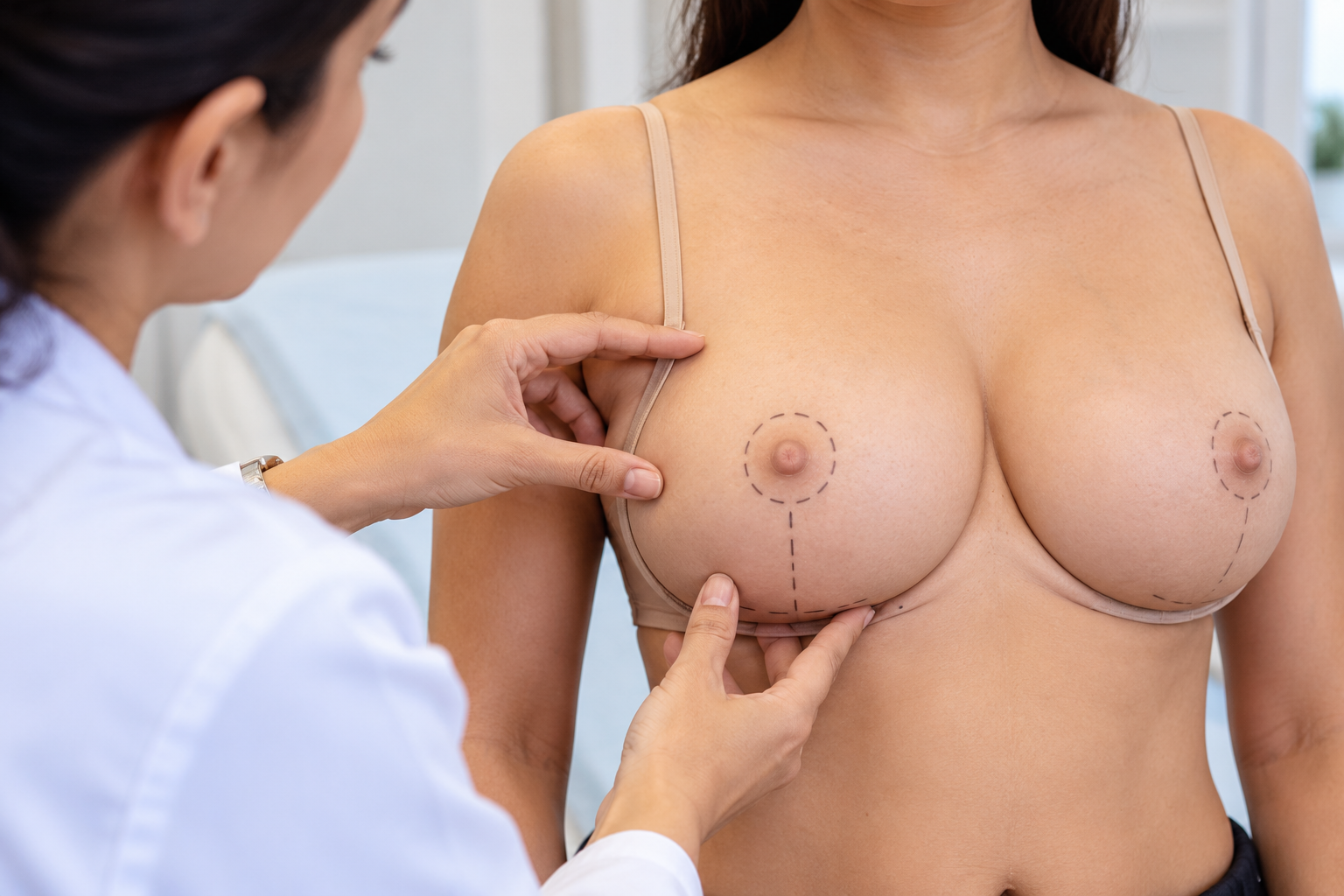
Nipple repositioning in breast lift surgery refers to moving the nipple-areola complex to a more suitable position on the reshaped breast.
The nipple-areola complex includes the nipple and the surrounding pigmented skin.
When breasts sag, the nipple may sit lower than its previous position. In some cases, it points downward.
During a breast lift, also called mastopexy, the surgeon removes selected excess skin, reshapes the breast tissue and adjusts the nipple position. Patients can explore other breast treatment options.
The goal is to create a more balanced breast contour while maintaining important tissue connections.
Why Does the Nipple Move Downward?
Several factors can contribute to breast sagging:
- Age-related changes in skin elasticity
- Pregnancy-related breast changes
- Weight fluctuations
- Genetic factors
- Changes in breast volume
- Gravity over time
These changes may stretch the skin and supporting tissues.
A breast lift addresses breast shape and nipple position, but it does not permanently stop natural ageing or future changes.
How Does a Surgeon Move the Nipple Without Removing It?
The surgeon usually preserves a section of underlying breast tissue that remains connected to the nipple-areola complex.
This tissue attachment is called a pedicle.
The pedicle contains blood vessels and may preserve important nerve and glandular connections. Read more about the pedicle technique in breast reduction to understand how surgeons preserve nipple blood supply.
During surgery, the surgeon carefully reshapes the surrounding breast tissue and moves the nipple to its planned position while maintaining this connection.
Step 1: Assessing Breast Anatomy
The surgeon evaluates breast size, shape, skin quality and nipple position.
They also consider the distance the nipple needs to move.
Step 2: Planning the Incision Pattern
The surgeon selects an incision pattern based on the degree of sagging and the amount of skin removal required.
Step 3: Preserving the Tissue Connection
The surgeon keeps the nipple attached to supporting tissue while removing excess skin and reshaping the breast.
Step 4: Repositioning the Nipple
The surgeon moves the nipple-areola complex to the planned location without routinely separating it from its blood supply.
Step 5: Closing the Incisions
The surgeon closes the incisions and applies appropriate dressings.
The final breast shape continues to settle during recovery.
Why Is Nipple Blood Supply Important During a Breast Lift?
The nipple-areola complex needs a continuous blood supply to remain healthy.
Blood vessels deliver oxygen and nutrients that support tissue survival and healing.
When surgeons perform nipple lift surgery, they must protect enough vascular connections to maintain circulation.
If the blood supply becomes inadequate, complications may occur.
These include delayed wound healing, changes in nipple colour and, rarely, partial or complete nipple-areola tissue loss.
What Factors Can Affect Circulation?
Several factors may influence blood supply during healing:
- The amount of nipple repositioning
- Surgical technique
- Previous breast surgery
- Smoking or nicotine exposure
- Individual vascular anatomy
- Excessive tension on tissue
- Certain medical conditions
Surgeons consider these factors before choosing the surgical approach.
Patients should discuss smoking, medications and relevant medical conditions during their consultation.
Does Every Breast Lift Require Nipple Repositioning?
No.
The amount of nipple movement depends on the degree of breast sagging and the desired shape.
Mild Breast Sagging
Patients with mild sagging may need only a small adjustment.
Some may benefit from a limited-incision breast lift.
Moderate Breast Sagging
Moderate sagging may require more noticeable nipple elevation and additional skin removal.
The surgeon selects a technique that provides enough reshaping while preserving circulation.
Severe Breast Sagging
Patients with significant sagging may require more extensive skin removal and nipple repositioning.
The surgeon must carefully assess the distance of movement and the reliability of the tissue connection.
Breast Lift Without Significant Nipple Movement
Some patients mainly need breast reshaping rather than substantial nipple elevation. Patients considering additional breast volume can also compare breast implants vs fat transfer.
The surgeon may recommend a technique that focuses on contour and skin tightening.
However, the appropriate approach depends on the actual breast anatomy.
What Are the Different Breast Lift Techniques?
Surgeons can combine suitable incision patterns with tissue-preserving techniques. Patients can also explore the breast cosmetic surgery gallery to understand different surgical outcomes.
The choice depends on skin excess, breast shape and the degree of correction required.
| Breast Lift Technique | Incision Pattern | Common Application |
|---|---|---|
| Crescent lift | Small crescent near the upper areola | Very limited correction in selected patients |
| Periareolar lift | Circular incision around the areola | Mild lifting and selected areola adjustments |
| Vertical lift | Around the areola and vertically downward | Moderate reshaping and lifting |
| Inverted-T lift | Around the areola, vertically downward and along the breast fold | More extensive lifting and skin removal |
The incision pattern does not independently determine whether the nipple remains attached.
Surgeons can combine suitable incision patterns with tissue-preserving techniques.
Can Nipple Repositioning Affect Sensation?
Yes.
Some patients experience changes in nipple sensation after breast lift surgery.
These changes may include:
- Temporary numbness
- Reduced sensitivity
- Increased sensitivity
- Tingling sensations
- Persistent sensory changes
Why Does Sensation Change?
Sensory nerves travel through the breast tissue toward the nipple.
Surgery can stretch, disturb or divide some nerve branches.
Swelling may also temporarily affect nerve function.
The amount of tissue movement and individual nerve anatomy influence the outcome.
Does Nipple Sensation Return?
Some patients notice gradual improvement over several months.
However, recovery varies, and permanent changes remain possible.
No surgical technique can guarantee that nipple sensation will remain completely unchanged.
Patients should discuss this possibility before surgery.
What Is Areola Repositioning During a Breast Lift?
Areola repositioning involves moving the pigmented area surrounding the nipple as part of the nipple-areola complex.
The surgeon usually moves both structures together.
In selected patients, the surgeon may also reduce the diameter of an enlarged areola.
Does Areola Reduction Affect the Nipple?
Areola reduction changes the size of the surrounding pigmented skin.
It does not necessarily require removing the nipple.
However, the procedure creates a scar around the areola and may affect sensation or healing.
The surgeon considers skin tension and blood supply when planning the adjustment.
Can Both Areolas Become Exactly Identical?
Surgeons aim to improve size, shape and position.
However, natural anatomical differences and healing responses can produce small variations.
Perfect symmetry cannot be guaranteed.
When Would a Surgeon Completely Remove and Reattach the Nipple?
In selected complex cases, surgeons may use a technique called a free nipple graft.
This approach differs from routine pedicle-based nipple repositioning.
During free nipple grafting, the surgeon completely separates the nipple-areola complex and reattaches it to the reshaped breast.
The graft must establish a new blood supply from the underlying tissue to survive.
When Might a Free Nipple Graft Be Considered?
A surgeon may consider this technique in selected situations involving:
- Extremely large breast reductions
- Very substantial nipple repositioning
- Certain complex breast anatomy
- Previous surgery affecting tissue circulation
- Other circumstances where a tissue-preserving approach may be unsuitable
Free nipple grafting is not the standard approach for most breast lifts.
What Are the Limitations?
Because the surgeon separates the original tissue connections, free nipple grafting generally causes substantial loss of normal nipple sensation and eliminates the original ductal connections needed for breastfeeding through that nipple.
Other risks include changes in pigmentation, graft-healing problems and partial or complete graft loss.
The surgeon should explain these limitations if recommending this technique.
Can You Breastfeed After a Breast Lift?
Some patients can breastfeed after breast lift surgery.
However, the procedure may affect milk production or delivery.
The outcome depends on how much glandular tissue, ductal tissue and nerve connection remains intact.
Factors That Affect Breastfeeding
These include:
- Surgical technique
- Preservation of milk ducts
- Nerve integrity
- Previous breast surgery
- Individual milk production
- Postoperative healing
A breast lift that preserves the nipple’s tissue connections may also preserve some breastfeeding function.
However, no surgeon can guarantee successful breastfeeding after surgery.
Patients planning future pregnancies should discuss this goal before choosing a procedure.
Does Nipple Repositioning Leave Scars?
Yes.
Breast lift surgery creates scars because the surgeon makes incisions to remove excess skin and reshape the breast.
The scar pattern depends on the technique.
Around the Areola
Many breast lift procedures create a scar along the border of the areola.
This location may help the scar blend with the transition between pigmented and surrounding skin.
However, visibility varies.
Vertical Scar
A vertical lift creates a scar extending from the lower areola toward the breast fold.
Breast Fold Scar
An inverted-T technique also creates a horizontal scar along the lower breast fold.
How Long Do Breast Lift Scars Take to Fade?
Scars generally change gradually over 12–18 months and sometimes longer.
They may initially appear pink, red or darker than the surrounding skin.
Over time, many scars soften and become less noticeable.
However, scars do not disappear completely.
Genetics, skin characteristics, wound tension and healing complications influence the final appearance.
How Long Does Recovery Take After Nipple Lift Surgery?
Recovery varies according to the surgical technique and individual healing.
| Recovery Period | What Patients May Experience |
|---|---|
| First week | Swelling, bruising, discomfort and temporary sensory changes |
| Weeks 2–3 | Gradual improvement in discomfort and daily activities |
| Weeks 4–6 | Further healing and possible return to additional activities with clearance |
| Months 2–3 | Continued settling of breast shape and swelling |
| Months 6–12 | Scar maturation and gradual changes in nipple sensation |
| Beyond 12 months | Further scar refinement and long-term tissue settling |
These are approximate timelines rather than guarantees.
Patients should follow their surgeon’s specific instructions regarding wound care, supportive garments, exercise and follow-up visits.
When Should You Contact Your Surgeon?
Seek prompt medical assessment if you notice:
- Increasing or severe pain
- Sudden swelling
- Persistent bleeding
- Fever
- Spreading redness
- Unusual wound discharge
- Significant wound separation
- Sudden nipple colour changes
A nipple that becomes unusually pale, dusky or dark after surgery requires urgent evaluation because it may indicate impaired circulation.
How Does a Surgeon Plan Nipple Repositioning?
Surgical planning begins with an individual assessment.
The surgeon evaluates:
- Current nipple position
- Degree of breast sagging
- Breast size and tissue distribution
- Skin elasticity
- Existing breast asymmetry
- Previous surgical scars
- Medical history
- Patient expectations
The surgeon also explains the possible scar pattern and limitations.
At Elegance Clinic, Dr. Ashutosh A Shah, MBBS, MS, MCh and DNB, a plastic and reconstructive surgeon practising since 2004, evaluates breast anatomy, skin quality and nipple position before recommending a suitable breast lift technique. He also discusses potential changes in sensation, breastfeeding ability, scars and healing so patients can make informed decisions.
The goal is to improve breast position and shape while protecting important tissue connections whenever possible.
Frequently Asked Questions
1. Is the Nipple Completely Removed During a Breast Lift?
Usually not. Most breast lift procedures keep the nipple attached to underlying tissue while the surgeon moves it to a higher position. Complete detachment and reattachment are generally reserved for selected complex cases.
2. How Does Nipple Repositioning in Breast Lift Surgery Work?
The surgeon preserves a tissue attachment that supplies blood to the nipple-areola complex. They remove selected excess skin, reshape the breast and move the nipple to its planned position while maintaining this connection.
3. Will My Nipples Feel Normal After a Breast Lift?
Some patients retain normal sensation, while others experience temporary or permanent changes. Sensation may improve over several months, but complete recovery cannot be guaranteed.
4. Can Breast Lift Surgery Make My Areolas Smaller?
Yes. In selected cases, surgeons can reduce areola diameter during a breast lift. The procedure creates a scar around the areola and requires careful planning to avoid excessive tension.
5. Will Both Nipples Be at Exactly the Same Height?
Surgeons aim for balanced nipple positions, but perfect symmetry cannot be guaranteed. Natural differences in breast anatomy and healing may affect the final result.
6. Can I Breastfeed After Nipple Repositioning?
Breastfeeding may remain possible when surgeons preserve important tissue and ductal connections. However, surgery can affect milk production, and outcomes vary.
7. Is Nipple Repositioning Painful?
Patients receive appropriate anaesthesia during surgery. Afterward, they may experience soreness, swelling and discomfort. The surgical team provides pain-management and recovery instructions.
8. Does Every Breast Lift Require a Scar Around the Areola?
Most conventional breast lift techniques involve an incision around at least part of the areola, but the exact scar pattern depends on the procedure. Patients should ask their surgeon which incisions their treatment requires.
Conclusion
Nipple repositioning in breast lift surgery usually does not involve completely removing the nipple.
Most surgeons preserve the nipple’s connection to underlying tissue while moving it to a more suitable position on the reshaped breast.
This approach helps maintain blood circulation and may preserve sensation and breastfeeding function.
However, changes in sensation, scarring and healing remain possible.
In selected complex cases, surgeons may consider a free nipple graft, which involves different risks and limitations.
At Elegance Clinic, Dr. Ashutosh Shah assesses breast anatomy, nipple position and individual goals before recommending a breast lift technique.
Understanding the difference between routine nipple repositioning and complete nipple detachment can help patients approach surgery with realistic expectations.
