

|
Getting your Trinity Audio player ready...
|
✓ Medically reviewed by Dr. Ashutosh Shah, Plastic, Reconstructive & Cosmetic Surgeon (M.Ch., DNB)
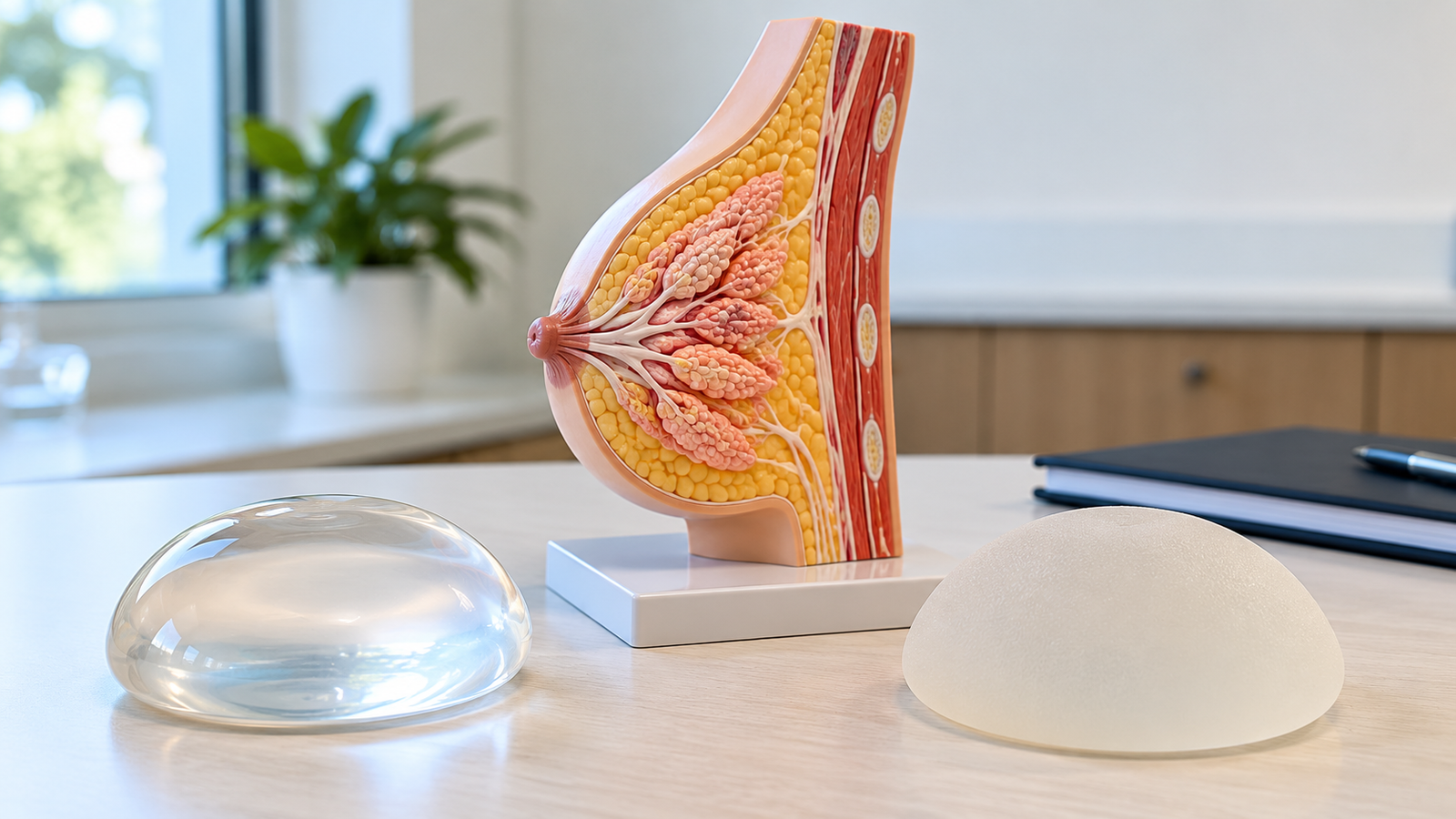
Most patients do not need implants after breast reduction. During breast reduction surgery, the surgeon removes excess breast tissue, reshapes the remaining tissue and lifts the breasts to improve comfort and appearance. However, some patients prefer additional upper breast fullness. In selected cases, surgeons may recommend implants, but these devices carry additional risks and require long-term monitoring.
Many women choose breast reduction surgery to relieve discomfort, shoulder pain, exercise difficulties and problems finding comfortable clothing.
The procedure primarily aims to reduce breast size while improving shape and proportion.
However, patients often worry that their breasts might look flat after surgery or lose their rounded appearance without implants.
Breast anatomy, existing tissue, skin elasticity and personal expectations help determine the most suitable approach.
This guide explains when breast reduction alone can achieve the desired results, when implants may help and which alternatives can improve breast shape without implants.
Are Implants Necessary After Breast Reduction?
No. Most patients do not need breast implants after reduction surgery.
Breast reduction, also called reduction mammoplasty, removes excess breast tissue, fat, and skin.
The surgeon then reshapes the remaining breast tissue to create a smaller, more balanced breast contour.
The procedure also commonly involves repositioning the nipple–areola complex to suit the new breast shape.
As a result, patients can achieve smaller, lifted breasts without implants.
Why Breast Reduction Usually Does Not Require Implants
A breast reduction already includes several reshaping steps.
These may involve:
- Removing excess breast tissue
- Reducing breast weight
- Removing loose skin
- Reshaping the remaining tissue
- Improving nipple position
- Creating a more balanced breast contour
- Improving differences between breast sizes
Because the surgeon uses the patient’s existing breast tissue, implants are not routinely required.
Can Breasts Look Full After Reduction Without Implants?
Yes. Many patients achieve a naturally rounded breast shape after reduction surgery.
However, the degree of fullness depends on the amount and distribution of remaining tissue.
Breasts may appear higher and firmer during early recovery because of swelling.
As healing progresses, the tissues settle into a softer shape.
The final appearance should not be judged immediately after surgery.
Why Can Upper Breast Fullness Change After Reduction?
One common concern is upper fullness after breast reduction.
Upper breast fullness refers to the rounded contour in the upper portion of the breast.
Some patients prefer a natural, gently sloping appearance, while others want a fuller upper contour.
1. Existing Breast Tissue
The amount of remaining breast tissue affects the final shape.
If sufficient tissue is available, the surgeon may reshape it to create a balanced contour.
However, the upper breast may not look as rounded as it would with an implant.
2. Skin Elasticity
Skin elasticity influences how well the breast maintains its shape.
Patients with stretched skin may experience more settling over time.
This can affect upper breast fullness.
3. Amount of Breast Tissue Removed
The amount of reduction required also matters.
A patient undergoing a large reduction may have different shaping possibilities from someone undergoing a smaller reduction.
The surgeon must balance the desired size with safe blood supply and tissue preservation.
4. Natural Breast Shape
Some women naturally have more tissue in the lower part of the breast.
Even after reshaping, their upper breast contour may remain relatively soft.
This is not necessarily a poor surgical result.
5. Healing and Tissue Settling
Swelling can temporarily create a fuller appearance.
Over the following months, the breasts generally soften and settle.
Therefore, early postoperative fullness does not always represent the long-term result.
When Might Breast Reduction With Implants Be Considered?
Breast reduction with implants is an uncommon but possible option for selected patients who want a smaller breast overall while maintaining or adding fullness in specific areas.
This approach is sometimes discussed as reduction-augmentation.
However, combining tissue removal with implant placement is more complex than standard breast reduction.
It is not appropriate for every patient.
Patients Who May Consider Implants
Implants may be discussed when a patient:
- Wants a smaller overall breast size but a fuller upper contour
- Has limited natural upper breast tissue
- Wants more projection than tissue reshaping alone can reasonably provide
- Has significant breast volume loss along with sagging
- Understands the additional risks of implants
- Accepts that future implant-related surgery may be necessary
The decision should be based on a detailed surgical assessment.
Can Implants Be Added During the Same Operation?
In selected cases, a surgeon may perform reduction and implant placement during the same operation.
However, this requires careful planning.
Removing tissue and inserting an implant can place competing demands on the breast skin and blood supply.
Possible concerns include wound-healing problems, implant complications, and changes in breast shape.
Some patients may be better suited to a staged approach.
Can Implants Be Added Later?
Yes. A patient who has already undergone breast reduction may consider augmentation later.
However, the breasts should be allowed to heal and settle before deciding whether additional volume is necessary.
The appropriate waiting period depends on recovery and individual anatomy.
A surgeon must also assess previous scars, tissue thickness, and blood supply before planning another operation.
Can Surgeons Improve Breast Shape Without Implants?
Yes. Several surgical techniques can improve breast contour using existing tissue.
For many patients, these approaches are sufficient.
Internal Tissue Reshaping
During reduction surgery, the surgeon may reposition and shape the remaining breast tissue.
This helps create a balanced contour while preserving suitable tissue support.
Different techniques are available, and no single method guarantees lasting upper fullness.
Breast Lift Techniques
Breast reduction frequently includes lifting and repositioning the breasts.
The surgeon removes excess skin and adjusts nipple position when necessary.
A breast lift can improve the overall shape without increasing breast volume.
Patients can explore breast lift surgery to understand how lifting differs from adding volume.
Auto-Augmentation Using Existing Tissue
Some surgical techniques use remaining breast tissue to improve projection or upper contour.
This is sometimes called auto-augmentation.
It does not involve inserting a breast implant.
However, the result depends on available tissue and surgical technique.
Fat Transfer
Fat transfer may be considered in selected patients who want modest volume improvement.
Blubber is removed from another body area, processed, and injected into appropriate breast tissue.
However, not all transferred fat survives.
Fat transfer may also cause cysts, fat necrosis, or changes visible on breast imaging.
It cannot reliably create the same volume or projection as an implant.
For additional information, read breast implants vs fat transfer.
Breast Reduction Alone vs Breast Reduction With Implants
The main difference is whether additional volume is introduced after tissue reduction.
| Feature | Breast Reduction Alone | Breast Reduction With Implants |
|---|---|---|
| Primary goal | Reduce size and reshape breasts | Reduce tissue while adding selected fullness |
| Breast implants | Not required | Required |
| Upper breast fullness | Depends on natural tissue and reshaping | May provide additional upper fullness |
| Breast weight | Generally reduced | Depends on tissue removed and implant weight |
| Implant-related risks | None | Present |
| Implant monitoring | Not needed | Required |
| Future implant surgery | Not applicable | May be needed |
| Scars | Permanent | Permanent |
| Perfect symmetry | Not guaranteed | Not guaranteed |
| Suitable for most reduction patients | Often | Only selected patients |
Neither option guarantees a particular cup size or perfectly symmetrical breasts.
The choice depends on the patient’s anatomy, goals, and tolerance for additional risks.
What Are the Risks of Adding Implants After Breast Reduction?
Breast implants introduce risks beyond those associated with reduction surgery alone.
Patients should understand these before choosing a combined or staged procedure.
Capsular Contracture
Scar tissue naturally forms around an implant.
Sometimes this capsule tightens excessively, making the breast feel firm or changing its appearance.
Severe capsular contracture may require additional surgery.
Implant Rupture
Breast implants are not lifetime devices.
They can rupture or develop complications over time.
Silicone implant rupture may not always cause obvious symptoms.
Patients should follow the recommended implant monitoring and imaging guidance for their particular device.
Infection
Infection may occur after implant surgery.
Severe infections can require implant removal.
Changes in Breast Shape
Breasts continue changing with age, pregnancy, and weight fluctuations.
Implants do not prevent future sagging.
Implant-Associated Conditions
Certain breast implants carry rare but serious risks, including breast implant-associated anaplastic large cell lymphoma (BIA-ALCL), which occurs more frequently in patients with textured implants.
Researchers have also identified other rare implant-associated cancers and received reports of systemic symptoms in some patients.
Patients should discuss implant type, safety information, and available alternatives with their surgeon.
Additional Surgery
Implants may require removal, replacement, or revision because of rupture, capsular contracture, infection, cosmetic changes, or other complications.
Therefore, implant placement should be considered a long-term decision rather than a one-time procedure.
How Do You Decide Which Procedure Is Right?
The best treatment depends on what you want to change.
Some patients primarily want relief from the weight of large breasts.
Others want smaller breasts but are concerned about losing upper fullness.
These goals should be discussed before surgery.
If Your Main Goal Is Smaller, Lighter Breasts
Breast reduction alone may be the most suitable approach.
It removes excess tissue and reshapes the remaining breast.
Adding an implant may work against the goal of reducing breast weight.
If You Want Smaller Breasts With a Natural Shape
Reduction with careful tissue reshaping may be sufficient.
The surgeon can explain what upper fullness is achievable using your existing tissue.
If You Want More Upper Breast Fullness
Ask whether tissue reshaping or auto-augmentation could achieve your goals.
If these options are insufficient, implants may be discussed.
However, the benefits must be weighed against the additional risks.
If You Already Had Breast Reduction
Allow sufficient healing before deciding whether you need further surgery.
Breast shape changes during recovery.
A revision should be considered only after the surgeon assesses the settled result, unless an earlier medical issue requires attention.
Questions to Ask During Consultation
Before deciding, ask your surgeon:
- Can I achieve my preferred breast shape without implants?
- How much breast tissue needs to be removed?
- What upper breast fullness is realistic?
- Would an implant increase breast weight?
- What are the risks of combining reduction and augmentation?
- Would a staged procedure be safer?
- What scars should I expect?
- Could nipple sensation or breastfeeding ability change?
- What future monitoring would implants require?
- How might my breasts change over time?
At Elegance Clinic, Dr. Ashutosh Shah, a plastic surgeon with over 22 years of experience, can assess breast volume, skin quality, nipple position, and the patient’s preferred size before explaining whether reduction alone or a more complex approach may be appropriate.
Patients can review the breast surgery gallery to understand different breast-shaping procedures. Individual results vary, and photographs cannot guarantee a particular outcome.
What Is Recovery Like After Breast Reduction?
Recovery depends on the extent of surgery and whether additional procedures are performed.
After standard breast reduction, patients may experience swelling, soreness, and temporary changes in breast sensation.
A supportive surgical bra may be recommended.
Strenuous exercise and heavy lifting are usually restricted during early healing.
General Recovery Timeline
| Recovery Period | What Patients May Experience |
|---|---|
| First week | Swelling, soreness, and wound-care needs |
| Weeks 2–3 | Gradual improvement in comfort and mobility |
| Weeks 4–6 | Many routine activities may resume with surgical clearance |
| Months 2–3 | Continued softening and changes in breast shape |
| Months 3–6 | More settled breast contour |
| Months 6–12 | Ongoing scar maturation |
These are general estimates, not a guaranteed schedule.
Recovery may be different when implants are added or when healing complications occur.
Always follow the treating surgeon’s instructions.
Frequently Asked Questions
1. Do most women need implants after breast reduction?
No. Most women do not need implants after breast reduction because the procedure already reshapes and lifts the remaining breast tissue. Implants are considered only in selected cases where additional fullness is desired and the benefits outweigh the risks.
2. Will my breasts look flat after reduction surgery?
Not necessarily. Breast reduction can create a rounded, balanced shape using natural breast tissue. However, upper fullness depends on existing tissue, skin elasticity and the amount removed. A consultation helps establish realistic expectations.
3. Can breast reduction give upper fullness without implants?
Yes. Surgeons may use tissue reshaping or selected auto-augmentation techniques to improve breast contour. However, the amount of fullness achievable without implants varies, and no technique guarantees a permanently rounded upper breast.
4. Is breast reduction with implants safe?
Combining breast reduction with implants may be appropriate for selected patients, but it introduces additional risks. These include implant-related complications, wound-healing concerns and possible future surgery. The surgeon must assess tissue blood supply, breast anatomy and overall health before recommending the combination.
5. Can I get implants years after breast reduction?
Yes. Breast augmentation may be possible years after reduction surgery. However, previous scars, tissue thickness, blood supply and current breast shape must be assessed. Some patients may benefit from alternative reshaping techniques rather than implants.
6. Do implants prevent sagging after breast reduction?
No. Implants do not prevent natural ageing or future breast sagging. In some patients, added implant weight may contribute to tissue stretching over time. Breast position can still change with pregnancy, weight fluctuations and ageing.
Conclusion
Most patients do not need implants after breast reduction.
Breast reduction surgery reduces breast size, reshapes existing tissue and improves breast position without implants.
Patients who want additional upper breast fullness can consider tissue reshaping, auto-augmentation, fat transfer or implants in selected cases.
However, implants carry additional risks, require ongoing monitoring, and may require future surgery.
Breast anatomy, desired size, skin quality, and realistic expectations help determine the most suitable approach.
At Elegance Clinic, Dr. Ashutosh Shah evaluates each patient’s breast shape and goals to determine whether breast reduction alone can achieve the desired result or whether another procedure may help.
