

|
Getting your Trinity Audio player ready...
|
✓ Medically reviewed by Dr. Ashutosh Shah, Plastic, Reconstructive & Cosmetic Surgeon (M.Ch., DNB)
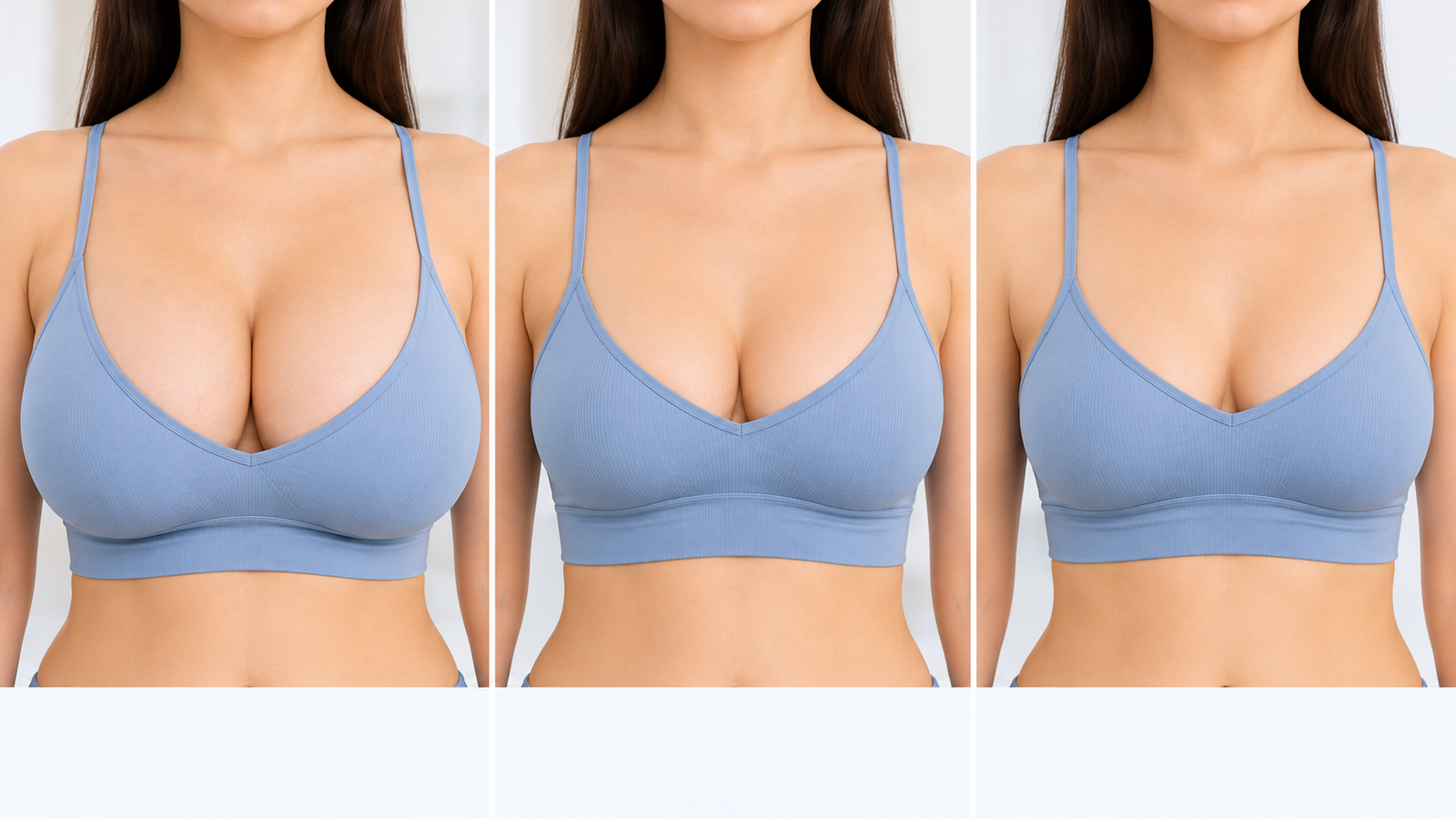
How small can breasts be reduced? Breast reduction surgery can make breasts significantly smaller, but the safest achievable size depends on your anatomy, existing breast volume, skin quality, and nipple blood supply. A plastic surgeon can often reduce several cup sizes, but no surgeon can guarantee an exact bra cup size. Your safety and a balanced breast shape guide the final result.
Many women considering breast reduction want to know whether they can move from a DD cup to a B cup or achieve an even smaller breast size.
Although breast reduction can remove a substantial amount of tissue, every patient has different anatomical limits.
The surgeon must preserve adequate blood circulation, support the nipple-areola complex, and maintain a shape that suits the patient’s goals.
At Elegance Clinic, plastic surgeon Dr. Ashutosh Shah evaluates breast size, skin elasticity, nipple position, and individual expectations when discussing breast reduction surgery. This assessment helps patients understand realistic size options, surgical limitations, and potential risks before choosing treatment.
How Small Can Breasts Be Reduced Safely?
Breast reduction surgery removes excess breast tissue, fat, and skin to decrease breast size and weight.
The amount of reduction depends on several factors:
- Current breast size and volume
- Desired breast size
- Breast width and chest proportions
- Amount of glandular and fatty tissue
- Nipple position
- Blood supply to the nipple
- Skin elasticity
- Previous breast surgery
- Overall health and healing capacity
Some patients can achieve a relatively small breast size through a standard reduction technique.
Others may face limitations because removing too much tissue could compromise nipple blood supply or create an unsatisfactory breast shape.
The goal is not simply to remove the maximum amount of tissue. It is to achieve a size that balances the patient’s preferences with surgical safety.
What Are the Breast Reduction Size Limits?
There is no universal minimum breast size that every patient can safely achieve.
Breast reduction size limits depend on the anatomy of each breast and the surgical technique.
1. Existing Breast Volume
Patients with very large breasts may require substantial tissue removal to reach their preferred size.
However, the starting size alone does not determine the final result.
2. Breast Width
The natural width of the breast influences how small the surgeon can make it while maintaining a balanced contour.
A wide breast base may limit how narrow the breast can appear after reduction.
3. Nipple Blood Supply
The nipple-areola complex requires an adequate blood supply.
Surgeons often preserve a connection between the nipple and underlying breast tissue through a structure called a pedicle.
Removing excessive tissue or creating too much tension can increase the risk of poor circulation.
4. Skin Quality
Skin elasticity affects how the breast settles after surgery.
Patients with significant skin stretching may need more extensive skin removal and reshaping.
5. Desired Breast Shape
A very small breast size may not always produce the shape a patient expects.
The surgeon must consider projection, breast width, and remaining tissue distribution.
Can Breast Reduction Take You From a DD Cup to a B Cup?
Some patients may achieve a substantial reduction, such as moving from a DD cup toward a B cup.
However, this outcome is not possible or appropriate for everyone.
Bra cup sizes vary between manufacturers and band sizes. A B cup in one bra size does not represent the same breast volume as a B cup in another.
For this reason, surgeons cannot reliably promise a particular cup size.
Instead, they assess the desired breast volume, shape, and proportions.
Why Cup Size Cannot Be Guaranteed
Several factors affect the final appearance:
- Natural breast width
- Amount of tissue the surgeon can safely remove
- Postoperative swelling
- Breast tissue settling
- Individual healing
- Differences between bra manufacturers
A patient may achieve the desired visual reduction without fitting into the exact cup size originally requested.
Breast Reduction Size Options: Small, Moderate, or Major Reduction
Surgeons can plan different degrees of reduction according to the patient’s anatomy and goals.
| Reduction Goal | What It Involves | Important Considerations |
|---|---|---|
| Small reduction | Removes a relatively limited amount of tissue | May improve comfort while preserving much of the original volume |
| Moderate reduction | Removes more tissue and reshapes the breast | May provide noticeable size and weight reduction |
| Major reduction | Removes a substantial amount of breast tissue | Requires careful planning to protect nipple circulation and breast shape |
| Very small or flat contour | Aims for minimal breast projection | May require different techniques and involves distinct trade-offs |
These categories describe general goals rather than fixed surgical measurements.
The amount of tissue removed does not always correspond directly to a specific cup-size change.
How Does a Surgeon Decide the Final Breast Size?
The surgeon considers both medical safety and the patient’s preferred appearance.
Step 1: Understand Your Goal
During consultation, explain why you want smaller breasts.
Some women primarily want relief from physical discomfort.
Others want a smaller breast shape that better matches their body proportions.
A few patients may prefer a particularly small breast contour.
Step 2: Examine Breast Anatomy
The surgeon measures breast width, nipple position, skin quality, and existing tissue volume.
These measurements help identify suitable techniques.
Step 3: Discuss Realistic Results
Your surgeon explains the approximate reduction that may be possible and the limitations of surgery.
Step 4: Review Safety Considerations
The surgeon assesses factors that may increase complications, including smoking, diabetes, previous surgery, and healing problems.
Step 5: Agree on Surgical Priorities
The final plan should reflect your goals while protecting blood supply and minimizing avoidable risks.
Can You Choose Your Breast Size Before Surgery?
You can explain your preferred size, but the surgeon cannot guarantee an exact final cup size.
Reference photographs may help communicate your desired breast proportions.
However, photos do not account for differences in chest width, body structure, and breast anatomy.
A useful consultation focuses on:
- How much smaller you want your breasts
- Whether you prefer a natural rounded shape
- How important upper-breast fullness is to you
- Whether you want to preserve nipple sensation
- Your future breastfeeding plans
- Your willingness to accept scars and surgical risks
Clear communication helps the surgeon understand your priorities.
Can Breast Reduction Make Breasts Very Small?
In selected patients, surgeons can achieve a substantial reduction.
However, extremely small breast goals may require techniques that differ from conventional reduction.
Standard Breast Reduction
In many techniques, the surgeon keeps the nipple connected to underlying tissue through a pedicle.
This connection helps preserve blood circulation and may support some nipple sensation and breastfeeding potential.
Free Nipple Graft Technique
For selected patients requiring a very large reduction, a surgeon may consider a free nipple graft.
This technique separates the nipple-areola complex and repositions it as a graft.
It can allow greater tissue removal in certain anatomical situations, but it involves important trade-offs.
These may include:
- Loss of normal nipple sensation
- Loss of functional milk-duct connections
- Inability to breastfeed through the grafted nipple
- Changes in nipple pigmentation or projection
- Partial or complete graft loss
A free nipple graft is not automatically necessary for every major breast reduction. The surgeon chooses the technique according to anatomy, safety, and the patient’s goals.
Why Is Nipple Blood Supply Important?
The nipple-areola complex contains blood vessels and nerves that support tissue health and sensation.
During breast reduction, the surgeon must protect adequate circulation.
Excessive tissue removal or tension can compromise blood flow.
In severe cases, inadequate circulation may cause partial or complete nipple tissue loss.
Although this complication is uncommon, it can have serious consequences.
Surgeons therefore balance the desired reduction with the need to preserve healthy tissue.
Will Smaller Breasts Still Look Natural?
Breast reduction can create a smaller, more balanced contour.
However, the final appearance depends on your anatomy and the amount of tissue that remains.
A natural-looking result involves several factors:
- Breast width
- Breast projection
- Nipple position
- Skin elasticity
- Remaining tissue volume
- Symmetry
- Scar placement
The surgeon reshapes the breast rather than simply removing tissue.
Does Breast Reduction Also Lift the Breasts?
Yes. Most breast reduction techniques also lift and reshape the breasts.
The surgeon removes excess skin and repositions the nipple when necessary.
This combination helps improve breast position while reducing volume.
For more information about related procedures, explore breast treatment options.
How Much Breast Tissue Can a Surgeon Remove?
Surgeons measure removed tissue in grams, but the amount varies widely between patients.
Some reductions involve a few hundred grams per breast. Others require considerably more.
The surgeon does not choose tissue removal solely by weight.
Instead, the surgical plan considers the patient’s anatomy, symptoms, desired proportions, and nipple safety.
Two patients may have similar cup sizes but require different amounts of tissue removal.
Likewise, removing the same tissue weight from two patients may produce different visual results.
Can You Reduce Breast Size Without Surgery?
Weight loss may reduce breast volume in some women because breasts contain fatty tissue.
However, breast composition varies.
Some women have a higher proportion of glandular tissue, which may not decrease substantially with weight loss.
Can Exercise Make Breasts Smaller?
Exercise can strengthen chest muscles and support overall fitness.
It does not directly remove glandular breast tissue.
Can a Supportive Bra Reduce Breast Size?
A properly fitted supportive bra can improve comfort and reduce movement during physical activity.
However, it does not permanently decrease breast volume.
Do Breast Reduction Creams Work?
No reliable scientific evidence shows that creams or massage products can permanently reduce breast tissue.
Women seeking a significant and predictable reduction generally need to discuss surgical options.
How Long Does Breast Reduction Recovery Take?
Recovery depends on the extent of surgery, technique, and individual healing.
First Few Days
Patients commonly experience swelling, tenderness, and discomfort.
The surgeon provides instructions for wound care, medication, and activity restrictions.
First One to Two Weeks
Many patients can resume light daily activities and desk work within approximately one to two weeks.
However, some need additional recovery time.
Three to Six Weeks
Swelling gradually decreases.
Patients may begin returning to more activities according to their surgeon’s instructions.
Following Months
The breasts continue to settle, and scars gradually mature.
Final breast shape may take several months to become clearer.
Patients should avoid strenuous exercise until their surgeon confirms that healing has progressed sufficiently.
What Scars Does Breast Reduction Leave?
Breast reduction surgery creates permanent scars.
The surgeon selects an incision pattern according to the amount of tissue and skin correction.
Vertical or Lollipop Incision
This technique creates a scar around the areola and a vertical scar toward the breast crease.
Anchor Incision
The anchor pattern includes an additional scar along the breast crease.
Surgeons often use this approach when patients need more extensive tissue and skin removal.
Scar appearance depends on genetics, skin characteristics, healing, and surgical technique.
No surgeon can guarantee completely invisible scars.
Can Breast Reduction Affect Breastfeeding?
Yes. Breast reduction can affect future breastfeeding.
The extent of the effect depends on the surgical technique and how much glandular tissue, nerve supply, and duct connections remain intact.
Some women successfully breastfeed after reduction.
Others experience reduced milk production or cannot produce enough milk for exclusive breastfeeding.
What If You Plan Pregnancy?
Tell your surgeon if you plan to become pregnant or breastfeed in the future.
This information may influence technique selection and the timing of surgery.
Patients who want a very large reduction should discuss the potential breastfeeding trade-offs carefully.
What Are the Risks of Making Breasts Too Small?
An aggressive reduction may increase certain risks.
Potential complications include:
- Poor wound healing
- Infection
- Bleeding
- Changes in nipple sensation
- Reduced nipple blood supply
- Breast asymmetry
- Contour irregularities
- Excessively flat breast shape
- Loss of breastfeeding capacity
- Unsatisfactory cosmetic results
- Need for revision surgery
Not every patient faces the same level of risk.
Your surgeon should explain how the proposed reduction affects your individual safety profile.
Can Breast Reduction Improve Neck, Back, and Shoulder Pain?
Women with large, heavy breasts sometimes experience neck, shoulder, and back discomfort.
Breast reduction may help relieve symptoms related to breast weight.
Patients may also notice improvements in physical activity, bra comfort, and skin irritation beneath the breasts.
However, surgery cannot guarantee relief from every type of back or neck pain.
Other medical conditions may contribute to these symptoms.
A proper assessment helps determine whether breast size plays a meaningful role.
How Long Do Breast Reduction Results Last?
Breast reduction usually provides a long-lasting decrease in breast volume.
However, breasts can continue to change over time.
Factors that may influence future breast size and shape include:
- Significant weight gain or loss
- Pregnancy
- Hormonal changes
- Ageing
- Skin elasticity
Maintaining a relatively stable weight may help preserve the results.
Even after successful surgery, natural ageing can affect breast position.
What Happens If You Want Even Smaller Breasts Later?
Some patients consider revision surgery because they want additional reduction.
However, revision breast reduction can be more complex than the first procedure.
Previous surgery may change tissue anatomy and blood supply.
The surgeon must review the earlier operative details, assess remaining tissue, and evaluate nipple circulation before recommending further reduction.
Revision surgery also carries additional risks, including healing problems and changes in nipple sensation.
Patients should discuss their size goals thoroughly before the initial operation to reduce the likelihood of dissatisfaction.
How Much Does Breast Reduction Surgery Cost?
The cost depends on several factors:
- Breast size and surgical complexity
- Amount of tissue removal
- Surgical technique
- Surgeon fees
- Anaesthesia
- Hospital facilities
- Hospital stay
- Postoperative garments
- Follow-up care
A major reduction may require a different surgical plan from a smaller reduction.
Ask for a written estimate that explains the included services and potential additional charges.
You can also review which breast surgery may suit your goals before your consultation.
Questions to Ask Your Plastic Surgeon
Before choosing breast reduction, consider asking:
- How small can my breasts safely become?
- Can you estimate my likely final breast proportions?
- Which surgical technique suits my anatomy?
- How will you protect nipple blood supply?
- What changes in sensation might occur?
- Could surgery affect future breastfeeding?
- Where will the scars appear?
- How much recovery time should I plan?
- What happens if my breasts remain larger than I hoped?
- What are my personal risks of complications?
A detailed consultation helps you understand both the possibilities and limitations of surgery.
Frequently Asked Questions
1. How small can breasts be reduced with surgery?
Breast reduction can make breasts substantially smaller, but the achievable size depends on breast anatomy, tissue volume, skin quality, and nipple blood supply. A surgeon must balance your desired size with safe tissue preservation and realistic breast proportions.
2. Can breast reduction take me from a DD cup to a B cup?
Some patients may achieve a reduction of this magnitude, but surgeons cannot guarantee a specific cup size. Breast width, tissue volume, and surgical safety influence the result. Bra sizing also varies between brands.
3. Is there a minimum breast size after reduction?
No universal minimum applies to every patient. Some women can safely achieve a relatively small breast size, while others face anatomical limitations. Very large reductions may require different techniques and involve additional risks.
4. Will my nipples stay in the same position after breast reduction?
Breast reduction commonly includes nipple repositioning to match the new breast shape. Surgeons aim to preserve blood supply and sensation, but the technique and degree of reduction influence the risks.
5. Can I breastfeed after a major breast reduction?
Breastfeeding may remain possible after some reduction techniques, but major reductions can affect milk ducts, nerves, and glandular tissue. A free nipple graft disconnects the normal milk-duct pathways and prevents breastfeeding through the grafted nipple.
6. Can I request a smaller size if I am unhappy with my first reduction?
You can discuss revision surgery, but additional reduction may involve higher risks because the first operation changes tissue anatomy and blood supply. A plastic surgeon must assess whether further surgery is appropriate.
Key Takeaways
- Breast reduction can make breasts significantly smaller.
- No universal minimum breast size applies to every patient.
- Surgeons cannot guarantee an exact bra cup size.
- Breast width, tissue volume, and nipple blood supply influence the achievable result.
- Major reductions may require different surgical techniques.
- Very large reductions can increase certain risks.
- Breast reduction usually lifts and reshapes the breasts.
- Surgery may affect nipple sensation and breastfeeding.
- Final breast shape takes time to settle.
- A personalized consultation helps establish realistic size goals.
Conclusion
How small can breasts be reduced? The answer depends on your anatomy, desired result, and the amount of tissue your surgeon can safely remove.
Some women can achieve a substantial reduction, while others may need to accept a slightly larger size to protect nipple circulation and maintain a balanced breast shape.
Rather than focusing only on a specific cup size, discuss your preferred breast proportions, physical symptoms, future breastfeeding plans, and surgical priorities.
A qualified plastic surgeon can explain realistic breast reduction size options, evaluate safety considerations, and help you make an informed decision.
For more information, explore the Breast Surgery FAQs or book a consultation to discuss your goals.
