

|
Getting your Trinity Audio player ready...
|
✓ Medically reviewed by Dr. Ashutosh Shah, Plastic, Reconstructive & Cosmetic Surgeon (M.Ch., DNB)
Doctors may recommend breast reduction before marriage once breast growth is complete and breast size has remained stable. Women should understand the benefits and risks before choosing surgery. Surgeons often recommend waiting until after age 18, but they also assess individual development. Many women can still breastfeed after surgery, although surgeons cannot guarantee this. Scars usually fade over 12 to 18 months.
For young women with heavy breasts, the decision to undergo breast reduction surgery is not always about appearance. Large breasts may cause neck pain, back pain, shoulder discomfort, skin irritation, and difficulty exercising or finding comfortable clothing.
However, women planning marriage often have additional questions. Will breast reduction affect future breastfeeding? Will the scars be visible? Should surgery happen before or after pregnancy? Is 18 the right age?
Understanding these factors can help women make an informed decision without rushing into surgery because of an upcoming wedding.
At What Age Is Breast Reduction Safe for a Young Woman?
There is no single age that is suitable for every woman. Breast development, physical maturity, symptoms, and emotional readiness all influence the decision.
For many women, breast development has substantially settled by the late teenage years. However, breast size can continue changing due to hormones, weight fluctuations, and other factors.
Breast reduction at 18 may be appropriate when breast development is sufficiently complete, and the patient experiences significant physical or psychological discomfort.
Surgeons generally assess whether breast size has remained relatively stable, often for approximately 12 months, before recommending elective surgery.
Important factors include breast growth, overall health, weight stability, symptoms, and realistic expectations.
In some teenagers, unusually rapid breast enlargement may occur because of juvenile breast hypertrophy. These cases require individual medical evaluation, and surgery may occasionally be considered before 18 when symptoms are severe.
At Elegance Clinic, Dr. Ashutosh Shah, a Plastic, Reconstructive & Cosmetic Surgeon with 22+ years of surgical experience, evaluates patients considering breast reduction surgery by assessing breast development, physical symptoms, future pregnancy plans, and expected surgical outcomes. The decision should be based on medical suitability and the patient’s own goals rather than marital status alone.
Can You Still Breastfeed After Breast Reduction?
One of the most important questions before surgery is: Can you breastfeed after breast reduction?
The answer is that breastfeeding may remain possible, but the ability to produce enough milk cannot be guaranteed.
Breast reduction removes some breast tissue and reshapes the remaining tissue. Depending on the technique, the procedure may affect glandular tissue, milk ducts, and nerves involved in breastfeeding.
The extent to which these structures are preserved influences the chances of successful breastfeeding.
A 2017 systematic review by Kraut and colleagues, published in PLoS ONE, examined breastfeeding outcomes following breast reduction surgery. It found that outcomes varied substantially according to whether the tissue connecting the nipple and areola to the underlying breast was preserved.
Techniques that preserve this tissue column generally offer a better chance of breastfeeding than procedures that completely divide it.
However, successful breastfeeding also depends on factors unrelated to surgery, including milk production, infant feeding, and other maternal health considerations.
Women who strongly wish to breastfeed in the future should discuss this priority with their surgeon before selecting a procedure. Understanding the available techniques is important, and patients can learn more about breast reduction surgery before making a decision.
Which Breast Reduction Technique Protects Nipple Sensation and Milk Ducts?
Different breast reduction techniques remove and rearrange tissue in different ways.
A key consideration is how the nipple and areola remain connected to the underlying breast tissue.
Inferior Pedicle Technique
In an inferior pedicle reduction, the nipple and areola remain attached to a column of tissue extending from the lower part of the breast.
This approach aims to preserve blood supply and some of the nerves and ductal connections while allowing breast tissue to be removed.
Superomedial Pedicle Technique
In a superomedial pedicle reduction, the nipple and areola remain connected to tissue from the upper and inner part of the breast.
This technique can provide breast reshaping while maintaining a tissue connection to the nipple.
Both approaches have potential advantages and limitations. Neither guarantees normal nipple sensation or future breastfeeding.
Free Nipple Graft Technique
In selected cases involving very large breasts or substantial nipple repositioning, a surgeon may consider a free nipple graft.
This involves completely detaching and repositioning the nipple and areola.
Because the original ductal connections are divided, breastfeeding from the operated breast is generally not expected after this technique.
Women planning future pregnancies should understand this distinction before surgery.
How Visible Are Breast Reduction Scars by the Wedding Day?
Breast reduction surgery involves incisions, and permanent scars are unavoidable.
The visibility of scars depends on the surgical technique, skin characteristics, wound healing, and individual tendency to develop prominent scars.
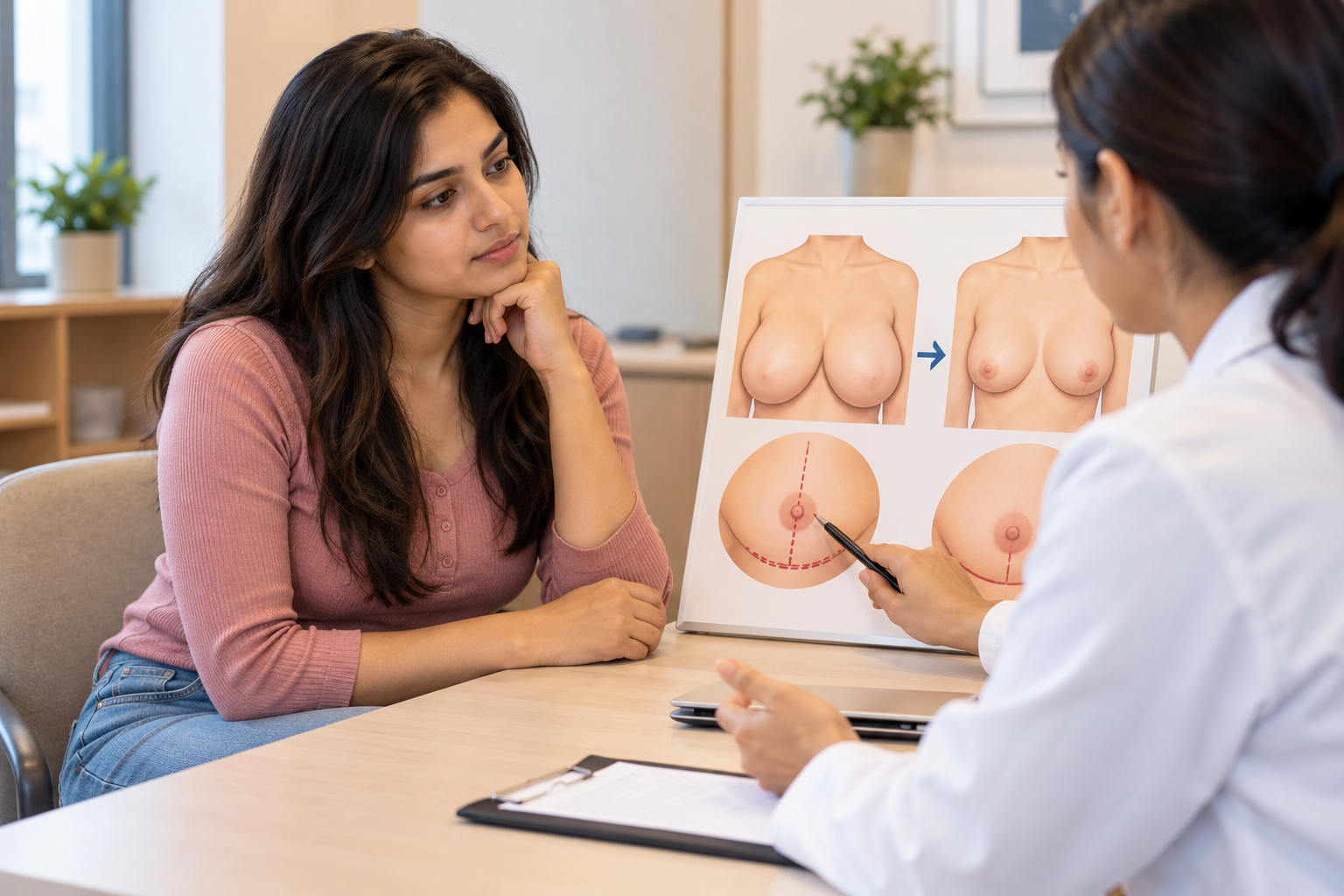
Common scar patterns include:
| Scar Pattern | Where the Scar Appears | Typical Use |
|---|---|---|
| Around the areola | Along the border of the areola | Selected smaller reductions |
| Vertical or lollipop | Around the areola and vertically toward the breast fold | Selected moderate reductions |
| Inverted T or anchor | Around the areola, vertically downward and along the breast fold | Frequently used for larger reductions |
How Do Scars Change Over Time?
During the first few weeks, scars may appear pink, red, or darker than the surrounding skin.
Over the following months, they often become flatter and less noticeable.
Scar maturation commonly continues for 12 to 18 months, sometimes longer.
Some patients develop raised, widened, or darker scars, particularly if they have a tendency toward hypertrophic scarring.
Therefore, patients should not expect breast reduction scars to disappear completely.
How Long Before Marriage Should Surgery Be Planned?
Surgery should be scheduled with enough time for wound healing, swelling reduction, and recovery before wedding activities.
Many patients return to light activities within a few weeks, but the breasts can continue changing in shape and firmness for several months.
If the wedding is only a few weeks away, postponing elective surgery may be more sensible than risking discomfort or wound problems during the celebrations.
The exact interval between surgery and the wedding should be decided with the treating surgeon.
Patients who want to understand possible surgical outcomes can explore the breast surgery gallery to see examples of breast reduction results and scar placement. However, individual healing and final results may vary.
Breast Reduction Surgery in Gujarat: When Is It Better to Wait Until After Pregnancy?
Pregnancy can cause significant changes in breast size, glandular tissue, and skin elasticity.
After pregnancy and breastfeeding, the breasts may become larger, smaller, or less firm than before.
For this reason, some women prefer to postpone breast reduction until after completing their planned pregnancies.
However, waiting is not always necessary.
A young woman experiencing severe back pain, shoulder discomfort, skin irritation or limitations in daily activities may benefit from earlier treatment.
The decision depends on symptom severity, pregnancy plans, breastfeeding priorities, and willingness to accept possible changes after surgery.
Women who want to become pregnant soon may prefer to wait, particularly if breastfeeding is a major priority.
Those planning pregnancy several years later may reasonably consider surgery earlier after discussing the risks.
Marriage itself is not a medical reason to undergo or postpone breast reduction. The decision should reflect the patient’s health and personal preferences.
Will Breast Reduction Affect Marriage or Intimacy?
Breast reduction does not directly affect fertility or the ability to become pregnant.
However, surgery may temporarily affect comfort, breast sensitivity, and confidence while healing takes place.
Some women report improved comfort during physical activities after breast reduction. Others may experience changes in nipple sensation or dissatisfaction with scarring or breast shape.
Sexual intimacy should be avoided during the early recovery period when pressure, friction, or movement could disturb the healing wounds.
The surgeon should advise when intimate activities can safely resume.
Importantly, a woman does not need to undergo breast reduction to meet a partner’s expectations. The procedure should be her own informed choice.
Can Breast Size Increase Again After Reduction?
Breast reduction permanently removes some breast tissue, but the remaining tissue can still change.
Possible reasons for increased breast size after surgery include weight gain, pregnancy, hormonal changes, and continued breast development in younger patients.
This is particularly relevant for women who undergo surgery before breast growth has fully stabilised.
Maintaining a relatively stable weight may help preserve results, although it cannot prevent every hormonal or pregnancy-related change.
Patients should understand that breast reduction produces a long-lasting change, not a guarantee that breast size will remain identical throughout life.
What Is the Recovery Time After Breast Reduction?
Recovery varies according to the amount of tissue removed, surgical technique, and individual healing.
During the first week, swelling, bruising, and discomfort are common. Patients generally need assistance with some daily activities and should avoid heavy lifting.
Many women can return to light desk work or college within approximately 2 to 3 weeks, although some may return earlier or require longer.
Follow your surgeon’s instructions and avoid strenuous exercise, heavy lifting, and activities that put pressure on your chest for several weeks.
Your surgeon may recommend wearing a supportive postoperative bra during recovery.
The final breast shape and scar appearance continue changing over several months.
Breast Reduction Before Marriage: Ready or Wait Checklist
| Factor | What to Consider |
|---|---|
| Age | Has breast development sufficiently matured? |
| Breast size | Has the size remained relatively stable for about 12 months? |
| Weight | Is body weight reasonably stable? |
| Physical symptoms | Are heavy breasts causing significant discomfort? |
| Wedding date | Is there enough time for recovery and scar maturation? |
| Breastfeeding goals | Has the possibility of reduced milk production been discussed? |
| Surgical technique | Has the surgeon explained pedicle options and scar patterns? |
| Expectations | Does the patient understand that scars are permanent? |
| Pregnancy plans | Is pregnancy expected soon? |
If several important factors remain uncertain, further consultation or postponing surgery may be appropriate.
What About Breast Reduction Cost and Insurance?
Breast reduction costs depend on the complexity of surgery, surgeon’s fees, anaesthesia, hospital facilities and postoperative care. Patients can read more about who needs breast reduction and what it costs to understand the factors that influence the overall treatment cost.
The amount of breast tissue removed and whether additional procedures are needed may also influence the total cost.
Patients should request a written estimate explaining what is included.
Insurance coverage varies according to the policy and medical necessity.
Some insurance policies may cover breast reduction when medically necessary, while purely cosmetic procedures are often excluded. Patients should review the information on paying for surgery and insurance and confirm eligibility directly with their insurer before scheduling treatment.
Frequently Asked Questions
1. Will My Breasts Grow Back After Reduction If I Gain Weight?
Breast tissue removed during surgery does not regenerate in the same way, but remaining fatty and glandular tissue can increase in size. Significant weight gain, pregnancy, and hormonal changes may alter breast volume after surgery. Maintaining a stable weight can help preserve the result, although changes are still possible.
2. Does Breast Reduction Affect Marriage or Intimacy?
Breast reduction does not prevent marriage, pregnancy, or sexual intimacy. However, temporary discomfort and changes in nipple sensitivity may occur during recovery. Some sensation changes can persist. Patients should wait until their surgeon confirms adequate healing before resuming activities that place pressure on the breasts.
3. Is Breast Reduction Covered by Insurance for Back Pain?
Insurance coverage depends on the policy, documented symptoms, and medical necessity criteria. Some insurers may consider surgery when heavy breasts cause significant physical problems, but approval is not guaranteed. Patients considering breast reduction surgery in Gujarat should obtain written clarification about coverage before scheduling treatment.
4. How Much Time Off College or Work Is Needed?
Many patients plan approximately 2 to 3 weeks away from college or desk work, depending on their recovery and activity requirements. Physically demanding jobs may require additional time. Heavy lifting and strenuous exercise should be avoided until the surgeon allows them.
5. Can Breast Reduction Be Done at 17?
Breast reduction may be considered at 17 in selected cases, especially when severe breast enlargement causes significant physical or emotional difficulties. However, ongoing breast growth increases the possibility of later changes. Assessment of physical maturity, symptoms, and informed consent is essential, including appropriate parental or guardian involvement for minors.
6. Will My Husband Be Able to Tell I Had Surgery?
Breast reduction leaves permanent scars, although they usually become less noticeable over time. Their visibility depends on the incision pattern, skin tone, and individual healing. Changes in breast shape and sensation may also occur. Surgery should never be presented as completely scarless or undetectable.
Final Thoughts: Should You Have Breast Reduction Before Marriage?
Breast reduction before marriage can be a reasonable option for young women experiencing discomfort from heavy breasts, provided breast development is sufficiently stable, and the patient understands the long-term considerations.
The most important factors are not simply age or wedding timing. Future breastfeeding goals, nipple sensation, permanent scars, recovery requirements, and possible breast changes after pregnancy all deserve careful discussion.
Women with significant symptoms may choose surgery before pregnancy, while others may prefer to wait until after childbirth and breastfeeding.
A personalised consultation can help determine whether surgery is appropriate now or whether postponing it would better support the patient’s goals.

