

|
Getting your Trinity Audio player ready...
|
✓ Medically reviewed by Dr. Ashutosh Shah, Plastic, Reconstructive & Cosmetic Surgeon (M.Ch., DNB)
The importance of anaesthesia for a patient goes far beyond putting you to sleep. Anaesthesia blocks pain, keeps you still, and, most importantly, lets a trained anaesthetist continuously monitor and support your breathing, heart, and vital functions throughout surgery. It is the backbone of safe surgery, not just a way to make you unconscious.
Many people think anaesthesia simply means being knocked out for an operation. As our clinic video explains, that is only a small part of it. The real value is the constant, expert protection of your body while the surgeon works. This guide explains the importance of anaesthesia for a patient, clearly and reassuringly.
What Is the Importance of Anaesthesia for a Patient?
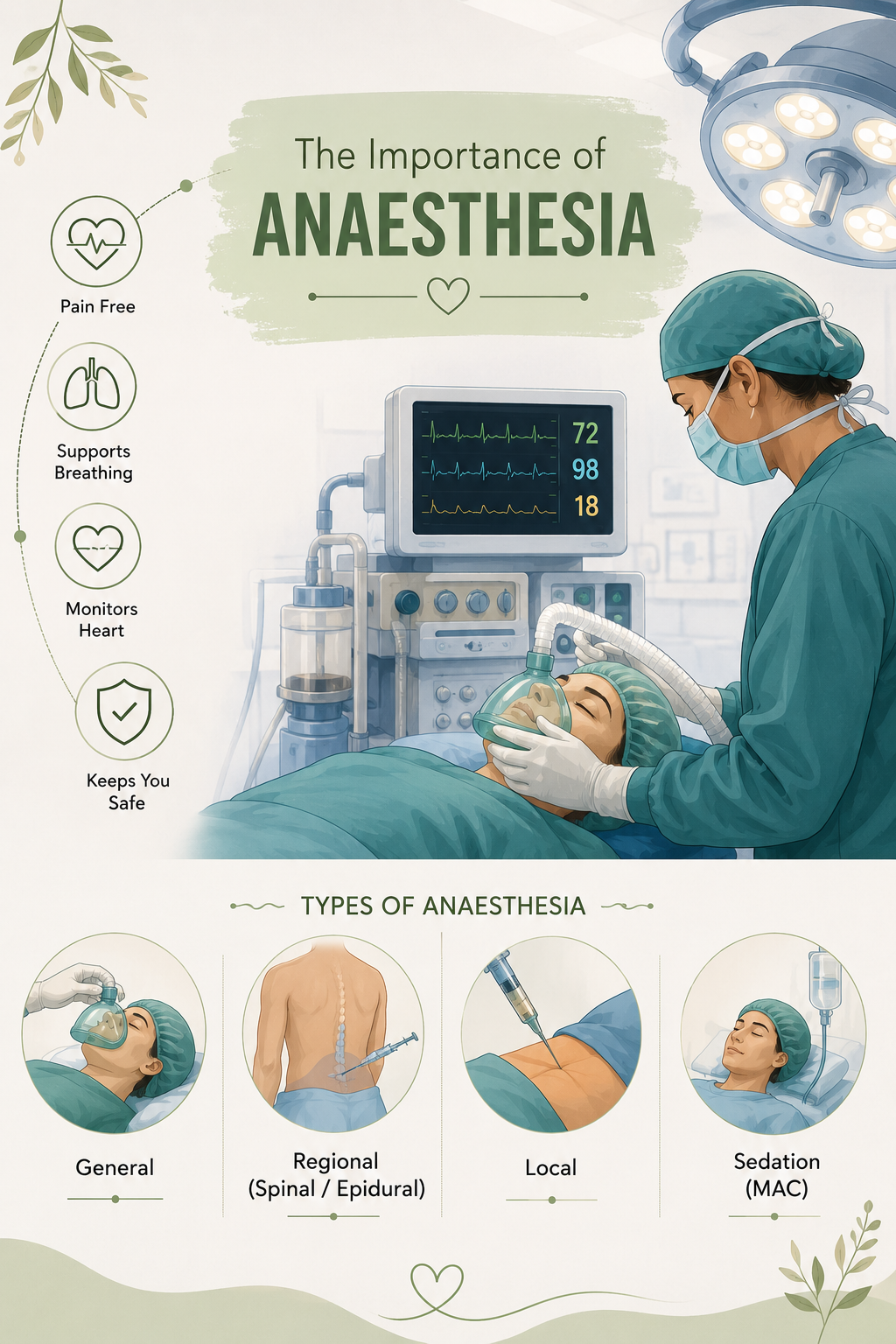
The importance of anaesthesia for a patient lies in making surgery both painless and safe. Anaesthesia does three linked jobs: it removes pain, keeps the body still and relaxed so the surgeon can work precisely, and allows an expert doctor (the anaesthetist) to watch over and control your vital functions, breathing, heart rate, blood pressure, and oxygen, from start to finish. Sleep, or unconsciousness, is just one tool used to achieve this, not the whole point.
In short, anaesthesia is what turns a major operation into a controlled, survivable, comfortable experience. Without it, most modern surgery simply would not be possible.
What Does Anaesthesia Actually Do During Surgery?
It does much more than send you to sleep. Its core roles are pain relief so you feel nothing, muscle relaxation and stillness for surgical precision, and continuous monitoring and support of your vital organs. The anaesthetist stays with you throughout, adjusting medicines second by second, managing your airway and breathing, maintaining blood pressure, and responding instantly to any change. This vigilance is exactly why surgery is safe today.
Think of the anaesthetist as the guardian of your body during surgery, while the surgeon focuses on the operation. Both roles are essential, and neither replaces the other.
What Are the Types of Anaesthesia?
The type is chosen to fit the surgery and the patient. The table below outlines the main types.
| Type | What it does |
|---|---|
| General anaesthesia | Full, controlled unconsciousness for major surgery. |
| Regional (spinal / epidural) | Numbs a large area, such as below the waist. |
| Local anaesthesia | Numbs a small area for minor procedures. |
| Sedation (MAC) | Relaxes and calms you while you stay drowsy. |
An expert doctor selects the safest option for your procedure, whether that is a cosmetic operation like liposuction or gynecomastia surgery, or any of the clinic’s surgical services.
Why Do the Anaesthetist and Pre-Anaesthesia Check Matter So Much?
Because safe anaesthesia begins before you even enter the operating room. The pre-anaesthesia checkup lets the anaesthetist review your health, medicines, allergies, and any conditions, and plan accordingly, which genuinely improves safety. A study on pre-anaesthesia assessment notes that the pre-anaesthesia assessment clinic is known to increase safety and quality in the perioperative period. This is why the checkup is never a formality.
During surgery, the anaesthetist’s training turns monitoring data into split-second decisions. That expertise, before and during the operation, is the single biggest reason anaesthesia is so safe today.
Is Anaesthesia Safe, and How Are Risks Reduced?
Modern anaesthesia is very safe, especially in trained hands, though like any medical intervention it carries some risk. Safety is protected in several ways.
- Pre-anaesthesia assessment: spotting risks and optimising you beforehand.
- A trained anaesthetist: an expert doctor dedicated to you throughout.
- Continuous monitoring: heart, breathing, oxygen, and blood pressure tracked constantly.
- Modern medicines and equipment: precise, adjustable, and reversible.
- Honest planning: the right type of anaesthesia for your health and surgery.
Telling your team about your health, medicines, and past anaesthesia is part of this teamwork, and helps an expert doctor keep you safe.
Why Choose Elegance Clinic in Surat?
Safe surgery depends on an experienced surgical and anaesthesia team and a properly equipped setting. At Elegance Clinic in Surat, procedures are performed by Dr. Ashutosh Shah, a board-certified plastic, reconstructive and cosmetic surgeon with more than 22 years of experience and centres in Adajan and Vesu, working with qualified anaesthesia support, thorough pre-anaesthesia assessment, and modern monitoring in accredited operating setups. Safety and honest communication come first at every step. You can meet the expert team, explore the surgical services, or book a consultation.
Medical disclaimer: This article is for general information and education only and is not a substitute for personalised medical advice. Anaesthesia is a specialised medical field, and the type, suitability, and risks vary by individual, procedure, and health status; like any medical intervention it carries some risk. Always discuss your anaesthesia plan and concerns with a qualified anaesthetist and surgeon. To discuss a procedure and its anaesthesia safely, book a consultation at Elegance Clinic, Surat.
