

|
Getting your Trinity Audio player ready...
|
✓ Medically reviewed by Dr. Ashutosh Shah, Plastic, Reconstructive & Cosmetic Surgeon (M.Ch., DNB)
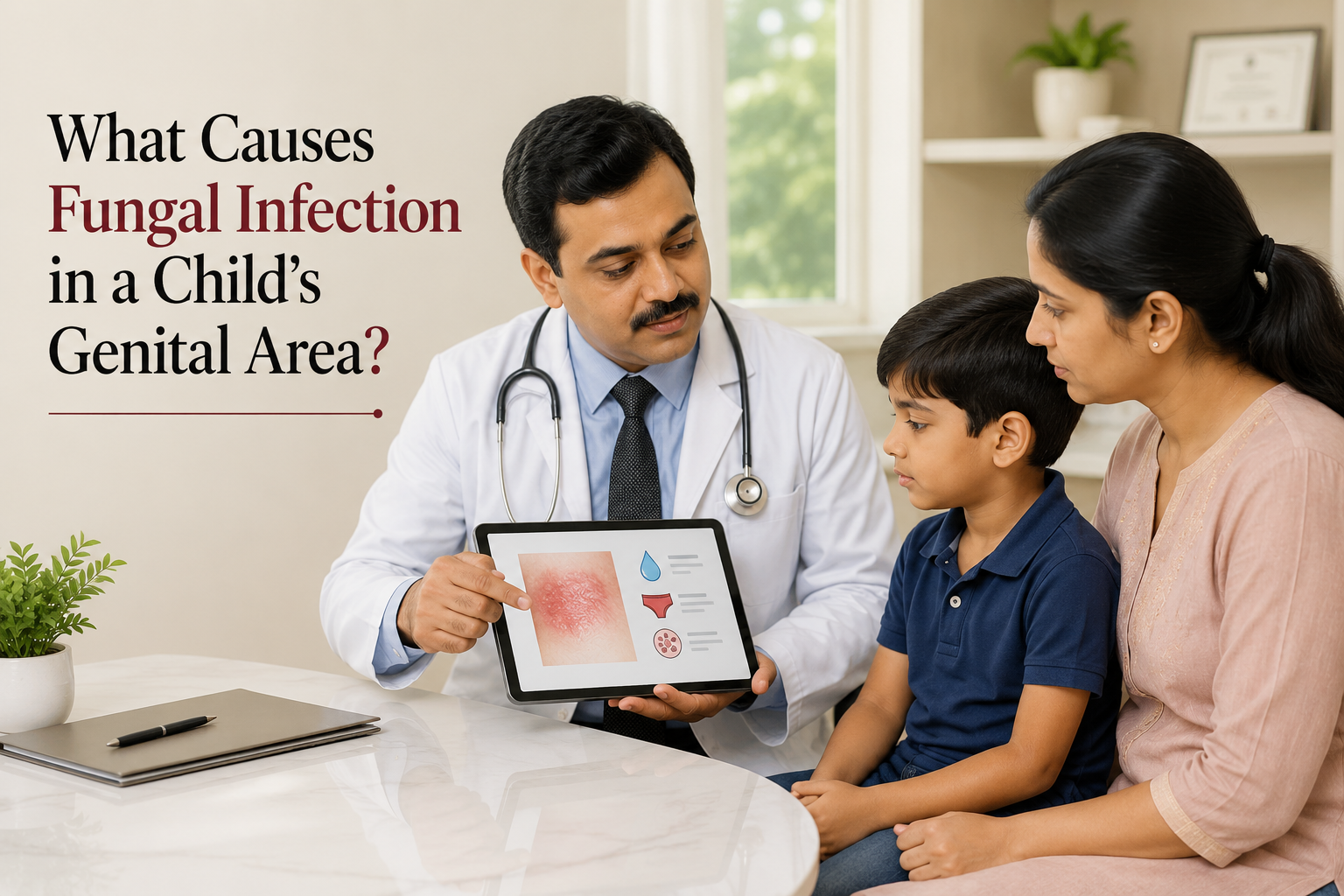
A fungal infection in a child’s genital or nappy area is commonly caused by Candida yeast, especially when the skin stays warm, damp, or irritated for long periods. However, not every genital rash is fungal. Irritation from urine or stool, soaps, wipes, tight clothing, eczema, and bacterial infections can cause similar symptoms.
Written by Dr. Ashutosh Shah, M.Ch., DNB (Plastic Surgery)
Director, Elegance Clinic, Surat
Dr. Ashutosh Shah is a Board-Certified Plastic, Cosmetic & Reconstructive Surgeon with more than 22 years of surgical experience. At Elegance Clinic, Surat, he provides personalized evaluation and treatment for a wide range of surgical, reconstructive, cosmetic, and skin-related concerns. His clinical approach focuses on accurate assessment, patient safety, appropriate treatment planning, and natural-looking outcomes.
Fungal infection: A fungal infection occurs when fungi or yeast, such as Candida, multiply excessively on or within the skin and cause inflammation, redness, itching, or discomfort.
Why Do Children Develop Fungal Infections in the Genital Area?
Children can develop fungal infections when moisture, warmth, friction, and skin irritation create an environment where yeast can multiply. Babies who wear nappies are particularly prone to rashes because urine and stool can remain against delicate skin. A fungal infection may develop on top of an existing nappy rash.
Common contributing factors include:
- Prolonged exposure to wet or dirty nappies
- Warm and moist skin folds
- Frequent sweating
- Tight or poorly ventilated clothing
- Existing nappy rash
- Skin irritation from soaps or fragranced products
- Recent antibiotic use
- Repeated skin irritation
- Certain medical conditions that affect immunity or blood sugar
Antibiotics can sometimes contribute to Candida overgrowth because they alter the balance of microorganisms that normally live on the body.
What Does a Fungal Rash Look Like in Children?
A Candida-related rash may appear as a red, inflamed, itchy, or sore area around the genital region, groin, buttocks, or skin folds. In children with darker skin tones, redness can be less obvious, so changes in texture, warmth, swelling, or colour compared with surrounding skin can also be important.
A Candida nappy rash may be more intense within the skin folds and can sometimes have small spots around the main rash. These are sometimes described as satellite lesions. However, appearance alone cannot always confirm that a rash is fungal because several childhood skin conditions can look similar.
What Are the Common Symptoms?
Parents may notice:
- Red or irritated skin
- Itching or increased scratching
- Burning or soreness
- Discomfort while urinating
- A rash around the groin or genital area
- Redness within skin folds
- Small surrounding spots
- Swelling or tenderness
- Fussiness in babies because of discomfort
In boys, inflammation around the penis or foreskin can sometimes occur. Balanitis can have several causes, including irritation and thrush, so medical assessment may be needed when symptoms are significant or persistent.
Can a Nappy Cause a Fungal Infection?
A nappy does not directly cause a fungal infection, but the warm, enclosed and moist environment can encourage irritation and fungal growth. Frequent exposure to urine or stool can weaken the skin barrier, making the area more vulnerable to inflammation and secondary infection.
Changing wet or dirty nappies promptly, gently cleaning the area, and keeping the skin dry can help reduce irritation. NHS guidance also recommends allowing the nappy area to remain uncovered when practical.
Can Antibiotics Cause Fungal Infection in Children?
Antibiotic treatment can sometimes be followed by Candida overgrowth. Antibiotics target bacteria and can change the normal microbial balance on the skin and other parts of the body. This may allow yeast to multiply more easily in susceptible children.
Parents should not stop or change a prescribed antibiotic without speaking with the child’s doctor. If a rash develops during or after antibiotic treatment, a healthcare professional can determine whether it is fungal, irritant, allergic, or another type of rash.
How Can Parents Reduce the Risk?
Simple hygiene and skin-care measures can help protect the genital and nappy area.
- Change nappies regularly: Replace wet or dirty nappies promptly.
- Clean gently: Use water or fragrance-free, alcohol-free wipes when appropriate.
- Dry carefully: Pat the skin dry instead of rubbing it.
- Avoid irritating products: Soaps, bubble baths, fragrances, and harsh cleansers can irritate sensitive skin.
- Allow airflow: Give the nappy area some time without a nappy when practical.
- Avoid tight clothing: Loose, breathable clothing can reduce heat and moisture.
- Follow medical advice: If a healthcare professional diagnoses a fungal infection , use the recommended treatment exactly as directed.
When Should a Child See a Doctor?
A child should be evaluated when the rash is severe, persistent, spreading, repeatedly returning, or causing significant pain. Medical assessment is also appropriate when there is fever, marked swelling, discharge, difficulty urinating, broken skin, or the child appears unusually unwell.
A rash that does not improve with basic skin care may need further assessment because fungal infection is only one possible cause. NHS guidance recommends medical review when a baby’s nappy rash does not improve, becomes worse, spreads, or is accompanied by a high temperature or significant discomfort.
Parents should avoid assuming that every genital rash is fungal and should not use leftover prescription creams or combination steroid creams without professional advice.
Treatment for Fungal Infection in Children
Treatment depends on the child’s age, symptoms, location of the rash, and confirmed or suspected cause. A healthcare professional may recommend an appropriate antifungal treatment when Candida is suspected or diagnosed.
The treatment should be selected according to the child’s age and affected area. Some antifungal medicines have age-specific instructions, and products intended for adults should not automatically be used on children. NHS guidance notes that antifungal medicines such as clotrimazole are used for certain Candida infections, but appropriate treatment depends on the location and individual circumstances.
If the rash is actually caused by irritation, eczema, bacteria, or another condition, antifungal treatment may not solve the problem.
Is a Child’s Genital Fungal Infection Serious?
Most uncomplicated fungal skin infections are treatable, but the cause should be correctly identified. Persistent or recurrent infections may require medical evaluation to look for contributing factors.
Parents should seek prompt medical attention if the child develops significant pain, fever, rapidly worsening swelling, pus, difficulty passing urine, extensive skin breakdown, or appears seriously unwell.
Key Takeaways
- Candida is a common cause of fungal infection in moist skin areas.
- Nappy rash can sometimes become secondarily infected with Candida.
- Moisture, warmth, friction, and prolonged contact with urine or stool can increase irritation.
- Not every genital rash in a child is fungal.
- Persistent, severe, recurrent, or painful rashes should be assessed by a healthcare professional.
- Treatment should be chosen according to the child’s age and diagnosis.
Discover comprehensive cosmetic, reconstructive, dermatology, hair restoration, and advanced aesthetic services available at Elegance Clinic.
Have questions about your child’s skin concern? Contact Elegance Clinic, Surat, to discuss your concerns and understand the appropriate next step.
Parents concerned about a persistent or unusual skin or genital-area problem in a child should seek an appropriate medical evaluation rather than self-treating. Contact Elegance Clinic to discuss your concern and determine the appropriate next step.
FAQs
Q: What causes fungal infection in a child’s genital area?
A: Moisture, warmth, skin irritation, tight clothing, and Candida yeast can contribute to fungal infections.
Q: What are common symptoms?
A: Redness, itching, soreness, irritation, swelling, or a persistent rash may occur.
Q: Can nappies cause fungal infections?
A: Nappies can create a warm, moist environment that encourages fungal growth.
Q: How is it treated?
A: Treatment depends on the cause and may include an age-appropriate antifungal medicine recommended by a doctor.
Q: When should parents see a doctor?
A: Seek medical advice if the rash is severe, persistent, spreading, painful, or associated with fever or difficulty urinating.

