

|
Getting your Trinity Audio player ready...
|
✓ Medically reviewed by Dr. Ashutosh Shah, Plastic, Reconstructive & Cosmetic Surgeon (M.Ch., DNB)
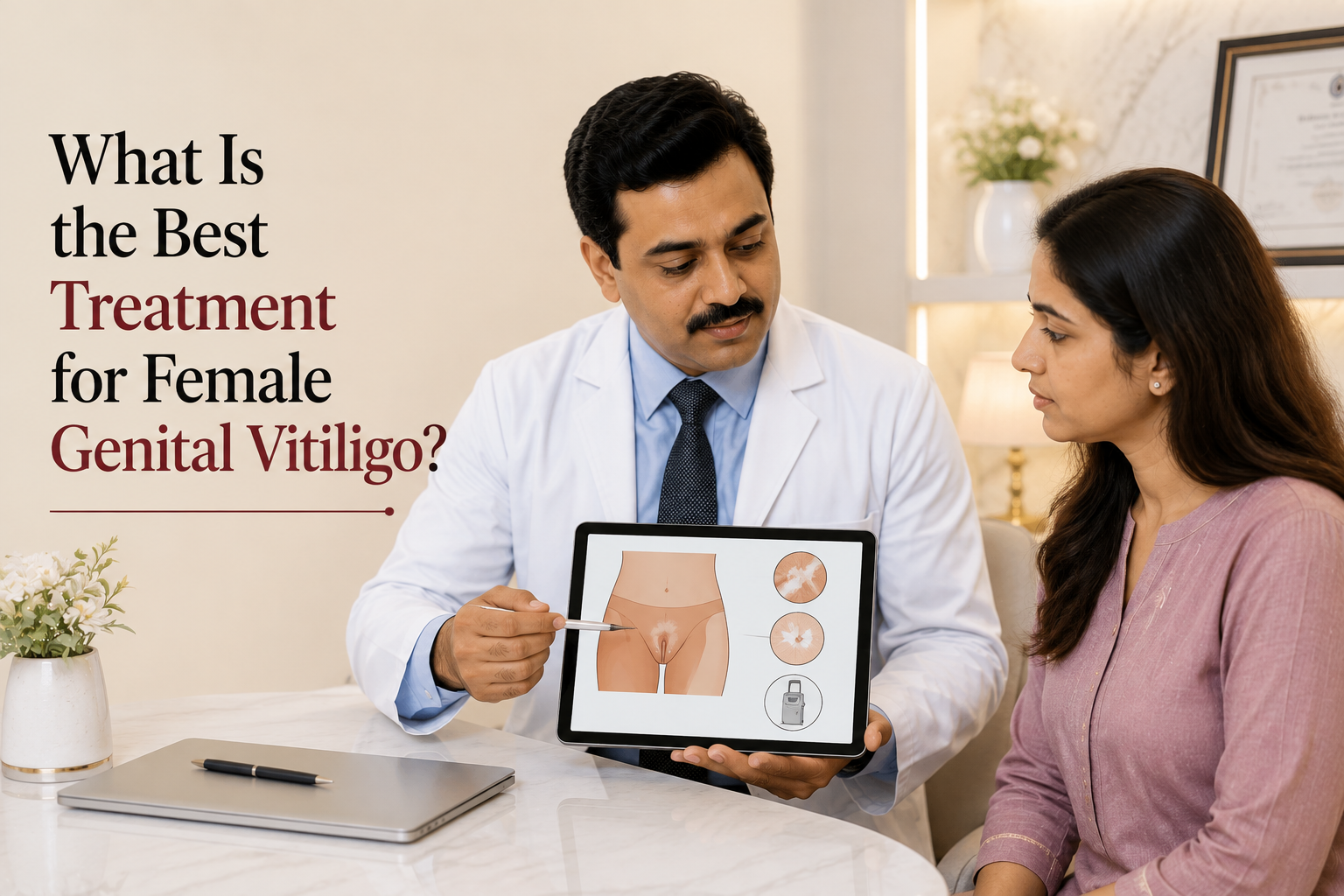
Female genital vitiligo causes patches of lighter or white skin when pigment-producing melanocytes are lost. Vitiligo can affect the vulva and surrounding genital skin, and treatment depends on whether the condition is stable or actively spreading, the extent of pigmentation loss, and the patient’s individual skin and health needs.
Written by Dr. Ashutosh Shah, M.Ch., DNB (Plastic Surgery)
Director, Elegance Clinic, Surat
Dr. Ashutosh Shah is a Board-Certified Plastic, Cosmetic & Reconstructive Surgeon with more than 22 years of surgical experience. At Elegance Clinic, Surat, he provides personalized care across cosmetic, reconstructive, facial aesthetic, hair restoration, and other surgical treatments, with an emphasis on careful assessment, patient safety, and natural-looking outcomes.
Female genital vitiligo: A form of vitiligo in which areas of the female genital skin lose their normal pigment, creating lighter or white patches.
What Causes Female Genital Vitiligo?
Vitiligo is an autoimmune condition in which the immune system mistakenly attacks melanocytes, the cells responsible for producing skin pigment. Genital involvement can occur because vitiligo may affect almost any area of the skin, including the genitals and mucous membranes.
A family history of vitiligo may increase the likelihood of developing the condition, although many people with vitiligo have no affected family member. Other autoimmune conditions can also be associated with vitiligo, which is why a medical evaluation may sometimes include assessment for related health concerns.
How Does Genital Vitiligo Look?
Female genital vitiligo usually appears as clearly lighter or completely white patches compared with the surrounding skin. The patches may be small and localized or may involve larger areas.
Genital vitiligo can occur on the vulvar skin and nearby areas. In some people, pigment loss may also affect hair growing in the affected region. The appearance can vary considerably between individuals.
A new white patch should not automatically be assumed to be vitiligo. Other skin disorders can also cause light or white genital patches, so an appropriate examination is important before starting treatment.
Is Female Genital Vitiligo Dangerous?
Vitiligo itself is not contagious and is generally not harmful to physical health, although visible pigment loss can have a significant emotional and psychological effect.
Genital skin is particularly sensitive, so an accurate diagnosis is important before using creams, chemical products, or cosmetic treatments. Conditions such as inflammatory skin disorders, infections, irritation, and other causes of hypopigmentation may sometimes resemble vitiligo.
What Are the Treatment Options for Female Genital Vitiligo?
There is no single treatment that works for every person with vitiligo. Treatment is selected according to the location, extent, activity of the condition, age, overall health, and treatment goals.
Prescription Topical Treatment
Doctors may prescribe medications applied directly to affected skin to help restore pigmentation or control the autoimmune activity.
Topical corticosteroids may be used for selected patients, but prolonged steroid use on sensitive genital skin can cause unwanted effects such as skin thinning. Calcineurin inhibitors such as tacrolimus or pimecrolimus may also be considered in appropriate cases. The exact medicine, strength, frequency, and duration should be determined by a qualified clinician.
Phototherapy
Phototherapy uses controlled ultraviolet light to stimulate repigmentation. It is an established treatment option for vitiligo, although the suitability of light-based treatment depends on the affected area and the patient’s individual circumstances. Several treatment sessions are usually required, and improvement occurs gradually.
Genital skin requires particular care because it is sensitive and treatment must be carefully planned to avoid unnecessary irritation.
Targeted Light Treatment
When vitiligo affects a limited area, targeted light-based treatment may sometimes be considered. Dermatologists can direct treatment toward affected skin while limiting exposure of surrounding normal skin.
Surgical Repigmentation
Surgical approaches may be considered for selected patients with stable vitiligo when other treatments have not produced satisfactory repigmentation.
Procedures can include skin grafting or cell-based transplantation techniques. According to the American Academy of Dermatology, surgery is generally not recommended when vitiligo is actively developing because new patches may continue to appear.
Whether a surgical technique is appropriate for genital vitiligo requires an individualized specialist assessment because the genital region has unique anatomy, sensitivity, and healing considerations.
Can Genital Vitiligo Be Completely Cured?
There is currently no permanent cure for vitiligo. However, treatment can sometimes restore pigment and may help reduce further pigment loss. Results vary between patients and between different areas of the body.
Vitiligo treatment is usually gradual rather than immediate. Even after successful repigmentation, pigment may fade over time, and some patients require maintenance treatment.
Can Female Genital Vitiligo Spread?
Yes. Vitiligo can remain stable in some patients while becoming more extensive in others. The course is unpredictable.
A clinician may assess whether the condition is stable or active before selecting treatment. This distinction is particularly important when considering surgical repigmentation because active vitiligo is generally less suitable for surgery.
Avoiding unnecessary trauma, cuts, burns, and repeated irritation may also be helpful because skin injury can trigger new vitiligo patches in some individuals.
How Is Female Genital Vitiligo Diagnosed?
Diagnosis usually begins with a detailed medical history and examination of the affected skin. A dermatologist may use a Wood’s lamp to make pigment loss easier to identify and distinguish vitiligo from some other causes of altered skin colour.
The doctor may also ask about:
- When the white patches first appeared
- Whether the patches are increasing in size
- Whether new patches have developed
- Family history of vitiligo
- Other skin conditions
- Possible autoimmune conditions
- Previous treatments
- Irritation, itching, pain, or inflammation
Blood tests may sometimes be recommended when the clinical assessment suggests that screening for associated autoimmune conditions would be useful.
Can Home Remedies Treat Genital Vitiligo?
Home remedies should not be relied upon to restore pigment in genital vitiligo. Lemon juice, strong herbal preparations, bleaching products, essential oils, and other irritating substances can damage sensitive genital skin and potentially worsen irritation.
A balanced diet and general healthy lifestyle are beneficial for overall health, but there is currently insufficient evidence that particular supplements or foods can reliably repigment vitiligo.
What Should Women Avoid With Genital Vitiligo?
Women with genital vitiligo should avoid unnecessary irritation of the affected skin. This may include harsh soaps, aggressive scrubbing, unapproved lightening products, and treatments that cause burns or inflammation.
Medical advice is especially important before applying prescription-strength creams or cosmetic products to genital skin.
When Should You See a Specialist?
A specialist assessment is appropriate when a new white genital patch develops, especially when the diagnosis is uncertain or the area is changing.
Professional evaluation becomes particularly important when:
- White patches are spreading
- New patches appear elsewhere
- The skin becomes itchy, painful, inflamed, or cracked
- There is discharge or another unusual symptom
- Previous treatment has not worked
- The diagnosis has never been confirmed
- You are considering surgical or advanced repigmentation treatment
A correct diagnosis is the first step because not every white genital patch represents vitiligo.
Key Takeaways
- Female genital vitiligo can affect the vulva and surrounding genital skin.
- Vitiligo is an autoimmune condition involving loss of pigment-producing melanocytes.
- Treatment may include prescription topical medicines, phototherapy, or selected surgical repigmentation procedures.
- There is currently no permanent cure, but treatment can restore pigment in some patients.
- Active vitiligo generally needs to be controlled before surgical repigmentation is considered.
- A specialist examination is important before treating any new white patch on genital skin.
If you notice new white patches on the female genital skin or want to understand available treatment options, consult a qualified specialist for an accurate diagnosis and personalized treatment plan.
Explore advanced cosmetic, reconstructive, dermatology, laser, and aesthetic treatments available at Elegance Clinic.
Discuss your skin concern with the Elegance Clinic team and schedule a personalized consultation in Surat.
Frequently Asked Questions
Q: Can female genital vitiligo be treated?
A: Yes. Treatment may help restore pigmentation, although results vary. Options can include topical medicines, light therapy, and selected surgical procedures.
Q: Is genital vitiligo contagious?
A: No. Vitiligo is an autoimmune condition and cannot be transmitted through sexual contact or skin-to-skin contact.
Q: Can genital vitiligo spread?
A: It can. Some cases remain stable while others develop new or larger patches. A specialist can assess whether the condition is active.
Q: Can creams restore pigment?
A: Prescription creams may help restore pigment in some patients. The appropriate medicine depends on the location and individual circumstances.
Q: Is surgery suitable for genital vitiligo?
A: Surgery may be considered for selected patients with stable vitiligo when other treatments have not produced adequate results. Specialist assessment is essential.

