

|
Getting your Trinity Audio player ready...
|
✓ Medically reviewed by Dr. Ashutosh Shah, Plastic, Reconstructive & Cosmetic Surgeon (M.Ch., DNB)
Written by Dr. Ashutosh Shah, M.Ch., DNB (Plastic Surgery)
Director, Elegance Clinic, Surat
Dr. Ashutosh Shah is a Board-Certified Plastic, Cosmetic & Reconstructive Surgeon with more than 22 years of surgical experience. His practice includes cosmetic and reconstructive surgery and aesthetic genital procedures.
Choosing the best vaginoplasty clinic is not simply about finding the clinic with the most advertisements, lowest price, or largest number of online reviews. Vaginoplasty is a surgical procedure involving delicate vaginal tissues, and the surgeon’s qualifications, relevant surgical experience, operating facilities, patient assessment, informed consent, and postoperative care all matter when evaluating a clinic.
A safe decision begins with understanding what type of vaginoplasty you are considering. Surgical vaginal tightening for vaginal laxity is different from reconstructive vaginoplasty or gender-affirming vaginoplasty. The appropriate surgeon, technique, goals, recovery, and risks can therefore vary significantly.
The American Society of Plastic Surgeons recommends choosing an appropriately trained, board-certified plastic surgeon and discussing your goals, medical history, treatment options, expected outcomes, and possible complications during consultation.
For women researching vaginoplasty in Surat, this article explains how to evaluate a clinic, what qualifications to look for in a vaginoplasty surgeon, which questions to ask during consultation, how to understand risks and recovery, and why comparing treatment plans is more useful than choosing a clinic based only on the word “best.”
Key Takeaways
- The best vaginoplasty clinic should be selected based on surgeon qualifications, relevant experience, safety standards, and personalised care.
- Vaginoplasty can refer to different surgical procedures, so the surgeon should clearly explain which operation is appropriate for your goals.
- A qualified surgeon should discuss benefits, limitations, risks, recovery, alternatives, and expected outcomes before surgery.
- Surgical vaginoplasty can involve risks such as bleeding, infection, pain, scarring, wound-healing problems, and other procedure-specific complications.
- Cost should be compared only after understanding what the treatment package includes.
- A private consultation is essential before deciding whether vaginoplasty is appropriate for you.
What Is Vaginoplasty?
Vaginoplasty is a surgical procedure that can reconstruct or tighten vaginal tissues, depending on the indication and surgical technique. Surgical vaginal tightening may address vaginal laxity associated with tissue stretching, including changes following childbirth. Other forms of vaginoplasty are reconstructive procedures used to create or reconstruct a vaginal canal.
The term vaginoplasty therefore does not describe one identical operation for every patient.
The American Society of Plastic Surgeons describes surgical vaginoplasty as a procedure that can tighten the vaginal canal by bringing separated tissues or muscles together and removing selected excess mucosal tissue.
Vaginoplasty: A surgical procedure involving reconstruction or modification of vaginal tissues. The exact operation depends on the patient’s anatomy, medical indication, and treatment goals.
Vaginal laxity: A feeling or clinical finding of reduced vaginal tightness that may occur after childbirth, tissue stretching, or other changes. It should be assessed individually rather than assumed from symptoms alone.
The first step in choosing a clinic is therefore to identify which type of vaginoplasty you actually need.
A patient seeking surgical vaginal tightening should not automatically compare their treatment with a patient seeking reconstructive or gender-affirming vaginoplasty. These procedures can involve different techniques, training requirements, recovery pathways, and clinical considerations.
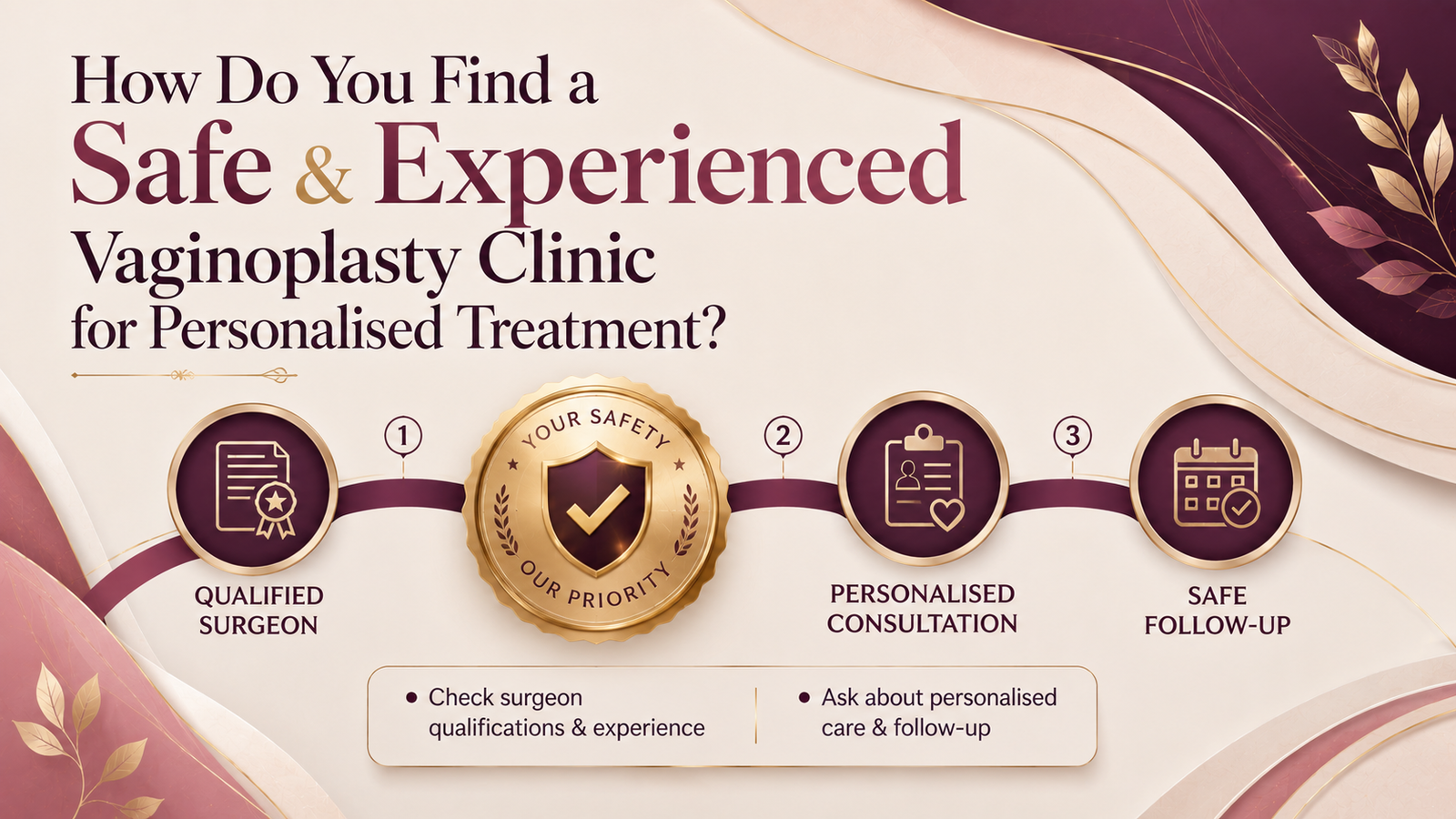
How Do You Choose a Safe Vaginoplasty Clinic?
The safest way to choose a vaginoplasty clinic is to evaluate the surgeon’s qualifications and relevant experience, the clinic or hospital’s surgical facilities, the consultation process, informed consent, postoperative support, and transparency about risks and costs. Online ratings can provide background information, but they should not replace professional assessment.
When comparing a vaginoplasty clinic, look beyond promotional claims.
1. Check the Surgeon’s Qualifications
Start by verifying the surgeon’s medical qualifications and specialist training.
For plastic surgery, relevant specialist training is important because genital surgery requires knowledge of anatomy, tissue handling, wound healing, and surgical complication management.
The American Society of Plastic Surgeons advises patients considering aesthetic genital surgery to select a suitably trained, board-certified plastic surgeon and to confirm that the surgeon has specific training relevant to the procedure.
2. Ask About Relevant Experience
Years of general medical experience and experience with the specific procedure are not necessarily the same thing.
Ask:
- How frequently does the surgeon perform this procedure?
- What type of vaginoplasty is performed?
- What technique is normally considered for your anatomy?
- What complications can occur?
- How are complications managed?
- What follow-up is provided?
A responsible surgeon should be comfortable discussing both benefits and limitations.
3. Evaluate the Consultation
A consultation should not feel like a sales appointment.
The surgeon should take time to understand your goals, medical history, previous procedures, medications, allergies, childbirth history when relevant, and expectations.
ASPS recommends discussing surgical goals, medical conditions, allergies, medications, and relevant medical history during consultation.
4. Ask About Surgical Facilities
Ask where the surgery will take place and whether the facility is appropriately equipped and licensed for the planned procedure.
Depending on the operation, anaesthesia requirements, and individual health factors, surgery may need an appropriate hospital or accredited surgical facility rather than a simple outpatient treatment room.
5. Look for Long-Term Follow-Up
Good surgical care does not end when the procedure is completed.
Ask who will monitor your recovery, how postoperative concerns are handled, and whom you should contact if you experience unexpected symptoms.
The ASPS patient-safety guidance emphasises the importance of follow-up and maintaining communication with the surgeon after plastic surgery.
If you are considering vaginoplasty, a personalised consultation can help clarify whether surgery is appropriate for your anatomy, symptoms, and treatment goals.
What Qualifications Should a Vaginoplasty Surgeon Have?
A suitable vaginoplasty surgeon should have recognised specialist surgical training, appropriate medical registration and qualifications, specific experience with the proposed procedure, and access to suitable surgical and anaesthesia facilities. The exact credentialing requirements vary by country and procedure, so patients should verify qualifications rather than relying on marketing titles.
In India, patients should verify the surgeon’s medical registration and specialist qualifications through appropriate professional and regulatory channels.
For a plastic surgeon, look for specialist training in plastic surgery and experience relevant to the procedure being considered.
The surgeon should also be able to explain:
- Why the procedure is being recommended
- What technique is planned
- What alternatives exist
- What risks apply
- What recovery involves
- What results are realistic
Does “Cosmetic Surgeon” Always Mean the Same Thing?
No. Titles used in cosmetic medicine can vary, and marketing language does not always tell you the extent of a doctor’s formal surgical training.
A patient should look for verifiable qualifications and relevant surgical training, rather than relying only on terms such as “cosmetic expert,” “aesthetic specialist,” or “best surgeon.”
What Should You Check About Clinic Safety?
Clinic safety includes more than a clean waiting room. Patients should consider the operating environment, anaesthesia arrangements, sterilisation practices, emergency preparedness, qualified clinical staff, postoperative monitoring, and access to appropriate medical care if a complication occurs.
The ASPS recommends asking whether a surgical facility is appropriately accredited, licensed, or certified and whether the surgeon has been specifically trained in the procedure.
Important Safety Questions
Before scheduling surgery, ask:
- Where will the surgery be performed?
- Who will administer anaesthesia?
- Is appropriate monitoring available?
- What happens if a complication occurs?
- Is emergency medical support available?
- How long will I be monitored after surgery?
- Who provides postoperative care?
- How can I contact the clinic after the procedure?
A clinic that welcomes reasonable safety questions can make the decision process more transparent.
What Happens During a Vaginoplasty Consultation?
During a vaginoplasty consultation, the surgeon reviews your goals, medical history, symptoms, anatomy, previous procedures, expectations, and available treatment options. The consultation should also include discussion of risks, recovery, anaesthesia, expected outcomes, alternatives, and the financial aspects of treatment.
A consultation may include:
Medical History
The surgeon may ask about:
- Previous pregnancies and childbirth
- Previous pelvic or vaginal surgery
- Medical conditions
- Current medications
- Allergies
- Previous anaesthesia problems
- Smoking or tobacco use
- Previous treatments for vaginal symptoms
Understanding Your Goal
The reason for considering surgery matters.
For example, a patient may be concerned about:
- A feeling of vaginal laxity
- Changes after childbirth
- Functional symptoms
- Sexual discomfort
- Appearance
- Reconstructive needs
The treatment should be based on the underlying concern rather than a generic assumption that every patient needs vaginal tightening.
Setting Realistic Expectations
No responsible surgeon should promise a guaranteed outcome.
Surgical results vary according to anatomy, tissue quality, healing, surgical technique, and individual circumstances.
What Questions Should You Ask a Vaginoplasty Surgeon?
The most useful questions are those that clarify the surgeon’s qualifications, procedure-specific experience, risks, recovery, facility standards, and follow-up plan. Asking these questions before surgery can help you compare clinics based on medical quality rather than advertisements or price alone.
Consider taking this checklist to your consultation:
- What type of vaginoplasty am I being considered for?
- Why is this procedure appropriate for my concerns?
- What qualifications do you have for performing this surgery?
- How frequently do you perform this procedure?
- Which surgical technique would you recommend?
- What are the main risks?
- What complications should I watch for?
- Where will the surgery be performed?
- Who will administer anaesthesia?
- How long should recovery take?
- When can normal activities be resumed?
- What restrictions will I have after surgery?
- How many follow-up visits are expected?
- What happens if the result is not as expected?
- What is included in the quoted cost?
These questions are consistent with the general patient-safety approach recommended by ASPS for aesthetic genital procedures.
What Are the Risks of Vaginoplasty?
Vaginoplasty is surgery and therefore carries potential complications. Depending on the technique, risks can include bleeding, infection, pain, scarring, wound-healing problems, changes in sensation, discomfort, and procedure-specific complications. The individual risk depends on the patient’s health, anatomy, surgical technique, and postoperative care.
The ASPS identifies infection, bleeding, and pain among the risks associated with surgical vaginoplasty.
Other potential concerns may include:
- Swelling
- Bruising
- Delayed wound healing
- Scar tissue
- Changes in sensation
- Persistent discomfort
- Pain during intercourse
- Need for additional treatment
The surgeon should explain which complications are relatively common and which are less common but potentially more serious.
Informed consent: A process in which a patient receives understandable information about a proposed treatment, including benefits, risks, alternatives, and the option to decline treatment.
ACOG states that informed consent requires patients to receive adequate, accurate, understandable information and have the opportunity to ask questions and make a voluntary decision.
How Does Vaginoplasty Surgery Work Step by Step?
The exact surgical process depends on the type of vaginoplasty. For surgical vaginal tightening, the procedure generally involves assessing the degree of tissue laxity, planning the amount of tightening, repairing or tightening selected deeper tissues, and closing the surgical area. The technique must be individualised rather than performed using one fixed approach.
Step 1: Consultation and Assessment
Your surgeon evaluates your concerns, health history, anatomy, and expectations.
Step 2: Treatment Planning
The surgeon determines whether surgical tightening is appropriate and explains the proposed technique.
Step 3: Anaesthesia Planning
The type of anaesthesia depends on the procedure and patient factors. ASPS notes that vaginoplasty may be performed with local or general anaesthesia depending on the circumstances.
Step 4: Surgical Treatment
For surgical vaginal tightening, selected vaginal tissues and supporting structures may be repaired or tightened. The precise approach depends on the individual anatomy and surgical plan.
Step 5: Wound Closure
The surgical tissues are carefully closed to allow healing.
Step 6: Recovery and Follow-Up
Postoperative care includes monitoring healing, following activity restrictions, attending follow-up appointments, and reporting unexpected symptoms.
How Long Is Vaginoplasty Recovery?
Recovery varies depending on the type and extent of vaginoplasty, surgical technique, individual healing, and postoperative care. For surgical vaginal tightening, patients may experience discomfort and swelling during the early recovery period and need to avoid activities that could place stress on healing tissues. ASPS notes that surgical vaginoplasty may involve approximately one to two weeks of downtime, with restrictions on tampon use and intercourse during healing.
Recovery instructions may include:
- Rest during the early recovery period
- Follow prescribed medications
- Keep the surgical area clean as instructed
- Avoid strenuous activity until cleared
- Follow instructions about sexual activity
- Attend follow-up appointments
- Contact the surgeon if concerning symptoms occur
The exact timeline should always come from the surgeon performing your procedure.
How Much Does Vaginoplasty Cost in Surat?
The vaginoplasty cost in Surat varies according to the type of procedure, surgical complexity, surgeon’s expertise, anaesthesia, facility charges, investigations, medications, follow-up, and whether additional procedures are required. A responsible clinic should provide a clear estimate after consultation rather than quoting one universal price for every patient.
When comparing costs, ask whether the quoted amount includes:
| Cost Component | What to Check |
|---|---|
| Surgeon fee | Whether consultation and surgery are included |
| Facility charges | Where the surgery will take place |
| Anaesthesia | Whether anaesthetist and medication costs are included |
| Investigations | Preoperative tests and assessments |
| Medicines | Postoperative medications |
| Follow-up | Number of included visits |
| Additional treatment | How unexpected complications or revisions are handled |
The cheapest option is not automatically the safest, while a higher price does not automatically guarantee better results.
The more useful comparison is what you are receiving for the cost and whether the medical standards are appropriate.
What Are the Alternatives to Surgical Vaginoplasty?
The appropriate alternative depends on the reason for seeking treatment. Options may include pelvic floor exercises, evaluation by a gynaecologist or pelvic floor specialist, or selected nonsurgical treatments. These options should not automatically be presented as equivalent to surgery because their effectiveness and indications differ.
ASPS notes that pelvic floor training may be recommended for vaginal laxity, while nonsurgical energy-based treatments and surgical vaginoplasty work through different mechanisms.
Surgical Vaginoplasty vs Nonsurgical Options
| Option | May Be Considered For | Main Consideration |
| Surgical vaginoplasty | Significant tissue laxity in selected patients | Involves surgery and recovery |
| Pelvic floor therapy | Pelvic floor weakness or functional concerns | Requires appropriate assessment and ongoing exercises |
| Energy-based treatments | Selected mild symptoms or aesthetic concerns | Evidence and suitability vary |
| Observation | Mild or non-bothersome changes | No procedure-related surgical risk |
Patients should not choose an alternative simply because it is marketed as “non-surgical.” The appropriate treatment depends on the clinical problem and the available evidence.
Why Consider Elegance Clinic for Vaginoplasty in Surat?
Elegance Clinic provides surgical vaginal tightening and other aesthetic genital procedures in Surat, with treatment planning led by Dr. Ashutosh Shah. The clinic states that it focuses on individualised treatment planning, confidentiality, and patient care. Its surgical vaginal tightening service describes vaginoplasty as a procedure intended to address changes in vaginal firmness associated with factors such as childbirth and aging.
Elegance Clinic was established in Surat in 2014 and has centres in Adajan and Vesu. The clinic provides cosmetic surgery, plastic surgery, dermatology, hair restoration, laser treatments, and reconstructive procedures.
You can learn more about the treatment through the Surgical Vaginal Tightening and Vaginoplasty service at Elegance Clinic.
A consultation should still be used to determine whether the procedure is appropriate for your specific needs. The clinic’s own medical disclaimer states that individual results vary and recommends consultation with a qualified medical professional before treatment.
How Can You Compare Vaginoplasty Clinics?
A useful comparison should focus on medical qualifications, procedure-specific experience, safety, communication, transparency, and follow-up. Instead of asking only which clinic is “best,” create a shortlist and compare each clinic using the same criteria.
| Factor | What to Look For |
| Surgeon qualifications | Recognised specialist surgical training |
| Procedure experience | Experience with the specific type of vaginoplasty |
| Consultation | Detailed, private, non-pressured discussion |
| Safety | Appropriate surgical and anaesthesia facilities |
| Transparency | Clear explanation of risks and limitations |
| Recovery | Detailed postoperative instructions |
| Follow-up | Accessible postoperative support |
| Cost | Transparent estimate with included services |
| Patient expectations | Realistic discussion rather than guarantees |
| Alternatives | Appropriate options discussed when relevant |
This approach is more reliable than selecting a clinic based solely on social media popularity or promotional language.
Finding the best vaginoplasty clinic should be about finding the right combination of specialist surgical expertise, appropriate facilities, honest communication, personalised planning, and dependable follow-up rather than choosing a clinic because of a marketing claim.
Before undergoing vaginoplasty, understand exactly which procedure you are considering and why it may be appropriate. Ask about the surgeon’s qualifications, relevant experience, surgical technique, anaesthesia, risks, recovery, alternatives, and total cost. A qualified surgeon should be willing to explain both the potential benefits and the limitations of treatment.
For women considering vaginoplasty in Surat, Elegance Clinic offers surgical vaginal tightening under the direction of Dr. Ashutosh Shah. The appropriate treatment should still be determined after an individual consultation and clinical assessment.
Book a personalised consultation with Dr. Ashutosh Shah at Elegance Clinic, Surat, to discuss your concerns, treatment options, expected recovery, and individualised surgical plan.
Frequently Asked Questions
Q: How do I choose the best vaginoplasty clinic?
A: Check the surgeon’s qualifications, experience, surgical facilities, safety standards, and postoperative care.
Q: What should I look for in a vaginoplasty surgeon?
A: Look for recognised surgical qualifications and specific experience with the type of vaginoplasty you are considering.
Q: Is vaginoplasty safe?
A: Vaginoplasty is surgery and may involve risks such as infection, bleeding, pain, scarring, and healing problems.
Q: How much does vaginoplasty cost in Surat?
A: The cost varies based on the procedure, surgeon, facility, anaesthesia, and follow-up care.
Q: How long is vaginoplasty recovery?
A: Recovery varies depending on the procedure and individual healing. Your surgeon will provide personalised instructions.
Q: Can vaginoplasty improve vaginal laxity?
A: Surgical vaginoplasty may improve vaginal laxity in appropriately selected patients after clinical assessment.
Q: What should I ask before vaginoplasty?
A: Ask about qualifications, technique, risks, recovery, facility, follow-up, alternatives, and total treatment cost.

