

✓ Medically reviewed by Dr. Ashutosh Shah, Plastic, Reconstructive & Cosmetic Surgeon (M.Ch., DNB)
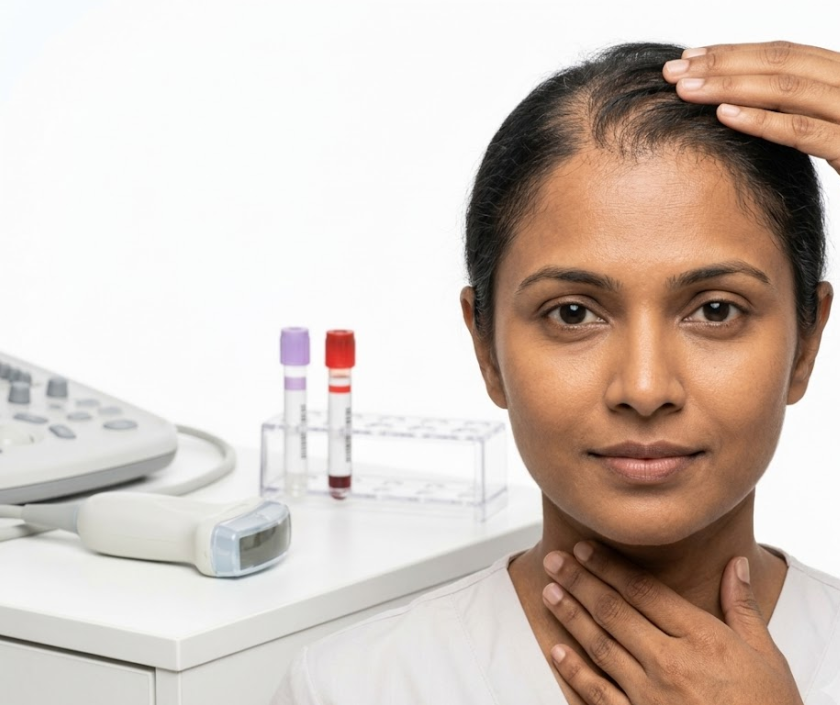
Hair Loss Due to Thyroid Disorders occurs when an underactive or overactive thyroid gland disrupts the normal hair growth cycle. Both hypothyroidism and hyperthyroidism can lead to excessive hair shedding, diffuse hair thinning, and slower hair regrowth. At Elegance Clinic in Adajan, Surat, Dr. Ashutosh Shah provides a comprehensive evaluation to identify thyroid-related hair loss and develop a personalized treatment plan.
Early diagnosis and proper management of thyroid disorders can help reduce hair shedding and support healthier hair growth.
What Is Hair Loss Due to Thyroid Disorders?
The thyroid gland produces hormones that regulate metabolism, energy levels, and many body functions, including the hair growth cycle. When thyroid hormone levels become abnormal, hair follicles may enter the resting phase too early, leading to increased hair fall and reduced hair density.
At Elegance Clinic, every patient receives a detailed hair and scalp assessment along with an evaluation of thyroid health and other contributing factors.
What Causes Thyroid-Related Hair Loss?
Hair loss may occur due to:
- Hypothyroidism (underactive thyroid)
- Hyperthyroidism (overactive thyroid)
- Autoimmune thyroid disorders
- Hormonal imbalance
- Delayed diagnosis of thyroid disease
- Nutritional deficiencies associated with thyroid conditions
- Certain thyroid medications in some cases
Identifying the exact cause helps guide the most appropriate treatment.
Symptoms of Thyroid-Related Hair Loss
Common symptoms include:
- Diffuse hair thinning across the scalp
- Excessive daily hair shedding
- Slow hair regrowth
- Reduced hair volume
- Dry or brittle hair
- Thinning eyebrows, especially the outer edges
- Visible scalp due to reduced hair density
You may also experience fatigue, weight changes, sensitivity to heat or cold, or changes in heart rate, depending on the thyroid condition.
How Is Thyroid-Related Hair Loss Diagnosed?
At Elegance Clinic, diagnosis may include:
- Detailed medical history
- Hair and scalp examination
- Trichoscopy
- Thyroid function tests
- Laboratory evaluation
- Nutritional assessment
- Review of current medications
A comprehensive evaluation helps identify thyroid-related hair loss and other contributing factors.
How Is Hair Loss Due to Thyroid Disorders Treated?
Treatment focuses on managing the thyroid condition while supporting healthy hair regrowth.
Your personalized treatment plan may include:
- Hair loss consultation and diagnosis
- Treatment of the thyroid disorder in coordination with your physician
- Nutritional counseling
- Vitamin and mineral supplementation when required
- Minoxidil Therapy
- PRP Hair Therapy
- Growth Factor Therapy (GFC)
- Personalized scalp care
- Hair Growth Maintenance Therapy
- Regular follow-up appointments
Your doctor will recommend the most suitable treatment based on your diagnosis and overall health.
Benefits of Early Treatment
- Helps reduce excessive hair shedding
- Supports healthy hair regrowth
- Addresses the underlying thyroid condition
- Improves hair density
- Promotes scalp health
- Identifies nutritional deficiencies
- Supports long-term hair maintenance
- Improves overall well-being
Why Choose Elegance Clinic?
Patients choose Elegance Clinic because of:
- Comprehensive hair loss evaluation
- Personalized treatment plans
- Advanced hair and scalp analysis
- Evidence-based therapies
- Experienced care by Dr. Ashutosh Shah
- Modern diagnostic techniques
- Long-term follow-up support
- Patient-centered care
Book Your Consultation in Surat
If you are experiencing excessive hair fall, thinning hair, or have been diagnosed with a thyroid disorder, consult Dr. Ashutosh Shah at Elegance Clinic in Adajan, Surat.
A detailed evaluation can identify the cause of thyroid-related hair loss and help you begin the right treatment to support healthier hair growth.
Frequently Asked Questions
Having doubts and questions? These are few questions our customers normally ask us!
Can thyroid disorders cause hair loss?
Yes. Both hypothyroidism and hyperthyroidism can disrupt the hair growth cycle, leading to excessive hair shedding and diffuse hair thinning.
Will my hair grow back after thyroid treatment?
Many people notice improved hair growth after their thyroid hormone levels are properly managed. Recovery depends on the severity of hair loss and overall health.
How is thyroid-related hair loss diagnosed?
Your doctor may recommend a scalp examination, trichoscopy, thyroid function tests, and other laboratory investigations to identify the underlying cause.
Can nutritional deficiencies worsen thyroid-related hair loss?
Yes. Deficiencies in iron, vitamin D, vitamin B12, and other nutrients may contribute to hair loss and are often evaluated during diagnosis.
When should I consult a hair specialist?
You should seek professional advice if you experience persistent hair thinning, excessive hair shedding, or hair loss along with symptoms such as fatigue, weight changes, or a known thyroid disorder.

