

✓ Medically reviewed by Dr. Ashutosh Shah, Plastic, Reconstructive & Cosmetic Surgeon (M.Ch., DNB)
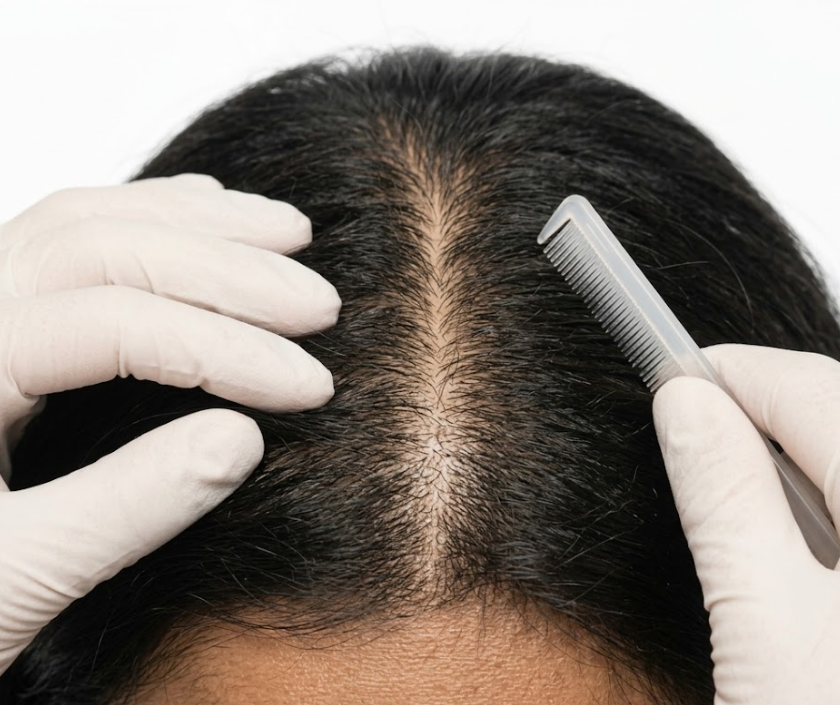
Female Pattern Hair Loss is one of the most common causes of hair thinning in women. Unlike male pattern baldness, it usually causes diffuse thinning over the top of the scalp while preserving the frontal hairline. At Elegance Clinic in Adajan, Surat, Dr. Ashutosh Shah provides personalized treatment plans after identifying the underlying cause and evaluating the extent of hair loss.
Early diagnosis and treatment can help slow hair thinning, preserve existing hair, and support healthier hair growth.
What Is Female Pattern Hair Loss?
Female Pattern Hair Loss, also known as female pattern alopecia or female androgenetic alopecia, is a progressive condition in which hair follicles gradually become smaller, producing thinner and shorter hair over time. Genetics, hormones, and aging commonly contribute to this condition.
At Elegance Clinic, every patient receives a detailed hair and scalp assessment to determine the severity of hair loss and recommend the most appropriate treatment.
What Causes Female Pattern Hair Loss?
Several factors may contribute to female hair thinning, including:
- Genetics
- Hormonal changes
- Menopause
- Polycystic Ovary Syndrome (PCOS)
- Thyroid disorders
- Iron deficiency
- Nutritional deficiencies
- Chronic stress
- Aging
- Certain medications
Identifying the underlying cause helps create a personalized treatment plan.
Symptoms of Female Pattern Hair Loss
Common signs include:
- Gradual thinning on the top of the scalp
- Widening of the hair part
- Reduced hair volume
- Increased hair shedding
- Decreased hair density
- Visible scalp in affected areas
- Thinner ponytail
- Slow hair regrowth
If these symptoms continue for several months, a professional evaluation is recommended.
How Is Female Pattern Hair Loss Treated?
At Elegance Clinic, treatment depends on the cause, severity, and pattern of hair loss.
Your personalized treatment plan may include:
- Hair loss consultation and diagnosis
- Hair and scalp analysis
- Trichoscopy
- Laboratory evaluation when required
- Minoxidil Therapy
- Oral hair growth medications
- PRP Hair Therapy
- Growth Factor Therapy (GFC)
- Mesotherapy
- Low-Level Laser Therapy (LLLT)
- Nutritional guidance
- Hair Growth Maintenance Therapy
Treatment aims to reduce hair shedding, improve hair density, and support long-term hair growth.
Benefits of Early Treatment
- Helps slow hair thinning
- Preserves existing hair
- Supports healthy hair growth
- Improves hair density
- Promotes scalp health
- Identifies underlying medical conditions
- Reduces the progression of hair loss
- Supports long-term hair maintenance
Why Choose Elegance Clinic?
Patients choose Elegance Clinic because of:
- Comprehensive hair loss evaluation
- Personalized treatment plans
- Advanced scalp analysis
- Evidence-based hair restoration
- Experienced care by Dr. Ashutosh Shah
- Modern non-surgical therapies
- Long-term follow-up support
- Patient-centered care
Book Your Consultation in Surat
If you have noticed gradual hair thinning, a widening hair part, or excessive hair shedding, consult Dr. Ashutosh Shah at Elegance Clinic in Adajan, Surat.
A personalized treatment plan can help manage Female Pattern Hair Loss and support healthier, fuller-looking hair.
Frequently Asked Questions
Having doubts and questions? These are few questions our customers normally ask us!
What is Female Pattern Hair Loss?
Female Pattern Hair Loss is a common condition that causes gradual thinning of the hair, especially over the top of the scalp, while the frontal hairline usually remains intact.
What causes Female Pattern Hair Loss?
Common causes include genetics, hormonal changes, menopause, thyroid disorders, nutritional deficiencies, stress, and certain medical conditions.
Can Female Pattern Hair Loss be treated?
Yes. Although treatment cannot always restore all lost hair, early intervention can help slow hair thinning, improve hair density, and support healthier hair growth.
Is a hair transplant suitable for women?
Some women may be suitable candidates for a hair transplant, depending on the pattern of hair loss and donor hair availability. A detailed evaluation is necessary.
When should I consult a hair specialist?
You should seek professional advice if you notice persistent hair thinning, excessive hair shedding, a widening hair part, or reduced hair volume that continues for several months.

