

✓ Medically reviewed by Dr. Ashutosh Shah, Plastic, Reconstructive & Cosmetic Surgeon (M.Ch., DNB)
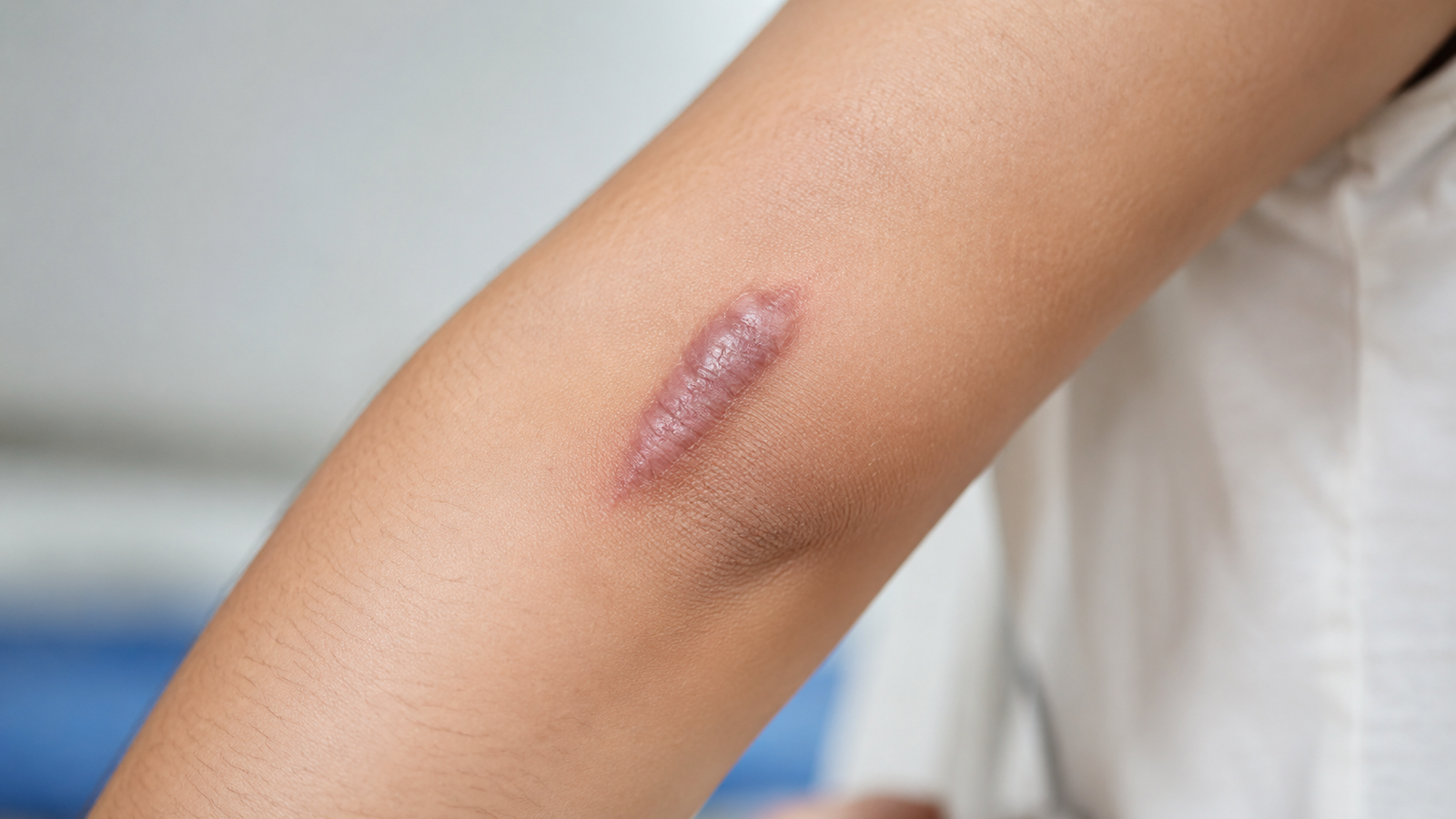
A bump on skin after wound treatment is usually raised scar tissue that forms while the skin repairs itself. In most cases this bump is a harmless keloid or a hypertrophic scar. However, some raised scars keep growing and need proper care. Early review, gentle pressure, and targeted scar treatment help flatten the bump and calm the area.
Key Takeaways
- A bump on skin after wound treatment often means the body produced extra collagen during healing.
- Keloids spread beyond the original wound edge, while hypertrophic scars stay inside it.
- Redness, itching, and firmness are common, and they usually settle with time or treatment.
- Effective options include silicone gel, pressure therapy, steroid injections, laser, and minor surgery.
- See a specialist if the bump grows quickly, hurts a lot, or changes colour.
- Early treatment gives the best chance of a flat, soft, natural looking result.
Table of Contents
- What causes a bump on skin after wound treatment?
- Is the bump a keloid or a normal scar?
- Is a raised bump after a wound dangerous?
- What are the best bump on skin after wound treatment options in Surat?
- How can you prevent a bump after a wound?
- When should you see a specialist in Surat?
- Frequently Asked Questions
What causes a bump on skin after wound treatment?
A bump on skin after wound treatment forms because the body makes too much collagen while healing. Collagen is the protein that rebuilds skin. When the repair process overreacts, the extra tissue piles up and creates a firm, raised bump instead of a smooth, flat scar.
Several everyday factors push the skin toward this overhealing response. Therefore knowing them helps you spot your own risk early.
- Deep cuts, burns, surgery, piercings, and acne can all trigger raised scars.
- Younger skin and darker skin tones tend to scar more, so genetics matter.
- Wounds under tension, for example over the chest or shoulder, heal with more bulk.
- Infection or slow healing keeps the area inflamed, which feeds extra collagen.
Because the cause sits deep in the healing process, creams alone rarely fix a stubborn bump. Instead, a proper assessment by a plastic surgery or clinical dermatology team identifies the exact scar type and the right plan.
Is the bump a keloid or a normal scar?
A bump on skin after wound treatment is usually one of two scar types. A keloid grows past the wound edge and can keep enlarging for months. A hypertrophic scar stays within the wound border and often softens on its own over a year or two.
How to tell the difference
The difference matters because it shapes the treatment. Keloids need firmer, layered care, while many hypertrophic scars respond to simpler steps. A quick guide helps:
- Keloid: raised, shiny, spreads outward, may itch or sting, rarely fades alone.
- Hypertrophic scar: raised but contained, red at first, tends to flatten slowly.
- Normal scar: flat or slightly firm, fades to a pale line over time.
Since these types look similar early on, a trained eye gives the clearest answer. Consequently a short consultation saves you months of guessing.
Is a raised bump after a wound dangerous?
Most raised bumps after a wound are not dangerous, and they carry no cancer risk. Still, they can feel itchy, tight, or tender, and they may bother you cosmetically. A bump that grows fast, bleeds, or oozes needs prompt medical review to rule out infection or other problems.
Comfort and confidence also count as valid reasons to treat a scar. Many people feel self conscious about a visible bump on the face, ears, or chest. Moreover a tight scar over a joint can limit movement, which affects daily life.
At Elegance Clinic in Surat, Dr. Ashutosh Shah assesses each scar for size, type, and symptoms before advising any treatment. This careful step keeps the plan safe and realistic.
What are the best bump on skin after wound treatment options in Surat?
The best bump on skin after wound treatment blends several methods based on the scar type. Common options include silicone sheets, pressure therapy, steroid injections, laser sessions, and minor surgical removal. A specialist often combines two or three of these for a flatter, softer result and a lower chance of return.
Non surgical options
Gentler treatments work well for newer or smaller bumps. Because they avoid cuts, recovery stays easy.
- Silicone gel or sheets soften and flatten the scar when used daily for weeks.
- Steroid injections shrink stubborn keloids and ease itching over a few sessions.
- Pressure garments help scars on the ears, chest, or limbs stay flat.
- Targeted laser treatments fade redness and smooth the surface.
Surgical and combined care
Large or old keloids often need a surgical approach. However surgery alone can trigger a new keloid, so a surgeon pairs it with follow up care. The dedicated keloid and raised scar treatment plan at Elegance Clinic combines removal with injections or other steps to protect the result.
For complex scars that pull the skin or affect function, a reconstructive plastic surgery approach restores both look and movement. Dr. Ashutosh Shah tailors each plan to the scar and the patient.
Comparison of common treatments
| Treatment | Best for | Typical downtime |
|---|---|---|
| Silicone gel or sheets | New or small bumps | None |
| Steroid injection | Itchy or firm keloids | Minimal |
| Laser sessions | Red or uneven scars | Low |
| Surgical removal with follow up | Large or old keloids | Short recovery |
Because prices depend on scar size, method, and number of sessions, a fixed figure is misleading. Therefore ask for a clear estimate during your consultation rather than relying on online numbers.
How can you prevent a bump after a wound?
You can lower the risk of a raised bump by caring for a wound early and gently. Keep the area clean, avoid tension on the skin, and start scar support once the wound closes. People who scar easily should ask for guidance before any planned surgery or piercing.
Simple daily habits protect the healing skin. Since prevention is easier than treatment, these steps are worth the effort:
- Follow wound care advice closely and keep the site moisturised.
- Protect fresh scars from the sun, because ultraviolet light darkens them.
- Start silicone gel early if a doctor recommends it for your skin type.
- Avoid picking, scratching, or stretching the healing area.
If you already know your skin forms keloids, tell your surgeon in advance. As a result, the team can plan a low tension closure and early scar support.
When should you see a specialist in Surat?
See a specialist when a bump on skin after wound treatment keeps growing, hurts, itches badly, or affects your confidence. Early review gives more treatment choices and a better outcome. A scar that changes colour, bleeds, or opens up needs prompt attention to rule out infection.
Elegance Clinic runs advanced centres at Adajan and Vesu in Surat, so patients across Gujarat can reach expert scar care easily. During the visit, the team examines the bump, checks its history, and explains the options in plain language.
What happens during a scar consultation?
A scar consultation is simple and unhurried. First, the specialist looks at the bump and asks how long it has been there. Next, they check its type, size, and symptoms. After that, they suggest a plan and give a clear cost estimate. Because every scar differs, this personal step matters more than any online advice.
Treating a bump on skin after wound treatment early keeps the process simpler and the result more natural. Book a consultation today at Elegance Clinic, Surat, and let the team design a safe, personal plan for your scar.
Frequently Asked Questions
Why does a bump form on skin after a wound heals?
A bump forms when the body makes extra collagen while repairing the skin. This overhealing creates raised scar tissue instead of a flat line. It is a common and usually harmless response to injury.
Will a raised scar go away on its own?
Some raised scars, especially hypertrophic ones, flatten slowly over one to two years. Keloids rarely fade alone and often need treatment. Early care improves the chance of a smooth, soft result.
Is a bump after a wound cancerous?
Raised scars like keloids and hypertrophic scars are not cancerous. They are simply excess healing tissue. Still, a lump that grows fast, bleeds, or changes should be checked by a doctor to be safe.
Can creams alone flatten a raised scar?
Silicone gel can soften and flatten newer scars with daily use. Deep or old keloids usually need stronger options like injections, laser, or surgery. A specialist advises the right mix for your scar.
Does removing a keloid make it come back?
Surgery alone can trigger a new keloid in some people. That is why surgeons pair removal with follow up steps such as injections or pressure. Combined care lowers the chance of the scar returning.
How soon should scar treatment start?
Scar support works best soon after a wound closes. Starting early, often within a few weeks, helps guide healing before a bump becomes thick. Ask a specialist about the right timing for your skin.
Are raised scars more common on certain skin types?
Yes, darker skin tones and younger skin tend to form keloids more often. Family history also raises the risk. Knowing this helps you take preventive steps before surgery or piercings.