

|
Getting your Trinity Audio player ready...
|
✓ Medically reviewed by Dr. Ashutosh Shah, Plastic, Reconstructive & Cosmetic Surgeon (M.Ch., DNB)
Jaw Clicking and Facial Pain: When to See a Dentist
Have you noticed a clicking sound when you open your mouth, chew food, or yawn? Sometimes, the sound appears without discomfort. However, when jaw clicking and pain occur together, they may indicate a problem with your jaw joint or surrounding muscles.
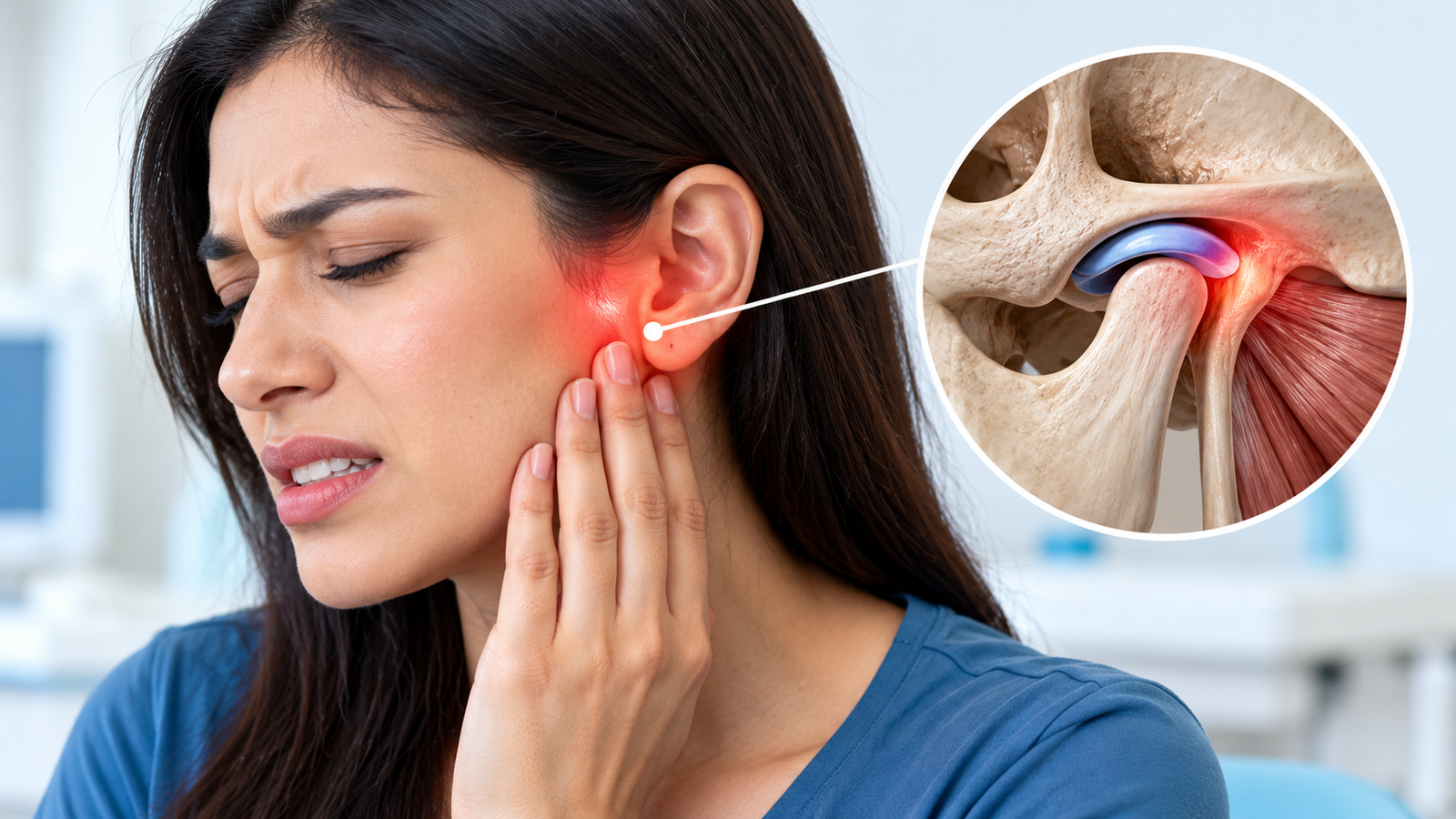
The temporomandibular joint (TMJ) connects your lower jaw to your skull. It helps you speak, chew, and move your mouth comfortably.
Although occasional painless clicking is common, persistent facial pain, difficulty chewing, or limited jaw movement deserves attention.
In this guide, you will learn why jaw clicking happens, which symptoms matter, and when to visit a dentist.
What Causes Jaw Clicking and Pain?
Several conditions can affect the jaw joint and nearby muscles. Therefore, identifying the cause is the first step toward effective treatment.
1. Temporomandibular Disorders (TMD)
Temporomandibular disorders affect the jaw joint, chewing muscles, or both.
For example, the cushioning disc inside the joint may move out of its usual position. As a result, you may hear clicking when opening or closing your mouth.
However, not every clicking sound indicates a serious joint problem.
2. Teeth Grinding and Clenching
Some people grind or clench their teeth during sleep. Others do so while concentrating or feeling stressed.
Consequently, the jaw muscles may become tired or painful.
You may also notice morning jaw stiffness, tooth sensitivity, or headaches.
3. Jaw Muscle Strain
Chewing gum frequently, biting hard foods, or opening your mouth very wide can strain jaw muscles.
Additionally, prolonged clenching can increase discomfort.
Therefore, changing these habits may reduce symptoms.
4. Arthritis Affecting the Jaw Joint
Arthritis can affect the TMJ, just like other joints.
For example, osteoarthritis may cause joint stiffness and discomfort.
However, a dentist must assess symptoms before deciding whether arthritis is involved.
5. Jaw Injury
A fall, accident, or direct impact can affect the jaw joint.
As a result, you may experience swelling, pain, or difficulty opening your mouth.
If an injury causes significant pain or changes your bite, seek prompt medical or dental assessment.
Common Symptoms of TMJ Pain
Jaw joint problems can cause several symptoms. However, their severity varies between patients.
Jaw and Facial Discomfort
You may experience pain near the ears, cheeks, or temples.
Sometimes, discomfort becomes worse while chewing or speaking.
Clicking or Popping Sounds
A clicking sound may occur when the joint disc moves during jaw opening.
However, painless clicking without movement problems often needs no treatment.
Difficulty Opening the Mouth
Some patients notice stiffness or reduced jaw movement.
In more severe cases, the jaw may temporarily lock.
Headaches and Ear-Area Pain
Jaw muscle tension may contribute to headaches or pain around the ears.
Nevertheless, these symptoms can have other causes. Therefore, proper evaluation matters.
When Should You See a Dentist for Jaw Clicking and Pain?
Not every jaw sound requires treatment. However, certain symptoms suggest that you should arrange a dental examination.
1. Pain Continues or Gets Worse
If jaw pain persists, returns frequently, or interferes with daily activities, consult a dentist.
Early assessment may help identify habits or conditions that contribute to discomfort.
2. Your Jaw Locks
Jaw locking can make opening or closing your mouth difficult.
Therefore, seek prompt dental or medical evaluation, especially if the jaw remains stuck.
3. Chewing Becomes Difficult
Pain while eating may indicate muscle strain or joint dysfunction.
Additionally, avoiding food because of jaw discomfort can affect your daily routine.
4. Your Bite Suddenly Changes
If your upper and lower teeth no longer meet normally, a dentist should investigate.
A sudden bite change after an injury requires particularly prompt assessment.
5. Facial Swelling or Fever Appears
Facial pain with swelling or fever may indicate an infection rather than a simple TMJ problem.
Therefore, seek urgent dental or medical care.
If swelling affects breathing or swallowing, seek emergency medical attention immediately.
How Does a Dentist Diagnose Jaw Joint Problems?
A dentist usually begins with your medical history and a clinical examination.
Reviewing Your Symptoms
First, the dentist asks when the clicking began.
Next, they may ask about pain, jaw locking, headaches, injuries, and teeth grinding.
Examining Jaw Movement
The dentist checks how widely your mouth opens.
Additionally, they may assess jaw movement, muscle tenderness, and joint sounds.
Checking Your Teeth and Bite
Tooth wear may suggest grinding or clenching.
However, tooth wear alone cannot confirm the cause of TMJ pain.
Are X-Rays or Scans Necessary?
Not always.
Most patients do not need advanced imaging immediately.
However, the dentist may recommend imaging when symptoms or examination findings suggest a joint injury, structural problem, or another condition.
How Is Jaw Clicking and Pain Treated?
Treatment depends on the cause and severity of your symptoms.
Fortunately, many temporomandibular disorders improve with conservative care.
Self-Care and Jaw Rest
For mild symptoms, a dentist may recommend temporary changes to reduce strain.
For example, softer foods can make chewing more comfortable.
Also, avoid chewing gum and opening your mouth excessively wide while symptoms are active.
Warm or Cold Compresses
A warm compress may help relax tense muscles.
Alternatively, a cold compress may reduce discomfort after a minor strain.
Use a comfortable temperature and protect your skin.
Jaw Exercises and Physical Therapy
Selected patients may benefit from gentle exercises or physical therapy.
However, exercises should match the specific problem.
Therefore, avoid forcing a painful or locked jaw to move.
Night Guards or Oral Appliances
A dentist may recommend a suitable oral appliance for selected patients.
For example, a stabilisation splint may help some people with jaw muscle pain or clenching.
However, appliances do not work for everyone and should not permanently change your bite.
Medication
A healthcare professional may recommend short-term pain relief when appropriate.
However, medicine choice depends on your medical history and other medications.
Is Surgery Necessary?
Most patients with TMJ pain do not need surgery.
Instead, dentists usually begin with reversible, conservative treatment.
Specialist procedures are reserved for selected cases after careful assessment.
What Can You Do at Home for Mild Jaw Pain?
Simple habits may help reduce discomfort while you arrange professional advice.
Reduce Jaw Strain
Choose softer foods temporarily.
Also, avoid chewing gum, biting fingernails, and holding objects between your teeth.
Notice Clenching Habits
During the day, check whether you are pressing your teeth together.
When resting, your teeth should generally remain slightly apart.
Improve Sleep and Stress Management
Stress can increase jaw muscle tension in some people.
Therefore, regular sleep habits and relaxation techniques may help.
However, stress management does not replace treatment when a joint disorder or dental problem is present.
Can Jaw Clicking Go Away on Its Own?
Yes. Occasional painless jaw clicking may remain harmless or improve without treatment.
However, persistent pain, locking, or reduced movement needs professional assessment.
What If the Clicking Continues Without Pain?
If you can chew normally and move your jaw comfortably, treatment may not be necessary.
Nevertheless, mention the clicking during your routine dental examination.
What If Pain Keeps Returning?
Repeated symptoms deserve evaluation.
For example, a dentist can assess muscle tenderness, clenching habits, and joint movement.
As a result, you can receive guidance that fits the actual cause.
When Is Jaw Pain an Emergency?
Most jaw clicking is not an emergency. However, certain symptoms require immediate attention.
Seek Urgent Care for These Symptoms
A jaw that remains locked, a suspected fracture, or significant swelling needs prompt assessment.
Additionally, fever with facial swelling may indicate an infection.
If you experience chest pressure, breathlessness, sweating, or pain spreading to the jaw, seek emergency medical care. Jaw pain can occasionally occur with a heart attack, especially when other warning symptoms are present.
Dental Consultation for Jaw Clicking and Facial Pain
If jaw discomfort affects your eating, speaking, or sleep, a dental examination can help identify the next step.
At Elegance Clinic, you can explore the clinic’s dental care information and contact options.
During your consultation, describe when the clicking occurs, whether you experience pain, and whether your jaw ever locks.
Most importantly, ask about conservative treatment options before considering irreversible procedures.
Frequently Asked Questions
1. Is jaw clicking normal?
Occasional painless jaw clicking is common and may not require treatment. However, clicking with pain, locking, or limited movement should be assessed by a dentist.
2. Can TMJ pain go away without treatment?
Some mild TMJ symptoms improve with time and conservative self-care. However, persistent or worsening pain needs professional evaluation.
3. Does teeth grinding cause jaw clicking?
Grinding and clenching can strain jaw muscles and contribute to discomfort. However, clicking can also occur because of changes inside the jaw joint.
4. Can stress cause jaw pain?
Stress may increase jaw clenching and muscle tension. As a result, some people experience more discomfort. However, stress is not the only possible cause.
5. Is jaw clicking a sign of arthritis?
Not necessarily. Clicking can occur without arthritis. A dentist may investigate arthritis if you also have persistent stiffness, pain, or other concerning symptoms.
6. Should I stop chewing gum if my jaw clicks?
If chewing gum increases pain or fatigue, avoiding it may help. However, painless clicking alone does not always require major lifestyle changes.
7. Can TMJ problems cause headaches?
Yes. Jaw muscle disorders may contribute to headaches, particularly around the temples. However, headaches have many possible causes, so proper assessment is important.
8. Can a dentist fix jaw clicking?
A dentist can assess the cause and recommend appropriate care. Treatment may reduce pain and improve function, but eliminating every painless clicking sound is not always necessary or possible.
9. How long does TMJ pain last?
Duration varies. Some episodes improve within days or weeks, while others persist longer. Therefore, recurring or worsening symptoms should be assessed.
10. When should I see a dentist for facial pain?
Arrange an appointment if pain persists, affects chewing, or occurs with jaw locking. Seek urgent care for significant swelling, fever, trauma, or sudden bite changes.
Conclusion
Jaw clicking and pain can result from muscle strain, clenching, joint disc changes, or other conditions.
Although occasional painless clicking is often harmless, persistent discomfort, jaw locking, or difficulty chewing deserves attention.
Fortunately, many jaw joint problems respond to conservative care.
Therefore, consult a dentist if symptoms continue or interfere with daily activities. Early assessment can help you understand the cause and choose appropriate treatment.
