

|
Getting your Trinity Audio player ready...
|
✓ Medically reviewed by Dr. Ashutosh Shah, Plastic, Reconstructive & Cosmetic Surgeon (M.Ch., DNB)
Missing teeth replacement options include dental implants, bridges and dentures. The right choice depends on how many teeth are missing, the condition of neighbouring teeth, jawbone health, budget and personal preferences. A dental examination helps determine which option can restore chewing function, support oral health and suit your individual needs.
What Are the Main Missing Teeth Replacement Options?
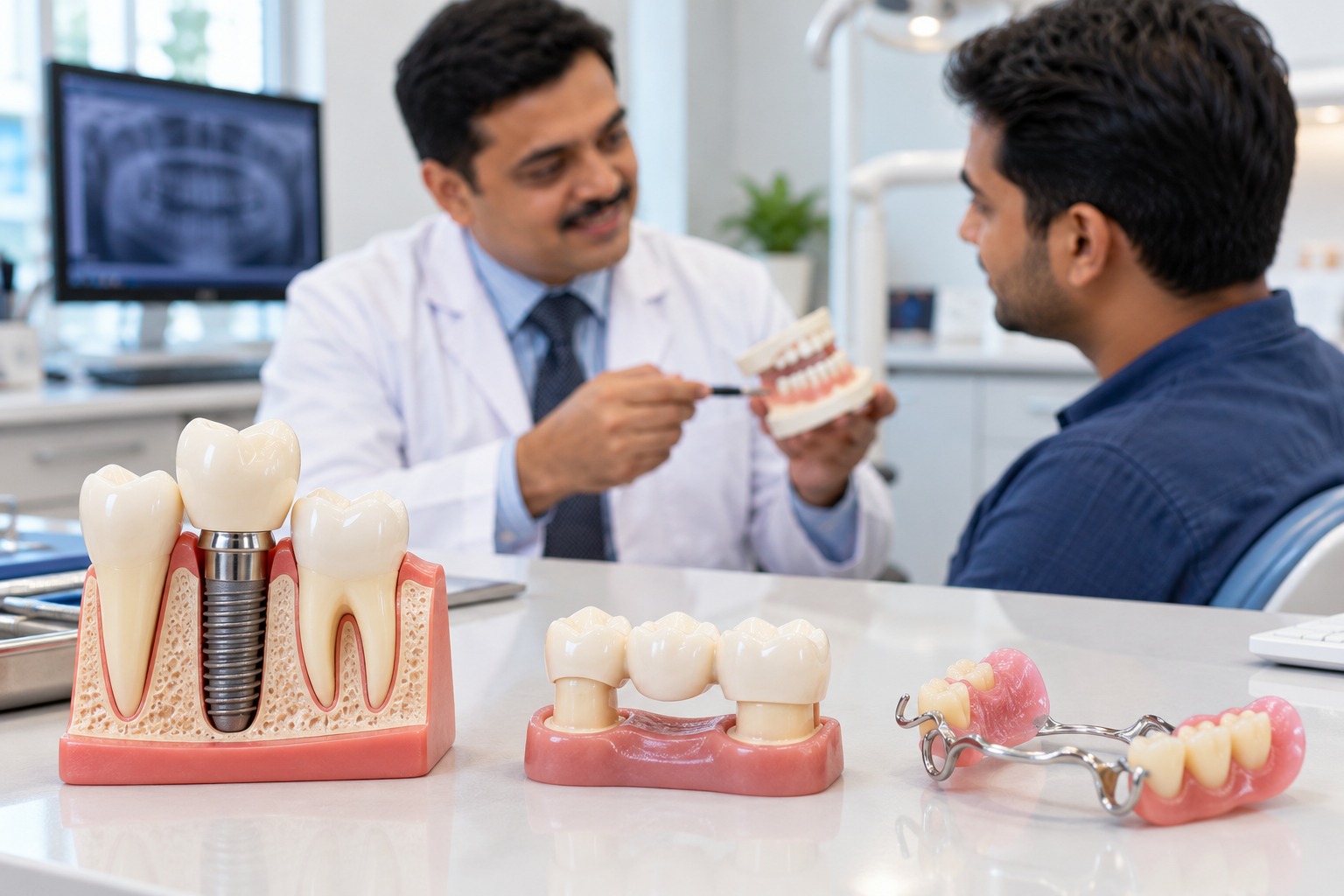
Three common ways to replace missing teeth are dental implants, dental bridges and dentures. Each option works differently and has its own advantages and limitations.
- Dental implants: An implant is placed in the jawbone to support a replacement tooth or a larger dental restoration.
- Dental bridges: A bridge fills a gap using artificial teeth supported by neighbouring teeth or, in some cases, implants.
- Dentures: Removable partial or complete dentures replace several missing teeth or an entire arch.
Your dentist can explain which approach is suitable after checking your gums, remaining teeth, bite and available jawbone.
Dental Bridge vs Implant: What Is the Difference?
Dental implants and bridges can both replace a missing tooth, but they differ in how they are supported.
An implant uses a fixture placed in the jawbone to support a crown. A conventional bridge usually relies on neighbouring teeth, which may need to be reshaped to support the restoration.
Implants may help preserve the jawbone around the missing tooth, but they require surgery and adequate healing. Bridges may be appropriate when neighbouring teeth already need crowns or when implant surgery is unsuitable.
There is no single best option for everyone. Your dentist should consider your oral health, the location of the gap, treatment time, cost and long-term maintenance. You can explore the clinic’s information about dental bridges and other tooth replacement treatments.
Are Dental Implants a Good Option for Missing Teeth?
Dental implants can replace one tooth, several teeth or support a full-arch restoration. They may be suitable for patients with healthy gums, adequate jawbone or the possibility of bone grafting, and good oral hygiene.
Potential advantages include:
- A fixed replacement that does not need to be removed for routine cleaning.
- No need to rely on neighbouring natural teeth for support in a single-tooth implant.
- Support for chewing and appearance.
- Help maintaining bone in the area where the implant is placed.
However, implant treatment involves surgery, healing time, ongoing maintenance and possible complications. Smoking, uncontrolled diabetes, active gum disease and certain medical factors may affect suitability or healing.
For patients missing most or all teeth in an arch, All-on-4 dental implants may be one option to discuss with a dental professional.
When Are Dental Bridges Recommended?
A dental bridge may be considered when one or more teeth are missing and the surrounding teeth can provide adequate support. A conventional bridge is fixed in place and does not need to be removed by the patient for daily cleaning.
Possible benefits include a fixed replacement and, in some cases, a shorter treatment process than implant placement. However, a conventional bridge may require reshaping the supporting teeth, and the area beneath the artificial tooth needs careful cleaning.
The suitability of a bridge depends on the strength of the supporting teeth, gum health, bite and size of the gap. Your dentist can compare the expected maintenance and longevity of a bridge with other replacement options.
Are Dentures Suitable for Replacing Missing Teeth?
Dentures are removable appliances used to replace some or all missing teeth. Partial dentures replace selected teeth, while complete dentures replace an entire upper or lower arch.
Dentures may be suitable for people who need to replace multiple teeth or prefer a non-surgical option. They can also be considered when implants are not suitable or are not preferred.
Some dentures may feel loose, require adjustments or need replacement as the mouth changes over time. Daily cleaning and regular dental reviews are important to maintain comfort and oral health.
Read more about the clinic’s removable and fixed denture options to understand the types of prosthetic replacements available.
Which Missing Teeth Replacement Option Is Best for You?
The best option depends on your individual dental condition rather than appearance alone.
| Factor | Dental implant | Dental bridge | Denture |
|---|---|---|---|
| Support | Jawbone implant | Supporting teeth or implants | Gums and underlying tissues, or implants in some designs |
| Removable by patient | Usually no | No | Yes, for conventional removable dentures |
| Surgery | Usually required | Not usually for a conventional bridge | Not usually for a conventional denture |
| Neighbouring teeth | A single-tooth implant does not normally rely on them for support | Conventional bridges often require preparation of supporting teeth | Usually does not require reshaping neighbouring teeth in the same way |
| Cleaning | Brush and clean around the restoration as instructed | Clean around and beneath the bridge | Remove and clean as instructed |
| Suitability | Depends on bone, gum health and medical factors | Depends on the supporting teeth and gap | Depends on oral anatomy, comfort and number of missing teeth |
This comparison is a general guide. The exact design, treatment time, cost and expected lifespan vary with the case and the type of restoration.
What Should You Ask Before Choosing a Tooth Replacement?
Before deciding, ask your dentist:
- Which treatment options are suitable for my teeth and gums?
- Will I need imaging or bone assessment?
- How long will treatment and healing take?
- What are the expected costs, maintenance needs and potential complications?
- How will the restoration affect chewing, speech and appearance?
- What happens if the restoration becomes damaged or needs replacement?
A personalised treatment plan can help you understand the benefits, limitations and long-term responsibilities of each option.
Frequently Asked Questions
1. What is the most natural-looking option for replacing missing teeth?
Dental implants, bridges and dentures can all be designed to look natural. The result depends on the restoration, gum condition, tooth position and treatment planning. Your dentist can recommend an option that balances appearance with function and oral health.
2. Is a dental bridge better than an implant?
Neither is always better. An implant may avoid reshaping neighbouring teeth, while a bridge may be appropriate when adjacent teeth already need crowns or implant surgery is unsuitable. The best choice depends on your oral health and individual circumstances.
3. Can dentures replace just one missing tooth?
Yes. A removable partial denture can replace one or more missing teeth. Whether it is the most suitable option depends on the location of the gap, comfort, remaining teeth and your treatment preferences.
4. How long do dental implants, bridges and dentures last?
Their lifespan varies with the materials used, oral hygiene, bite forces, maintenance and individual health. All require ongoing care, and any restoration may eventually need repair, adjustment or replacement.
5. Do I need a dental examination before choosing a replacement?
Yes. A dental examination helps assess your gums, remaining teeth, bite and jawbone. Imaging may also be needed, particularly when considering implants. This assessment helps the dentist recommend a suitable treatment plan.
Conclusion
Dental implants, bridges and dentures can all replace missing teeth, but they differ in support, maintenance, treatment time and suitability. A dental examination is the best starting point for comparing these options and choosing a restoration that meets your functional and aesthetic needs.
