

|
Getting your Trinity Audio player ready...
|
✓ Medically reviewed by Dr. Ashutosh Shah, Plastic, Reconstructive & Cosmetic Surgeon (M.Ch., DNB)
Written by: Dr. Ashutosh Shah, M.Ch., DNB (Plastic Surgery) – Director, Elegance Clinic, with 22+ years of experience in Plastic, Cosmetic & Reconstructive Surgery.
Parents naturally want the very best for their child, especially when it comes to their health and development. If your child has been diagnosed with hypospadias, you may have many questions about the condition, whether surgery is necessary, and the best time for treatment. While hearing the diagnosis can feel overwhelming, it’s important to know that hypospadias is a common congenital condition and can often be successfully corrected with surgery.
At Elegance Clinic, Dr. Ashutosh Shah provides advanced hypospadias repair surgery using modern reconstructive techniques that focus on restoring normal function and appearance while minimizing discomfort and recovery time. Every child receives a personalized treatment plan, and parents are guided through each step of the process with compassion and care.
To learn more about Dr. Ashutosh Shah and his expertise in plastic and reconstructive surgery, visit our About Us page.
Key Takeaways
- Hypospadias is a common birth condition affecting the position of the urethral opening.
- Surgery is usually recommended between 6 and 18 months of age for the best outcomes.
- Early treatment supports normal urinary function and healthy penile development.
- Most children require only one surgical procedure.
- Hypospadias repair has a high success rate when performed by an experienced reconstructive surgeon.
- Choosing a qualified surgeon helps ensure safe treatment and excellent long-term results.
What Is Hypospadias?
Hypospadias is a congenital condition in which the opening of the urethra is located on the underside of the penis instead of at the tip. It develops before birth and affects approximately 1 in every 200–300 male births, making it one of the most common congenital conditions involving the male genitalia.
Depending on the severity, hypospadias may also be associated with:
- A downward curve of the penis (chordee)
- An incomplete foreskin, often giving a hooded appearance
- Difficulty directing the urine stream
- Cosmetic concerns that may affect confidence later in life
Fortunately, modern surgical techniques can successfully correct most cases, allowing children to achieve normal urinary function and healthy development.
If you’re exploring pediatric reconstructive procedures or other plastic surgery services, visit our Services page:
https://www.eleganceclinic.in/services/
When Does a Child Need Hypospadias Repair Surgery?
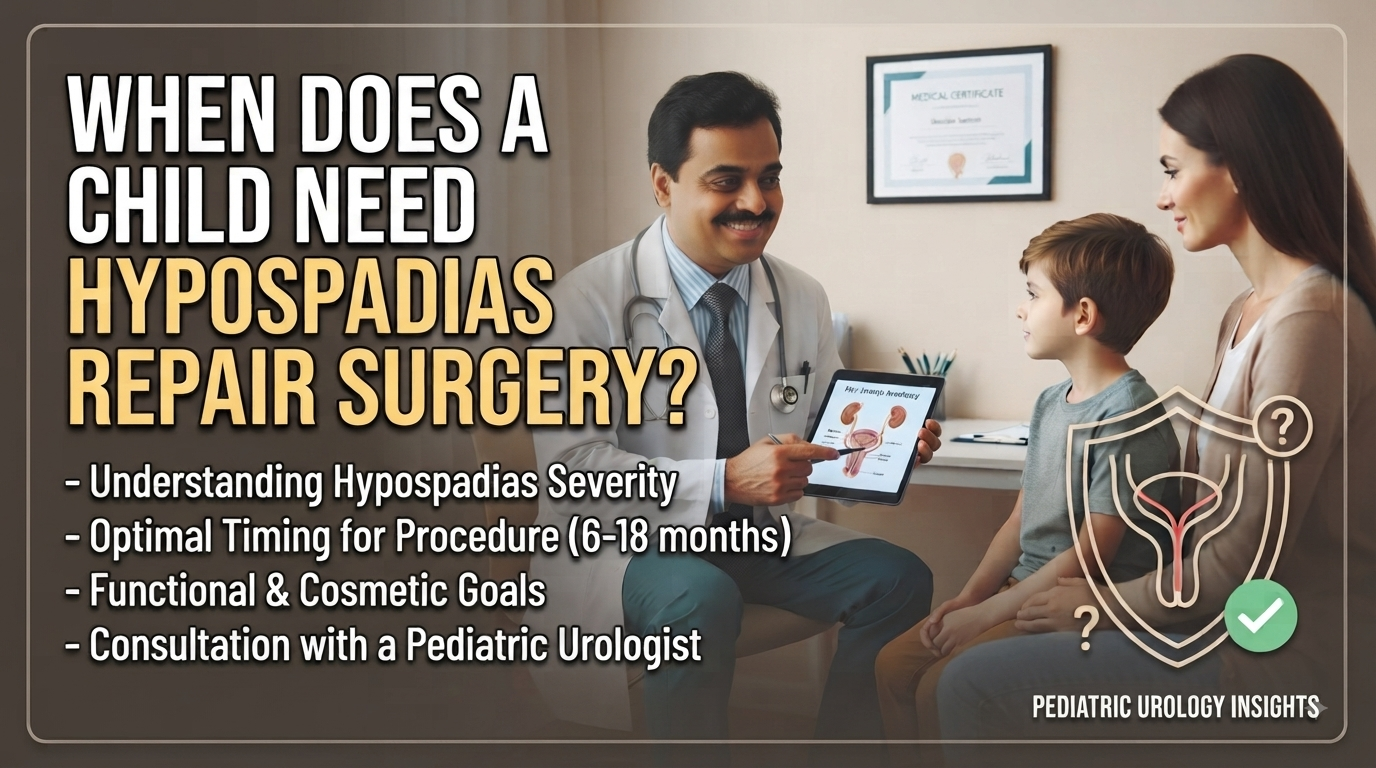
Quick Answer: Most children with hypospadias benefit from surgery between 6 and 18 months of age, although the exact timing depends on the severity of the condition, the child’s overall health, and the surgeon’s recommendation.
Surgery is usually advised when the condition affects:
- Normal urination
- Penile curvature (chordee)
- Future sexual function
- Cosmetic appearance
- Psychological well-being as the child grows
Early surgical correction allows the penis to develop normally and helps reduce emotional stress that older children may experience during treatment.
Not every case is identical. Mild forms may require a simpler procedure, while more complex cases may need specialized reconstructive techniques. During your consultation, Dr. Ashutosh Shah carefully evaluates your child’s condition and recommends the most appropriate treatment plan.
Why Is Early Surgery Recommended?
Medical experts generally recommend performing hypospadias repair during infancy because children recover more quickly and are less likely to remember the procedure. Operating before toilet training also allows normal urinary habits to develop naturally.
Benefits of early surgery include:
- Faster healing
- Better tissue flexibility
- Lower psychological impact
- Reduced risk of urinary complications
- Improved long-term cosmetic and functional outcomes
Modern anesthesia techniques are considered safe for healthy infants when administered by experienced pediatric anesthesia teams.
Signs Your Child May Need Hypospadias Repair
While every child is different, surgery is commonly recommended if your child has:
- The urethral opening below the tip of the penis
- Difficulty urinating in a straight stream
- Significant penile curvature
- An incomplete or hooded foreskin
- Moderate to severe hypospadias affecting function
Some children are diagnosed immediately after birth, while others may be referred to a specialist during infancy.
Why Is Hypospadias Repair Surgery Important?
Quick Answer: Hypospadias repair surgery is performed to improve urinary function, straighten the penis if curvature is present, and help ensure normal growth and development. Early treatment can also reduce the risk of emotional or psychological concerns as a child grows older.
Although some mild cases may not cause significant problems during infancy, untreated hypospadias can lead to challenges with urination, penile curvature, and future sexual function. Surgical correction helps restore normal anatomy and supports healthy physical development.
At Elegance Clinic, Dr. Ashutosh Shah carefully evaluates each child to determine whether surgery is necessary and recommends the most appropriate treatment based on the severity of the condition and the child’s age.
Benefits of Hypospadias Repair Surgery
When performed by an experienced reconstructive surgeon, hypospadias repair offers several long-term benefits.
Improved Urinary Function
One of the primary goals of surgery is to reposition the urethral opening at the tip of the penis. This helps children urinate with a straight stream and reduces difficulties during toilet training.
Correction of Penile Curvature
Some children with hypospadias also have chordee, a downward curvature of the penis. During surgery, this curvature is corrected to promote normal growth and function.
Better Cosmetic Appearance
Hypospadias repair also improves the appearance of the penis by reconstructing the urethra and correcting the foreskin. This can enhance confidence later in life.
Healthy Physical Development
Early correction allows the penis to grow normally and helps minimize potential complications during adolescence and adulthood.
If you would like to learn more about pediatric reconstructive procedures and other advanced treatments, visit our Services page:
https://www.eleganceclinic.in/services/
What Happens During Hypospadias Repair Surgery?
Hypospadias repair is usually performed under general anesthesia and takes approximately 1 to 3 hours, depending on the complexity of the condition.
The procedure typically involves:
- Straightening the penis if curvature is present.
- Creating a new urethral channel.
- Moving the urethral opening to the tip of the penis.
- Reconstructing the surrounding tissues for a natural appearance.
Most children return home on the same day, although more complex cases may occasionally require an overnight hospital stay.
Surgery Overview
Hypospadias repair surgery is typically performed under general anesthesia and usually takes 1 to 3 hours, depending on the severity of the condition and the complexity of the repair. In most cases, children are discharged on the same day, allowing them to recover comfortably at home under parental supervision. After surgery, a urinary catheter or stent may be placed to help protect the repaired urethra and ensure proper urine drainage. This catheter is generally kept in place for 5 to 10 days, based on the surgeon’s recommendation. While most children begin feeling better within a few days, complete healing usually takes around 4 to 6 weeks. During this recovery period, regular follow-up visits with Dr. Ashutosh Shah at Elegance Clinic are important to monitor healing, address any concerns, and ensure the best possible functional and cosmetic outcome.
Recovery After Hypospadias Repair
Recovery is generally smooth when parents carefully follow the surgeon’s instructions.
First Week
During the first few days, your child may experience:
- Mild swelling
- Minor bruising
- Slight discomfort
- Temporary dressing around the surgical site
Pain is usually well controlled with prescribed medications.
Two to Four Weeks
Most swelling gradually improves, and children can resume many normal activities. Parents should continue following wound care instructions and attend scheduled follow-up appointments.
Four to Six Weeks
By this stage, healing is usually well advanced. Your surgeon will confirm when your child can safely resume all normal activities.
Possible Risks and Complications
Like all surgical procedures, hypospadias repair carries some risks. Fortunately, serious complications are uncommon when performed by an experienced reconstructive surgeon.
Possible risks include:
- Bleeding
- Infection
- Swelling
- Urethral fistula
- Narrowing of the urethra (stricture)
- Delayed healing
- Need for additional surgery in complex cases
Choosing an experienced surgeon such as Dr. Ashutosh Shah significantly helps reduce these risks and improves long-term outcomes.
Before and After Surgery Care
Following the recommended care plan helps ensure a smooth recovery.
Before Surgery
- Attend all scheduled consultations.
- Follow fasting instructions before anesthesia.
- Inform your surgeon about any medications or allergies.
- Keep your child healthy by avoiding exposure to infections before surgery.
After Surgery
- Keep the surgical area clean and dry.
- Administer medications exactly as prescribed.
- Prevent rough play or activities that may affect healing.
- Attend all follow-up visits.
- Contact your surgeon immediately if you notice excessive swelling, fever, or unusual drainage.
Frequently Asked Questions
What is the best age for hypospadias repair?
Most specialists recommend surgery between 6 and 18 months of age, although treatment can also be successful in older children when necessary.
Is hypospadias surgery safe?
Yes. Hypospadias repair is considered a safe and highly successful procedure when performed by an experienced reconstructive surgeon in an appropriate surgical setting.
How long does recovery take?
Most children recover well within 4 to 6 weeks, although healing varies depending on the complexity of the repair.
Will my child need more than one surgery?
Many children require only one procedure. However, more severe forms of hypospadias may occasionally require additional corrective surgery.
Will my child have normal urinary function after surgery?
In most cases, successful hypospadias repair allows children to urinate normally and supports healthy long-term development.
Why Choose Elegance Clinic?
At Elegance Clinic, we understand that parents want expert care and compassionate support when their child requires surgery.
Dr. Ashutosh Shah, a leading Plastic, Cosmetic & Reconstructive Surgeon in Surat with over 22 years of experience, specializes in advanced reconstructive procedures, including hypospadias repair. Using modern surgical techniques and individualized treatment planning, he focuses on achieving excellent functional and cosmetic outcomes while ensuring the highest standards of patient safety.
Learn more about Dr. Ashutosh Shah on our About Us page.
Final Thoughts
Hypospadias is a treatable congenital condition, and early surgical correction can make a significant difference in a child’s urinary function, physical development, and overall quality of life. Timely evaluation by an experienced surgeon ensures that parents receive the guidance they need to make informed decisions about their child’s care.
If your child has been diagnosed with hypospadias or you would like a specialist opinion, schedule a consultation with Dr. Ashutosh Shah at Elegance Clinic. Our team is committed to providing expert pediatric reconstructive care with compassion, precision, and personalized attention.
To book an appointment, visit our Contact Us page.

