

|
Getting your Trinity Audio player ready...
|
✓ Medically reviewed by Dr. Ashutosh Shah, Plastic, Reconstructive & Cosmetic Surgeon (M.Ch., DNB)
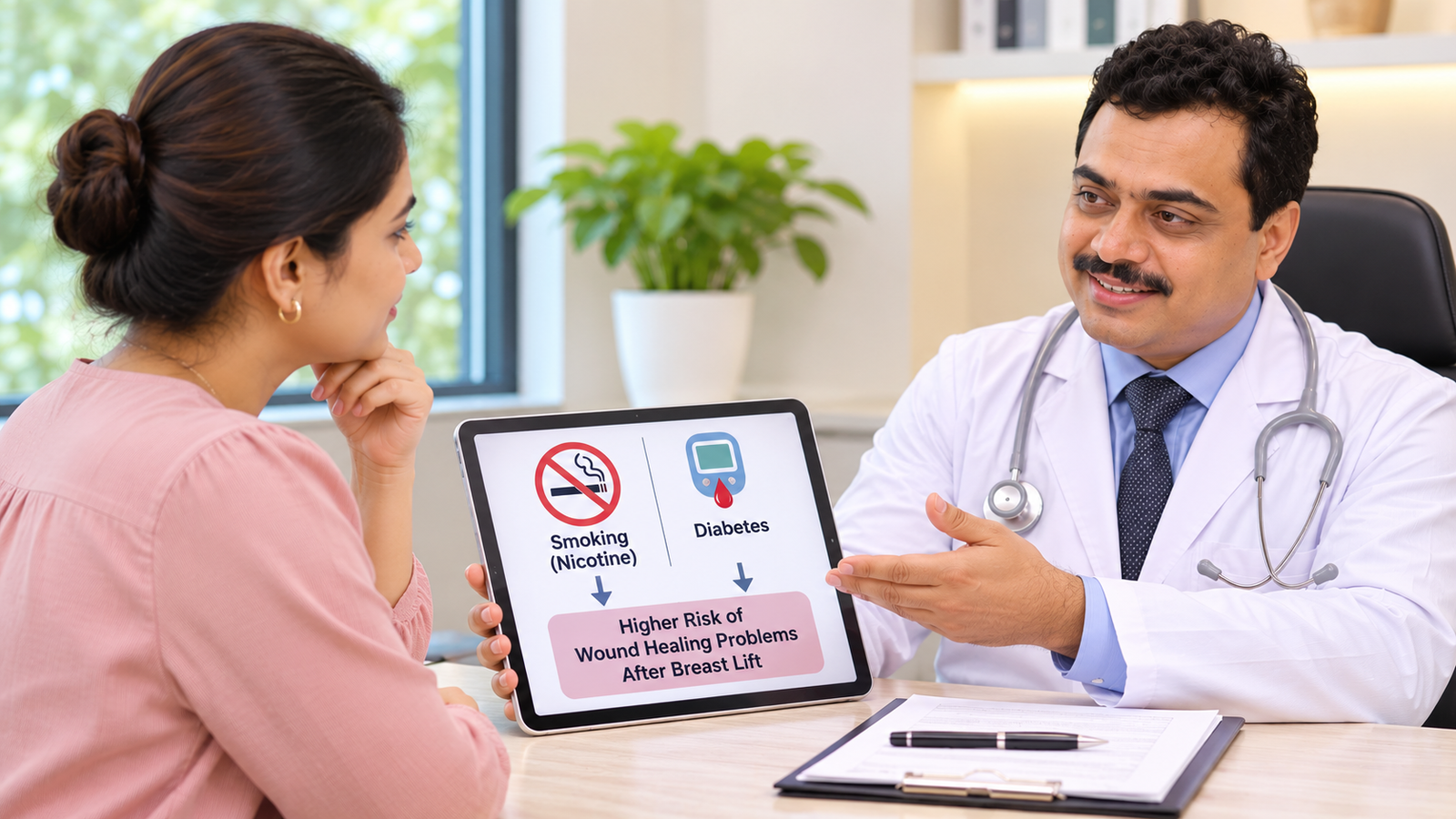
Smoking, nicotine exposure and poorly controlled diabetes can significantly affect breast lift healing. These factors can reduce tissue oxygen delivery, increase infection risk and delay wound repair after mastopexy. Consequently, patients may face complications such as wound separation, prolonged swelling, poor scarring and, in severe cases, skin or nipple tissue loss.
However, careful preparation, smoking cessation, appropriate diabetes management and regular follow-up can help reduce these risks.
At Elegance Clinic in Surat, Dr. Ashutosh Shah (M.S., M.Ch., D.N.B.) evaluates individual health factors before breast lift surgery to support safer surgical planning.
Key Takeaways
- Smoking increases the risk of wound-healing complications after breast lift surgery.
- Nicotine can constrict blood vessels and reduce blood supply to healing tissues.
- Poorly controlled diabetes increases the risk of infection and delayed healing.
- Combining smoking and diabetes may increase surgical risks further.
- Patients should disclose all nicotine products and diabetes medications before surgery.
- Increasing redness, wound separation, unusual discharge or tissue colour changes require medical attention.
- Stopping smoking and optimising blood glucose before surgery can improve surgical safety.
How Does Smoking Affect Breast Lift Healing?
Smoking and breast lift healing are closely connected because breast surgery depends on adequate blood circulation.
During mastopexy, the surgeon reshapes breast tissue, removes excess skin and repositions the nipple when necessary. The operated tissues must receive sufficient oxygen and nutrients to heal.
However, cigarette smoke contains substances that interfere with this process.
Nicotine causes blood vessels to narrow, while carbon monoxide reduces the blood’s ability to transport oxygen.
As a result, healing tissues may receive less oxygen than they need.
Smoking is associated with several postoperative complications:
- Delayed incision healing
- Wound separation
- Increased infection risk
- Poor scar quality
- Skin or fat necrosis
- Nipple-areola circulation problems
Not every smoker experiences complications. Nevertheless, smoking increases the likelihood of adverse outcomes.
Therefore, surgeons assess smoking history before recommending elective breast lift surgery.
Why Is Nicotine Dangerous Before and After Mastopexy?
Nicotine is not limited to conventional cigarettes.
Patients may receive nicotine through vaping products, chewing tobacco, nicotine pouches, patches or gum.
Because nicotine can constrict blood vessels, surgeons need to know about all sources of exposure.
Does Vaping Affect Breast Lift Recovery?
Vaping products containing nicotine may interfere with circulation and healing.
Although vaping differs from cigarette smoking, it should not automatically be considered safe before plastic surgery.
What About Nicotine Patches and Gum?
Nicotine replacement products can help people stop smoking. However, their suitability around surgery depends on the surgeon’s protocol and the patient’s overall health.
Do not independently abandon a medically supervised smoking cessation plan.
Instead, discuss nicotine replacement options with your surgeon and treating clinician.
Important: Patients should disclose all tobacco and nicotine use, even if they stopped recently.
How Does Diabetes Affect Breast Surgery Recovery?
Diabetes can influence how the body responds to surgery, especially when blood glucose remains above the recommended range.
Persistently elevated blood sugar may interfere with immune function, circulation and tissue repair.
Consequently, patients with poorly controlled diabetes may face an increased risk of postoperative infection and delayed wound healing.
1. Delayed Wound Closure
High glucose levels can interfere with normal tissue repair.
Therefore, surgical incisions may take longer to heal.
2. Increased Infection Risk
Poor blood sugar control can weaken the body’s ability to respond effectively to infection.
As a result, wound infections may become more likely.
3. Circulation Problems
Some people with longstanding diabetes develop blood vessel disease.
Reduced circulation can make tissue healing more difficult.
4. Greater Risk of Wound Separation
When healing is delayed, surgical incisions may become more vulnerable to reopening.
However, having diabetes does not automatically mean that breast lift surgery is impossible.
The key consideration is the patient’s overall health, diabetes control and individual surgical risk.
What Happens When Smoking and Diabetes Occur Together?
Smoking and diabetes can both interfere with the body’s healing mechanisms.
When these risk factors occur together, they may create additional challenges during recovery.
For example, nicotine-related blood vessel narrowing can reduce circulation, while elevated blood glucose can impair immune responses.
Consequently, surgeons may be particularly concerned about wound infection, delayed healing and tissue damage.
A patient with both risk factors may need additional medical optimisation before elective surgery.
In some circumstances, postponing the operation may be the safest decision.
Therefore, patients should discuss their smoking history, diabetes treatment and recent blood glucose results openly during consultation.
How Long Should You Stop Smoking Before Breast Lift Surgery?
Many plastic surgeons recommend stopping smoking at least four weeks before elective surgery, with continued abstinence throughout recovery.
However, the exact requirement varies according to the procedure, patient health and surgeon’s protocol.
Some surgeons may recommend a longer nicotine-free period.
Why Is Stopping Before Surgery Important?
Smoking cessation can improve circulation and reduce certain postoperative complications.
Furthermore, avoiding smoking during recovery helps protect healing tissues.
Can You Smoke Immediately After Surgery?
Smoking during early recovery can increase wound-healing risks.
Therefore, patients should follow the surgeon’s instructions about continued abstinence.
[Dr. Ashutosh Shah to confirm the clinic’s required smoking and nicotine cessation period before and after breast lift surgery.]
How Can Patients With Diabetes Prepare for Breast Lift Surgery?
Preparation begins with an individual medical assessment.
The surgeon may coordinate with the patient’s diabetes physician to evaluate blood sugar control and other health conditions.
Check HbA1c and Blood Glucose
HbA1c provides information about average blood glucose over approximately two to three months.
The medical team may review HbA1c alongside recent blood glucose measurements and overall health.
However, there is no single HbA1c target that guarantees safe surgery for every patient.
Review Diabetes Medications
Patients should provide a complete medication list.
Some diabetes medicines may require temporary adjustments around anaesthesia, fasting or surgery.
However, patients must not stop insulin or other prescribed medicines without medical instructions.
Maintain Balanced Nutrition
Adequate protein, calories and essential nutrients support wound healing.
Patients should avoid crash dieting before surgery.
Plan Follow-Up Appointments
Regular postoperative reviews help the surgeon monitor incision healing and identify complications early.
What Are the Warning Signs of Poor Wound Healing?
Some swelling, bruising and discomfort are expected after mastopexy.
However, certain symptoms require prompt medical attention.
Breast Lift Healing: Normal Recovery vs Warning Signs
| Finding | What May Be Expected | Warning Signs | Recommended Action |
|---|---|---|---|
| Swelling | Mild to moderate early swelling | Sudden or rapidly increasing swelling | Contact the surgical team urgently |
| Redness | Mild redness near incisions | Spreading redness, warmth or fever | Prompt medical evaluation |
| Pain | Gradually improving discomfort | Severe or worsening pain | Contact the surgeon |
| Wound edges | Incisions gradually close | Wound opening or exposed tissue | Prompt wound assessment |
| Discharge | Small amounts of early drainage may occur | Pus, foul smell or increasing discharge | Medical evaluation |
| Skin colour | Temporary bruising | Darkening, blackening or pale, cold tissue | Urgent surgical assessment |
| General health | Gradual improvement | Fever, chills or significant illness | Seek medical care |
Emergency warning: Chest pain, sudden breathlessness, fainting or severe bleeding requires immediate emergency medical attention.
How Can You Support Safer Recovery?
Good postoperative care can reduce avoidable complications.
First, avoid smoking and nicotine according to the surgeon’s instructions.
Second, maintain the blood glucose monitoring plan recommended by your diabetes physician.
Additionally, take prescribed medications correctly and attend scheduled follow-ups.
Keep surgical wounds clean and dry according to your care instructions.
Avoid unnecessary pressure, friction or stretching around the incisions.
Furthermore, wear the recommended supportive garment and follow restrictions on lifting and exercise.
Do not apply unapproved creams, herbal products or home remedies to surgical wounds.
Most importantly, contact the surgical team when healing appears abnormal instead of waiting for symptoms to become severe.
When Should You Contact Your Plastic Surgeon?
Contact your surgeon if you notice:
- Increasing redness or swelling
- Worsening pain
- Persistent wound discharge
- Opening of an incision
- Unusual skin or nipple colour changes
- Fever or other signs of infection
- Unexpected changes in breast shape
Early evaluation may help prevent a minor problem from becoming more serious.
At Elegance Clinic, Dr. Ashutosh Shah can assess healing concerns and explain appropriate follow-up care.
Patients can arrange a consultation through the Elegance Clinic website.
Frequently Asked Questions (FAQs)
1. Does smoking affect breast lift healing?
Yes. Smoking reduces tissue oxygen delivery and increases the risk of delayed healing, infection and wound complications after breast lift surgery.
2. Can I have breast lift surgery if I have diabetes?
Possibly. Diabetes does not automatically prevent surgery. However, the surgeon must assess blood sugar control, overall health and individual risks before proceeding.
3. How long should I stop smoking before mastopexy?
Many surgeons recommend at least four weeks before surgery, although requirements vary. Follow your surgeon’s specific nicotine cessation instructions.
4. Does vaping affect wound healing after mastopexy?
Nicotine-containing vaping products may impair circulation and wound healing. Patients should disclose vaping and follow their surgeon’s instructions.
5. Can high blood sugar cause breast lift wound infection?
Poorly controlled blood glucose can increase infection risk and delay tissue repair. Appropriate diabetes management helps reduce these risks.
6. What happens if a breast lift incision opens?
Wound separation requires medical assessment. Contact your surgeon promptly rather than attempting to close the wound yourself.
7. Can nicotine patches be used before breast surgery?
Nicotine replacement should be discussed with the surgeon and smoking cessation clinician. Do not change a supervised cessation plan without medical advice.
8. What is the most serious healing complication after a breast lift?
Severe complications may include infection, significant wound breakdown and tissue necrosis. Although uncommon, these problems require prompt medical attention.
Conclusion
Smoking, nicotine exposure and poorly controlled diabetes can increase the risk of complications after breast lift surgery.
However, careful preparation can make a meaningful difference.
Stopping smoking, following an appropriate diabetes management plan and attending regular follow-ups can help support safer healing.
Patients should also recognise warning signs such as worsening pain, wound separation, infection and abnormal tissue colour changes.
Dr. Ashutosh Shah at Elegance Clinic can assess individual risk factors and explain whether breast lift surgery is appropriate.
For a personalised evaluation, visit Elegance Clinic.
