

|
Getting your Trinity Audio player ready...
|
✓ Medically reviewed by Dr. Ashutosh Shah, Plastic, Reconstructive & Cosmetic Surgeon (M.Ch., DNB)
Introduction
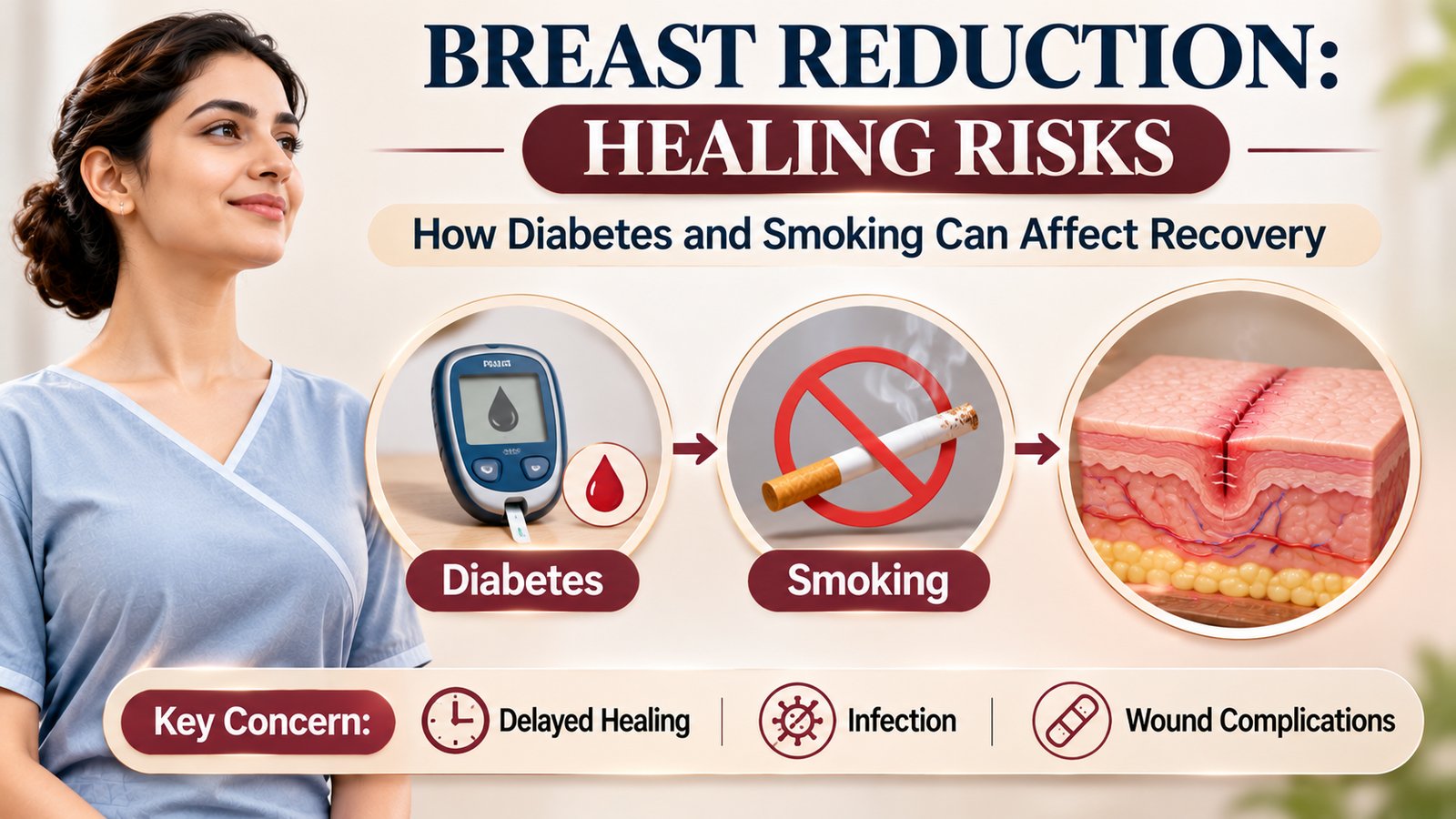
Breast reduction surgery can help relieve discomfort caused by heavy breasts, but certain health conditions and lifestyle habits can affect recovery. Diabetes may increase the risk of infection and delayed wound healing, particularly when blood sugar levels are poorly controlled. Similarly, smoking and nicotine exposure can reduce blood flow to healing tissues. Understanding these risks before surgery helps patients and surgeons plan appropriate precautions and improve surgical safety.
Can You Have Breast Reduction Surgery If You Have Diabetes?
Yes, having diabetes does not automatically prevent someone from undergoing breast reduction surgery. However, blood sugar control plays an important role in surgical planning and recovery.
When blood glucose levels remain high, the body’s ability to fight infection and repair damaged tissues may become less effective.
Before recommending surgery, the surgeon may review:
- Your recent blood sugar readings.
- HbA1c test results, when appropriate.
- Current diabetes medications.
- History of diabetes-related complications.
- Previous wound-healing problems.
- Other medical conditions, such as high blood pressure.
The surgeon may also coordinate with your physician or diabetologist to optimise your health before an elective procedure.
How Does Poorly Controlled Diabetes Affect Wound Healing?
Poorly controlled diabetes can affect the body’s natural healing process in several ways.
1. Reduced immune response
High blood glucose can interfere with immune-system function, making it harder for the body to respond to infections.
2. Reduced circulation
Diabetes may damage blood vessels and affect circulation. Reduced blood supply can limit the oxygen and nutrients that healing tissues need.
3. Delayed wound closure
When circulation and tissue repair are affected, surgical incisions may take longer to close.
4. Increased infection risk
Patients with poorly controlled diabetes may have a higher risk of surgical-site infections.
5. Greater risk of wound complications
Some patients may experience wound separation, delayed healing or additional treatment requirements.
Can Smoking Affect Breast Reduction Healing?
Yes. Smoking is an important risk factor for complications after breast reduction surgery.
Cigarette smoke contains carbon monoxide and other harmful substances. Nicotine also causes blood vessels to narrow, which can reduce blood flow to healing tissues.
Breast reduction involves removing breast tissue and reshaping the skin. The nipple and surrounding tissues also depend on an adequate blood supply during recovery.
Smoking may increase the risk of:
- Delayed wound healing.
- Surgical-site infection.
- Wound separation.
- Skin tissue damage.
- Poor scar formation.
- Reduced blood supply to the nipple and areola.
- Partial tissue loss in severe cases.
These risks may be greater in patients undergoing extensive breast reduction procedures.
Does Vaping or Other Nicotine Use Also Matter?
Yes. Patients should disclose all nicotine and tobacco exposure before surgery.
This includes:
- Cigarettes.
- E-cigarettes and vaping products.
- Nicotine pouches.
- Chewing tobacco.
- Other nicotine-containing products.
Nicotine exposure may affect blood circulation and tissue healing. Do not assume that switching from cigarettes to vaping makes surgery risk-free.
Discuss nicotine replacement products, such as patches or gum, with your surgeon rather than stopping or starting them independently.
Smoking Before Breast Reduction: When Should You Stop?
Surgeons commonly recommend stopping smoking and nicotine exposure several weeks before surgery and continuing to avoid them throughout recovery.
A period of at least four to six weeks before surgery and after surgery is commonly recommended, although the exact instructions depend on the surgeon and individual risk.
Stopping earlier may provide additional benefits.
Why Is Smoking Cessation Important Before Surgery?
Stopping smoking before surgery can help:
- Improve tissue oxygen supply.
- Support better blood circulation.
- Reduce wound-healing complications.
- Lower the risk of infection.
- Support recovery of the nipple and surrounding skin.
Patients should discuss their smoking history honestly during consultation. This information helps the surgical team make safer decisions.
Diabetes vs Smoking: How Do They Affect Breast Reduction Recovery?
Both diabetes and smoking can affect wound healing, but they do so through different mechanisms.
| Factor | Diabetes | Smoking and Nicotine |
|---|---|---|
| Circulation | May damage blood vessels | Nicotine narrows blood vessels |
| Infection risk | May increase when glucose is poorly controlled | Smoking can impair immune and tissue responses |
| Wound healing | May slow tissue repair | May reduce oxygen and nutrient delivery |
| Skin health | Can affect tissue health through vascular damage | Can increase tissue injury risk |
| Surgical planning | Blood sugar and medical assessment | Smoking cessation and nicotine assessment |
Patients with both diabetes and nicotine exposure may have additional healing concerns. Their surgical plan should account for the combined risks.
What Are the Warning Signs of Delayed Wound Healing After Breast Surgery?
Some swelling, bruising and discomfort are expected after breast reduction. However, certain symptoms may indicate an infection or wound-healing problem.
Watch for the following warning signs:
1. Increasing Redness
Redness that spreads around the incision or becomes progressively worse may indicate infection.
2. Increasing Pain
Pain that becomes more severe rather than gradually improving needs medical assessment.
3. Unusual Discharge
Yellow or green discharge, pus or an unpleasant smell from the incision may indicate infection.
4. Wound Separation
If the edges of a surgical incision begin to separate, contact the surgical team promptly.
5. Dark or Discoloured Skin
Skin around the incision or nipple that becomes unusually dark, grey or black may indicate reduced blood supply or tissue damage.
This requires urgent assessment.
6. Fever
Fever, especially when accompanied by redness, worsening pain or discharge, may indicate an infection.
Patients should not wait for their next routine appointment if these symptoms develop.
How Can Patients Reduce Healing Risks Before Breast Reduction?
Proper preparation can help reduce avoidable complications.
1. Improve Blood Sugar Control
Patients with diabetes should work with their treating physician to achieve an appropriate blood glucose range before surgery.
Follow prescribed treatment and attend recommended medical assessments.
2. Stop Smoking and Nicotine Exposure
Follow the surgeon’s recommended smoking cessation period before and after surgery.
Inform the surgical team about cigarettes, vaping, tobacco and nicotine replacement products.
3. Share Your Complete Medical History
Inform your surgeon about diabetes, blood pressure problems, circulation issues, previous infections and any history of slow wound healing.
4. Review Your Medications
Provide a complete list of prescription medicines, supplements and other products.
Never stop diabetes medicines or other prescribed treatment without medical advice.
5. Follow Wound-Care Instructions
After surgery, keep the incision areas clean and follow the recommended dressing and bathing instructions.
Avoid applying creams or other products to unhealed wounds unless your surgeon approves them.
6. Attend Follow-Up Appointments
Regular follow-ups help the surgeon monitor healing, identify complications and recommend additional care when necessary.
What Happens If a Breast Reduction Wound Heals Slowly?
Delayed wound healing does not always mean that surgery has failed. However, it requires proper evaluation and treatment.
Depending on the cause, the surgeon may recommend:
- Wound examination and monitoring.
- Appropriate dressing changes.
- Treatment for infection when diagnosed.
- Blood glucose optimisation.
- Assessment of tissue circulation.
- Specialist wound-care support.
- Additional procedures in selected cases.
The treatment depends on the location, severity and underlying cause of the wound problem.
Patients should not attempt to manage an opening surgical wound or suspected infection at home without medical guidance.
Should Patients With Diabetes or Smoking History Delay Breast Reduction?
Not necessarily. The decision depends on individual health and risk factors.
A patient with well-controlled diabetes may be suitable for surgery after appropriate medical assessment. Similarly, a former smoker may be considered after completing the recommended nicotine-free period and undergoing surgical evaluation.
However, surgery may need to be postponed when:
- Blood glucose remains poorly controlled.
- There is an active infection.
- The patient continues smoking against medical advice.
- Significant circulation problems are present.
- Previous wounds have not healed adequately.
- Other medical conditions are not optimised.
The surgeon may recommend additional tests or medical clearance before scheduling the procedure.
Frequently Asked Questions
1. Can I have breast reduction surgery if I have diabetes?
Yes. Patients with diabetes may undergo breast reduction when their condition is appropriately assessed and managed. However, poorly controlled blood glucose can increase infection and delayed wound-healing risks. Your surgeon may coordinate with your diabetologist before approving surgery.
2. Does smoking increase the risk of complications after breast reduction?
Yes. Smoking can reduce blood flow and oxygen delivery to healing tissues. It may increase the risk of infection, wound separation, delayed healing and nipple blood-supply complications. Patients should follow their surgeon’s smoking cessation instructions.
3. How long before breast reduction should I stop smoking?
Surgeons commonly recommend stopping smoking and nicotine exposure at least four to six weeks before surgery and continuing throughout recovery. The exact period may vary depending on individual health and surgical requirements.
4. Can vaping affect breast reduction healing?
Yes. Vaping products containing nicotine may affect blood circulation and tissue healing. Patients should disclose vaping and all other nicotine exposure during consultation and follow their surgeon’s instructions.
5. What are the signs of delayed wound healing after breast surgery?
Warning signs include increasing redness, worsening pain, unusual discharge, wound separation, fever and dark or discoloured skin. Contact your surgical team promptly if these symptoms appear. Sudden skin or nipple discolouration needs urgent assessment.
6. Can breast reduction surgery be postponed because of diabetes?
Yes. If blood glucose is poorly controlled or diabetes-related complications increase surgical risks, the surgeon may recommend postponing elective surgery. Medical optimisation before the procedure can help improve safety and recovery conditions.
Conclusion
Diabetes and smoking can both affect healing after breast reduction surgery. Poorly controlled blood glucose may increase infection and wound-healing risks, while smoking and nicotine exposure can reduce blood supply to healing tissues.
However, these factors do not automatically make every patient unsuitable for surgery. A detailed medical assessment, appropriate blood sugar management, smoking cessation and regular postoperative monitoring can help reduce avoidable complications.
Patients should discuss their medical history and lifestyle habits openly with their plastic surgeon before deciding on breast reduction surgery.
