

|
Getting your Trinity Audio player ready...
|
✓ Medically reviewed by Dr. Ashutosh Shah, Plastic, Reconstructive & Cosmetic Surgeon (M.Ch., DNB)
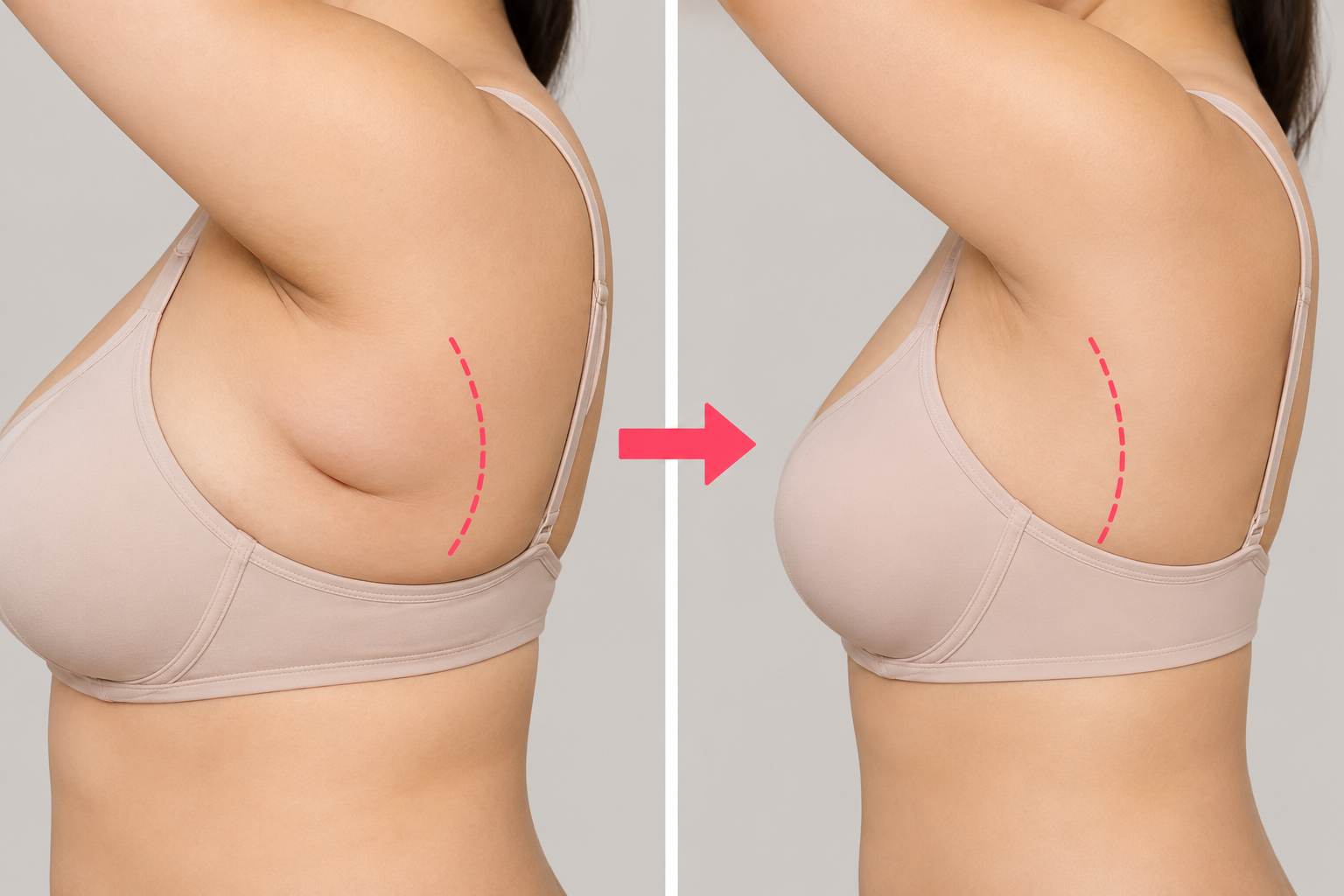
Axillary breast fat removal can improve fullness near the armpits and outer breasts. However, breast reduction alone does not always correct this area. Some patients have ordinary fat, while others have accessory breast tissue or loose skin. Depending on the cause, a surgeon may recommend liposuction, tissue excision or a combined procedure to improve the contour.
Many women notice a soft bulge between the breast and armpit, especially when wearing fitted clothing or a bra.
Some describe this area as side breast fat, armpit fat or an underarm bulge.
Although these terms sound similar, they do not always describe the same condition.
For example, ordinary fat may respond to liposuction, while accessory breast tissue often requires a different approach.
Additionally, breast reduction surgery may improve the outer breast without completely removing fullness in the armpit.
Therefore, identifying the cause is the first step toward choosing an appropriate treatment.
What Causes Side Breast and Armpit Fullness?
Several factors can create fullness near the outer breast and underarm.
When loose skin contributes to the appearance of side-breast fullness, a surgeon may also assess whether breast lift surgery could improve the breast shape. However, a breast lift does not necessarily correct separate axillary fullness.
The most common causes include localised fat, accessory breast tissue, natural breast extension and loose skin.
1. Localised Armpit Fat
Some women naturally store more fat near the armpits.
This fat may become more noticeable with weight gain or changes in body composition.
However, even women with a stable weight may develop localised deposits.
The area can appear fuller when a bra compresses nearby tissue.
2. Accessory Breast Tissue
Accessory breast tissue develops outside the usual breast area.
It commonly appears along the embryonic milk line, including the armpit.
Unlike ordinary fat, accessory tissue contains breast glandular structures.
As a result, it may become tender or swollen during hormonal changes.
Some women notice increased fullness during pregnancy, breastfeeding or menstruation.
3. Natural Outer Breast Tissue
Normal breast tissue can extend toward the armpit.
Doctors call this extension the axillary tail of the breast.
However, the axillary tail is not the same as separate accessory breast tissue.
A surgeon must identify the anatomy before planning removal.
4. Loose Skin
Weight loss, ageing and changes in skin elasticity can create folds near the outer breast.
In this situation, removing fat alone may not correct the visible fullness.
Therefore, selected patients may need skin tightening or surgical skin removal.
5. Bra Fit and Compression
A poorly fitting bra may push normal breast tissue toward the sides.
Consequently, the underarm area may appear fuller than it actually is.
Before considering surgery, patients should check whether proper support improves the contour.
Can Breast Reduction Remove Side Breast Fat?
Breast reduction may improve fullness along the outer breast when excess breast tissue contributes to the bulge. Patients can explore breast reduction surgery to understand how surgeons remove excess tissue and reshape the breasts.
During the procedure, the surgeon also considers the outer breast contour.
However, standard breast reduction does not automatically remove tissue from the armpit.
The result depends on the location of the fullness and the surgical plan.
When Breast Reduction May Help
Breast reduction may improve side fullness when the bulge comes mainly from the outer portion of the breast.
For example, a patient with large breasts may have excess tissue extending toward the sides.
In this situation, the surgeon may reshape the lateral breast during reduction.
When Breast Reduction Alone May Not Help
Breast reduction may not fully correct:
- Separate armpit fat deposits
- Accessory breast tissue
- Significant loose skin
- Fullness beyond the planned reduction area
- A distinct underarm lump
Therefore, patients should discuss side and armpit fullness before surgery rather than assuming the standard procedure will address it.
What Is Axillary Breast Fat Removal?
Axillary breast fat removal refers to treatment that reduces unwanted fullness in the underarm region.
However, the exact procedure depends on whether the area contains ordinary fat, breast glandular tissue or both.
A surgeon may recommend liposuction, surgical excision or a combination.
How Does Axillary Liposuction Work?
Liposuction removes selected fat deposits through a thin cannula.
For patients with localised fatty deposits, liposuction surgery may help reduce underarm fullness. However, liposuction alone may not adequately remove accessory glandular breast tissue.
The surgeon makes small access incisions and uses controlled suction to reduce the fatty layer.
This technique may suit patients with:
- Localised soft fat deposits
- Good skin elasticity
- No suspicious underlying lump
- Realistic expectations about contour improvement
However, liposuction cannot reliably remove all glandular breast tissue.
Additionally, it may not correct significant loose skin.
When Is Surgical Excision Necessary?
Surgical excision may be appropriate when the fullness contains accessory breast tissue.
During the procedure, the surgeon removes selected glandular tissue and reshapes the surrounding area.
Depending on the anatomy, the surgeon may combine excision with liposuction.
However, tissue removal can create scars and carries risks such as swelling, fluid collection and sensory changes.
Armpit Fat vs Accessory Breast Tissue: How Are They Different?
Ordinary fat and accessory breast tissue may look similar from the outside.
However, their internal structures differ.
Comparison Table
| Feature | Ordinary Armpit Fat | Accessory Breast Tissue |
|---|---|---|
| Tissue type | Mainly fatty tissue | Breast glandular tissue, often mixed with fat |
| Texture | Usually soft | May feel firmer or more glandular |
| Hormonal changes | Usually limited | May become tender or swollen |
| Pregnancy-related changes | May change with weight | May enlarge with hormonal stimulation |
| Possible treatment | Liposuction in suitable patients | Excision, sometimes with liposuction |
| Need for imaging | If examination raises concern | Often useful when diagnosis is uncertain |
A clinical examination helps distinguish these conditions.
However, the surgeon may recommend ultrasound when the tissue type remains unclear or a lump needs evaluation.
Importantly, patients should not assume every armpit bulge is harmless fat.
Can Armpit Fat Removal and Breast Reduction Happen Together?
Yes. In selected patients, surgeons can combine breast reduction with treatment of side or axillary fullness.
This approach may improve the overall contour during one operation.
However, the surgeon must consider the extent of tissue removal, incision placement and recovery requirements.
Benefits of a Combined Procedure
A combined procedure may:
- Address breast size and side fullness together
- Improve the transition between breast and underarm
- Reduce the need for a separate operation
- Allow coordinated contour planning
However, combining procedures may increase surgical time, swelling and the area that needs to heal.
Therefore, the surgeon should assess whether a combined operation offers a reasonable balance of benefits and risks.
When Might Separate Procedures Be Better?
A staged approach may be appropriate when:
- The patient has significant medical risk factors
- The axillary tissue requires further investigation
- The surgeon expects complex healing
- The patient prefers a smaller initial procedure
- The treatment plan involves extensive tissue removal
The final decision depends on individual anatomy and medical assessment.
Which Procedure Is Best for Side Breast and Armpit Fullness?
The correct treatment depends on the cause rather than the appearance alone.
Treatment Decision Table
| Main Problem | Possible Treatment | Important Limitation |
|---|---|---|
| Small localised fat deposit | Liposuction | Does not remove significant loose skin |
| Accessory breast tissue | Surgical excision | May leave a visible scar |
| Fat mixed with glandular tissue | Excision with liposuction | Requires careful contour planning |
| Outer breast tissue extending laterally | Breast reduction with lateral contour correction | May not address separate armpit fullness |
| Loose skin after weight loss | Skin excision in selected cases | Longer scars may be necessary |
| New or unexplained lump | Clinical examination and imaging | Cosmetic removal should wait until assessment is complete |
For example, a patient with soft fatty fullness may benefit from liposuction.
In contrast, a patient with accessory breast tissue may require surgical removal.
Therefore, the surgeon should identify the tissue before recommending a procedure.
Does Axillary Breast Fat Removal Leave Scars?
Scarring depends on the treatment technique.
Liposuction generally requires small access incisions.
However, accessory breast tissue excision may need a longer incision to remove glandular tissue and manage excess skin.
The surgeon may position the incision within a natural underarm crease when suitable.
Nevertheless, scar visibility varies according to incision length, skin type and individual healing.
Can Scars Become Thick or Dark?
Yes. Some patients develop raised, widened or darker scars.
Factors that influence scar appearance include:
- Skin characteristics
- Wound tension
- Previous scarring history
- Infection
- Healing complications
- Postoperative care
Patients should discuss scar placement and expected appearance before surgery.
What Is Recovery Like After Armpit Fat Removal?
Recovery depends on the amount of tissue removed and whether the surgeon combines the procedure with breast reduction.
After surgery, patients may experience swelling, bruising and temporary discomfort.
Additionally, the underarm area moves frequently during daily activities.
Therefore, certain arm movements may feel uncomfortable during early healing.
Typical Recovery Considerations
| Recovery Stage | What Patients May Experience |
|---|---|
| First few days | Swelling, bruising and discomfort |
| First 1–2 weeks | Gradual improvement in routine movement |
| Following weeks | Reduced swelling and improving comfort |
| Following months | Continued contour settling and scar maturation |
These timelines are general estimates rather than guarantees.
Patients undergoing a combined breast reduction may need a different recovery schedule.
Will I Need a Compression Garment?
The surgeon may recommend a supportive garment or local compression.
However, garment requirements vary according to the procedure.
Patients should follow their surgeon’s instructions rather than applying excessive pressure themselves.
When Can I Return to Exercise?
Light daily activities may resume as comfort and healing allow.
However, strenuous exercise, heavy lifting and repetitive arm movements may require a longer break.
The surgeon should provide an individual activity plan.
What Are the Risks of Axillary Breast Fat Removal?
Every surgical procedure carries risks.
Although many patients recover without major complications, problems can occur.
Potential risks include:
- Bleeding
- Infection
- Fluid collection or seroma
- Swelling
- Bruising
- Scarring
- Temporary or persistent numbness
- Contour irregularities
- Asymmetry
- Residual fullness
- Need for revision surgery
Axillary surgery also requires careful attention to important nerves, lymphatic structures and blood vessels.
Therefore, treatment planning should account for the depth and location of tissue removal.
Can Numbness Occur After Surgery?
Yes. Small sensory nerves may become irritated or injured during tissue removal.
As a result, patients may notice numbness, tingling or altered sensation near the underarm.
Sensation often improves gradually, but some changes may persist.
Patients should discuss this possibility before surgery.
When Should an Armpit Lump Be Medically Checked?
Not every underarm lump comes from fat or accessory breast tissue.
Some lumps develop because of enlarged lymph nodes, cysts, infections or other medical conditions.
Therefore, a new or unexplained lump requires proper assessment before cosmetic treatment.
Warning Signs
Seek medical evaluation if you notice:
- A new lump in one armpit
- Rapid enlargement
- A hard or fixed lump
- Persistent pain
- Redness or warmth
- Unexplained swelling
- A breast lump
- New nipple discharge
- Skin dimpling or other breast changes
Depending on the findings, a clinician may recommend ultrasound, mammography or biopsy.
Importantly, cosmetic surgery should not replace diagnostic investigation.
Will Armpit Fullness Return After Surgery?
The long-term result depends on the tissue type, treatment method and future body changes.
Liposuction removes some fat cells from the treated area.
However, remaining fat cells can enlarge with weight gain.
Similarly, incomplete removal of accessory breast tissue may leave residual fullness.
Hormonal changes may also affect remaining breast tissue.
Therefore, surgery cannot guarantee that the area will remain unchanged throughout life.
Maintaining a stable weight may help preserve the contour after fat removal.
How Does a Surgeon Plan the Procedure?
A consultation should identify the exact source of fullness.
The surgeon examines the breasts, outer chest and armpits while the patient sits or stands.
The assessment may include:
- Location of the fullness
- Tissue thickness
- Skin elasticity
- Breast size and shape
- Presence of a distinct lump
- Previous surgery
- Hormonal or pregnancy-related changes
- Patient expectations
If the tissue appears suspicious or the diagnosis remains uncertain, the surgeon may recommend imaging before cosmetic treatment.
At Elegance Clinic, Dr. Ashutosh A Shah, MBBS, MS, MCh and DNB, Plastic and Reconstructive Surgeon with over 22 years of experience, evaluates breast contour concerns and discusses suitable surgical options, recovery expectations and possible complications. The treatment plan should distinguish ordinary fat from accessory breast tissue and address any medical concerns before surgery.
Frequently Asked Questions
1. Can Breast Reduction Remove Armpit Fat?
Breast reduction may improve fullness along the outer breast. However, it does not automatically remove separate fat deposits in the armpit. Some patients need targeted liposuction or accessory tissue excision. Therefore, the surgeon should assess the underarm area before planning the operation.
2. Is Axillary Breast Tissue Different From Normal Fat?
Yes. Accessory breast tissue contains glandular breast structures, while ordinary armpit fat mainly contains fatty tissue. Accessory tissue may become tender or swollen during hormonal changes. A clinical examination and, when necessary, ultrasound can help identify the difference.
3. Can Liposuction Alone Remove Accessory Breast Tissue?
Liposuction can reduce the fatty component of an underarm bulge. However, it may not adequately remove firm glandular breast tissue. Therefore, patients with significant accessory breast tissue may need surgical excision or a combined procedure.
4. Will Armpit Fat Return After Surgery?
Liposuction removes some fat cells, but remaining cells can enlarge if body weight increases. Additionally, residual accessory breast tissue may change with hormonal stimulation. Therefore, long-term contour stability depends on the procedure, tissue characteristics and future body changes.
5. Can Breast Reduction and Armpit Fat Removal Happen Together?
Yes. Surgeons can combine breast reduction with selected underarm contouring procedures. However, the decision depends on anatomy, medical history and the amount of tissue involved. Combining procedures may increase swelling and recovery requirements, so individual planning remains important.
6. Will Axillary Breast Fat Removal Leave Scars?
Yes, although scar size varies. Liposuction usually creates small access scars, while accessory breast tissue excision may require a longer incision. Surgeons may place incisions within natural underarm creases when appropriate. However, scar appearance depends on individual healing.
Conclusion
Axillary breast fat removal can improve side breast and armpit fullness when the surgeon selects the appropriate treatment.
However, not every underarm bulge contains ordinary fat.
Some patients have accessory breast tissue, natural breast extension or loose skin.
Therefore, the first step is identifying the cause through clinical examination and appropriate imaging when needed.
Liposuction may suit localised fat deposits, while glandular tissue often requires surgical excision.
Additionally, selected patients can combine underarm contouring with breast reduction to improve the overall breast and side-chest shape.
The goal is not simply to remove tissue. It is to create a balanced contour while protecting surrounding structures and maintaining realistic expectations.
