

|
Getting your Trinity Audio player ready...
|
✓ Medically reviewed by Dr. Ashutosh Shah, Plastic, Reconstructive & Cosmetic Surgeon (M.Ch., DNB)
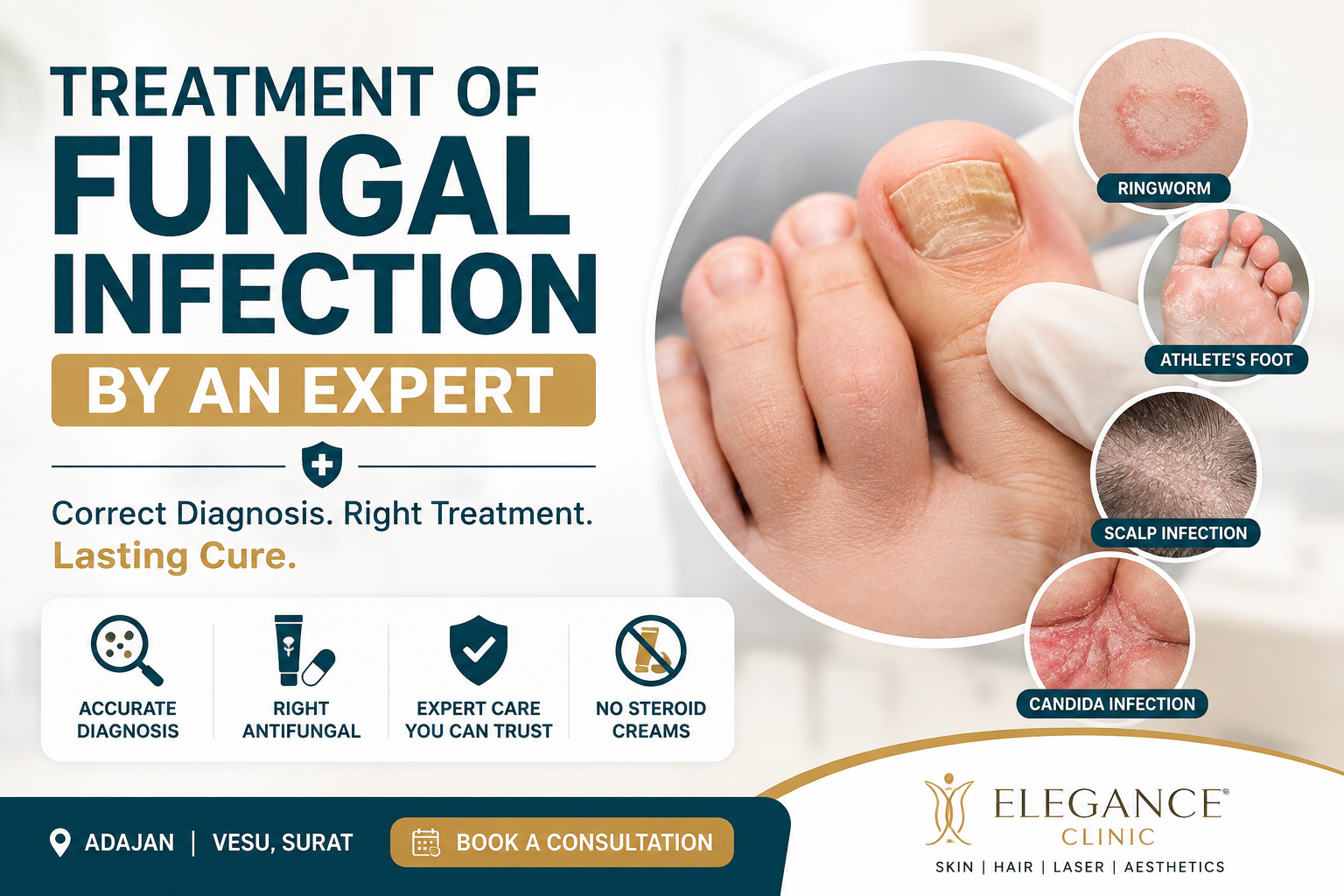
Treatment of fungal infection by an expert means a dermatologist correctly diagnoses the infection, prescribes the right antifungal for the right duration, and avoids the steroid creams that make fungus worse. This matters because fungal infections in India are increasingly stubborn and resistant, largely due to self-treatment, so expert care gives a real, lasting cure.
A discoloured nail or an itchy, spreading rash is easy to dismiss or self-treat, but fungal infections have become surprisingly hard to clear in India. The reason is usually how they are treated, not the fungus itself. This guide explains treatment of fungal infection by an expert, and why it is the reliable path to a cure.
What Is Treatment of Fungal Infection by an Expert?
Treatment of fungal infection by an expert is care led by a qualified dermatologist (an expert doctor in skin, hair, and nails) rather than by guesswork or over-the-counter creams. It starts with correctly identifying the infection, sometimes with a simple test, then choosing the right antifungal, topical, oral, or both, at the correct dose and for the full duration needed. Crucially, an expert avoids the steroid-containing combination creams that briefly calm symptoms while letting the fungus spread and become resistant.
The difference is cure versus cycle. Expert treatment aims to clear the infection completely, while casual self-treatment often leads to it coming back again and again.
What Types of Fungal Infection Can Be Treated?
Fungal infections affect different parts of the body, and each needs a tailored approach. The table below outlines common types.
| Type | Where it appears |
|---|---|
| Nail fungus (onychomycosis) | Discoloured, thick, or crumbling finger or toe nails. |
| Ringworm (tinea) | Itchy, ring-shaped rash on the body, groin, or face. |
| Athlete’s foot | Itching, peeling skin between the toes. |
| Scalp and candida | Scalp infection, or yeast in moist skin folds. |
A change in nail colour, like the sign highlighted in our clinic video, is a classic early clue of nail fungus, and all of these are assessed within expert clinical dermatology care.
Why See an Expert Instead of Self-Treating?
Because self-treatment is the main reason fungal infections in India have become so stubborn. A review of antifungal resistance in dermatophyte infections found rising recurrent and treatment-resistant tinea, with India strongly represented and nearly all affected patients having previously used antifungals, often incorrectly. Widely sold steroid-antifungal combination creams are a major culprit: they ease itching for a few days but suppress the skin’s defences, alter the rash so it is misdiagnosed, and drive resistance.
An expert doctor breaks this cycle: correct diagnosis, an effective antifungal for long enough, and a firm stop to steroid creams. That is what actually clears the infection for good.
How Are Fungal Infections Treated Properly?
Proper treatment is simple in principle but must be done fully. It usually involves the following.
- Accurate diagnosis: confirming it is fungal, sometimes with a quick skin or nail test.
- The right antifungal: topical creams for mild skin infection, oral tablets for widespread or nail infection.
- Full duration: completing the course, often weeks to months, especially for nails.
- No steroid creams: stopping the combination creams that worsen fungus.
- Hygiene and prevention: keeping skin dry, and treating family members if needed.
Nail infections in particular need patience, because a healthy nail must grow out, so expert follow-up keeps treatment on track through the clinic’s full range of services.
How Do You Stop Fungal Infections Coming Back?
Preventing recurrence is as important as the treatment itself, and here too expert guidance helps. The key steps are finishing the full course even after the rash or itch settles, since stopping early lets survivors regrow, and never returning to steroid combination creams. Day to day, keeping skin and feet clean and dry, changing damp clothes and socks, not sharing towels or footwear, and treating affected family members together all reduce reinfection, because fungus spreads easily within households. If an infection keeps returning despite treatment, that itself is a reason to see an expert doctor, as it may signal resistance, an underlying condition such as diabetes, or an incomplete previous course that needs a properly planned approach.
Why Choose Elegance Clinic in Surat?
Clearing a stubborn fungal infection needs a dermatologist who treats it correctly the first time. At Elegance Clinic in Surat, fungal and other skin conditions are managed by an expert dermatology team led by Dr. Ravi Khambhati, Chief Dermatologist, within a trusted clinic run by Dr. Ashutosh Shah with more than 22 years of experience and centres in Adajan and Vesu. Care is evidence-based: proper diagnosis, the right antifungal, and no harmful steroid creams. You can meet the expert dermatologist, explore clinical dermatology, or book a consultation.
Medical disclaimer: This article is for general information and education only and is not a substitute for personalised medical advice. Fungal infections vary in type and severity, and diagnosis and treatment should be guided by a qualified dermatologist, especially for recurrent, widespread, or nail infections, or if you have diabetes or a weakened immune system. Avoid self-treating with steroid combination creams. To get properly assessed, book a consultation at Elegance Clinic, Surat.
